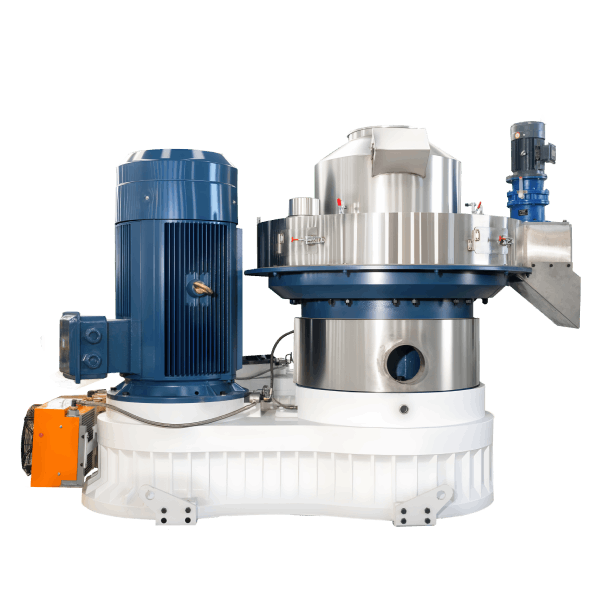
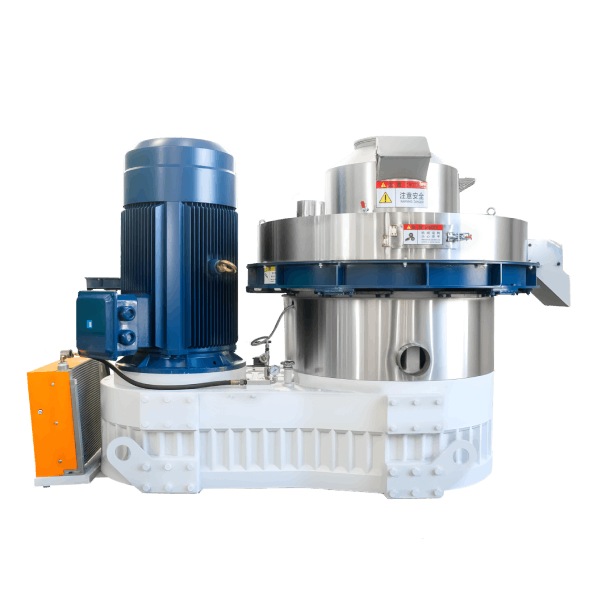
Biomass Pellet Machine: Buyer’s Guide, Types & Price
News 2026-08-17
Biomass Pellet Machine: Buyer’s Guide
A biomass pellet machine is the core equipment that compresses organic materials such as wood, agricultural residues, and energy crops into dense cylindrical pellets for fuel, heating, bedding, or industrial use. Buyers searching for a biomass pellet machine are usually not looking for a science explanation. They are trying to decide which machine fits their raw material, capacity target, power supply, and budget.
That decision depends on eight factors: raw material type, target capacity, moisture content, particle size, pellet diameter, operating hours, power supply, and automation level. Different materials and different capacities cannot use the same machine configuration. A straw project and a sawdust project may look similar on paper but require different die compression ratios, feeder settings, and auxiliary equipment.
This guide is written for procurement managers, importers, EPC contractors, distributors, and end users. It covers machine types, raw material effects, capacity selection, technical specifications, price factors, complete line requirements, supplier evaluation, and a practical buying checklist. For the detailed pelletizing process, see the separate process guide on this site.
What Is a Biomass Pellet Machine?
A biomass pellet machine, also called a biomass pellet mill, compresses organic material into pellets using pressure and friction heat. The material is ground to a suitable particle size, fed into the die chamber, pressed through die holes by rollers, and cut to the required length.
Biomass Pellet Machine vs Wood Pellet Machine
A wood pellet machine is optimized for wood materials. A biomass pellet machine is designed to handle a wider range of materials, including wood, straw, rice husk, bagasse, palm kernel shell, coconut shell, and other biomass. Because the material range is wider, biomass machines usually require heavier-duty dies and rollers, more flexible feeding, and more careful moisture control.
What Does a Biomass Pellet Machine Produce?
A biomass pellet machine can produce biomass fuel pellets for boilers and power generation, heating pellets for stoves and residential boilers, industrial fuel pellets for district heating and industrial furnaces, and bedding pellets for stables and poultry.
Aspect: Shape
Typical description: Small cylinders
Aspect: Diameter
Typical description: 6 to 12 mm depending on die and application
Aspect: Length
Typical description: 10 to 30 mm depending on cutter setting
Aspect: Bulk density
Typical description: About 600 to 750 kg/m³ depending on material and compression
Aspect: Moisture
Typical description: About 8 to 12 percent after cooling and stabilization
These values depend on raw material, moisture, die compression ratio, and cooling conditions. They are indicative, not guaranteed, and should be confirmed with a test run using your material.
How Does a Biomass Pellet Machine Work?
A biomass pellet machine works in a simple sequence: grinding, feeding, compression, heating, binding, and cutting. Each step has a direct effect on machine selection. For the full pelletizing process, see the separate process guide on this site.
Particle size determines grinding requirement. If material is too coarse, feeding becomes uneven and pellet quality drops.
Moisture determines conditioning or drying requirement. Most biomass materials run best within a specific moisture band, and the exact band depends on material.
Material density affects feeding and compression. Dense materials require more motor power and stronger die and roller assemblies.
Die hole diameter determines pellet size. Common pellet diameters range from 6 mm to 12 mm, depending on application.
Compression ratio affects pellet quality and die wear. Compression ratio should be matched to material density, fiber content, and moisture. Hard, dense materials usually need a different compression ratio than soft, low-density materials. A mismatch causes soft pellets, blockage, or fast die wear.
Feed rate affects actual output. A machine rated at a certain capacity under ideal conditions may produce less under real material and moisture conditions.
Types of Biomass Pellet Machines
Flat Die Biomass Pellet Machine
A flat die biomass pellet machine uses a horizontal or vertical flat die. It is typically used for small production, farms, and projects with varied or mixed materials. Capacity usually ranges from about 30 kg/h to 300 kg/h, depending on model, material, moisture, die condition, and voltage stability.
Initial investment is lower, structure is simpler, and maintenance is easier. The main limitations are lower capacity and higher wear per ton when running abrasive materials.
Typical buyers include small producers, farms, cooperatives, and start-up projects that need flexibility and lower initial cost.
Typical applications include small farm feed or fuel production, pilot projects, and mixed material use where batch size is small.
Die and roller change is relatively simple. Dies are usually smaller and lighter, and can be changed with basic tools. This makes flat die machines easier to maintain in locations with limited technical support.
Ring Die Biomass Pellet Machine
A ring die biomass pellet machine uses a vertical ring die. It is typically used for commercial and industrial production, continuous operation, and higher capacity. Capacity usually ranges from about 200 kg/h to several tons per hour, depending on model, material, moisture, die condition, and operating hours.
Pellet quality is generally higher, energy efficiency is better at scale, and automation is easier to add. The main limitations are higher cost, larger footprint, and more specialized maintenance.
Typical buyers include commercial pellet plants, industrial fuel producers, and projects with consistent material and continuous operating hours.
Typical applications include commercial fuel pellet production, industrial heating fuel, and export-oriented pellet plants.
Die and roller change is more specialized. Dies are larger and heavier, and often require lifting equipment. Roller clearance adjustment and die seating must follow the manufacturer procedure. Training and spare parts planning are more important than with flat die machines.
Flat Die vs Ring Die Biomass Pellet Machine
Factor: Typical scale
Flat Die: Small
Ring Die: Medium to large
Factor: Capacity
Flat Die: Lower
Ring Die: Higher
Factor: Initial investment
Flat Die: Lower
Ring Die: Higher
Factor: Continuous production
Flat Die: Limited
Ring Die: Better suited
Factor: Automation
Flat Die: Lower
Ring Die: Higher
Factor: Maintenance
Flat Die: Simpler
Ring Die: More specialized
Factor: Die change
Flat Die: Easier, basic tools
Ring Die: More specialized, may need lifting equipment
Factor: Typical buyer
Flat Die: Small producers
Ring Die: Commercial plants
Factor: Best use
Flat Die: Small projects and varied materials
Ring Die: Industrial production and consistent material
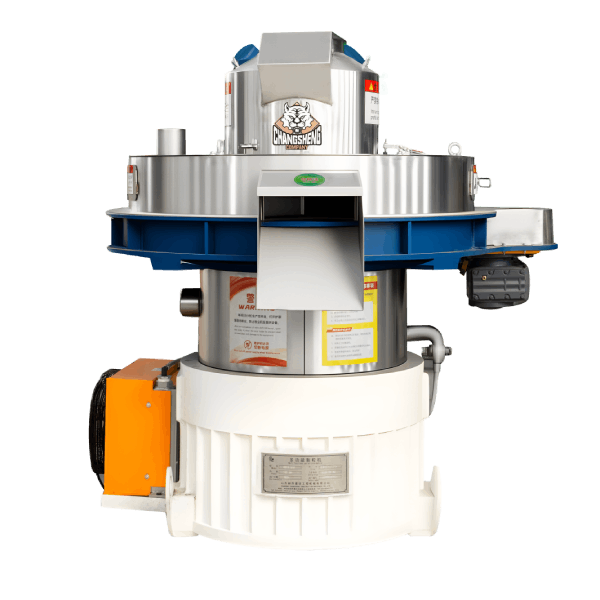
How Raw Material Affects Biomass Pellet Machine Selection
Raw material is the single most important factor in machine selection. The same machine cannot perform equally well on sawdust, straw, rice husk, wood chips, and coconut shell.
Sawdust
Sawdust is one of the easiest materials to pelletize because of its relatively high lignin content and uniform particle size. Key considerations are moisture, particle size, and die compression ratio. If moisture is controlled and particle size is consistent, sawdust can run at higher output with lower die wear.
Straw
Straw has high fiber content, low lignin content, and variable moisture. It often requires higher compression ratio, more careful feeding, and in some cases a binder. Die wear is usually higher than with wood materials.
Rice Husk
Rice husk is abrasive and has high ash content. It requires a hard die, suitable compression ratio, and more frequent die inspection. Output may be lower than with wood materials under the same motor power.
Wood Chips
Wood chips require grinding before pelletizing. A hammer mill is usually needed to reduce particle size. Moisture control and uniform feeding are important for stable output.
Coconut Shell and Palm Kernel Shell
Coconut shell and palm kernel shell are hard and dense. They require robust grinding, premium die and roller material, and higher motor power. Pellet quality is usually good because of high lignin content, but die wear is a real cost factor.
How to Choose Biomass Pellet Machine Capacity
Capacity Calculation
Required capacity equals annual production target divided by annual operating hours. For example, if the annual target is 2,000 tons and the plant operates 6,000 hours per year, the required capacity is about 0.33 t/h.
In practice, a capacity margin of about 20 to 30 percent above the calculated figure is a practical starting point. This margin absorbs material variation, moisture changes, maintenance time, and operator breaks. The exact margin depends on how consistent your material is and how many hours you can realistically operate.
100 kg/h
A 100 kg/h biomass pellet machine is suitable for small farms, small estates, and pilot projects. It is usually a flat die machine and can run on a relatively small power supply.
500 kg/h
A 500 kg/h biomass pellet machine is suitable for small commercial production, cooperatives, and medium farms. It may be a large flat die machine or a small ring die machine, depending on material and operating hours.
1 to 5 t/h
A 1 to 5 t/h biomass pellet machine is suitable for commercial and industrial production. It is usually a ring die machine and requires a complete line including grinding, drying, pelletizing, cooling, screening, and packing.
Biomass Pellet Machine Technical Specifications
When reviewing a quotation, confirm the following specifications in writing:
Die type, die diameter, die hole diameter, compression ratio, roller material and hardness.
Main motor power, total connected load, feeder type, conditioner type, lubrication system.
Control mode, voltage, phase, frequency, control voltage, protection class, insulation class.
Rated capacity and the conditions used to define it, including material type, moisture, particle size, and pellet diameter.
Any specification without stated conditions should be treated as incomplete.
Biomass Pellet Machine Price Factors
Price is determined by configuration, not by machine type alone. The main factors are capacity, flat die or ring die, motor power, die diameter and material, automation level, raw material characteristics, whether a dryer is required, whether a hammer mill is required, cooler and screener requirements, packing requirements, electrical system requirements, and spare parts included.
Indicative price ranges vary by configuration and market. As a general reference, a small flat die machine, a medium ring die machine, and a complete line are in different price categories, and the difference is driven mainly by capacity, motor power, die size, automation, and auxiliary equipment. Final price should be confirmed against a written scope of supply.
Do You Need a Complete Biomass Pellet Production Line?
A complete biomass pellet production line usually includes a crusher or hammer mill, a dryer, a pellet mill, a cooler, a screener, and a packing system.
You may need only the pellet mill and a cooler when your material is already dry and uniform, when you produce for own use, and when pellet appearance is not critical.
You need grinding and drying before pelletizing when your material is wet, coarse, or mixed. You need cooling, screening, and packing when you produce for commercial sale or export, when pellet durability matters, or when storage time is long.
Decide based on material condition, target pellet quality, and sales channel, not on budget alone.
Biomass Pellet Machine Buying Checklist
Raw Material: material type, moisture, particle size, bulk density, abrasiveness.
Production: required kg/h or t/h, annual output, pellet diameter, operating hours.
Machine: die type, motor, roller, feeder, lubrication, control system.
Complete Line: crusher, hammer mill, dryer, pellet mill, cooler, screener, packing.
Supplier: factory, test run, capacity guarantee, spare parts, installation, after-sales support.
How to Evaluate a Biomass Pellet Machine Supplier
Confirm whether the supplier has real production capacity and export experience. Request factory photos, production videos, and reference projects using similar material.
Confirm whether the supplier can state capacity with clear conditions, including material, moisture, particle size, and pellet diameter.
Confirm whether the supplier can provide a die recommendation based on your material, not a general answer.
Confirm whether the supplier can provide a scope of supply table, foundation drawing, electrical diagram, and spare parts list with part numbers.
Confirm whether the supplier allows pre-shipment test run and video inspection, and whether a third-party inspection can be arranged.
Confirm how capacity guarantee is verified. A meaningful capacity guarantee should state the test material, moisture, particle size, pellet diameter, die specification, and running hours used to define the guaranteed output. Without these conditions, a capacity guarantee cannot be verified.
Confirm warranty terms, wear part definition, and response process for claims.
Biomass Pellet Machine FAQ
What is a biomass pellet machine?
A biomass pellet machine compresses organic materials such as wood, agricultural residues, and energy crops into dense cylindrical pellets for fuel, heating, bedding, or industrial use.
How do I choose a biomass pellet machine?
Start with raw material, moisture, target capacity, pellet diameter, power supply, and operating hours. Then choose flat die or ring die based on scale and material consistency.
What is the difference between flat die and ring die?
Flat die machines are simpler and better for small scale and varied materials. Ring die machines are more efficient at higher capacity and produce denser pellets, but cost more and require more specialized maintenance.
What capacity biomass pellet machine do I need?
Calculate annual production target divided by annual operating hours, then add a capacity margin of about 20 to 30 percent for material variation and maintenance.
Can one machine process different biomass materials?
Yes, but different materials may require different die compression ratios, feeder settings, and moisture control. In some cases, more than one die is needed.
Does raw material moisture affect machine selection?
Yes. Moisture affects feeding, compression, pellet quality, and die wear. If moisture is too high, a dryer may be required before pelletizing.
What pellet diameter can a biomass pellet machine produce?
Common pellet diameters range from 6 mm to 12 mm, depending on die and application. Feed pellets, fuel pellets, and bedding pellets have different size requirements.
How much does a biomass pellet machine cost?
Price depends on capacity, die type, motor power, automation, and whether a complete line is required. Small flat die machines, medium ring die machines, and complete industrial lines are in clearly different price categories. Final price should be confirmed against a written scope of supply.
Do I need a dryer before the pellet machine?
If raw material moisture is above the suitable range for pelletizing, a dryer is needed. The exact range depends on material.
Do I need a hammer mill?
If raw material particle size is too coarse, a hammer mill or crusher is needed to reduce particle size before pelletizing.
What equipment is needed for a complete biomass pellet line?
A typical line includes a crusher or hammer mill, dryer, pellet mill, cooler, screener, and packing system. The exact scope depends on material and target pellet quality.
How do I evaluate a biomass pellet machine supplier?
Check factory capability, export experience, reference projects with similar material, written technical data, die recommendation, spare parts list, inspection terms, capacity guarantee conditions, and warranty process.
What information should I provide for a machine quotation?
Provide material type, moisture, particle size, target capacity, pellet diameter, operating hours, power supply, and automation requirements. This allows the supplier to recommend a suitable configuration.
Can the production line be customized?
Yes. A biomass pellet production line can be configured based on raw material, capacity, pellet diameter, power supply, automation level, and site conditions. Customization should be confirmed in a written technical agreement.
About the Author
This article was prepared by a technical content specialist with over ten years of experience in industrial equipment, biomass and feed processing machinery, and B2B export projects. The author has worked with biomass pellet projects in Southeast Asia, the Middle East, Africa, Europe, and Latin America, and understands the practical challenges buyers face in material testing, machine selection, capacity planning, and international procurement.
The content reflects real engineering practice in biomass pellet machine selection, raw material adaptation, cost analysis, and project execution. It is intended to help procurement managers, importers, EPC contractors, distributors, and end users make informed decisions and reduce purchase risk. The author is affiliated with Shandong Changsheng Machinery Co., Ltd.
Call to Action
If you are planning a biomass pellet project and need help confirming machine type, capacity, die configuration, or complete line scope, you can request a technical proposal based on your raw material and required output. Share your material type, moisture, particle size, target capacity, pellet diameter, local power supply, and operating hours, and a suitable configuration can be recommended.
You can also request a quotation, ask for general arrangement drawings, request a spare parts list, or arrange a video factory inspection before making a final decision. If you already have a quotation from another supplier, you can send the technical data for a comparison of configuration and total cost of ownership.