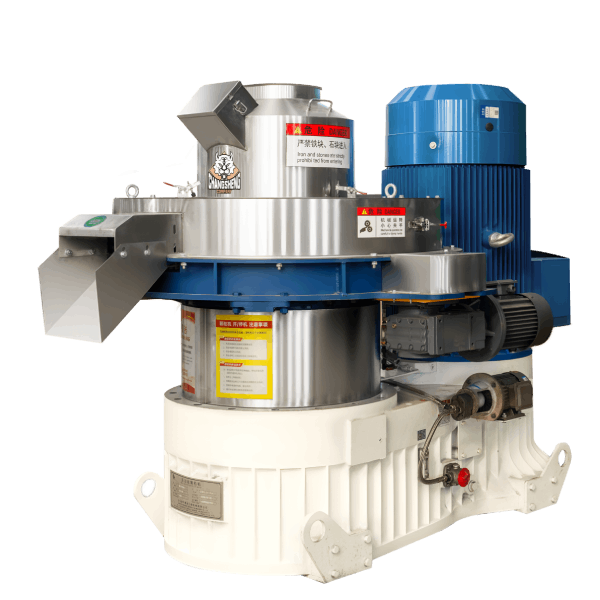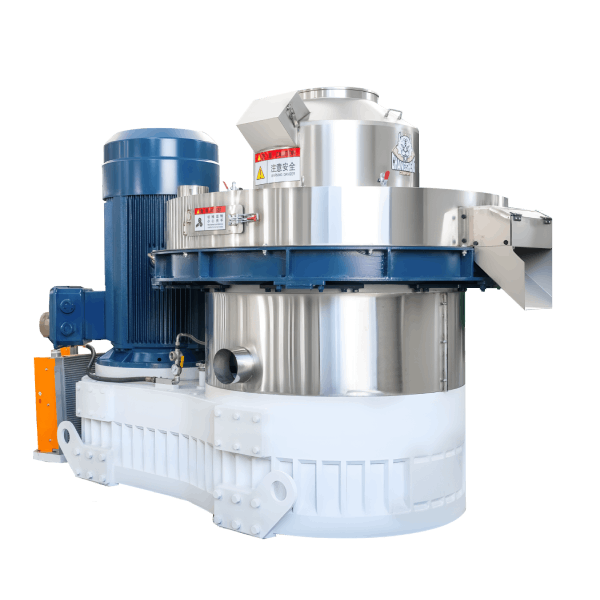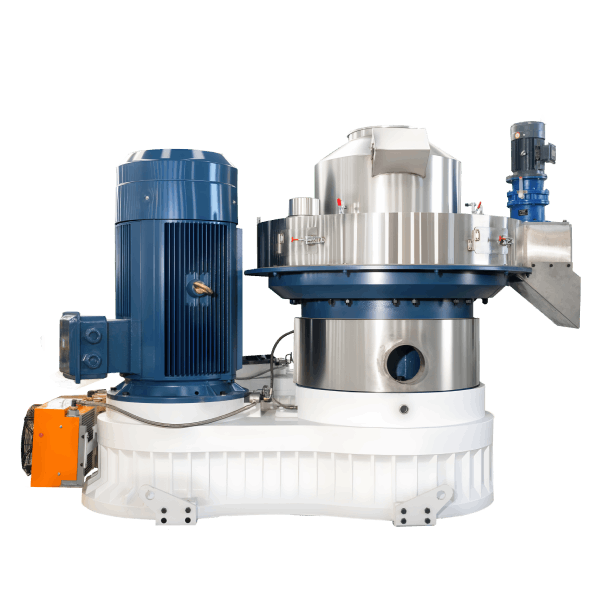
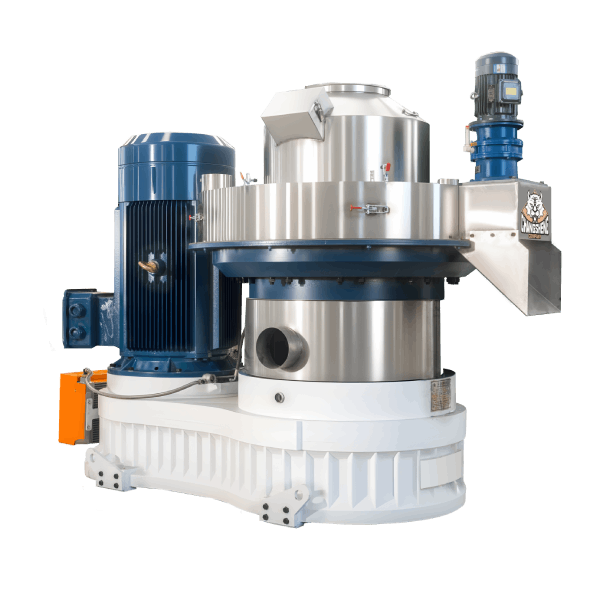
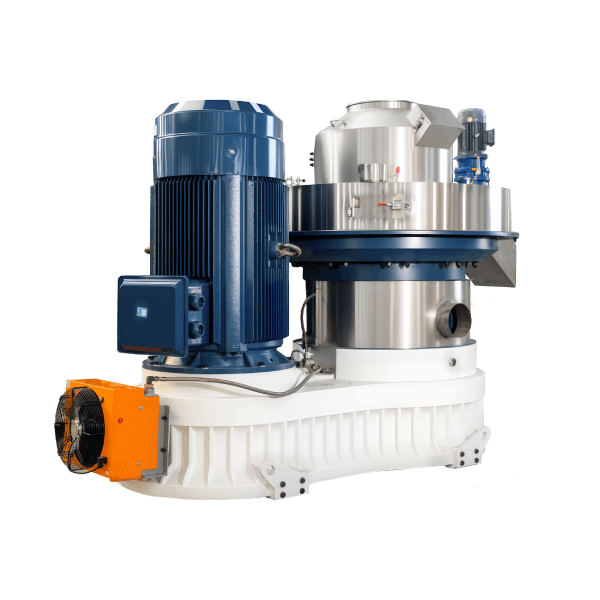
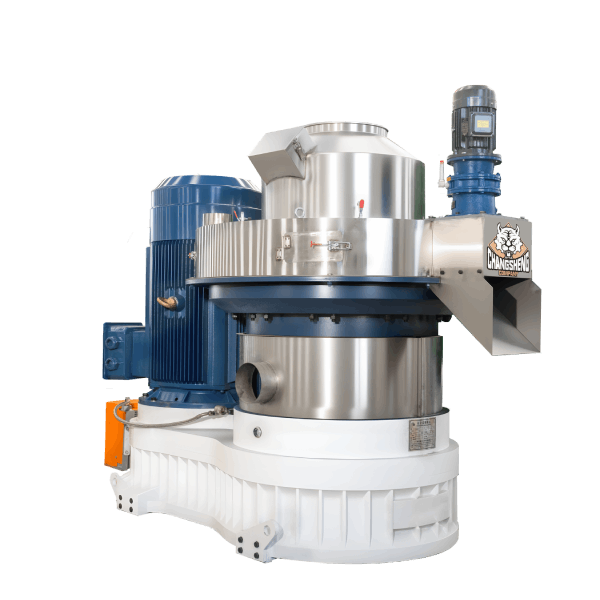
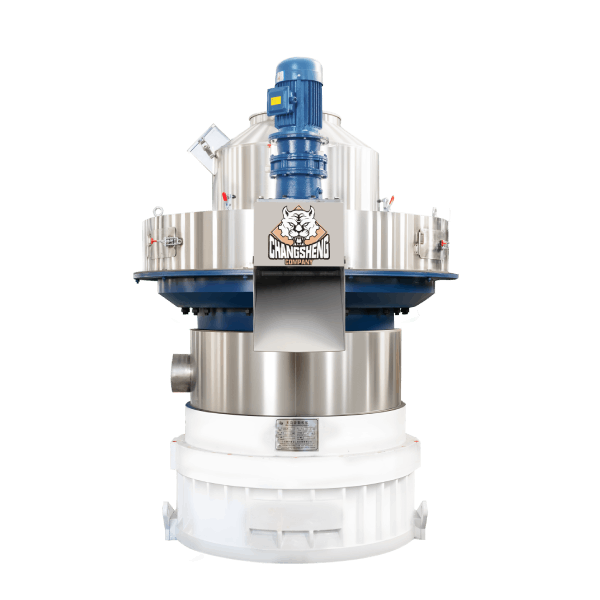
850 Wood Pellet Machine
Brand: Changsheng
YIELD(T): 3-4T
POWER(KW): 250KW
MOLDAPERTURESIZE(MM): 4-12MM
PACKAGE SIZE(MM): 3150*1550*2240
WEIGHT(T): 9.5
Category:Product one
Product Details
Stop letting capacity limits and unplanned downtime cap your profits. The Changsheng 850 Wood Pellet Machine delivers 3-4 TPH and unmatched durability for maximum ROI. Get a custom quote & free material test now!
For managers of large-scale pellet plants, growth is often blocked by two critical barriers: the inability to scale up production to meet lucrative contracts and the crippling operational costs from constant downtime and part replacements in high-volume settings. For operations where every hour of uptime translates directly to profit, these are not just inconveniences—they are existential threats to your business model and ability to secure long-term off-take agreements.
The Changsheng 850 Wood Pellet Machine is engineered to shatter these barriers and serve as the strategic, flagship asset for dominating the high-volume market. By combining an industrial 220kW drive system built for mega-capacity with a robust construction designed for over 1,000 hours of key component life and optional predictive intelligence systems, this machine transforms your production facility. It directly addresses scalability and cost control at a strategic level, enabling you to confidently secure and fulfill large-volume orders while achieving the lowest possible cost per ton.
Technical Superiority: Engineered for Mega-Volume and Maximum Uptime
Core Specifications at a Glance:
- Production Capacity: 3.0 – 4.0 TPH (Tons Per Hour)
- Main Motor Power: 250 kW
- Machine Weight: Approximately 9,500 kg
- Ring Die Inner Diameter: 850 mm
- Pellet Diameter Range: 6mm – 12mm (adjustable)
Comparative Advantage Table
| Feature Dimension | Our 850 Wood Pellet Machine | Industry Average for This Class | Value for Your Operation |
|---|---|---|---|
| Component Life (Die & Rollers) | 1,000+ hours (Special Alloy Cast Die, Carburized Rollers) | 600 – 800 hours | Drastically lower cost per ton, fewer production interruptions for part changes. |
| Design & Control (Operational Stability) | Optional Integrated Smart Lube & Vibration Monitoring | Basic manual or single-line lubrication | Enables predictive maintenance, ensures 24/7 continuous operation with minimal unplanned failure risk. |
| Power & Output Efficiency | Optimized 220kW Drive for 4TPH Output | Often requires higher kW for similar output | Superior throughput-to-power ratio, reducing your largest operational expense (energy) per ton. |
Operating Principle:
This heavy-duty wood pellet machine utilizes a large-diameter horizontal ring die system with a heavy-duty forced feeder. This ensures consistent, high-volume material intake and uniform compression force across the entire die width, producing stable, high-density wood pellets even at maximum throughput.
Built for Demanding, High-Volume Industrial Applications
Designed for Large-Scale Processing of:
- Dense Forestry Materials: Hardwood sawdust, mixed wood chips, mill residuals.
- Aggressive Agricultural Waste: Rice husk, palm kernel shell (PKS), olive pits.
- Industrial By-products: Suitable for other compactable lignocellulosic materials.
Ideal for: Large Commercial Biomass Fuel Plants, Major Wood Processing & Recycling Facilities, and Industrial Feed Mills requiring reliable, high-capacity pelletizing.
Trust Built on Global Proof & Commitment
Certifications: Manufactured under an ISO 9001:2015 certified quality management system. Critical safety components comply with international standards.
Global Experience: Proven performance in large-scale operations across Europe, North America, and Southeast Asia, where uptime and total cost of ownership are paramount.
Client Testimonials:
- Case A (Strategic Capacity): “A major wood pellet producer in Central Europe integrated the 850 machine as the cornerstone of their expansion to fulfill a long-term supply contract. The unit consistently operates at 3.8 TPH, providing the core, reliable output needed.”
- Case B (Uptime as Revenue Protection): “An operator in Southeast Asia processing abrasive palm kernel shell reported that the extended component life and predictive monitoring system reduced unscheduled downtime by over 40% in the first year, directly safeguarding their revenue stream and contract compliance.”
Service Commitment: Supported by a comprehensive flagship service plan, including priority technical support, strategic stocking of critical wear parts, and on-site training for maintenance crews.
Interactive Hook: Optimize your high-volume production line. Contact us to arrange a FREE full-scale pelletizing test of your most challenging material and receive a detailed throughput and wear analysis report.
Answers to Critical Operational Questions
Q: What kind of foundation and plant utilities are required for this large wood pellet machine?
A: Due to its weight and power, it requires a solid, level concrete foundation and a stable, high-capacity electrical supply (consult our detailed installation manual). Proper planning is key. Explore our recommended [plant layout designs] and [installation support services] to ensure a smooth start-up.
Q: How does the optional monitoring system help in daily operations? Is it worth the investment?
A: This is not just monitoring; it’s production insurance. The integrated system tracks lubrication pressure and bearing vibration in real-time, providing early warnings hours or even days before a potential failure. This allows you to schedule maintenance during a planned stop, preventing a catastrophic breakdown that could halt your 4 TPH line and cost tens of thousands in lost production and emergency repairs. For a flagship operation, it is a critical investment in predictable profitability.
Your Path to Dominating the High-Volume Market
Download Our Guide: Get our in-depth analysis: *“Scaling Your Pellet Production: A Cost-Benefit Guide for 3+ TPH Operations.”*
Get a Custom Plan: Schedule a technical review to receive a Free High-Capacity System Feasibility Study based on your raw material profile and annual production targets.
Move Forward with Confidence: Ready to upgrade your core capacity? Request a Detailed Commercial Quotation & Schedule Your Free Material Test Now. Let’s engineer your growth together.
Find Your Perfect Capacity Match
Looking for a solution tailored to your scale? Explore our full range of industrial wood pellet machines:
- For 1-1.5 TPH Reliable Output: Discover the cost-effective workhorse, the [Changsheng GZLH560 Wood Pellet Machine].
- For 2.5-3 TPH High-Value Output: Optimize your mid-scale production with the [Changsheng 700 Wood Pellet Machine].
- For 3.5-4 TPH Flagship Output & Maximum Uptime: You are currently viewing our top-tier solution, the Changsheng 850 Wood Pellet Machine.
- Unsure? Use our [Capacity Calculator Tool] or contact our engineering team for a personalized recommendation.
References & Industry Context
The economic logic for investing in high-capacity, high-uptime equipment is reinforced by market trends. According to analysis from Hawkins Wright, the demand for industrial wood pellets is expected to see sustained growth, particularly for large-scale heat and power generation. This shift places a critical premium on production assets that offer not just volume, but also exceptional reliability and predictable operating costs to secure long-term off-take agreements—precisely the design philosophy behind the Changsheng 850 series. Investing in such flagship-grade wood pellet machinery is increasingly seen as a strategic move to secure a competitive advantage in a tightening market.
Frequently Asked Questions
A small home-use pellet mill (50-100kg/h) costs $1,000-$4,000. A commercial ring die machine (500-1000kg/h) ranges from $15,000 to $50,000. The final price depends on capacity, power (electric/diesel), and die type (flat/ring). For an exact quote, always specify your raw material (wood, feed, straw) and target hourly output.
For making wood pellets, a ring die pellet mill is best for commercial production (>300kg/h) due to higher output and durability. For home/small farm use (<300kg/h), a flat die machine is more cost-effective. Key factors: moisture content (<15%), material size (<3mm), and your required capacity.
Three main reasons: ① Incorrect moisture (too dry or wet – ideal is 10-15%). ② Worn die or rollers – replace if gap > 0.5mm. ③ Improper feeding – inconsistent or too fast. Always test with dry sawdust first and ensure material is finely crushed.
Pellet machines can process biomass (wood, straw, bamboo), animal feed (alfalfa, corn, soybean), and some organic waste. Wood is most common. Avoid materials with high sand, oil, or metal content. Each material requires specific die hole size and moisture adjustment.
- Market research – target local farms (feed) or homeowners (heating).
- Start small – begin with a 300-500kg/h machine (investment: ~$20k-$35k).
- Secure raw materials – local sawdust, agricultural waste.
- Focus on quality – produce high-density, low-ash pellets.
- Calculate ROI – average net profit: $30-$80/ton. A 500kg/h line can ROI in 12-18 months.