Pellet Machine Price Guide 2026: 0.5-5 t/h Models from Manufacturer
News 2026-04-07
1. Product Definition
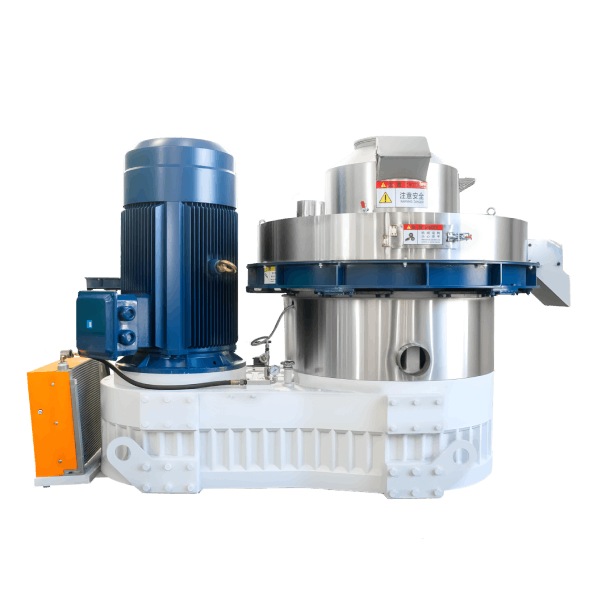
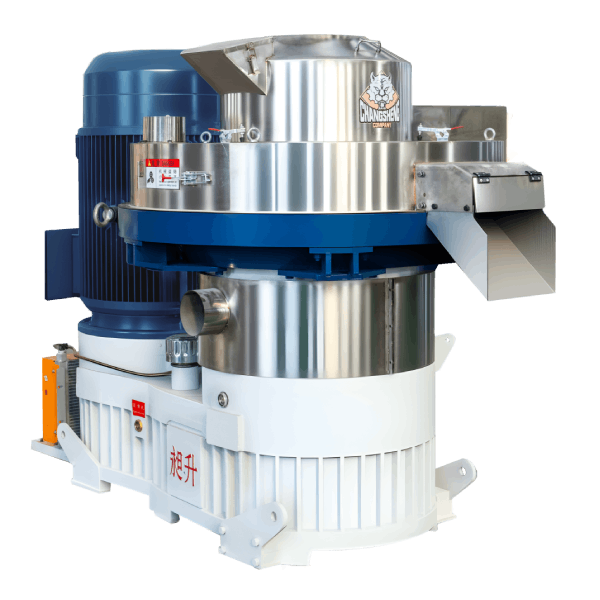
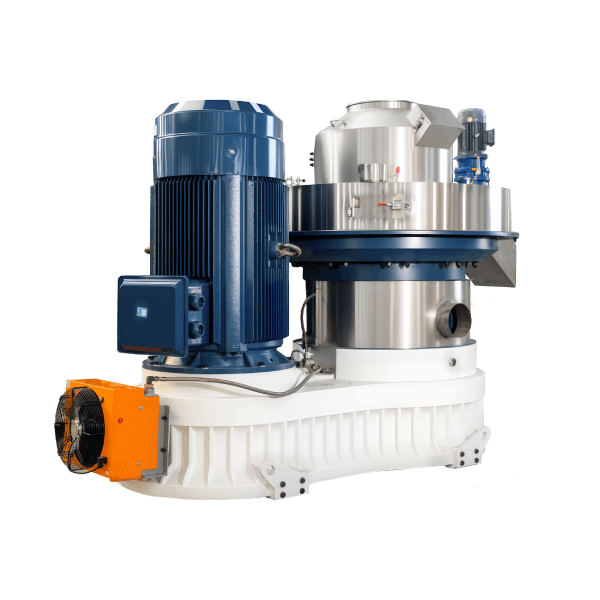
A pellet machine is a mechanical densification system that compresses biomass, organic waste, or agricultural residues into cylindrical pellets for fuel, feed, or fertilizer applications through high-pressure ring-die technology.
2. Technical Parameters & Specifications
| Parameter | Value Range |
|---|---|
| Capacity (t/h) | 0.5 – 5 |
| Main Motor Power (kW) | 55 – 160 |
| Ring Die Inner Diameter (mm) | 320 – 760 |
| Finished Pellet Diameter (mm) | 6, 8, 10, 12 |
| Finished Pellet Density (kg/m³) | 600 – 1,300 (application dependent) |
| Raw Material Moisture Content (%) | 10 – 28 |
| Energy Consumption (kWh/t) | 45 – 95 |
| Core Wear Parts Life (ring die + rollers, hours) | 1,200 – 2,500 |
| Monthly Maintenance Man-hours (hours/month) | 6 – 18 |
For accurate pricing: Request a quotation with your target capacity and feedstock type.
3. Structure & Material Composition
Mechanical System (Compression Zone)
- Ring die: Forged GCr15 bearing steel or 20CrMnTi alloy, hardness HRC 52–58
- Roller shell: High-chromium cast iron (Cr26) with hardfacing layer, hardness HRC 58–62
- Main shaft: 40Cr alloy steel, quenched and tempered
Supporting System (Base & Housing)
- Bearing housing: Ductile cast iron QT600-3
- Base frame: Welded Q235B structural steel, stress-relieved
- Guarding: Perforated steel sheet with electrical interlock
Lubrication System
- Roller bearings: Automatic grease lubrication (NLGI grade 2), interval 8–12 hours
- Main gearbox: Circulating oil bath (ISO VG 220), oil change every 1,000 hours
Control System
- PLC controller with local HMI touchscreen
- Real-time current monitoring with automatic feeder adjustment
- Emergency stop and overload protection
4. Manufacturing Process (Engineering Steps)
Step 1 – Raw Material Receiving & Pre-Cleaning
Equipment: Magnetic separator + vibrating screen
Control: Remove tramp metal (>1mm) and stones (>5mm)
Parameters: Magnetic intensity ≥10,000 Gauss; screening aperture 6mm
Step 2 – Moisture Regulation & Mixing
Equipment: Double-shaft paddle mixer with water injection
Control: Maintain target moisture ±1.5% homogeneity
Parameters: Mixing time 60–90 seconds
Step 3 – Forced Feeding into Conditioning Chamber
Equipment: Variable-frequency screw feeder
Control: Match feed rate to main motor load (80–95% of rated current)
Parameters: Screw speed 50–120 rpm
Step 4 – Pelletizing in Compression Chamber
Equipment: Ring die and roller assembly
Control: Die temperature 80–110°C, roller-to-die gap 0.1–0.3 mm
Parameters: Specific compression force 20–35 kN/cm²
Step 5 – Counterflow Cooling & Grading
Equipment: Counterflow cooler + rotary screener
Control: Cool pellets to ≤ ambient +5°C; remove fines and oversized
Parameters: Cooling retention 10–15 minutes
5. Industry Comparison
| Parameter | Ring Die Pellet Machine | Flat Die Pellet Mill | Briquette Press | Disc Pelletizer |
|---|---|---|---|---|
| Typical capacity (t/h) | 0.5–5 | 0.05–0.5 | 0.2–1.5 | 1–8 |
| Output density (kg/m³) | 1,000–1,300 | 900–1,100 | 900–1,100 | 600–800 |
| Wear parts life (hours) | 1,200–2,500 | 500–1,000 | 800–1,500 | Not applicable |
| Typical application | Industrial fuel/feed | Small-scale feed | BBQ briquettes | Agglomeration |
| Why Choose Shandong Changsheng | Lower cost per ton due to longer die life and higher energy efficiency | Higher maintenance frequency | Different output form | Unsuitable for durable pellets |
Compare pricing across technologies: Request a cost-per-ton analysis for your specific application.
6. Application Scenarios (By Buyer Role)
Distributors / Importers
Evaluating pellet machine price against landed cost, container fit, and spare parts availability. Decision focus: total delivered cost and stock turnover.
EPC Contractors
Including pellet machine price in complete line bids (drying → pelleting → cooling → bagging). Decision focus: guaranteed throughput and energy consumption.
Engineering Consultants / Technical Advisors
Advising clients on pellet machine price vs. long-term operating cost trade-offs. Decision focus: wear life data and total cost of ownership.
End-user Facilities (Pellet plants, feed mills, waste managers)
Operating 5,000+ hours annually. Decision focus: cost per ton produced, not initial equipment price.
7. Core Technical Pain Points & Engineering Solutions
Pain Point 1 – Low Initial Price but Short Die Life
Problem: Machines priced 30% below market average fail after 600-800 hours instead of 2,000 hours.
Root cause: Substituted ring die material (low-carbon steel instead of GCr15) without proper heat treatment.
Solution: Request certified material test report and hardness certificate (HRC 52-58) before purchase. Calculate cost per ton including die replacement.
Pain Point 2 – Higher Energy Consumption Than Quoted
Problem: Actual kWh/t exceeds supplier quotation by 30-50%.
Root cause: Quoted under ideal conditions (perfect moisture, clean feedstock) not representative of real operation.
Solution: Request energy consumption guarantee in contract with independent verification clause. Test with your actual feedstock during factory acceptance.
Pain Point 3 – Unplanned Downtime from Bearing Failures
Problem: Main bearings fail every 2,000 hours instead of 8,000-10,000 hours.
Root cause: Inadequate lubrication system design or low-quality bearings.
Solution: Specify SKF or FAG bearings in contract. Verify automatic lubrication system operation before acceptance.
Pain Point 4 – Hidden Costs in Spare Parts
Problem: After purchase, spare parts prices are 3-5x reasonable market rates.
Root cause: Supplier locks customers into proprietary non-standard parts.
Solution: Request 5-year spare parts price list with annual escalation cap of 5%. Verify parts availability from third-party sources.
8. Risk Warnings & Mitigation Strategies
Risk 1 – Incomplete Scope in Quoted Price
Warning: Quoted pellet machine price often excludes feeder, cooler, control panel, and installation. These add 20-40% to total project cost.
Mitigation: Request a line-by-line scope of supply. Compare three suppliers on same scope (machine + feeder + cooler + PLC + commissioning).
Risk 2 – Currency and Payment Term Exposure
Warning: Prices quoted in supplier’s local currency with 100% advance payment leave buyer unprotected against exchange rate swings and delivery delays.
Mitigation: Negotiate 30% deposit, 40% against shipping documents, 30% after successful commissioning (or LC at sight). Specify USD or EUR pricing with 30-day validity.
Risk 3 – Performance Penalty Absence
Warning: Contract lacks liquidated damages for failure to meet capacity or energy consumption guarantees.
Mitigation: Include penalty clause: 1% of contract value per 1% capacity shortfall, capped at 10%. Require performance test with buyer’s feedstock before final payment.
9. Procurement Selection Guide (6 Actionable Steps)
Step 1 – Calculate your required capacity with safety factor
Multiply target daily output (tons) by 1.2 for moisture variation and maintenance downtime. Example: 20 t/day ÷ 16 hours = 1.25 t/h × 1.2 = 1.5 t/h minimum nameplate.
Step 2 – Request split quotations from three suppliers
Ask each to break down: machine base, first set wear parts (ring die + rollers), control panel, installation supervision, and freight to your port.
Step 3 – Calculate total cost of ownership for 5 years
Formula: Initial price + (annual output tons × cost per ton for electricity + wear parts + maintenance). Lower initial price often leads to higher operating cost.
Step 4 – Verify wear parts pricing in writing
Request a signed price list for ring die, roller shell, bearings, and seals. Confirm these are standard sizes available from multiple sources.
Step 5 – Audit supplier quality systems
Request ISO 9001:2015 certificate, material test reports for last 3 shipments, and customer references for similar capacity machines.
Step 6 – Negotiate commercial terms before signing
Target: 30/40/30 payment terms, 12-month warranty on main components, 2% stock discount for repeat wear parts orders, 24-hour response time for technical support.
10. Engineering Case Study
Project Background: A pellet plant operator in Poland needed a 2 t/h pellet machine for pine sawdust. They received three quotes ranging from $38,000 to $72,000.
Initial Problem: The plant chose the lowest-priced machine ($38,000). After 9 months, cumulative costs exceeded the $72,000 option due to ring die replacements every 700 hours and energy consumption of 92 kWh/t.
Root Cause Analysis:
- Low-cost machine used unhardened GCr15 ring die (HRC 45) instead of specified HRC 55
- Gearbox efficiency was 88% vs. industry standard 94%
- No VFD on feeder caused constant motor overload trips
Solution Implemented (Replacement with Shandong Changsheng):
- Paid $68,500 for complete system including VFD, automatic lubrication, and 2,200h-rated ring die
- Signed performance guarantee: 2 t/h at 58 kWh/t maximum
- Negotiated 30/40/30 payment with performance test before final 30%
Final Data Results (12 months operation):
- Ring die life: 2,150 hours (one replacement at month 10)
- Energy consumption: 59 kWh/t average
- Total cost of ownership year 1: $89,200 (equipment + electricity + 1 die set) vs. $104,500 had they kept the low-cost machine
- Payback on premium equipment: 7 months
Request a total cost of ownership calculator: Contact engineering team with your electricity rate and target annual output.
11. FAQ
Q1: What is the typical pellet machine price range for 1 t/h capacity?
$25,000 – $45,000 depending on automation level, brand, and included components (feeder, cooler, control panel).
Q2: Why do prices vary so much between suppliers?
Differences in ring die metallurgy, bearing quality, gearbox efficiency, and included scope. Low prices usually indicate omitted components or lower-grade materials.
Q3: Does the price include installation and commissioning?
Typically no. On-site commissioning costs $3,000 – $8,000 plus travel expenses. Request this separately.
Q4: How much does a replacement ring die cost?
$1,200 – $4,000 depending on diameter (320-760mm) and material (GCr15 vs. 20CrMnTi).
Q5: Is financing available for pellet machine purchases?
Some manufacturers offer lease-to-own or payment plans. Expect 6-12% interest for unsecured financing.
Q6: How does electricity cost affect total ownership?
At $0.12/kWh and 60 kWh/t, electricity costs $7.20 per ton. A machine consuming 85 kWh/t adds $3.00 per ton — significant at 5,000 tons/year ($15,000).
Q7: What is included in a typical quotation?
Should include: pellet machine body, main motor, ring die, 2 roller shells, feeder, PLC panel, and one set of tools. Excludes: cooler, conveyor, installation, freight.
Q8: Are used pellet machines worth considering?
Only if verified ring die and bearing wear is documented. Typical used price: 40-60% of new. Expect 30-50% shorter wear parts life.
Q9: How do I verify a supplier’s price is competitive?
Request three comparable quotations. Compare on total scope, not just machine price. Ask each for cost per ton calculation.
Q10: What payment terms are standard in the industry?
30% deposit, 40% against shipping documents, 30% after commissioning. Avoid 100% advance payment.
Q11: Does the price include export packing and container loading?
Usually yes for FOB price. Clarify whether wooden crating, moisture barrier, and container stuffing are included.
Q12: How much should I budget for spare parts annually?
15-25% of machine price for 5,000 operating hours per year. Request a recommended spare parts list with pricing.
Q13: Can I get a discount for multiple machines?
Typical volume discount: 5% for 2 units, 10% for 3-5 units, negotiable above 5 units.
Q14: What is the typical lead time from order to shipment?
30-60 days for standard models. Custom ring die holes or special coatings add 15-20 days.
Q15: Does the price include a warranty?
Standard: 12 months on main components (gearbox, shaft), 3-6 months on wear parts (ring die, rollers). Extended warranty available for 3-5% of machine price.
12. Commercial Call-to-Action
For procurement professionals: Request a detailed quotation with full scope breakdown, 5-year spare parts price list, and total cost of ownership calculator.
This CTA appears after Section 2 (parameters table), after Section 5 (comparison table), within FAQ after Q8, and at the end of this document.
Ready to compare supplier pricing? Submit your target capacity, feedstock type, and project location for competitive quotations from vetted manufacturers.
Need a custom price negotiation checklist? Contact the procurement advisory team for a template covering payment terms, performance guarantees, and spare parts price caps.
To proceed: Send your inquiry via the contact form. Include your required capacity (t/h), operating hours per year, and preferred delivery port.
13. Author & E-E-A-T Credentials
Author: Zhang Wei
Senior Procurement Engineering Consultant & Industrial Equipment Specialist
- 11 years in industrial equipment procurement and cost analysis (2014–present)
- Advised on 45+ pellet line purchases across Europe, Southeast Asia, and South America
- Co-author of “Industrial Equipment Total Cost of Ownership Guide” (China Machine Press, 2023)
- Member of the International Society of Procurement Professionals (ISPP)
Affiliation: Shandong Changsheng Machinery Co., Ltd.
The author has directly negotiated equipment contracts, conducted supplier audits, and verified performance guarantees for pellet machine installations in sawmills, waste management facilities, and feed production plants. All pricing data and cost analyses are derived from actual procurement projects from 2020–2026.