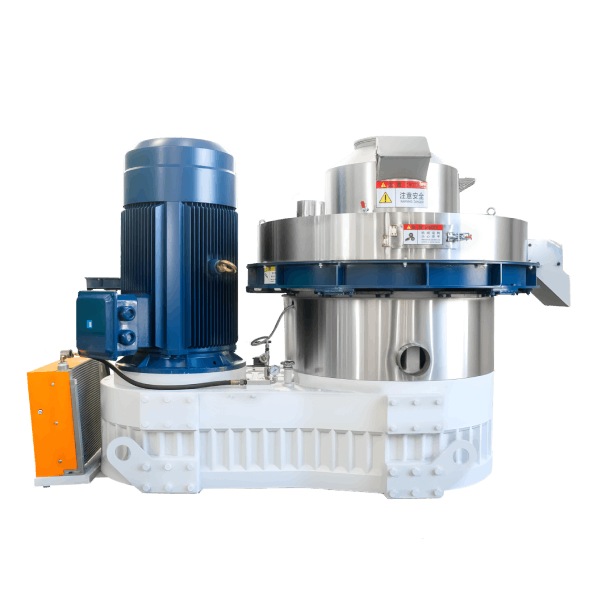
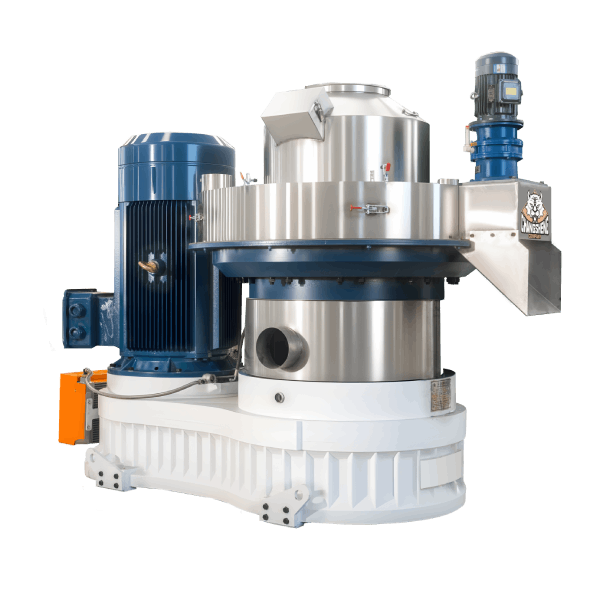
Pellet Mill 3 Tons Per Hour Output: Complete Selection Guide
News 2026-07-21
Page SEO Summary: This procurement guide helps buyers select a 3 tons per hour pellet mill—covering specifications, complete line configuration, investment costs, and decision criteria for medium-scale pellet production projects.
A 3 tons per hour pellet mill represents the sweet spot for many commercial pellet operations. It is large enough for serious production—whether for feed, biomass, or wood pellets—yet modest enough to be feasible for mid-sized enterprises, cooperatives, and growing businesses. It offers a practical balance between investment cost and production capacity.
For a feed mill, 3 t/h can supply a mid-sized livestock operation. For a biomass plant, it can produce enough pellets for local heating or industrial use. For an exporter, it provides a reliable baseline for container shipments.
This guide provides a comprehensive framework for understanding, selecting, and procuring a 3 tons per hour pellet mill—covering specifications, full line configuration, investment considerations, and key decision factors.
3 t/h Pellet Mill: What It Represents
Capacity in Context
| Scale | Capacity Range | Typical Application | Investment Level |
|---|---|---|---|
| Micro/Pilot | 0.1-0.5 t/h | R&D; demonstration | Low |
| Small commercial | 0.5-2 t/h | Small feed mills; farm operations | Low-Medium |
| Mid-commercial | 2-5 t/h | Feed mills; biomass plants | Medium |
| Large commercial | 5-10 t/h | Industrial feed; large biomass | Medium-High |
| Industrial | 10-20+ t/h | Large-scale production | High |
Position: 3 t/h is at the upper end of mid-commercial scale, suitable for established businesses and growing operations.
What 3 t/h Means in Practice
| Application | 3 t/h Production | Annual Output (300 days, 16h/day) |
|---|---|---|
| Livestock feed | Feeds 15,000-20,000 pigs or equivalent | 14,400 tons/year |
| Poultry feed | Feeds 50,000-70,000 birds | 14,400 tons/year |
| Wood pellets | Heats 1,000-1,500 homes (average) | 14,400 tons/year |
| Biomass pellets | Industrial fuel for 3-5 MW boiler | 14,400 tons/year |
Pellet Mill Specifications (3 t/h)
Typical Motor Options
| Motor Configuration | Power | Application | Voltage Options |
|---|---|---|---|
| Standard | 90 kW (125 HP) | Most materials | 380V/50Hz; 460V/60Hz |
| Heavy-duty | 110 kW (150 HP) | Hard materials; agricultural residues | 380V/50Hz; 460V/60Hz |
| High-torque | 90-110 kW | Variable materials; reliable operation | 380V/50Hz; 460V/60Hz |
Typical Die Specifications
| Parameter | Value | Notes |
|---|---|---|
| Die diameter | 500-560 mm | Standard for 3 t/h capacity |
| Die width | 160-200 mm | Affects capacity and durability |
| Die rotation speed | 250-350 RPM | Material-dependent |
| Hole diameter | 2-12 mm | Application-dependent |
| Compression ratio (L/D) | Material-dependent | 1:6 to 1:18 range |
Physical Dimensions
| Parameter | Approximate Value | Notes |
|---|---|---|
| Length | 2.0-2.5 m | Varies by manufacturer |
| Width | 1.5-2.0 m | Varies by manufacturer |
| Height | 1.8-2.5 m | Varies by manufacturer |
| Weight | 5,000-8,000 kg | Includes motor and gearbox |
Capacity vs. Material
| Material | Expected Output | Notes |
|---|---|---|
| Softwood (pine, spruce) | 3.0-3.5 t/h | Easiest to pelletize |
| Hardwood (oak, beech) | 2.5-3.0 t/h | Moderate difficulty |
| Agricultural residues | 2.0-3.0 t/h | Variable; depends on fiber |
| Mixed biomass | 2.5-3.2 t/h | Blend-dependent |
| Animal feed (grain-based) | 3.0-4.0 t/h | Higher output possible |
Complete Line Configuration for 3 t/h
Required Equipment (Basic Line)
| Equipment | Specification | Function |
|---|---|---|
| Hammer mill | 55-75 kW; 3-6 mm screen | Size reduction |
| Pellet mill | 90-110 kW; die 500-560 mm | Pelletizing |
| Cooler | Counterflow; 3-4 t/h capacity | Cooling and moisture removal |
| Screening | 3-4 t/h; fines return | Product separation |
| Conveying | Bucket elevators; screw conveyors | Material transfer |
Optional Equipment
| Equipment | Specification | Function |
|---|---|---|
| Pre-cleaner | 5-10 t/h capacity | Remove stones and metal |
| Mixer | 1-2 t/batch | Ingredient blending |
| Conditioner | 3-5 t/h | Pre-heating and moisture addition |
| Bagging scale | 3-4 t/h capacity | Packaging |
| Dust collector | 2,000-5,000 m³/h | Dust control |
Space Requirements
| Area | Approximate Size | Notes |
|---|---|---|
| Equipment footprint | 50-80 m² | Main equipment only |
| Operating area | 100-150 m² | Includes access and clearance |
| Storage area | 200-500 m² | Raw materials and finished product |
| Total building | 300-650 m² | Depends on layout and storage |
Investment Costs (Estimates)
Equipment Cost Breakdown
| Component | Estimated Cost (USD FOB) | Notes |
|---|---|---|
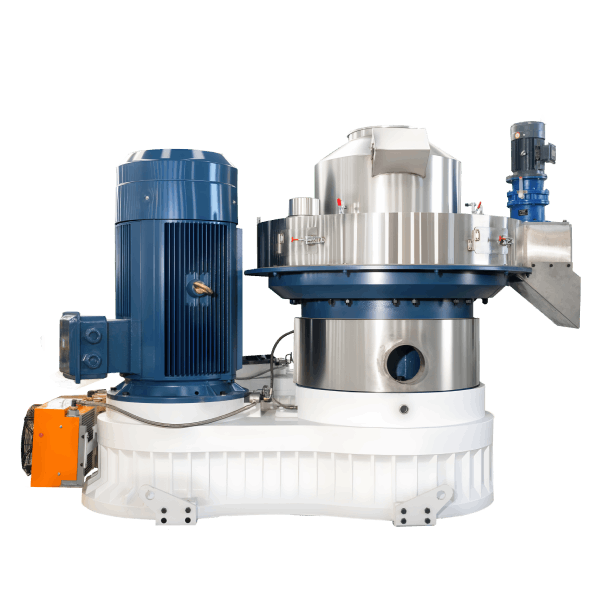
| Pellet mill (90-110 kW) | $35,000-60,000 | Core equipment |
| Hammer mill (55-75 kW) | $15,000-30,000 | Size reduction |
| Cooler (3-4 t/h) | $10,000-20,000 | Cooling system |
| Screening system | $5,000-15,000 | Product separation |
| Conveying equipment | $10,000-25,000 | Material handling |
| Conditioner | $5,000-15,000 | Pre-heating (optional) |
| Dust collection | $5,000-15,000 | Environmental |
| Electrical controls | $5,000-15,000 | Control panel and wiring |
| Total Equipment Cost | $90,000-195,000 | Varies by configuration |
Additional Costs
| Cost Category | Estimated Cost | Notes |
|---|---|---|
| Installation | $15,000-35,000 | Dependent on location and scope |
| Foundation | $5,000-15,000 | Building-dependent |
| Shipping | $5,000-20,000 | Destination-dependent |
| Commissioning | $3,000-10,000 | Supplier support |
| Import duties | Variable | Country-dependent |
| Total Additional | $28,000-80,000 |
Total Project Investment
| Scenario | Estimated Total | Notes |
|---|---|---|
| Equipment only (FOB) | $90,000-195,000 | Basic line |
| Complete line (installed) | $150,000-300,000 | Full installation and commissioning |
| Turnkey plant | $300,000-600,000+ | Complete facility |
Operating Costs
Annual Operating Cost Estimate (16h/day, 300 days/year)
| Cost Category | Estimated Annual Cost | Notes |
|---|---|---|
| Electricity | $40,000-70,000 | ~90-110 kW average load |
| Die replacement | $8,000-15,000 | 2-3 dies/year |
| Roller shells | $3,000-8,000 | Replacement schedule |
| Maintenance | $5,000-15,000 | Routine maintenance |
| Labor | $20,000-50,000 | 2-3 operators |
| Total Operating Cost | $76,000-158,000 |
Performance Factors
What Affects Actual Output
| Factor | Impact on 3 t/h Target |
|---|---|
| Material type | Hard materials reduce output |
| Material moisture | Below 12% is best |
| Particle size | Proper grinding is essential |
| Die condition | Worn die reduces output |
| Operation schedule | Startup/warm-up time |
| Operator skill | Experienced operators achieve higher output |
Achieving Rated Capacity
| Requirement | Why It Matters |
|---|---|
| Proper material preparation | Moisture and particle size |
| Correct die specification | Compression ratio for the material |
| Consistent feed | Avoid surging and starvation |
| Regular maintenance | Prevent performance degradation |
| Process optimization | Adjust for optimal operation |
Procurement Checklist
Technical Specifications
- □ Motor power confirmed (90-110 kW)
- □ Voltage and frequency match site supply
- □ Die diameter and compression ratio specified
- □ Material type and moisture confirmed
Equipment Configuration
- □ Pellet mill included
- □ Hammer mill included (if required)
- □ Cooler included
- □ Screening system included
- □ Conveying system included
- □ Conditioner included (if required)
Cost Considerations
- □ Equipment cost confirmed
- □ Shipping cost estimated
- □ Installation cost estimated
- □ Operating cost estimated
- □ ROI/payback period calculated
Supplier Evaluation
- □ Supplier experience with 3 t/h applications
- □ References from similar installations
- □ Warranty and support terms
- □ Spare parts availability
Frequently Asked Questions
1. What motor power is needed for a 3 t/h pellet mill?
Typically 90-110 kW (125-150 HP). The exact power depends on the material being processed—hardwood and agricultural residues require more power than softwood or feed.
2. What is the typical die size for a 3 t/h pellet mill?
Die diameter is typically 500-560 mm with a width of 160-200 mm. The exact size depends on the manufacturer and specific configuration.
3. How much does a 3 t/h pellet mill cost?
A 3 t/h pellet mill (equipment only) typically costs $35,000-60,000. The complete line (pellet mill + hammer mill + cooler + other equipment) costs $90,000-195,000.
4. What is included in a complete 3 t/h line?
A complete line typically includes: hammer mill, pellet mill, cooler, screening system, conveying equipment, dust collection, and control panel. Optional equipment includes conditioner and bagging system.
5. What materials can a 3 t/h pellet mill process?
A 3 t/h pellet mill can process a wide range of materials: wood (softwood and hardwood), agricultural residues (straw, rice husk, corn stover), animal feed, and biomass blends. The optimal configuration depends on the specific material.
6. What are the space requirements for a 3 t/h line?
Equipment footprint is approximately 50-80 m². With operating space, 100-150 m² is recommended. Raw material and finished product storage add additional space requirements.
7. How long does it take to install a 3 t/h line?
Installation typically takes 2-4 weeks for the equipment. Commissioning and start-up require 1-2 weeks. Total project timeline is typically 3-6 months from order to production.
8. What is the payback period for a 3 t/h pellet mill?
Payback period varies by operation and market conditions. Typical payback is 1-3 years for commercial operations, depending on margin, utilization, and local economics.
About the Author
Zhang Wei – Senior International Sales Engineer, Shandong Changsheng Machinery Co., Ltd.
Zhang Wei has over 12 years of experience in the biomass and feed pellet mill industry, with a background in mechanical engineering and international project execution. He has managed pellet mill supply projects for clients across Southeast Asia, the Middle East, Africa, Europe, and Latin America, including numerous 2-5 t/h installations.
With hands-on experience in both the manufacturing workshop and client-side operations, Zhang brings practical insights into successful equipment procurement—from the factory floor to the customer’s production site.