Biomass Fuel Production Equipment: Complete Production Line Guide
News 2026-08-20
A complete biomass fuel production system converts prepared biomass raw materials into finished fuel products such as biomass pellets. Unlike raw material preparation equipment, which focuses on crushing, grinding, and drying, this guide covers the full production line—from raw material receiving through pelletizing, cooling, screening, and packaging.
The scope of this page is the fuel production line itself: how it is configured, how equipment is selected, how capacity is determined, and what must be confirmed before purchase. For raw material preparation equipment (crushing, grinding, drying, screening), see the dedicated guide on biomass processing equipment.
The complete production flow is:
Raw Material → Preparation → Pelletizing → Cooling → Screening → Packaging
What Is Biomass Fuel Production Equipment?
Biomass fuel production equipment refers to the machinery and systems used to convert prepared biomass materials into finished solid fuels—primarily pellets and briquettes. The equipment includes the complete production line: receiving, preparation, pelletizing, cooling, screening, and packaging.
In international procurement, this category is also referred to as biomass fuel production machinery, a biomass fuel processing plant, or biomass fuel manufacturing equipment. The terminology varies by supplier and region, but the scope is the same: the complete line that converts raw biomass into finished fuel.
The final products are typically:
- Biomass pellets: Small cylinders (6–12 mm diameter) used for heating, power generation, and industrial fuel.
- Biomass briquettes: Larger blocks (50–100 mm) used for heating and industrial applications.
This guide focuses on pellet production lines, which are the most common configuration for commercial biomass fuel projects.
Biomass Fuel Production Process
The complete production process for biomass fuel is:
Raw Material Receiving → Crushing → Grinding → Drying → Pelletizing → Cooling → Screening → Packaging
Each stage has a defined function and must be controlled to maintain product quality and production efficiency.
| Stage | Purpose | Key Parameter |
|---|---|---|
| Receiving | Accept raw material | Match delivery method |
| Crushing | Reduce large pieces | Output size 10–30 mm |
| Grinding | Fine size reduction | 2–5 mm for pellets |
| Drying | Control moisture | 12–15% for pelletizing |
| Pelletizing | Form pellets | Pressure; temperature |
| Cooling | Stabilize pellets | Ambient temperature |
| Screening | Remove fines | Fines recycled |
| Packaging | Final product | Bag or bulk |
The order of crushing and drying can vary depending on the raw material. For high-moisture materials, drying before grinding prevents screen blinding. For dry materials, grinding before drying is more efficient. Confirm the optimal sequence with material testing before finalizing the line configuration.
Main Equipment in a Biomass Fuel Production Line
Each piece of equipment in the production line has a specific function. Selection must be based on material characteristics, capacity, and target product.
| Equipment | Function | Key Consideration |
|---|---|---|
| Crusher | Reduce large biomass | Handles wood chips, branches, stalks |
| Hammer Mill | Fine grinding | Screen size determines final particle size |
| Dryer | Control moisture | Rotary or belt; sized to moisture load |
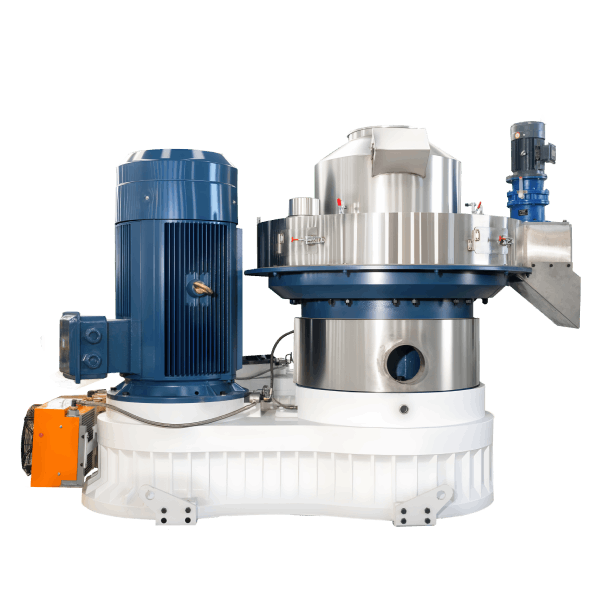
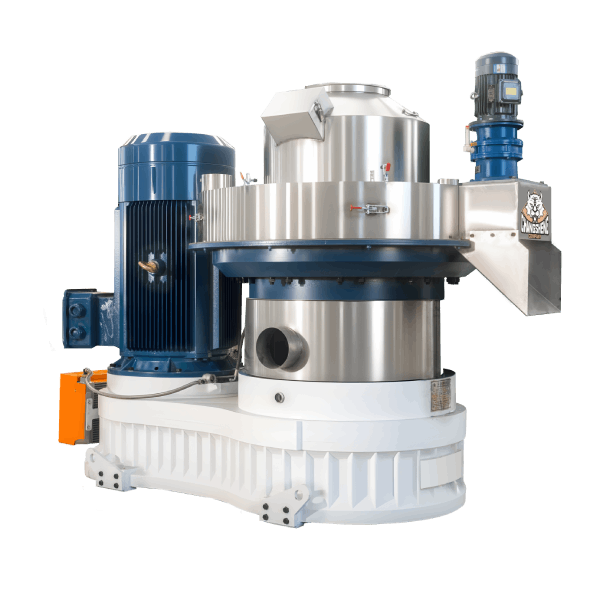
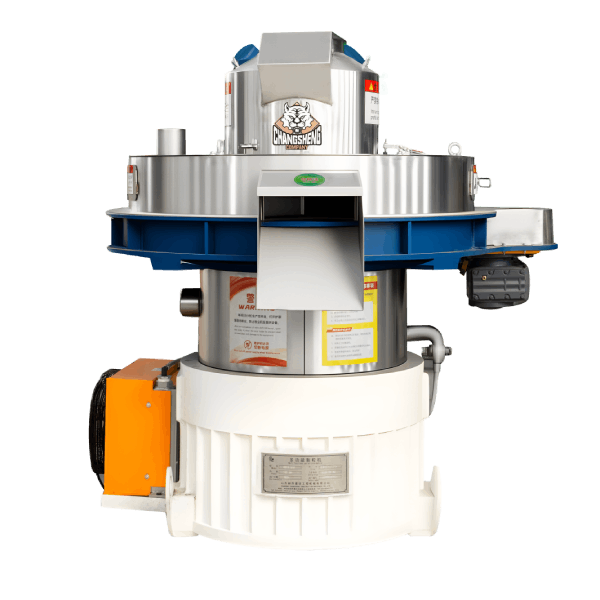
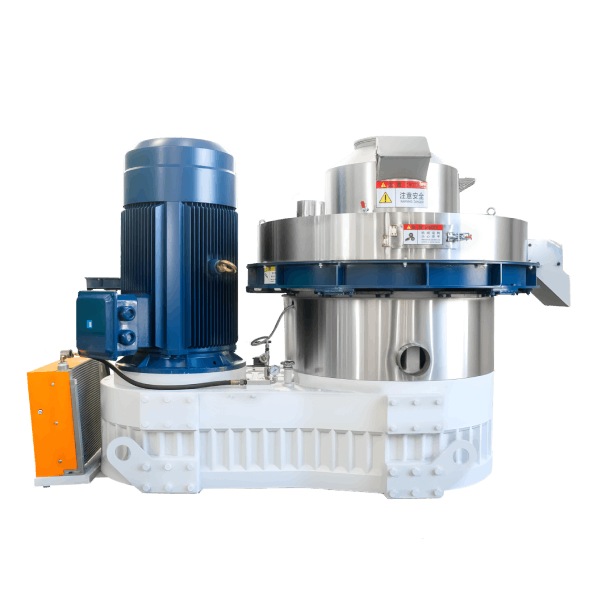
| Pellet Mill | Form fuel pellets | Ring die or flat die; die compression ratio |
| Cooler | Reduce pellet temperature | Counter-flow or belt cooler |
| Screener | Remove fines | Fines returned to process |
| Packing Machine | Package finished fuel | Bag or bulk; manual or automatic |
Each unit must be sized to match the others. A production line is only as productive as its bottleneck. Confirm capacity matching before purchase.
Auxiliary equipment includes feeders, conveyors, and dust collection systems. These are essential for continuous operation and must be sized to match the main equipment.
How to Design a Biomass Fuel Production Line by Capacity
Production line configuration depends primarily on target capacity. The table below provides indicative line configurations for common scales.
| Capacity | Line Configuration | Key Equipment |
|---|---|---|
| 0.5 t/h | Manual/semi-auto line | Crusher + hammer mill + dryer + pellet mill + cooler |
| 1–2 t/h | Semi-auto complete line | Complete preparation + pelletizing + cooling + screening |
| 3–5 t/h+ | Fully automated line | Automated control + integrated material handling |
Small Production (300–500 kg/h)
A small production line typically includes a crusher, hammer mill, dryer, pellet mill, cooler, and screener. Manual or semi-automatic controls are common. Suitable for small commercial operations, workshops, and pilot projects.
Medium Production (1–2 t/h)
A medium production line includes the same core equipment with higher capacity and better automation. Material handling is more automated, and process control is more precise. Suitable for commercial pellet producers and regional fuel suppliers.
Large Production (3–5 t/h and above)
A large production line includes multiple processing stages, automated control systems, and integrated material handling. Cooling, screening, and packaging are fully integrated. Suitable for industrial-scale fuel production and export-oriented projects.
Actual capacity depends on raw material characteristics, moisture content, and target pellet quality. Confirm equipment specifications with the supplier based on your specific material.
How to Choose Biomass Fuel Production Equipment
Equipment selection depends on multiple project-specific factors. The table below summarizes the key decision variables.
| Factor | Why It Matters |
|---|---|
| Target fuel product | Pellets or briquettes; diameter and density requirements |
| Raw material | Wood, agricultural residues, or mixed biomass |
| Moisture | Determines drying capacity and energy consumption |
| Required capacity | Determines equipment size and line configuration |
| Pellet diameter | Determines die specification |
| Working hours | Determines whether single or multiple lines are needed |
| Automation level | Determines labor requirements and control system |
| Power supply | Determines motor selection and electrical infrastructure |
| Factory space | Determines layout and equipment arrangement |
| Budget | Determines configuration and supplier selection |
These factors are interdependent. For example, high moisture content increases drying capacity requirements, which affects power supply and factory space. Pellet diameter affects die selection, which affects pellet mill motor power. All variables must be considered together.
Automation Level
Automation level affects labor requirements, product consistency, and operating cost. A fully automated line includes PLC control, automatic moisture adjustment, and remote monitoring. Manual lines require more operator attention but have lower capital cost.
For medium and large production, automation is typically justified by labor savings and consistent product quality. For small production, manual or semi-automatic control is often sufficient.
Why Raw Material Testing Matters Before Buying Equipment
Raw material testing is one of the most important steps in project planning. Without testing, equipment selection is based on assumptions that may not match actual production conditions.
A proper material test should include:
- Provide raw material samples: Send representative samples of your actual biomass material to the equipment supplier.
- Test moisture content: Measure the moisture content of the raw material as received.
- Test particle size: Measure the initial particle size distribution.
- Trial run: Process the material through the proposed equipment configuration.
- Test pellet formation: Evaluate pellet quality, durability, and density.
- Test actual output: Measure real production capacity under operating conditions.
- Configure equipment based on test results: Adjust equipment specifications and line configuration according to test data.
The test report should include moisture content, particle size distribution, pellet durability index, and actual output. This report becomes the basis for equipment specification and performance guarantees.
Material testing reduces project risk by confirming that the proposed equipment can achieve the required output and quality with your specific raw material. It is a standard step in professional project planning.
Investment Cost Overview
Equipment cost varies by capacity, configuration, and automation level. The table below provides indicative ranges.
| Scale | Pellet Production Line Cost |
|---|---|
| Small (0.5–1 t/h) | $50,000–100,000 |
| Medium (1–3 t/h) | $100,000–250,000 |
| Large (3–5 t/h) | $250,000–500,000 |
| Industrial (5–10+ t/h) | $500,000–1,500,000 |
Costs shown are indicative equipment-only ranges for biomass fuel manufacturing equipment. Installation, commissioning, freight, duties, and civil works are additional.
Cost breakdown for a typical pellet production line:
| Component | % of Total | Notes |
|---|---|---|
| Drying system | 25–35% | Largest single cost |
| Pellet mill | 20–25% | Core equipment |
| Hammer mill | 10–15% | Grinding |
| Cooling/screening | 10–15% | Post-processing |
| Conveying/handling | 10–15% | Material transport |
| Control system | 5–10% | Automation |
Actual costs depend on specifications, local labor, import duties, and freight.
Factory Layout and Power Requirements
Factory layout and power supply are critical project planning factors that are often underestimated.
Factory space: A complete pellet production line typically requires 300–800 m², depending on capacity, storage needs, and layout. Allow access for maintenance, material handling, and finished product storage.
Power supply: Pellet production requires significant connected load. A 1–2 t/h line may require 200–400 kW total connected power, depending on equipment configuration. Confirm your electrical supply can handle the load, including motors, heaters, and auxiliary equipment.
Layout considerations: Vertical integration (gravity flow) reduces conveying equipment but requires taller buildings. Horizontal layouts are easier to expand but need more floor space. Confirm layout with the equipment supplier before construction.
Project Planning
Implementation Timeline
| Phase | Activities | Duration |
|---|---|---|
| 1. Feasibility | Market; raw materials; business case | 1–3 months |
| 2. Design | Process design; equipment selection | 2–4 months |
| 3. Procurement | Supplier selection; contracting | 1–2 months |
| 4. Manufacturing | Equipment production | 2–4 months |
| 5. Installation | Site prep; equipment installation | 2–4 months |
| 6. Commissioning | Testing; start-up | 1–2 months |
| Total | 9–19 months |
Key Success Factors
- Raw material supply: Must be reliable and consistent in quality.
- Equipment quality: Affects reliability and operating cost.
- Material testing: Confirm equipment performance with your actual material before purchase.
- Project management: On time and on budget.
- Operational skills: Proper operation and maintenance.
- After-sales support: Spare parts availability and technical support.
Procurement Checklist
Project Definition
- Target fuel product confirmed (pellets or briquettes)
- Raw material identified and tested
- Capacity target confirmed
- Budget established
Equipment Planning
- Complete equipment list developed
- Capacity matched across all equipment
- Space requirements confirmed
- Utility requirements confirmed
- Material testing completed
Supplier Evaluation
- Multiple suppliers compared
- References contacted
- Factory visited or verified
- Proposals evaluated
- Material test reports reviewed
- After-sales and spare parts plan confirmed
Project Management
- Implementation timeline developed
- Milestones established
- Risk assessment completed
Frequently Asked Questions
1. What equipment is needed for biomass fuel production?
A complete biomass fuel production line includes a crusher, hammer mill, dryer, pellet mill, cooler, screener, and packaging machine. Auxiliary equipment includes conveyors, feeders, and control systems.
2. What is the difference between a pellet production line and a briquette production line?
Pellet production lines produce small cylinders (6–12 mm diameter). Briquette production lines produce larger blocks (50–100 mm). Pellets require finer grinding and higher pressure.
3. What materials can be processed?
Wood (sawdust, chips), agricultural residues (straw, rice husk, corn stover), bagasse, palm waste, and many other biomass materials.
4. How much does biomass fuel production equipment cost?
Small lines: $50,000–100,000. Medium lines: $100,000–250,000. Large lines: $250,000–500,000. Industrial: $500,000–1,500,000+.
5. What is the most expensive equipment?
Drying systems are typically the largest cost (25–35% of total). Pellet mills are the second largest.
6. How long does it take to implement a biomass fuel project?
Typically 9–19 months from planning to production, depending on scale and complexity.
7. What are the main challenges?
Raw material supply consistency, moisture control, equipment reliability, and market demand are the main challenges.
8. Why is raw material testing important before buying equipment?
Material testing confirms that the proposed equipment can achieve the required output and pellet quality with your specific raw material. It reduces project risk and avoids costly selection errors.
9. Do I need both drying and grinding equipment?
Yes, unless your raw material is already at the correct moisture (12–15%) and particle size (2–5 mm for pellets).
10. What is the power requirement for a pellet production line?
A 1–2 t/h line may require 200–400 kW total connected power, depending on equipment configuration. Confirm with the supplier based on your specific line design.
About the Author
Zhang Wei – Senior International Sales Engineer, Shandong Changsheng Machinery Co., Ltd.
Zhang Wei has over 12 years of experience in the biomass fuel production and pelletizing equipment industry, with a background in mechanical engineering and international project execution. He has helped clients across Southeast Asia, the Middle East, Africa, Europe, and Latin America plan and implement biomass fuel production projects.
With hands-on experience in both the manufacturing workshop and client-side operations, Zhang brings practical insights into successful project execution—from the factory floor to the customer’s production site.