Sawdust Pellet Mill: Types, Moisture & Cost Guide
News 2026-09-28
Sawdust Pellet Mill: Types, Moisture, Capacity & Cost Guide
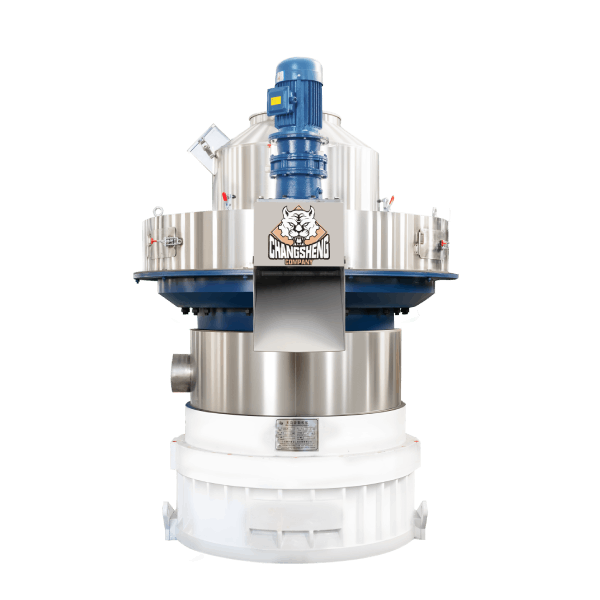
A sawdust pellet mill is a pellet machine configured for sawdust and similar fine wood residues. Sawdust is one of the easier materials to pelletize because of its relatively high lignin content and consistent particle size, but it still requires correct moisture control, die selection, and feeding stability. A sawdust pellet mill is not simply a wood pellet machine with a different name. It is a machine selected for the specific source, moisture, particle size, and density of your sawdust.
This guide is written for procurement managers, importers, EPC contractors, distributors, and end users. It covers sawdust sources, sawdust characteristics, moisture and particle size requirements, die types, drive system options, flat die vs ring die, capacity selection, die compression ratio, production process, cost and payback, maintenance, and a procurement checklist. For general pellet mill selection, see the separate pellet mill guide on this site. For ring die machine types, see the separate ring die pellet machine page on this site. For India-specific pricing, see the separate sawdust pellet machine price in India page on this site.
What Is a Sawdust Pellet Mill?
A sawdust pellet mill is a pellet machine that compresses sawdust into dense cylindrical pellets using pressure and friction heat. It is used in small farm production, commercial fuel production, and industrial pellet plants. Configuration depends on sawdust source, moisture, particle size, target capacity, pellet diameter, and operating hours.
Unlike a general wood pellet machine, a sawdust pellet mill is specifically optimized for fine, consistent wood material. This usually means less grinding, more stable feeding, and stronger pellets, provided moisture is controlled.
Sawdust Sources That Affect Machine Selection
Sawmill Sawdust
Sawmill sawdust is usually consistent in particle size and wood species. It is one of the easiest sawdust sources to pelletize. Moisture varies by sawing process and storage condition.
Furniture Factory Sawdust
Furniture factory sawdust may contain mixed wood species, glue residue, and occasional metal. Cleaning and screening are important. Mixed species may cause variable pellet quality if the mix ratio is not controlled.
Plywood and Board Plant Sawdust
Plywood and board plant sawdust may contain resin and glue residue. Resin affects binding and die wear. Cleaning and moisture control are important.
Pallet and Crate Sawdust
Pallet and crate sawdust may contain nails, staples, and treated wood. Metal removal is mandatory. Treated wood should be avoided for fuel pellets intended for certain markets.
Mixed Collection Sawdust
Mixed collection sawdust from multiple sources is common in commercial projects. Mix ratio should be consistent, or the process should be set for the most challenging component. Variable mix causes variable compression, feeding, and pellet quality.
Sawdust Characteristics That Affect Pelletizing
Lignin Content
Lignin is the natural binder in sawdust. Softwood usually has higher lignin content and produces stronger pellets. Hardwood may require different die compression ratio. Mixed sawdust may produce acceptable pellets when the mix ratio is consistent.
Moisture
Moisture is the most important variable in sawdust pelletizing. Typical target moisture before pelletizing is around 10 to 15 percent. This range depends on wood species, die compression ratio, and machine configuration. The exact target should be confirmed with a pelletizing test.
If sawdust is too dry, binding is poor, pellets are weak, and fines increase. If sawdust is too wet, compression is poor, the die may block, and throughput drops.
Particle Size
Particle size affects feeding stability, compression, pellet density, and die wear. Target particle size for sawdust pelletizing is usually in the range of 2 to 5 mm, depending on die specification. If sawdust is already in this range, grinding may not be needed. If sawdust contains coarse chips, shavings, or offcuts, grinding is required.
Bulk Density
Bulk density of sawdust varies by species and particle size. It is generally lower than wood chips and lower than finished pellets. Low bulk density affects feeder design, storage volume, and transport cost. Feeder design should be matched to the sawdust source. Exact bulk density should be confirmed by laboratory test for your material.
Contamination
Sawdust from pallets, plywood, or treated wood may contain nails, glue, paint, or other contaminants. These damage dies and rollers and reduce pellet quality. Clean, untreated sawdust is preferred.
Sawdust Moisture and Drying
Dry Sawdust
If sawdust already has moisture within the range suitable for pelletizing, it can be fed directly to the pellet machine. In this case, drying equipment may be reduced or omitted, depending on actual moisture and trial results.
Wet Sawdust
If sawdust moisture is above the suitable range, drying is required. A rotary dryer or belt dryer is commonly used. Drying cost depends on initial moisture, target moisture, fuel type, and dryer efficiency.
Moisture Testing
Moisture should be tested before pelletizing, not only after drying. Moisture variation is a common cause of unstable output and poor pellet quality.
Sawdust Grinding
When Grinding Is Needed
Grinding is needed when sawdust contains coarse chips, shavings, or offcuts. If sawdust is already fine and consistent, grinding may not be needed.
Hammer Mill Selection
A hammer mill with suitable screen size is used. For sawdust pelletizing, a 2 to 5 mm screen is common, depending on sawdust source and target pellet quality. Screen size determines final particle size. Screen size and hammer condition affect particle size consistency.
Sawdust Pellet Mill Types
Flat Die Sawdust Pellet Mill
Flat die machines are simpler, lower in initial cost, and easier to maintain. They suit small farms, small workshops, and varied or intermittent production. Typical capacity range is about 30 to 300 kg/h, depending on material, moisture, and die specification.
Ring Die Sawdust Pellet Mill
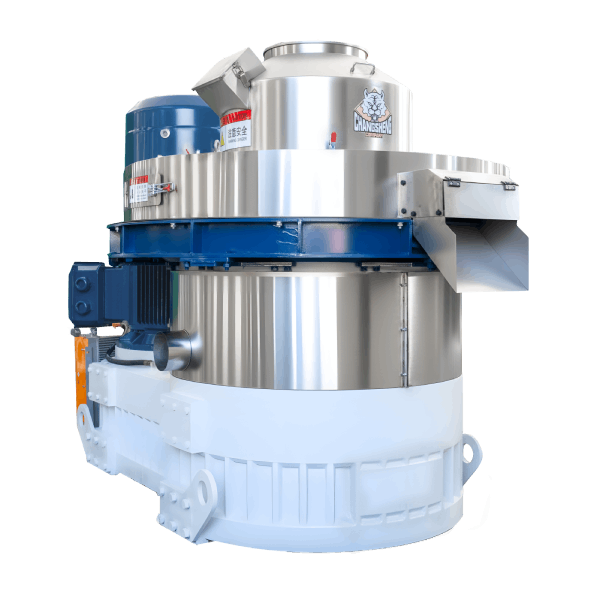
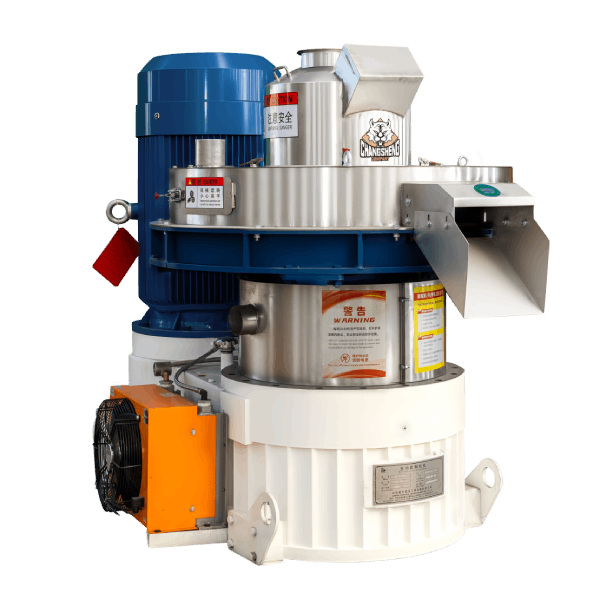
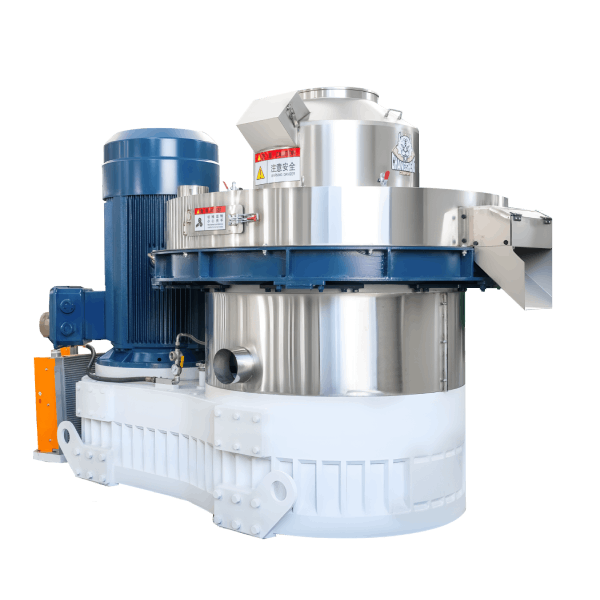
Ring die machines are used for medium to high capacity and continuous operation. They suit commercial and industrial sawdust projects. Typical capacity range is about 300 kg/h to several tons per hour, depending on material, moisture, and die specification. Die and roller configuration is more specialized, and die change may require lifting equipment.
Flat Die vs Ring Die for Sawdust
Factor: Production scale
Flat Die: Small
Ring Die: Medium to large
Factor: Initial investment
Flat Die: Lower
Ring Die: Higher
Factor: Continuous operation
Flat Die: Limited
Ring Die: Suitable
Factor: Maintenance
Flat Die: Simpler
Ring Die: More specialized
Factor: Die change
Flat Die: Easier, basic tools
Ring Die: May need lifting equipment
Factor: Typical use
Flat Die: Small farm or workshop
Ring Die: Commercial or industrial production
Sawdust Pellet Mill Die Types and Drive Options
Single-Layer Die
A single-layer die uses one ring die with one set of die holes. It is simpler and lower in cost than a double-layer design. It suits single-species sawdust production and moderate capacity.
Double-Layer Die
A double-layer die allows two different compression zones or two pellet specifications in one die body. It suits projects that need to switch between two pellet specifications, or that need a longer die service interval between replacements. The trade-off is higher die cost and more complex die management.
Gearbox Drive
A gearbox drive uses a gear transmission between the motor and the main shaft. Gearbox drive provides higher torque transmission efficiency and better stability under continuous load. It is common in industrial ring die machines. Maintenance requires oil change, oil analysis, and gear inspection according to the supplier schedule.
Belt Drive
A belt drive uses belts to transmit power from the motor to the main shaft. Belt drive is simpler, lower in cost, and easier to maintain in locations without specialized service. Belt tension and alignment must be checked regularly, and belts must be replaced at planned intervals.
How to Choose Sawdust Pellet Mill Capacity
Capacity is usually expressed in kg/h or t/h. Required hourly capacity equals annual production target divided by annual operating hours.
Example: annual target 500 tons, operating hours 2,000 per year, required hourly capacity is about 0.25 t/h. This is an illustrative example, not a fixed industry value.
A capacity margin of about 20 to 30 percent is a practical starting point. The exact margin depends on sawdust consistency, operating hours, and maintenance planning.
Actual capacity depends on sawdust type, moisture, particle size, pellet diameter, die specification, compression ratio, machine efficiency, and operating skill.
Die Compression Ratio for Sawdust
Die compression ratio is the ratio of die hole length to die hole diameter. This is the common definition used in this guide. Some suppliers use effective length or taper-based definitions, so the definition should always be confirmed with the supplier before comparing dies.
Higher compression ratio increases pellet density but also increases power demand and die wear. Lower compression ratio reduces density and may cause soft pellets.
Sawdust usually requires a moderate compression ratio because of its relatively high lignin content. Hardwood, dry sawdust, or fine sawdust may require different compression ratio than softwood or moist sawdust. The correct compression ratio should be confirmed with a pelletizing test.
Sawdust Pellet Production Process
Sawdust pellet production typically follows this sequence: sawdust receiving, screening or cleaning, drying, grinding if needed, pelletizing, cooling, screening, and packing.
Screening removes foreign material. Drying reduces moisture to the target range. Grinding reduces particle size if needed. Pelletizing forms pellets. Cooling hardens pellets. Screening removes fines and oversize. Packing prepares finished pellets for storage or sale.
Each step is included for a specific reason. Skipping moisture control or cleaning is a common cause of short die life and poor pellet quality.
Sawdust Pellet Mill Cost and Payback
Cost Factors
Cost depends on machine type, capacity, motor power, die type, die specification, drive system, roller configuration, automation, drying requirement, grinding requirement, cooling, screening, packing, electrical system, and spare parts.
A complete sawdust pellet production line may include a hammer mill, dryer, pellet mill, cooler, screener, packing machine, and dust collection. Auxiliary equipment often represents a significant part of total project cost.
Indicative price ranges vary by configuration and market. A small flat die machine, a medium ring die machine, and a complete industrial line are in clearly different price categories. The difference is driven mainly by capacity, motor power, die size, die type, drive system, automation, and auxiliary equipment.
Payback Calculation Example
Calculate production cost per ton of pellets, including raw material, power, labor, depreciation, and maintenance. Compare with the local price of wood pellets or alternative heating fuel. The difference multiplied by annual output gives annual benefit. Divide total investment by annual benefit to get the approximate payback period.
Example: annual output 500 tons, local pellet price advantage 80 USD per ton, annual benefit 40,000 USD. If total investment is 120,000 USD, approximate payback is about 3 years. This is an illustrative example, not a guaranteed result. The actual payback period depends on sawdust supply, moisture, power price, and machine utilization rate. Use conservative data.
Sawdust Pellet Mill Maintenance and Wear Parts
Dies and rollers are wear parts. Their life depends on sawdust abrasiveness, moisture, compression ratio, and operating conditions. Die life varies widely by sawdust source, so expected working hours should be confirmed with the supplier based on similar material, not assumed from a general figure.
Daily checks: lubrication, roller clearance, feeder condition, motor current.
Weekly checks: die and roller wear, belt tension, electrical connections.
Monthly checks: lubrication system condition, bearing temperature, gearbox oil condition, control panel inspection.
Seasonal checks: spare parts stock review, die replacement planning, electrical insulation check.
Keeping a maintenance log helps track die hours, power consumption, and output.
Sawdust Pellet Mill Procurement Checklist
Requirements: sawdust source, moisture, particle size, target capacity, pellet diameter, power supply, operating hours, automation level.
Machine: die type (single-layer or double-layer), die diameter, compression ratio, motor power, roller configuration, drive system (gearbox or belt), feeder type, lubrication, control mode.
Auxiliary equipment: hammer mill, dryer, cooler, screener, packing, dust collection.
Spare parts: die, roller, bearings, belts or gearbox spare parts, seals, with part numbers and recommended stock.
Supplier: factory capability, reference projects with sawdust material, test run, inspection terms, warranty process.
Frequently Asked Questions
What is a sawdust pellet mill?
A sawdust pellet mill is a pellet machine configured for sawdust and similar fine wood residues, used to produce wood pellets for heating, fuel, or sale.
What is the difference between a sawdust pellet mill and a wood pellet machine?
A wood pellet machine is a general term for pellet machines used on wood materials. A sawdust pellet mill is specifically configured for sawdust, which usually has consistent particle size and higher lignin content than other wood waste.
What moisture is suitable for sawdust pelletizing?
Typical target moisture before pelletizing is around 10 to 15 percent, depending on wood species, die compression ratio, and machine configuration. The exact target should be confirmed with a pelletizing test.
Can wet sawdust be used directly?
Wet sawdust should not be fed directly to the pellet machine. It causes soft pellets, die blockage, and unstable output. Drying is required when moisture is above the suitable range.
Do I need a hammer mill for sawdust?
If sawdust is already fine and consistent, a hammer mill may not be needed. If sawdust contains coarse chips, shavings, or offcuts, grinding is required. A 2 to 5 mm screen is common for sawdust grinding.
Should I choose flat die or ring die for sawdust?
Flat die suits small production and varied materials. Ring die suits medium to large capacity and continuous operation. The choice depends on capacity, operating hours, and maintenance capability.
Should I choose a single-layer or double-layer die?
Single-layer die is simpler and lower in cost, and suits single-species production. Double-layer die suits projects that need to switch between two pellet specifications or need a longer service interval between replacements. The trade-off is higher die cost and more complex die management.
Should I choose gearbox drive or belt drive?
Gearbox drive provides higher torque transmission efficiency and better stability under continuous load, and is common in industrial ring die machines. Belt drive is simpler, lower in cost, and easier to maintain in locations without specialized service. The choice depends on capacity, operating hours, and local maintenance capability.
How do I calculate sawdust pellet mill capacity?
Required hourly capacity equals annual production target divided by annual operating hours, plus a capacity margin of about 20 to 30 percent. Actual capacity depends on sawdust type, moisture, particle size, die specification, and machine configuration.
How do I choose the correct die for sawdust?
Die selection depends on sawdust species, moisture, particle size, and target pellet quality. A pelletizing test with your actual sawdust is the most reliable method.
How long do dies and rollers last?
Die and roller life depends on sawdust abrasiveness, moisture, compression ratio, and operating conditions. Expected working hours should be confirmed with the supplier based on similar material, not assumed from a general figure.
How much does a sawdust pellet mill cost?
Price depends on type, capacity, motor power, die specification, die type, drive system, automation, drying and grinding requirement, and scope of supply. A small flat die machine, a medium ring die machine, and a complete line are in clearly different price categories. Final price should be confirmed against a written scope of supply.
Do I need a complete sawdust pellet line?
It depends on sawdust condition and target pellet quality. Dry and fine sawdust may need only a pellet mill and cooler. Wet, coarse, or mixed sawdust usually requires a complete line with drying and grinding.
Author Introduction
This article was prepared by a technical content specialist with over ten years of experience in industrial equipment, wood and biomass processing machinery, and B2B export projects. The author has worked with sawdust pellet projects in multiple regions, including softwood, hardwood, mixed sawdust, sawmill waste, and furniture factory sawdust, and understands the practical challenges buyers face in moisture control, die selection, drive system choice, capacity planning, and international procurement.
The content reflects real engineering practice in sawdust pellet mill selection, raw material preparation, cost analysis, and project execution. It is intended to help procurement managers, importers, EPC contractors, distributors, and end users make informed decisions and reduce purchase risk. The author is affiliated with Shandong Changsheng Machinery Co., Ltd.
Call to Action
If you are planning a sawdust pellet project and need help confirming machine type, capacity, die configuration, drive system, moisture control, grinding requirement, or spare parts plan, you can request a technical proposal based on your sawdust and required output. Share your sawdust source, moisture, particle size, target capacity, pellet diameter, local power supply, and operating hours, and a suitable configuration can be recommended.
You can also request a quotation for a sawdust pellet mill, ask for a process flow diagram, request a spare parts list, or arrange a video factory inspection before making a final decision. If you have a sawdust sample, a pelletizing test can be arranged to confirm die selection and expected performance under your actual material conditions.