Ring Die Pellet Machine: Types, Working Principle & Selection
News 2026-09-28
Ring Die Pellet Machine: Types, Working Principle & Selection Guide
A ring die pellet machine is the core compression equipment used in commercial and industrial pellet production. It is chosen for higher capacity, continuous operation, and more stable pellet quality than flat die machines. Buyers searching for a ring die pellet machine are usually trying to confirm three things: which ring die machine type fits their raw material, what capacity and drive configuration they need, and how to compare suppliers on real cost rather than headline price.
This guide is written for procurement managers, importers, EPC contractors, distributors, and end users. It covers ring die machine types, how a ring die machine works, main components, drive system options, ring die vs flat die, die compression ratio, capacity, technical specifications, common problems, maintenance, and a procurement checklist. For general pellet mill selection, see the separate pellet mill guide on this site. For material-specific guidance such as wood, coffee husk, peanut shell, or cotton stalk, see the separate material pages on this site.
What Is a Ring Die Pellet Machine?
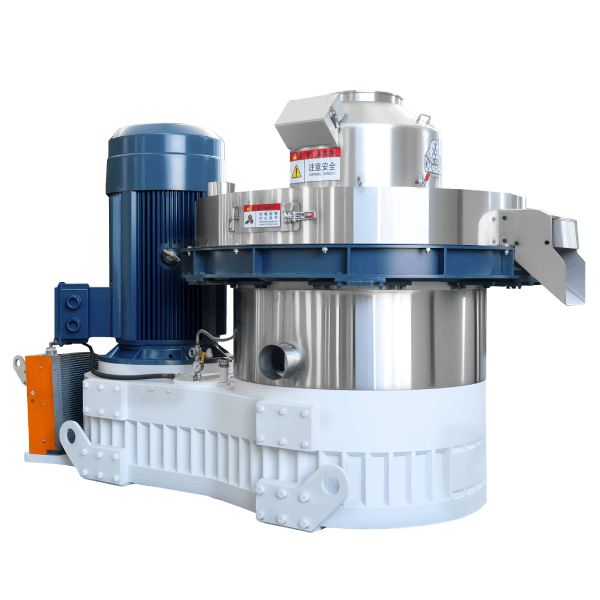
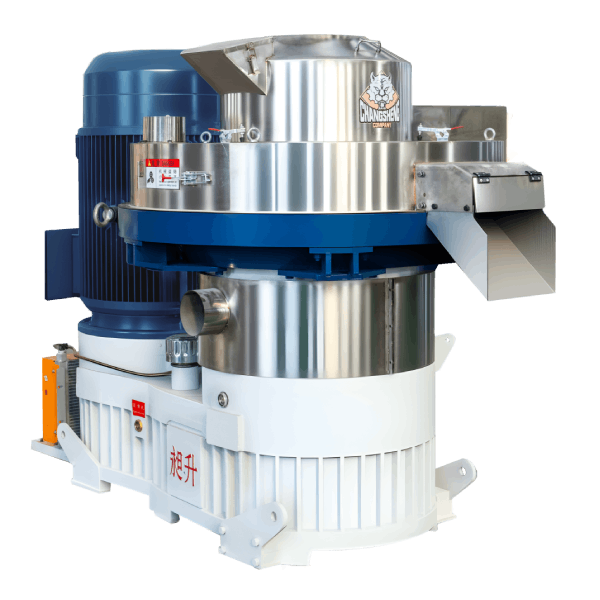
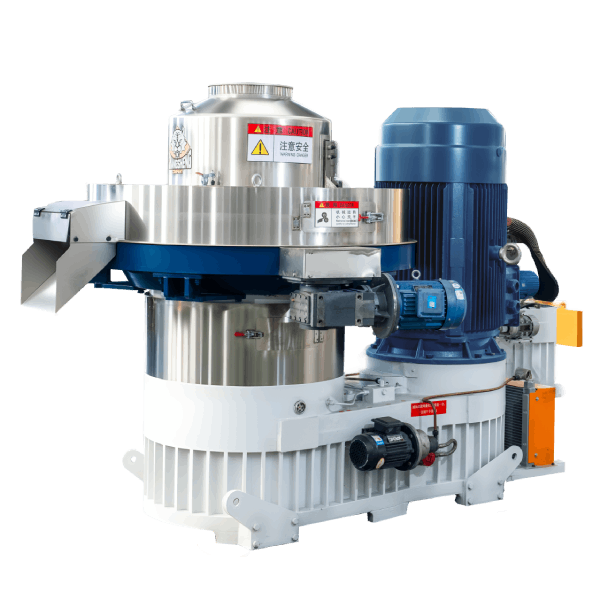
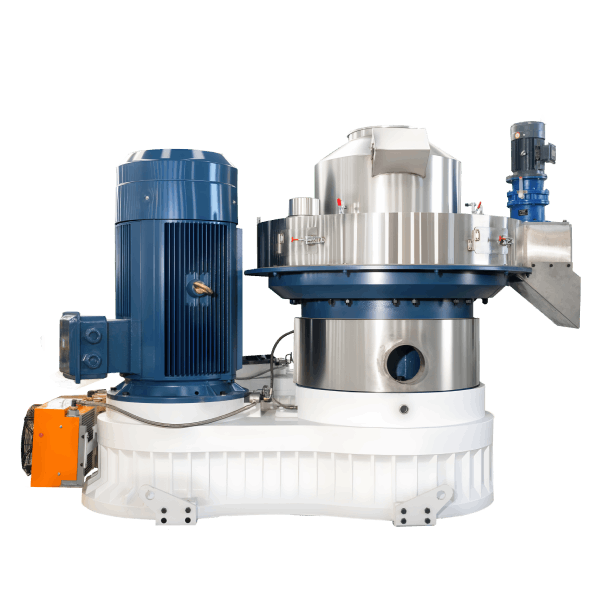
A ring die pellet machine is a pellet mill that uses a vertical ring-shaped die to form pellets. Material is fed into the die chamber, pressed through die holes by rollers, heated by friction, and cut to length as pellets exit the die. Ring die machines are typically used for medium to high capacity and continuous operation.
Unlike a flat die machine, the ring die machine has a larger die surface area and a more complex drive system. This allows higher throughput and more stable pellet quality, but also requires more specialized maintenance and a planned spare parts program.
Ring Die Pellet Machine Types
Ring die pellet machines are not a single design. They differ in die structure, drive system, roller configuration, and automation level. The correct type depends on capacity, material, operating hours, and maintenance capability.
Single-Layer Ring Die Machine
A single-layer ring die machine uses one ring die with one set of die holes. It is simpler and lower in cost than a double-layer design. It suits single-material production and moderate capacity.
Double-Layer Ring Die Machine
A double-layer ring die machine uses a die structure that allows two different compression zones or two different pellet specifications in one die body. It suits projects that need to switch between two pellet specifications, or that need a longer die service interval between replacements. The trade-off is higher die cost and more complex die management.
Gearbox Drive Ring Die Machine
A gearbox drive uses a gear transmission between the motor and the main shaft. Gearbox drive provides higher torque transmission efficiency and better stability under continuous load. It is common in industrial ring die machines. Maintenance requires oil change, oil analysis, and gear inspection according to the supplier schedule.
Belt Drive Ring Die Machine
A belt drive uses belts to transmit power from the motor to the main shaft. Belt drive is simpler, lower in cost, and easier to maintain in locations without specialized service. Belt tension and alignment must be checked regularly, and belts must be replaced at planned intervals.
Single Roller, Double Roller, and Three Roller Configuration
A ring die machine may use one, two, or three rollers to press material into the die. More rollers provide more compression points and can improve output stability, but also increase maintenance complexity. Roller configuration should be matched to die size, material, and target capacity.
Ring Die Pellet Machine Working Principle
A ring die pellet machine works by combining pressure, friction heat, and natural binding. The working principle is the same across all ring die types, but the mechanical arrangement and drive system differ.
Material enters the die chamber through a feeder. Rollers press the material into the die holes. Friction between material and die generates heat, which softens natural binders such as lignin. The softened material binds particles together as it passes through the die. Pellets exit the die and are cut to length by the cutter.
Each step affects pellet quality and machine load. Feed rate affects stability. Die compression ratio affects density and power demand. Roller clearance affects compression and wear. Material moisture affects binding and blockage risk.
Main Components of a Ring Die Pellet Machine
Die: the vertical ring that shapes pellets and determines compression ratio.
Rollers: press material into the die holes; roller pressure and clearance affect compression and wear.
Main shaft: transmits torque to the die or roller assembly.
Gearbox or belt drive: transmits torque from motor to main shaft.
Motor: powers the machine; motor power must match capacity and material density.
Feeder: controls material input; variable frequency feeding improves stability.
Conditioner: adds heat and moisture when needed; improves binding for dry or low-lignin materials.
Cutter: trims pellets to length.
Lubrication system: reduces wear and supports continuous operation.
Ring Die vs Flat Die Pellet Machine
Factor: Production scale
Ring Die: Medium to large
Flat Die: Small to medium
Factor: Continuous operation
Ring Die: Suitable
Flat Die: More limited
Factor: Initial investment
Ring Die: Higher
Flat Die: Lower
Factor: Die structure
Ring Die: Vertical ring
Flat Die: Flat plate
Factor: Die surface area
Ring Die: Larger, higher throughput
Flat Die: Smaller, lower throughput
Factor: Drive system
Ring Die: Gearbox or belt drive
Flat Die: Simpler drive
Factor: Maintenance
Ring Die: More specialized
Flat Die: Simpler
Factor: Die change
Ring Die: May need lifting equipment
Flat Die: Easier, basic tools
Factor: Footprint
Ring Die: Larger
Flat Die: Smaller
Factor: Typical use
Ring Die: Commercial and industrial production
Flat Die: Small production and varied materials
Die Compression Ratio and Die Selection
Die compression ratio is the ratio of die hole length to die hole diameter. This is the common definition used in this guide. Some suppliers use effective length or taper-based definitions, so the definition should always be confirmed with the supplier before comparing dies.
Higher compression ratio increases pellet density but also increases power demand and die wear. Lower compression ratio reduces density and may cause soft pellets.
The correct compression ratio depends on material density, fiber content, and moisture. Hard, dense materials usually need a different compression ratio than soft, low-density materials. A mismatch causes soft pellets, blockage, or fast die wear.
Die selection should be confirmed with a pelletizing test using your actual material. Die life varies widely by material, so expected working hours should be confirmed with the supplier based on similar material and operating conditions, not assumed from a general figure.
Ring Die Pellet Machine Capacity and Production Calculation
Required hourly capacity equals annual production target divided by annual operating hours.
Example: annual target 2,000 tons, operating hours 6,000 per year, required hourly capacity is about 0.33 t/h. This is an illustrative example, not a fixed industry value.
A capacity margin of about 20 to 30 percent is a practical starting point. The exact margin depends on material consistency, operating hours, and maintenance planning.
Actual output depends on material type, moisture, particle size, pellet diameter, die specification, compression ratio, machine efficiency, and operating skill. A capacity figure without these conditions is not a technical commitment.
Ring Die Pellet Machine Technical Specifications
Specification: Capacity
Why It Matters: Determines production output; only meaningful with material, moisture, and die conditions
Specification: Motor power
Why It Matters: Determines drive configuration; depends on capacity, material density, voltage, frequency, altitude, ambient temperature
Specification: Die diameter
Why It Matters: Affects production configuration
Specification: Die type
Why It Matters: Single-layer or double-layer; affects die cost and management
Specification: Pellet diameter
Why It Matters: Determines final pellet size; usually 2 to 12 mm depending on die
Specification: Compression ratio
Why It Matters: Affects pellet density and die wear; depends on material density, fiber, and moisture
Specification: Roller configuration
Why It Matters: Single, double, or three rollers; affects compression and output stability
Specification: Drive system
Why It Matters: Gearbox or belt drive; affects efficiency, maintenance, and cost
Specification: Feed rate control
Why It Matters: Controls production stability; variable frequency recommended
Specification: Machine dimensions
Why It Matters: Installation planning
Specification: Weight
Why It Matters: Transport and foundation
Specification: Power supply
Why It Matters: Overseas installation and compatibility
Actual values should be confirmed in a written technical agreement, not estimated from catalog images.
Common Problems in Ring Die Pellet Machine Operation
Blockage
Blockage is usually caused by moisture too high, feed rate too fast, particle size too fine, or compression ratio mismatch. Check moisture, feed rate, and die selection before adjusting the machine.
Poor Pellet Formation
Poor formation is usually caused by wrong compression ratio, low moisture, low temperature, or worn die and rollers. Review die selection, moisture, and roller condition.
High Energy Consumption
High energy consumption is usually caused by die and roller mismatch, overload feed rate, worn die, or unstable power supply. Review die specification, feed rate, and motor load.
Short Die and Roller Life
Short die and roller life is usually caused by abrasive material, mineral contamination, wrong compression ratio, or incorrect roller clearance. Review material preparation, die material, and clearance adjustment.
Unstable Feed
Unstable feed is usually caused by variable moisture, variable particle size, feeder design, or material bridging. Review drying, grinding, and feeder configuration.
Gearbox or Belt Drive Problems
Gearbox problems may include oil contamination, oil level issues, or gear wear. Belt drive problems may include tension loss, misalignment, or belt wear. Both should be checked according to the supplier schedule.
Ring Die Pellet Machine Maintenance and Wear Parts
Dies and rollers are wear parts. Their life depends on material abrasiveness, moisture, compression ratio, and operating conditions. Die life varies widely by material, so expected working hours should be confirmed with the supplier based on similar material and operating conditions, not assumed from a general figure.
Daily checks include lubrication, roller clearance, feeder condition, and motor current.
Weekly checks include die and roller wear, belt tension, and electrical connections.
Monthly checks include lubrication system condition, bearing temperature, gearbox oil condition, and control panel inspection.
Seasonal checks include spare parts stock review, die replacement planning, gearbox oil change, and electrical insulation check.
Keeping a maintenance log helps track die hours, power consumption, and output, and supports planned replacement instead of unplanned downtime.
Ring Die Pellet Machine Cost and Price Factors
What Determines Ring Die Pellet Machine Price?
Ring die pellet machine price is determined by machine type, capacity, motor power, die size and material, die type (single-layer or double-layer), roller configuration, drive system (gearbox or belt), automation level, material compatibility, spare parts included, and auxiliary equipment scope.
A small ring die machine and a large ring die machine are in different price categories. A belt drive machine and a gearbox drive machine are also in different price categories. A machine for feed materials and a machine for abrasive biomass may also differ in price because of die and roller specification.
Machine price is not the same as complete pellet production line cost. A complete line may include a crusher or hammer mill, dryer, pellet mill, cooler, screener, packing machine, and dust collection. Final cost should be confirmed against a written scope of supply.
Indicative price ranges vary by configuration and market. A small ring die machine, a medium ring die machine, and a complete industrial line are in clearly different price categories. Final price should be confirmed against a written scope of supply.
Ring Die Pellet Machine Procurement Checklist
Requirements: material type, moisture, particle size, target capacity, pellet diameter, power supply, operating hours, automation level.
Machine: die type, die diameter, compression ratio, motor power, roller configuration, drive system, feeder type, lubrication, control mode.
Technical agreement: capacity with conditions, voltage, phase, frequency, control voltage, protection class, insulation class.
Spare parts: die, roller, bearings, belts or gearbox spare parts, seals, with part numbers and recommended stock.
Supplier: factory capability, export experience, reference projects with similar material, test run, inspection terms, warranty process.
Frequently Asked Questions
What is a ring die pellet machine?
A ring die pellet machine is a pellet mill that uses a vertical ring-shaped die to form pellets. Material is pressed through die holes by rollers, heated by friction, and cut to length.
What are the main types of ring die pellet machines?
Main types include single-layer and double-layer ring dies, gearbox drive and belt drive, and single-roller, double-roller, and three-roller configurations. The correct type depends on capacity, material, and operating hours.
What is the difference between a ring die and flat die pellet machine?
Ring die machines suit medium to large capacity and continuous operation, and use a vertical ring die with larger die surface area. Flat die machines suit small to medium capacity and varied materials, and use a flat plate die with simpler maintenance.
How do I choose between a ring die and flat die pellet machine?
Consider production scale, required capacity, operating hours, material consistency, pellet quality requirement, maintenance capability, and budget.
How is ring die pellet machine capacity calculated?
Required hourly capacity equals annual production target divided by annual operating hours, plus a capacity margin of about 20 to 30 percent. Actual capacity depends on material, moisture, particle size, die specification, and machine configuration.
What determines ring die pellet machine output?
Output depends on material type, moisture, particle size, pellet diameter, die specification, compression ratio, machine efficiency, and operating skill.
How do I choose the correct die?
Die selection depends on material density, fiber content, moisture, and target pellet quality. A pelletizing test with your actual material is the most reliable method.
Does ring die pellet machine capacity depend on the raw material?
Yes. The same machine can produce different output with different materials. A capacity figure is only meaningful when material and moisture conditions are stated.
What motor power does a ring die pellet machine need?
Motor power depends on capacity, material density, voltage, frequency, altitude, and ambient temperature. A written technical agreement should state main motor power and total connected load.
How much does a ring die pellet machine cost?
Price depends on type, capacity, motor power, die specification, die type, drive system, automation, and scope of supply. A small ring die machine, a medium ring die machine, and a complete industrial line are in clearly different price categories. Final price should be confirmed against a written scope of supply.
How often do dies and rollers need maintenance?
Die and roller life depends on material abrasiveness, moisture, and operating conditions. Die life varies widely by material, so expected working hours should be confirmed with the supplier based on similar material, not assumed from a general figure.
Do I need a complete production line?
It depends on material condition, target pellet quality, and sales channel. Dry and uniform material may only need a pellet mill and cooler. Wet, coarse, or mixed material usually requires a complete line.
Author Introduction
This article was prepared by a technical content specialist with over ten years of experience in industrial equipment, biomass and feed processing machinery, and B2B export projects. The author has worked with ring die pellet machine projects in feed, biomass, and agricultural processing, and understands the practical challenges buyers face in machine selection, die configuration, drive system choice, capacity planning, and international procurement.
The content reflects real engineering practice in ring die pellet machine selection, technical specification review, cost analysis, and project execution. It is intended to help procurement managers, importers, EPC contractors, distributors, and end users make informed decisions and reduce purchase risk. The author is affiliated with Shandong Changsheng Machinery Co., Ltd.
Call to Action
If you are planning a ring die pellet machine project and need help confirming machine type, capacity, die configuration, drive system, motor power, or spare parts plan, you can request a technical proposal based on your raw material and required output. Share your material type, moisture, particle size, target capacity, pellet diameter, local power supply, and operating hours, and a suitable configuration can be recommended.
You can also request a quotation, ask for general arrangement drawings, request a spare parts list, or arrange a video factory inspection before making a final decision. If you already have a quotation from another supplier, you can send the technical data for a comparison of configuration and total cost of ownership.