Page SEO Summary: This technical guide helps buyers select a 160kW wood pellet mill—covering specifications, capacity expectations, power requirements, and procurement considerations.
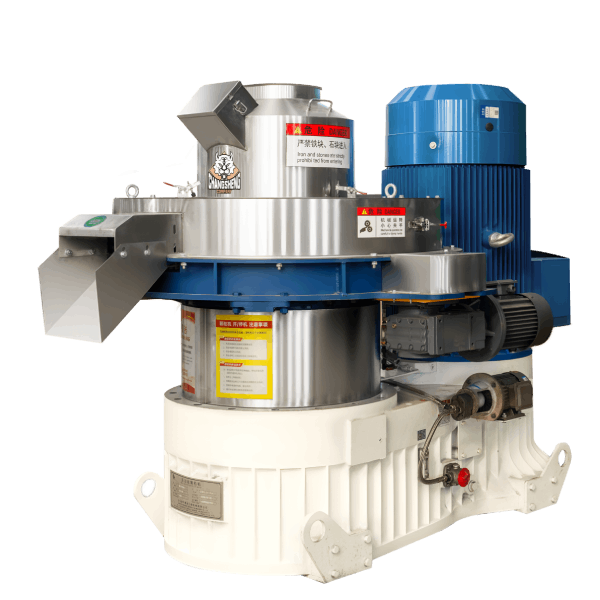
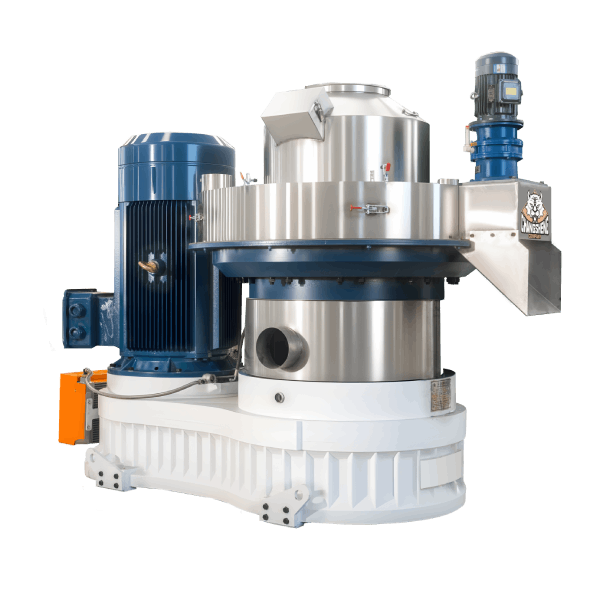
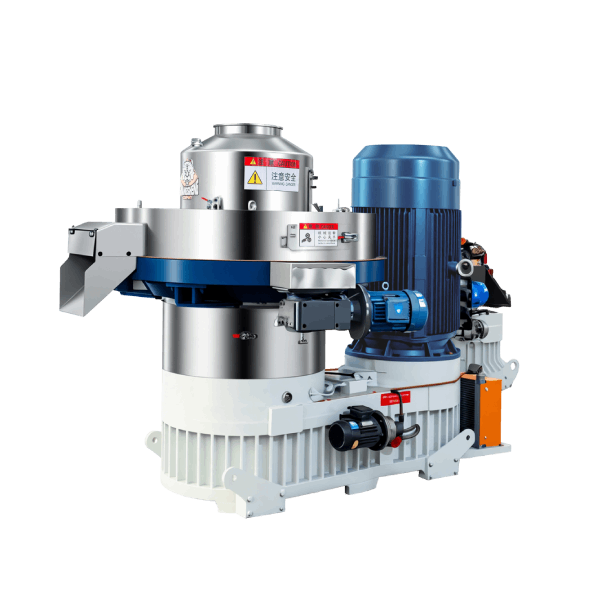
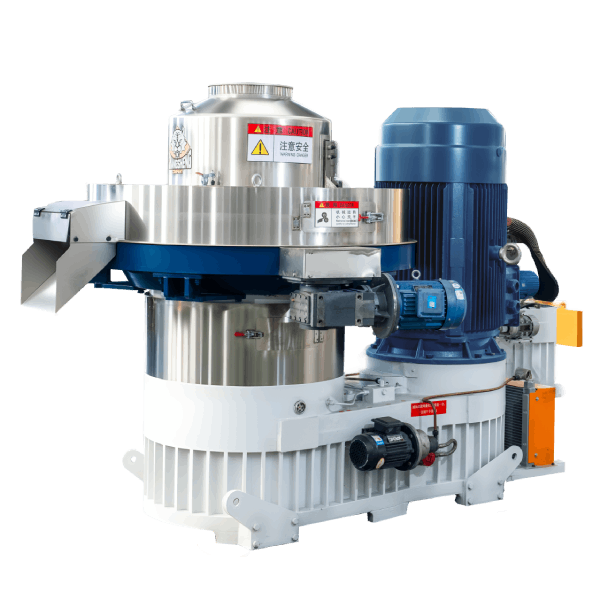
A 160kW wood pellet mill represents serious industrial capability. It is the power class for large-scale commercial production, capable of processing challenging materials and delivering high output for export markets and large industrial operations. Manufacturers like Shandong Changsheng Machinery Co., Ltd. offer 160kW configurations as part of their industrial-grade product lines.
This guide provides a comprehensive overview of 160kW wood pellet mills, helping you understand the specifications, capabilities, and procurement considerations for this power class.
A 160kW wood pellet mill from a reputable manufacturer like Shandong Changsheng Machinery Co., Ltd. will feature a heavy-duty gearbox with hardened and ground gears, ensuring reliable operation under continuous industrial loads.
Capacity Expectations
Output by Material
Material
Expected Capacity
Notes
Softwood (pine, spruce)
4.5-5.5 t/h
Best performance
Hardwood (oak, beech)
3.5-4.5 t/h
More energy required
Mixed wood
4.0-5.0 t/h
Good performance
Wood chips
3.5-4.5 t/h
Requires proper grinding
Agricultural residues
2.5-3.5 t/h
Variable
Factors Affecting Capacity
Factor
Impact
Material moisture
>12% reduces output 10-20%
Particle size
Proper size = rated capacity
Die condition
Worn die reduces output 10-15%
Screen selection
Affects throughput
Operator skill
5-10% variation
Annual Production
Operating Hours
Annual Output (Softwood)
Annual Output (Hardwood)
6,000 hours
27,000-33,000 tons
21,000-27,000 tons
7,000 hours
31,500-38,500 tons
24,500-31,500 tons
8,000 hours
36,000-44,000 tons
28,000-36,000 tons
Power and Electrical Requirements
Power Supply
Parameter
Requirement
Notes
Voltage
380V/400V/415V/460V
Depends on region
Frequency
50Hz or 60Hz
Region dependent
Phase
3-phase
Required
Full load current
~280-320 A (at 380V)
Motor only
Transformer
250-350 kVA
Recommended
Starting Current
Starting Method
Current
Notes
Direct-on-line
6-8× full load
Requires strong grid
Star-delta
2-3× full load
Recommended
Soft starter
2.5-4× full load
Smooth start
VFD
1-1.5× full load
Best control
Electrical Distribution
Component
Specification
Main breaker
400-500 A
Cable size
95-120 mm² (copper)
Control panel
IP55 rated
Complete System Integration
Required Support Equipment
Equipment
Specification
Purpose
Feeder
Variable speed
Controlled feed
Conditioner
5-6 t/h
Pre-heating
Cooler
5-6 t/h
Pellet cooling
Hammer mill
5-8 t/h
Grinding
Dust collection
Adequate
Environmental control
Typical Line Configuration
Component
Specification
Notes
Hammer mill
90-110 kW
Feeding the pellet mill
Conditioner
Integrated or stand-alone
Steam addition
Pellet mill
160 kW
Core equipment
Cooler
5-6 t/h
Counterflow design
Screening
5-6 t/h
Fines removal
Control
PLC with HMI
Automation
Investment Costs
Equipment Cost Estimates
Equipment
Estimated Cost (USD)
Notes
Pellet mill (160 kW)
$60,000-100,000
Core equipment
Gearbox (heavy-duty)
$15,000-25,000
Premium quality
Die (premium)
$3,000-5,000
X46Cr13 or equivalent
Conditioner
$10,000-20,000
Pre-heating
Control system
$10,000-25,000
PLC/HMI
Total Equipment
$100,000-175,000
Complete Line Cost
Scope
Estimated Cost (USD)
Pellet mill only
$60,000-100,000
Pellet mill + conditioner + feeder
$85,000-145,000
Complete line (with hammer mill, cooler)
$200,000-350,000
Space Requirements
Equipment Footprint
Equipment
Approximate Area
Pellet mill
10-15 m²
Conditioner
3-5 m²
Feeder/surge bin
3-5 m²
Control panel
2-4 m²
Total equipment area
20-30 m²
Height Requirements
Equipment
Typical Height
Pellet mill
3.0-3.5 m
Conditioner
2.5-3.0 m
Surge bin
3-5 m
Maintenance Considerations
Key Wear Parts
Component
Replacement Interval
Cost
Die
2,000-4,000 hours
$3,000-5,000
Roller shells
1,500-3,000 hours
$800-1,500
Bearings
10,000-20,000 hours
$500-1,000
Gearbox oil
2,000-4,000 hours
$200-500
Annual Maintenance Cost
Item
Estimated Cost (USD)
Die replacement
$6,000-15,000
Roller shells
$2,000-4,000
Bearings/maintenance
$2,000-5,000
Total
$10,000-24,000
Procurement Checklist
Technical Specifications
□ Motor power confirmed: 160 kW
□ Voltage and frequency match site supply
□ Motor efficiency class specified (IE3/IE4)
□ Starting method confirmed
□ Transformer capacity verified
Application Requirements
□ Material type identified
□ Target capacity (t/h) confirmed
□ Die specification confirmed
□ Operating hours defined
Supporting Equipment
□ Electrical supply confirmed
□ Feeder/conditioner specified
□ Cooling system specified
□ Additional equipment considered
Supplier Evaluation
□ Supplier experience with 160kW configuration
□ Component brands (bearings, motor) confirmed
□ References from similar applications
□ Warranty and support terms reviewed
Frequently Asked Questions
1. What is a 160kW wood pellet mill?
A 160kW wood pellet mill is an industrial-scale pelletizing machine with a 160 kW (215 HP) main motor, capable of producing 3.5-5.5 t/h of wood pellets depending on the material.
2. What capacity can a 160kW pellet mill achieve?
Softwood: 4.5-5.5 t/h. Hardwood: 3.5-4.5 t/h. Mixed wood: 4.0-5.0 t/h. Capacity depends on moisture, particle size, and die specification.
3. What power supply is needed?
3-phase power, typically 380V/400V/415V/460V depending on region. Transformer capacity of 250-350 kVA is recommended.
4. What is the starting current?
Direct-on-line: 6-8× full load current. Star-delta or soft starter is recommended to reduce starting current.
5. How much does a 160kW wood pellet mill cost?
Pellet mill only: $60,000-100,000. Complete line: $200,000-350,000 depending on configuration.
6. What is the typical die size?
Die diameter is typically 560-610 mm with a width of 180-220 mm, depending on the manufacturer.
7. What is the annual production?
With 8,000 operating hours/year, a 160kW wood pellet mill produces approximately 28,000-44,000 tons/year depending on material.
8. What are the key maintenance costs?
Die replacement ($3,000-5,000), roller shells ($800-1,500), and bearing maintenance are the main ongoing costs.
Zhang Wei has over 12 years of experience in the biomass and feed pellet mill industry, with a background in mechanical engineering and international project execution. He has worked with clients across Southeast Asia, the Middle East, Africa, Europe, and Latin America on 160kW and similar power class projects, providing complete solutions from specification to commissioning.
With hands-on experience in both the manufacturing workshop and client-side operations, Zhang brings practical insights into successful equipment procurement—from the factory floor to the customer’s industrial plant.