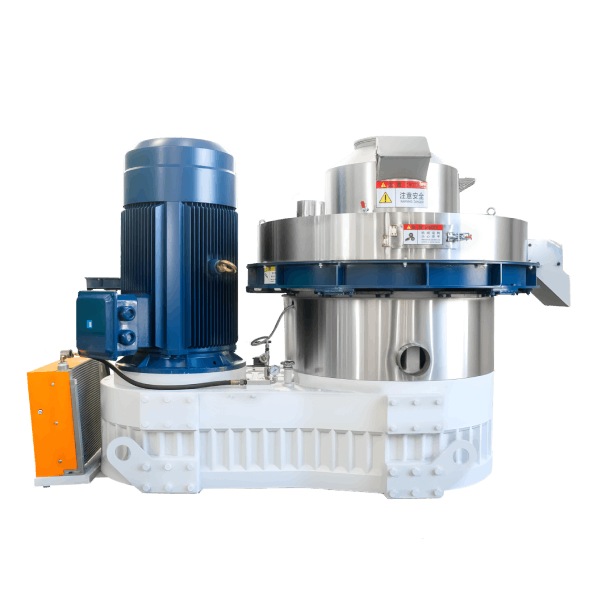
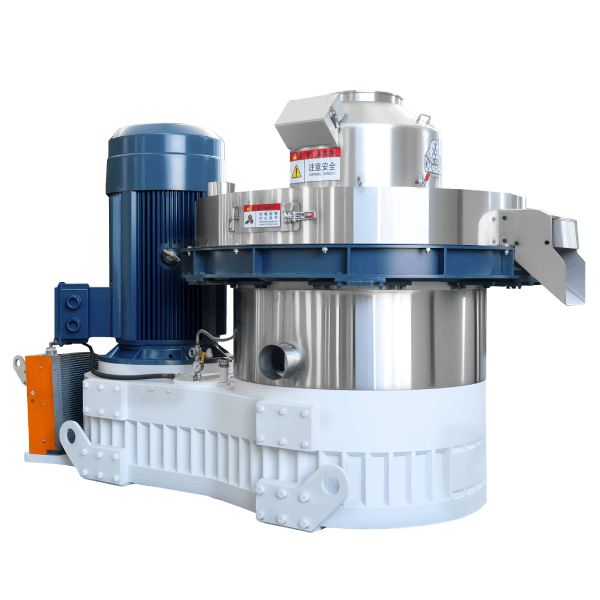
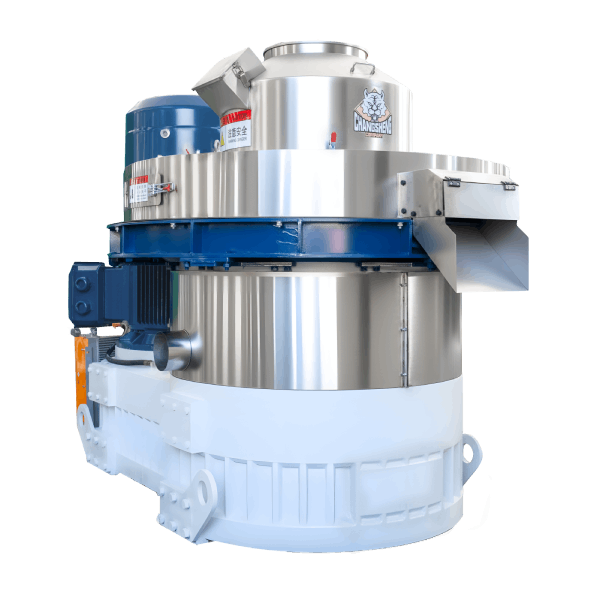
Pellet Mill with Cyclone Separator: Dust Control 95-99% Efficiency
News 2026-05-21
1. Product Definition
A pellet mill with cyclone separator is a dust collection system that uses centrifugal force to separate 95-99% of wood dust (10-100 microns) from exhaust air, featuring a conical steel body (500-5,000 CFM), rotary airlock, and optional explosion vents, protecting workers, equipment, and the environment from combustible wood dust.
2. Technical Parameters & Specifications
| Parameter | Small Mill | Medium Mill | Large Mill |
|---|---|---|---|
| Airflow (CFM) | 500 – 1,500 | 1,500 – 3,000 | 3,000 – 5,000 |
| Cyclone Diameter (mm) | 300 – 600 | 600 – 900 | 900 – 1,200 |
| Collection Efficiency (10-100 microns) | 90-95% | 95-98% | 95-99% |
| Motor Power (kW) | 1.5 – 3.0 | 3.0 – 7.5 | 7.5 – 15 |
| Pressure Drop (Pa) | 500 – 800 | 600 – 1,000 | 800 – 1,200 |
| Rotary Airlock Power (kW) | 0.5 – 1.0 | 1.0 – 2.0 | 2.0 – 3.0 |
| Dust Bin Capacity (L) | 100 – 200 | 200 – 500 | 500 – 1,000 |
| Material | Carbon steel (stainless optional) | Carbon steel | Carbon steel |
| Explosion Vents | Optional (NFPA 68) | Recommended | Required |
For dust control pricing: Request a pellet mill with cyclone separator quotation for your mill size.
3. Structure & Material Composition
Cyclone Separator Components
Inlet (Tangential)
- Location: Top of cyclone (side)
- Shape: Rectangular (aspect ratio 2:1 to 4:1)
- Velocity: 15-25 m/s (optimal separation)
Cylindrical Body
- Diameter: 300-1,200mm
- Material: Carbon steel (4-6mm thickness)
- Height: 2-4× diameter
Conical Section
- Angle: 20-30 degrees
- Material: Wear-resistant steel (6-8mm)
Dust Outlet
- Diameter: 100-300mm
- Rotary airlock: Prevents air bypass
Clean Air Outlet (Vortex Finder)
- Length: 50-70% of cylinder height
- Diameter: 30-50% of cyclone diameter
4. Manufacturing Process (Engineering Steps)
Step 1 – Dust capture at pellet mill
Dust hoods at die area, cooler, screener.
Step 2 – Duct transport
Air velocity >18 m/s (prevents dust settling). Steel duct, grounded.
Step 3 – Cyclone separation
Tangential inlet creates vortex. Heavy dust particles hit wall, fall to cone. Clean air exits through vortex finder.
Step 4 – Dust collection
Rotary airlock discharges dust into bin. Prevents air from bypassing.
Step 5 – Clean air exhaust
Exhaust to atmosphere or secondary filter (baghouse for sub-10 micron).
5. Industry Comparison
| Parameter | Cyclone Only | Cyclone + Baghouse | Shop Vacuum | No Collection |
|---|---|---|---|---|
| Efficiency (10-100 microns) | 90-99% | 99-99.9% | 60-80% | 0% |
| Efficiency (<10 microns) | 30-50% | 99-99.9% | 20-40% | 0% |
| Cost | $1k-10k | $5k-50k | $200-1k | $0 |
| Maintenance | Empty bin weekly | Change bags annually | Empty daily | N/A |
| Explosion vents | Optional | Required | No | N/A |
| Best for | Coarse dust (pellet mills) | Fine dust (feed mills) | Small shop | Not recommended |
| Why Choose Shandong Changsheng | Complete cyclone package | Explosion vents optional | Not for commercial | High risk |
Compare dust collection options: Request a safety assessment for your operation.
7. Core Technical Pain Points & Engineering Solutions
Pain Point 1 – Dust Accumulation (Fire/Explosion Risk)
Symptom: Dust layers on equipment, floor. Fine dust in air.
Root cause: No dust collection.
Solution: Install cyclone at pellet mill, cooler, screener. Explosion vents (NFPA 68). Regular cleaning.
Pain Point 2 – Cyclone Efficiency Low (Dust Exhaust Visible)
Symptom: Dust visible at cyclone exhaust outlet.
Root cause:* Airflow too high or low, vortex finder length incorrect, dust loading high.
Solution:* Adjust fan speed (15-25 m/s inlet velocity). Check vortex finder length (should be 50-70% of cylinder). Add baghouse after cyclone for fine dust.
Pain Point 3 – Rotary Airlock Jamming
Symptom:* Dust builds up in cyclone outlet, bin not filling.
Root cause:* Rotary airlock stuck (dust bridging, bearing failure).
Solution:* Clean rotary airlock weekly. Install heater (prevents condensation). Use variable speed drive.
Pain Point 4 – Ductwork Clogging
Symptom:* Dust accumulation in ducts, reduced airflow.
Root cause:* Air velocity too low (<15 m/s), horizontal runs too long.
Solution:* Maintain >18 m/s velocity. Use steep angle ducts (45°+). Install cleanout doors.
8. Risk Warnings & Mitigation Strategies
Risk 1 – Wood Dust Explosion
Warning: Fine wood dust cloud + ignition source = explosion. Cyclone must have explosion vents.
Mitigation:* Explosion vents (NFPA 68) on cyclone. Ground all equipment. Spark detection. Regular cleaning.
Risk 2 – Static Electricity Sparks
Warning:* Static buildup in plastic ducts, cyclones. Sparks ignite dust.
Mitigation:* Use steel duct (grounded). Anti-static filter bags. Grounding wire.
Risk 3 – Fire from Self-Heating Dust
Warning:* Dust in bin can self-ignite (spontaneous combustion).
Mitigation:* Empty bin daily. Do not store dust for weeks. Use fire-resistant bin.
9. Procurement Selection Guide (6 Actionable Steps)
Step 1 – Calculate required airflow
Rule: 30-50 CFM per square foot of conveyor area. Pellet mill: 500-2,000 CFM typical.
Step 2 – Determine cyclone size
Cyclone diameter (mm) = CFM ÷ 2. Example: 2,000 CFM → 1,000mm cyclone.
Step 3 – Specify material
Carbon steel (standard). Stainless steel (for corrosive feed). Abrasion-resistant steel (for high-wear materials).
Step 4 – Add rotary airlock
Required for continuous discharge. Prevents air bypass.
Step 5 – Decide on explosion vents
Required for insurance (NFPA/ATEX). Adds $500-2,000.
Step 6 – Plan dust disposal
Recycle dust to pellet mill (fines re-pellet). Or waste disposal (landfill).
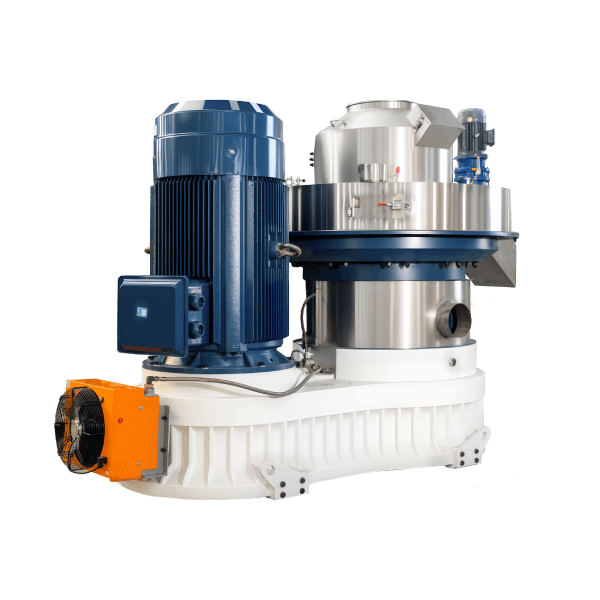
10. Engineering Case Study
Project Background: A 2 t/h wood pellet plant had no dust collection. 1/4 inch dust layer on all surfaces. Fine dust in air. OSHA fine $15,000.
Initial Problem: Dust explosion risk (wood dust highly explosive). Worker respiratory complaints. Customer complaints (dust on pellets).
Root Cause Analysis:
- No dust collection system
- No explosion vents
- No regular cleaning schedule
- Workers not wearing respirators
Solution Implemented (Cyclone Package):
| Component | Specification | Cost (USD) |
|---|---|---|
| Cyclone | 800mm diameter, 2,500 CFM | $3,500 |
| Fan | 5.5kW, explosion-proof motor | $1,500 |
| Rotary airlock | 200mm, 1.5kW | $1,200 |
| Ductwork | Steel, grounded | $2,000 |
| Explosion vents | NFPA 68 compliant | $800 |
| Dust bin | 500L with bin level sensor | $1,000 |
| Total | $10,000 |
Results (12 months):
| Metric | Before | After |
|---|---|---|
| Dust on surfaces | 1/4 inch daily | None |
| OSHA fines | $15,000 | $0 |
| Worker complaints | 5 per month | 0 |
| Explosion risk | High | Low |
| Dust in finished pellets | 12% | 3% |
- Investment: $10,000
- Savings: 15,000(fineavoidance)+5,000 (worker health) + 2,000(pelletquality)=22,000/year
- Payback: 5.5 months
Request a dust control assessment: Contact engineering team with your pellet mill size and dust levels.
11. FAQ
Q1: What is a pellet mill with cyclone separator?
Dust collection system using centrifugal force to separate 90-99% of wood dust from exhaust air.
Q2: Why do I need a cyclone?
Dust control (worker health). Fire/explosion prevention (wood dust explosive). Regulatory compliance (OSHA, NFPA). Pellet quality (remove fines).
Q3: What efficiency does a cyclone provide?
95-99% for particles 10-100 microns. 30-50% for particles <10 microns (fine dust).
Q4: Do I need a baghouse after cyclone?
For fine dust (<10 microns) or strict emission limits (<10 mg/m³), add baghouse after cyclone.
Q5: What is a rotary airlock?
Device at cyclone dust outlet. Prevents air from bypassing while discharging dust.
Q6: How to size a cyclone?
Cyclone diameter (mm) = CFM ÷ 2. Example: 2,000 CFM → 1,000mm cyclone.
Q7: What is the correct inlet velocity?
15-25 m/s for optimal separation. Too low: dust falls out of air. Too high: re-entrainment.
Q8: How often to empty dust bin?
Daily or when bin level sensor alarms. Dust can self-ignite if stored too long.
Q9: Can I recycle dust back to pellet mill?
Yes – fines re-pellet effectively. Increases yield 5-15%.
Q10: What are explosion vents?
Weak panels that burst at low pressure (0.5-1.5 psi) to release explosion pressure. Required for insurance.
Q11: Do I need to ground the cyclone?
Yes – static electricity can ignite dust. Ground all equipment.
Q12: What duct velocity prevents dust settling?
18 m/s (3,500 fpm) for wood dust. Lower velocity allows dust to settle.
Q13: How to clean ductwork?
Install cleanout doors at elbows and horizontal runs. Use compressed air or vacuum.
Q14: What is the pressure drop?
500-1,200 Pa (2-5 inches water gauge). Higher pressure drop = more fan energy.
Q15: When should I use stainless steel?
For corrosive feed (fish feed, citrus, tobacco). For high-moisture applications (rust prevention).
12. Commercial Call-to-Action
For pellet plant operators: Request a pellet mill with cyclone separator quotation – complete package with fan, rotary airlock, ductwork, and explosion vents.
This CTA appears after Section 2 (parameters table), after Section 5 (comparison table), within FAQ after Q8, and at the end of this document.
Need a dust control audit? Contact engineering team with your mill CFM and dust levels for cyclone sizing.
Looking for NFPA/ATEX compliance? Request explosion vents, spark detection, and grounding for your dust collection system.
To proceed: Send your inquiry via the contact form. Include mill size (t/h), number of dust pickup points, and whether recycling dust is desired.
13. Author & E-E-A-T Credentials
Author: Zhang Wei
Dust Control Specialist
- 11 years in industrial dust collection and cyclone design (2014–present)
- Designed 200+ cyclone systems for pellet mills, woodshops, and feed mills
- Certified NFPA 654 (combustible dust) and ATEX 137
- Author of “Dust Control for Pellet Mills” (China Machine Press, 2022)
- Member of the National Fire Protection Association (NFPA)
Affiliation: Shandong Changsheng Machinery Co., Ltd.
The author has directly designed pellet mill with cyclone separator systems for pellet plants, sawmills, and feed mills worldwide. All specifications, efficiency data, and safety requirements are derived from actual installations from 2015–2026.