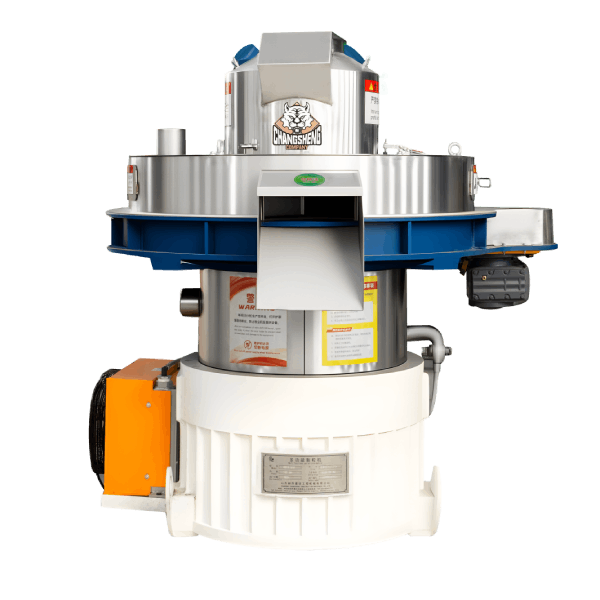
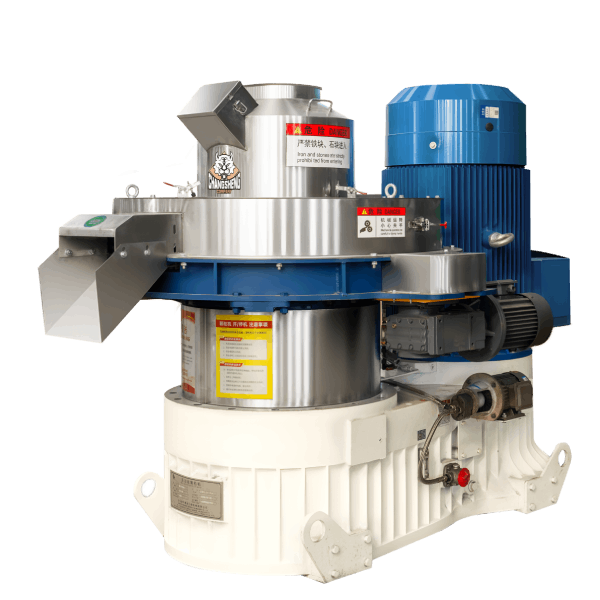
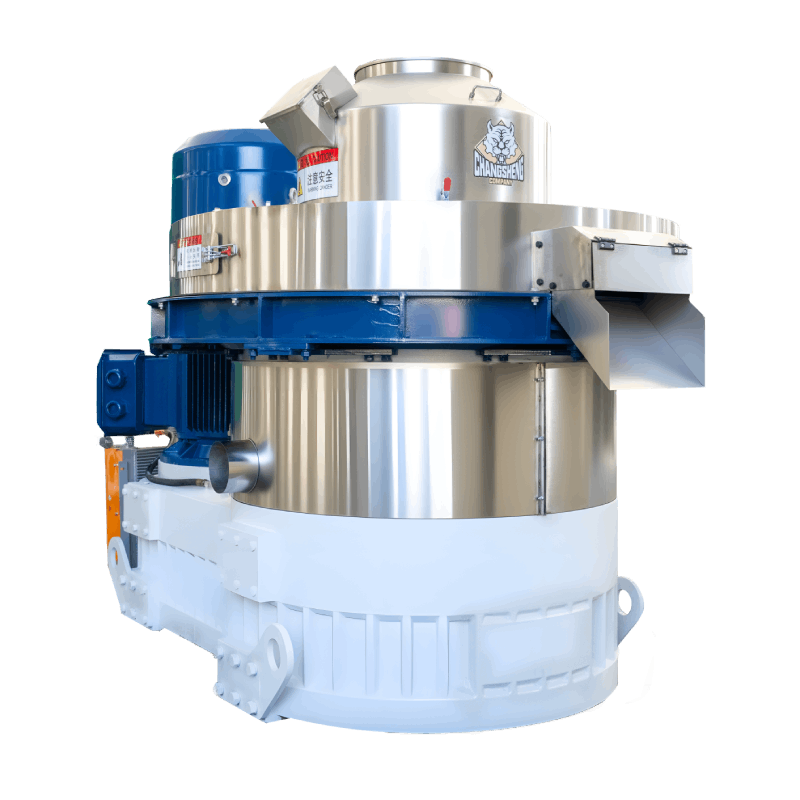
Wood Pellet Mill: Complete Buyer’s Guide
News 2026-08-17
Page SEO Summary: This in-depth buyer’s guide helps procurement professionals evaluate wood pellet mills—covering die compression ratio, component quality, 24/7 operation suitability, TCO analysis, and supplier assessment.
How to Choose the Right Wood Pellet Mill
When you are ready to buy a wood pellet mill, the decision is not about definitions. It is about which machine will deliver reliable production, consistent quality, and strong ROI for your specific operation.
This guide focuses on the procurement decision. Before you buy, you need to answer these questions:
| Decision Factor | What You Need to Know |
|---|---|
| Raw material | What wood will you process? Softwood, hardwood, bark, mixed? |
| Moisture | What is the moisture content? Do you need drying? |
| Required capacity | How many tons per hour or per year? |
| Pellet size | What diameter and length? |
| Operating hours | 8 hours, 16 hours, or 24/7? |
| Power supply | Single-phase or 3-phase? What voltage? |
| Die compression ratio | Which L/D ratio suits your material? |
| Complete-line requirements | Do you need crushing, drying, cooling, packing? |
| Budget | What is your total investment range? |
| Supplier support | What installation, training, and after-sales support? |
A wood pellet mill from a manufacturer like Shandong Changsheng Machinery Co., Ltd. is configured based on these specific factors—not a one-size-fits-all approach.
Wood Pellet Mill vs Wood Pellet Machine: Term Clarification
These terms are often used interchangeably. For procurement purposes:
| Term | Meaning |
|---|---|
| Wood pellet mill | The core machine that forms pellets |
| Wood pellet machine | Can refer to the same machine, or a complete line |
| Complete pellet production line | The full system including crushing, drying, pelletizing, cooling, screening, packing |
What should you look at when buying a wood pellet mill? Focus on the die type, compression ratio, component quality, and supplier capability—not just the name.
Flat Die vs Ring Die: Detailed Procurement Comparison
This is the most consequential decision in wood pellet mill selection.
| Factor | Flat Die | Ring Die |
|---|---|---|
| Capacity | Small (30-300 kg/h) | Medium/Large (200-5,000+ kg/h) |
| Initial cost | Lower | Higher |
| Continuous operation | Limited | Better |
| Wear parts | Simpler | More components |
| Commercial production | Limited | Suitable |
| 24/7 operation | Less suitable | Better suited |
| Large-scale line | No | Yes |
| Pellet quality | Good | Excellent |
| Die life | Shorter (100-300 hours) | Longer (300-600+ hours) |
| Maintenance | Simpler | More involved |
Why Ring Die is Better for Commercial Production
| Reason | Explanation |
|---|---|
| Forced feed | Material is pushed into the die, ensuring even distribution |
| Uniform wear | Consistent material distribution across the die face |
| Better heat dissipation | Vertical orientation allows better cooling |
| Higher capacity | Designed for continuous, high-volume production |
| Longer die life | Even wear extends die life significantly |
Selection Decision Matrix
| If Your Operation | Choose |
|---|---|
| Produces <200 kg/h, intermittent | Flat die |
| Produces >200 kg/h, continuous | Ring die |
| Budget under $5,000 | Flat die |
| Budget $5,000-$15,000 | Ring die (small) |
| 24/7 operation | Ring die |
| Multiple shift operation | Ring die |
| Commercial pellet sales | Ring die |
Need help choosing? Send your raw material details and required capacity for a machine recommendation.
Why Die Compression Ratio Matters
The die compression ratio (L/D ratio) is one of the most important specifications in wood pellet mill selection. It determines how much the material is compressed as it passes through the die.
What Is Compression Ratio?
Compression Ratio = Effective Length of Die Hole (L) ÷ Die Hole Diameter (D)
| L/D Ratio | Classification | Best For |
|---|---|---|
| 1:6 to 1:8 | Low | Softwood, low-density materials |
| 1:8 to 1:10 | Medium | Mixed wood, general purpose |
| 1:10 to 1:12 | Medium-High | Hardwood, higher density |
| 1:12 to 1:16 | High | Bark, high-fiber materials |
| 1:16 to 1:20 | Very High | Agricultural residues, challenging materials |
How to Select Compression Ratio
| Factor | Impact on Compression Ratio |
|---|---|
| Raw material | Softwood needs lower ratio; hardwood needs higher |
| Density | Higher density requires higher compression |
| Moisture | Higher moisture may require adjustment |
| Pellet diameter | Smaller diameter may need higher ratio |
| Pellet quality target | Higher durability requires higher ratio |
Important Warning
Do not select a ring die based only on the word “wood.”
| Material | Actual Conditions Differ |
|---|---|
| Softwood | Lower compression, easier pelletizing |
| Hardwood | Higher compression, more energy required |
| Bark | Higher compression, higher ash |
| Mixed sawdust | Variable, requires testing |
Procurement Recommendation: Always provide your raw material sample and moisture content to the manufacturer. A reliable supplier like Shandong Changsheng Machinery Co., Ltd. will test your material and recommend the correct compression ratio—not just a generic “wood” die.
Wood Pellet Mill Selection by Feedstock
This is where procurement decisions become material-specific.
Sawdust
| Factor | Consideration |
|---|---|
| Moisture | Check before processing |
| Particle size | Usually suitable (2-5 mm) |
| Pellet diameter | 6-8 mm standard |
| Die selection | Based on softwood/hardwood mix |
| Pre-processing | Drying only (if moisture high) |
Wood Chips
| Factor | Consideration |
|---|---|
| Crushing | Required (hammer mill) |
| Hammer mill | 2-5 mm output |
| Drying | Required if moisture >12% |
| Pellet mill | Ring die recommended |
| Complete line | Crusher + dryer + pellet mill + cooler |
Bark
| Factor | Consideration |
|---|---|
| Ash content | Higher ash (affects pellet grade) |
| Compression ratio | Higher (1:10 to 1:14) |
| Conditioning | Important for binding |
| Die selection | Higher L/D ratio |
| Blending | May blend with other materials |
Hardwood
| Factor | Consideration |
|---|---|
| Density | Higher than softwood |
| Compression ratio | Higher (1:9 to 1:12) |
| Power requirement | 10-15% higher |
| Die life | Shorter than softwood |
| Motor power | Higher power recommended |
Softwood
| Factor | Consideration |
|---|---|
| Density | Lower than hardwood |
| Compression ratio | Lower (1:6 to 1:9) |
| Power requirement | Standard |
| Die life | Longer |
| Pellet quality | Excellent |
Mixed Wood
| Factor | Consideration |
|---|---|
| Consistency | Variable |
| Compression ratio | Medium (1:8 to 1:10) |
| Die selection | Balanced for mix |
| Testing | Recommended |
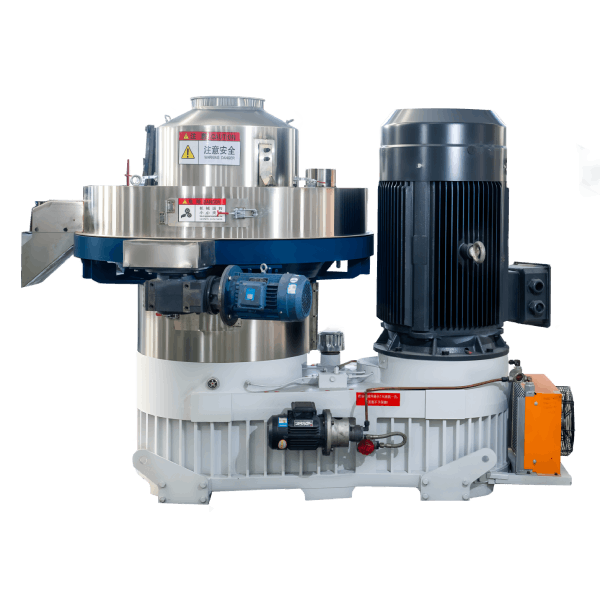
How to Choose Pellet Mill Motor Power
Motor power is not a simple formula. It depends on multiple factors.
Factors Affecting Motor Power Selection
| Factor | Impact |
|---|---|
| Raw material | Harder materials require more power |
| Moisture | Higher moisture may increase power |
| Pellet diameter | Smaller diameter may require more pressure |
| Compression ratio | Higher ratio requires more power |
| Required output | Higher output requires more power |
| Machine design | Different designs have different efficiency |
| Operating conditions | Continuous operation requires more robust power |
Motor Power Examples (Not Absolute Formula)
| Capacity | Material | Typical Motor Power |
|---|---|---|
| 300 kg/h | Softwood | 55-75 kW |
| 300 kg/h | Hardwood | 75-90 kW |
| 500 kg/h | Softwood | 75-90 kW |
| 500 kg/h | Hardwood | 90-110 kW |
| 1 t/h | Mixed wood | 110-132 kW |
| 2 t/h | Softwood | 132-160 kW |
| 2 t/h | Hardwood | 160-200 kW |
Procurement Recommendation: Provide your material sample and required output to the manufacturer. They will recommend the correct motor power based on actual testing—not a generic formula.
Core Components: What to Check Before Buying
Bearing Quality
| Factor | What to Check | Why Important |
|---|---|---|
| Load capacity | Rated for continuous load | Reliability |
| Operating temperature | Suitable for your conditions | Longevity |
| Sealing | Dust and moisture protection | Contamination prevention |
| Lubrication | Proper system design | Reduced wear |
| Expected service conditions | Matches your operation | Performance |
| Brand | SKF, FAG, NSK preferred | Quality assurance |
Gearbox
| Factor | What to Check | Why Important |
|---|---|---|
| Continuous load | Service factor >2.0 | Reliability |
| Transmission efficiency | >95% | Energy cost |
| Cooling | Adequate for 24/7 | Longevity |
| Lubrication | Oil cooling system | Reliability |
| Manufacturer/brand | Premium brand | Quality |
Die
| Factor | What to Check | Why Important |
|---|---|---|
| Material | X46Cr13 or equivalent | Wear resistance |
| Heat treatment | Proper hardening | Die life |
| Thickness | Appropriate for compression | Pellet quality |
| Compression ratio | Matches your material | Performance |
| Hole diameter | Matches pellet size | Application |
Roller
| Factor | What to Check | Why Important |
|---|---|---|
| Wear resistance | Hardened surface | Roller life |
| Surface condition | Smooth, uniform | Pellet quality |
| Bearing | Premium brand | Reliability |
| Adjustment | Precise gap control | Compression consistency |
Is the Pellet Mill Suitable for 24/7 Operation?
“Can start” is not the same as “can run continuously.”
What 24/7 Operation Requires
| Component | Requirement |
|---|---|
| Motor | Premium efficiency, continuous duty |
| Gearbox | Heavy-duty, service factor >2.0 |
| Bearings | Premium brands (SKF/FAG/NSK) |
| Lubrication | Automatic system recommended |
| Cooling | Oil cooling for gearbox, adequate motor cooling |
| Die | Premium material, proper compression |
| Roller | Hardened, replaceable shells |
| Spare parts | Critical spares on hand |
| Maintenance | Scheduled preventive maintenance |
24/7 Operation Checklist
| Item | Check |
|---|---|
| Motor duty rating | ☐ |
| Gearbox service factor | ☐ |
| Bearing brand | ☐ |
| Lubrication system | ☐ |
| Cooling system | ☐ |
| Die material | ☐ |
| Roller material | ☐ |
| Spare parts strategy | ☐ |
| Maintenance plan | ☐ |
Procurement Reality: Not all wood pellet mills are designed for 24/7 operation. If continuous production is your goal, specify this requirement to your supplier and verify the components that support it.
True Cost of Owning a Wood Pellet Mill
Machine price alone does not represent the cost of a complete pellet production line.
Total Cost Components
| Cost Category | What to Include |
|---|---|
| Machine | Pellet mill only, or complete line |
| Electricity | Energy consumption per ton |
| Dryer | If moisture >12% |
| Wear parts | Dies, rollers, bearings |
| Maintenance | Labor, spare parts |
| Installation | Installation and commissioning |
| Labor | Operators, maintenance staff |
Cost per Ton Calculation
Example: 300 kg/h machine, 2,000 hours/year = 600 tons/year
| Cost Factor | Annual Cost | Cost per Ton |
|---|---|---|
| Equipment (amortized over 5 years) | $3,000-6,000 | $5-10/ton |
| Die and rollers | $2,000-4,000 | $3.50-7/ton |
| Energy | $5,000-8,000 | $8-13/ton |
| Maintenance | $1,000-3,000 | $1.50-5/ton |
| Total production cost | $11,000-21,000 | $18-35/ton |
Why Two Machines with Similar Prices Can Have Different Operating Costs
| Factor | Impact |
|---|---|
| Component quality | Better bearings and gearbox reduce downtime |
| Die material | Premium dies last 2-3× longer |
| Energy efficiency | Efficient motors reduce electricity cost |
| Maintenance design | Easier maintenance reduces labor cost |
| Spare parts availability | Reduces downtime waiting for parts |
Key Insight: Equipment purchase is typically 30-50% of total 5-year cost. Energy and consumables (dies, rollers) are the hidden costs that most buyers underestimate.
How to Choose a Reliable Wood Pellet Mill Manufacturer
Verification Checklist
| Check | What to Look For |
|---|---|
| Factory | Specific, industrial, verifiable |
| Production capability | In-house manufacturing |
| Machine testing | Comprehensive testing before shipment |
| Raw material testing | Can test your material |
| Spare parts | Availability and lead time |
| Warranty | Duration and coverage |
| Installation | Scope and support |
| After-sales support | Responsiveness and capability |
| Existing customer projects | References and site visits |
| Video of actual production | Proof of manufacturing |
| Component quality | Brand verification |
Red Flags vs. Green Lights
| Indicator | Green Light (Manufacturer) | Red Flag (Trader) |
|---|---|---|
| Factory address | Specific, industrial, verifiable | Vague, office building, generic |
| Factory video/photos | Specific, current, production floor | Generic, stock images |
| Technical questions | Answered by engineers | Answered by sales only |
| Product range | Focused, consistent | Broad, inconsistent |
| Years in business | 10+ years | <5 years |
| Raw material testing | Offers to test your material | Cannot test |
A manufacturer like Shandong Changsheng Machinery Co., Ltd. can provide factory verification, material testing, and customer references to support your supplier evaluation.
10 Questions to Ask Before Buying a Wood Pellet Mill
Use this checklist when evaluating suppliers.
| # | Question | Why Ask |
|---|---|---|
| 1 | What raw material will you test? | Verifies material capability |
| 2 | What moisture content will you use? | Confirms drying requirements |
| 3 | What output can you guarantee with my material? | Performance guarantee |
| 4 | What pellet diameter will you produce? | Application match |
| 5 | What die compression ratio will you use? | Correct die selection |
| 6 | What motor and gearbox are included? | Component quality |
| 7 | What are the main wear parts? | Operating cost |
| 8 | How often do they need replacement? | Maintenance planning |
| 9 | What is included in the complete line? | Scope clarity |
| 10 | Can you test my raw material before purchase? | Verification |
Next Step: Send your raw material + moisture + required capacity for a machine recommendation.
Procurement Decision Checklist
Before Contacting Suppliers
- □ Feedstock type and moisture confirmed
- □ Target capacity (kg/h or t/h) calculated
- □ Power supply (voltage, phase) confirmed
- □ Space available (height matters for ring die)
- □ Budget range established
During Supplier Evaluation
- □ Component brands verified in writing
- □ Die material and expected life stated
- □ Warranty duration and coverage confirmed
- □ Spare parts availability and lead time confirmed
- □ Installation and training scope defined
- □ Raw material testing offered
Before Final Decision
- □ Compare total delivered cost (not just FOB price)
- □ Verify component quality across quotes
- □ Check reference calls completed
- □ Payment terms negotiated (milestone payments)
- □ Delivery timeline confirmed
Frequently Asked Questions
1. How do I choose a wood pellet mill?
Choose based on your raw material, moisture content, required capacity, pellet size, operating hours, power supply, and budget. Match the die compression ratio to your material and select the right type (flat die or ring die).
2. Flat die or ring die—which is better?
Neither is universally better. Flat die is better for small-scale, low-budget operations. Ring die is better for commercial-scale, high-quality, continuous production.
3. What capacity should I choose?
Calculate your target annual production and divide by operating hours. Add 20% margin. For 500 tons/year with 2,500 hours, you need 0.24 t/h—choose a 300 kg/h machine.
4. What moisture content is required?
10-12% is optimal. Below 8% causes poor binding; above 15% causes steam issues and poor pellet quality. If your material exceeds 12-15%, you need a drying system.
5. How do I choose the die compression ratio?
Match the compression ratio to your raw material. Softwood needs 1:6 to 1:9. Hardwood needs 1:9 to 1:12. Bark needs 1:10 to 1:14. Always test your material before selecting.
6. How much does a commercial wood pellet mill cost?
Flat die: $500-5,000. Ring die: $5,000-80,000+. Complete lines: $50,000-150,000+. Total cost depends on capacity, components, and scope.
7. How long do dies and rollers last?
Die life varies by material and quality. Premium dies processing softwood last 3,000-4,000 hours. Standard dies processing hardwood last 1,500-2,500 hours. Rollers typically last 1,500-3,000 hours.
8. Can a wood pellet mill run 24/7?
Not all machines are designed for 24/7 operation. It requires premium components, proper lubrication, adequate cooling, and a preventive maintenance plan. Specify 24/7 operation to your supplier and verify the supporting components.
9. What equipment is needed for a complete wood pellet production line?
A complete line includes: crushing (hammer mill), drying (dryer), pelletizing (pellet mill), cooling (cooler), screening (screener), and packing (bagging system). The specific equipment depends on your raw material and capacity.
10. What should I check before buying from a manufacturer?
Check factory address, production capability, machine testing, raw material testing, spare parts, warranty, installation support, after-sales service, customer references, and component quality. Request video of actual production and verify component brands in writing.
About the Author
Zhang Wei – Senior International Sales Engineer, Shandong Changsheng Machinery Co., Ltd.
Zhang Wei has over 12 years of experience in the biomass and feed pellet mill industry, with a background in mechanical engineering and international project execution. He has worked with clients across Southeast Asia, the Middle East, Africa, Europe, and Latin America, providing practical solutions for wood pellet production.
With hands-on experience in both the manufacturing workshop and client-side operations, Zhang brings practical insights into successful equipment procurement—from the factory floor to the customer’s production site.