Pellet Machine for Wood Workshop Waste 50-800kg/h | Supplier Guide
News 2026-06-29
Product Definition
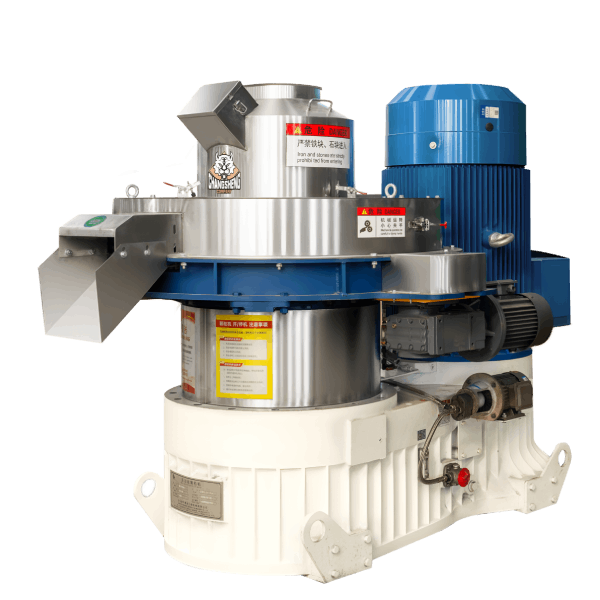
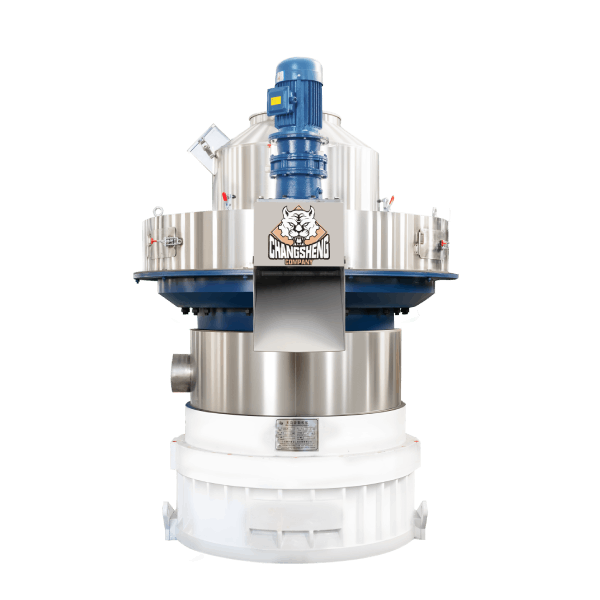
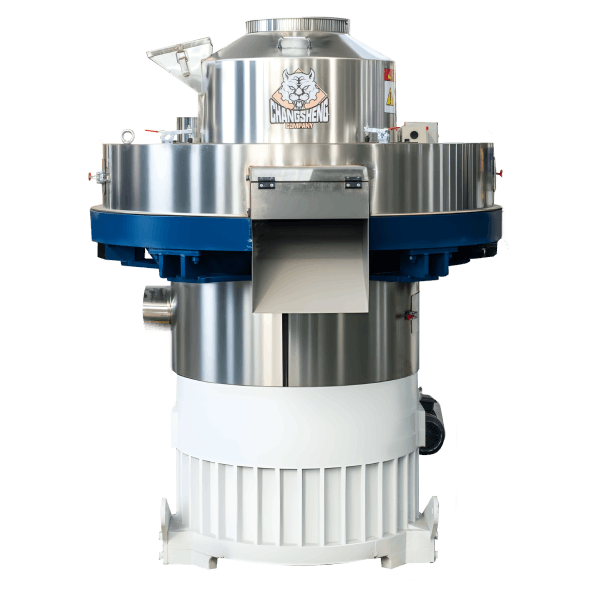
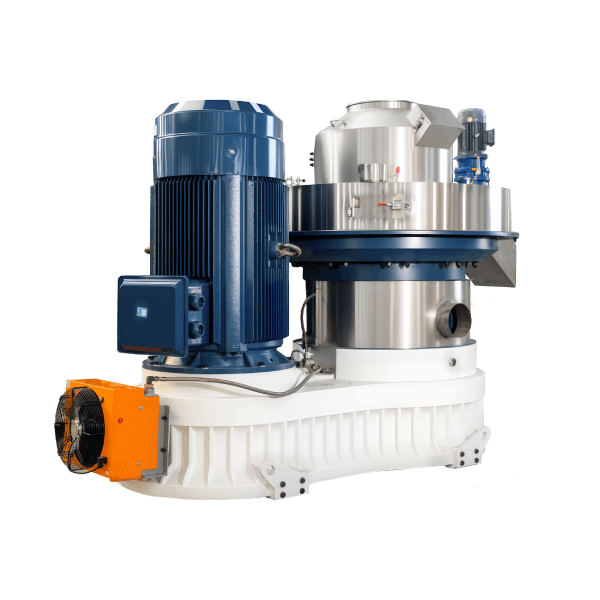
A pellet machine for wood workshop waste is a flat die compaction system that converts sawdust, wood shavings, and small offcuts from woodworking operations into dense cylindrical fuel pellets. Designed for workshop-scale production, these machines transform a problematic waste stream into a valuable heating fuel or saleable product.
Technical Specifications & Performance Parameters
| Parameter | Value Range / Specification |
|---|---|
| Throughput capacity | 50 – 800 kg/h (feedstock-dependent) |
| Main motor power | 5.5 – 55 kW (electric) or diesel engine option |
| Die type | Flat die (D-type configuration) |
| Die diameter | 200 – 550 mm |
| Pellet diameter | 4 – 12 mm (customisable) |
| Pellet bulk density | 600 – 750 kg/m³ |
| Raw material moisture | 12% – 18% (optimal: 14% – 16%) |
| Specific energy consumption | 40 – 70 kWh/t |
| Die service life | 500 – 700 hours |
| Roller service life | 600 – 800 hours |
| Maintenance man-hours | 2 – 4 h / week |
Structural Composition & Material Selection
The wood workshop pellet machine integrates four functional subsystems with defined material grades:
Mechanical System
- Flat die: 40Cr alloy steel, carburised hardening layer (HRC 55–58)
- Rollers: High-chromium cast iron (Cr26) with wear-resistant overlay
- Main shaft: Heat-treated 42CrMo4 steel with induction-hardened journals
- Gearbox: Helical-gear configuration for smooth power transmission
Support System
- Frame: Cast steel or heavy welded construction
- Vibration-damping mounts for stable operation
- Compact footprint for workshop installation
Lubrication System
- Manual grease lubrication for bearings
- Lubrication interval: every 4–8 operating hours
Control System
- Emergency stop button
- Optional VFD for speed control
- Manual operation with basic controls
Manufacturing Process – Engineering Workflow
Step 1 – Wood Waste Collection & Sorting
Sawdust and shavings collected from workshop operations. Remove metal contaminants (nails, screws) using magnetic separator. Screen out oversized particles.
Step 2 – Drying & Moisture Control
Workshop wood waste typically has 10%–15% moisture. Sawdust may need drying; shavings may need addition. Target 14%–16% for optimal pelletisation.
Step 3 – Pelletising (Core Forming Process)
Material enters flat die chamber. Rollers compress wood particles through die holes under high pressure. Lignin acts as natural binder at elevated temperature, forming dense pellets.
Step 4 – Cooling
Pellets exit machine at 80–90°C. Cooling required to harden and reduce moisture to ≤12% for storage stability.
Step 5 – Screening & Bagging
Pellets screened to remove fines. Bagged for storage or sale. Proper storage prevents moisture reabsorption.
Industry Comparison – Wood Waste Processing Options
| Equipment Type | Feedstock | Capacity | Pellet Size | Typical Application |
|---|---|---|---|---|
| Workshop Pellet Machine | Sawdust, shavings, offcuts | 50 – 800 kg/h | 4 – 12mm | Small workshops, joinery |
| Large Industrial Pellet Mill | Wood chips, sawdust | 1 – 10 t/h | 6 – 12mm | Large wood processing plants |
| Briquetting Press | Shavings, chips | 0.2 – 2.0 t/h | 50 – 100mm | Heating, industrial fuel |
| Wood Chipper | Logs, large offcuts | 1 – 10 t/h | 5 – 30mm | Pre-processing only |
Differentiation (Shandong Changsheng Machinery):
Our workshop pellet machines are designed for sawdust and shavings – materials with consistent particle size and low contamination. The flat die design is tolerant of the variable moisture found in workshop waste. Compact construction enables installation in existing workshop spaces without major modifications. Electric motor drive suits workshop power supply.
Application Scenarios by Buyer Role
Distributors / Importers
Focus on machine suitability for small woodworking businesses. Require low-cost consumables and simple maintenance.
EPC Contractors
Integrating workshop pellet machines into waste management systems. Need compact footprint and simple installation.
Engineering Consultants / Technical Advisors
Evaluate workshop-scale feasibility. Require economic data – waste disposal cost avoided plus pellet sale value.
End-user Production Facilities
Joinery shops, furniture manufacturers, and sawmills. Demand reliable operation and conversion of waste to saleable fuel.
Core Pain Points & Engineering Solutions
Pain Point 1 – Sawdust compacting and bridging in hopper
Root cause: Fine sawdust has poor flow characteristics – bridges in hopper.
Solution: Agitator in feed hopper. Proper particle size mix (sawdust + shavings improves flow). Vibration assistance.
Pain Point 2 – Variable moisture from different wood sources
Root cause: Workshop wood waste varies from dry (10%) to green (40%).
Solution: Moisture meter for feedstock testing. Pre-dry or condition to 14%–16%. Mixing dry and wet material.
Pain Point 3 – Pellet cracking from excessive heat
Root cause: High friction generates excessive heat – pellets crack on cooling.
Solution: Adjust roller gap for optimum pressure. Reduce speed for problematic materials. Proper die compression ratio.
Pain Point 4 – High energy consumption at workshop scale
Root cause: Small machines have lower efficiency than industrial systems.
Solution: VFD to optimise speed. Proper die selection for material. Maintain sharp rollers.
Critical Risk Warnings & Mitigation Measures
Risk 1 – Dust explosion risk from fine wood dust
Mitigation: Install dust extraction system. Keep workshop clean. Use explosion-proof electrical components. No smoking or open flames.
Risk 2 – Metal contamination damaging die
Mitigation: Install magnetic separator before pelleting. Inspect feedstock for nails, screws. Use metal detector.
Risk 3 – Overloading motor from oversize material
Mitigation: Pre-screen material to ≤6mm. Use hammer mill for large offcuts. Monitor motor current.
Procurement Selection Guide – 7 Executable Steps
Step 1 – Analyse workshop wood waste
Quantity (kg/week), types (sawdust, shavings, offcuts), moisture range, and contamination level.
Step 2 – Determine required capacity
Select model with 20% margin above workshop waste volume. Available capacities: 50–800 kg/h.
Step 3 – Select pellet diameter
Common sizes: 6mm (domestic heating), 8mm (industrial), 10mm (larger systems). 6mm standard for workshop scale.
Step 4 – Verify workshop floor space
Compact footprint under 2m². Allow access for maintenance and cleaning.
Step 5 – Confirm power supply
Electric motor 5.5–55 kW. Verify workshop electrical capacity. Soft-start optional.
Step 6 – Plan for pre-processing equipment
Hammer mill for offcuts. Magnetic separator. Moisture meter.
Step 7 – Establish maintenance schedule
Weekly: roller and die inspection, lubrication. Monthly: gap adjustment, belt tension.
Engineering Case Study – Joinery Workshop in Germany
Project Background
A joinery workshop in Bavaria produced 200 kg/week of sawdust and shavings. Disposal cost €25/tonne – annual cost €260.
Initial Problem
Waste disposal was a cost and an environmental concern. Workshop had no value recovery from waste stream.
Root Cause Analysis
No pelletisation equipment. Workshop generated consistent wood waste stream with low moisture.
Solution Implemented
Acquired flat die pellet machine (100 kg/h capacity). Installed in workshop corner. Bags pellets for sale to local heating market.
Final Data Results
| Metric | Value |
|---|---|
| Waste processed | 200 kg/week |
| Pellet output | 150 kg/week (after drying/screening) |
| Disposal cost avoided | €260/year |
| Pellet sale revenue | €1,800/year |
| Payback period | < 2 years |
Frequently Asked Questions (FAQ)
1. What wood waste can a workshop pellet machine process?
Sawdust, wood shavings, small offcuts, planer shavings, and sanding dust.
2. What capacity is available for workshop scale?
50 – 800 kg/h, depending on model and feedstock.
3. What moisture is required?
12% – 18%, with 14% – 16% optimal. Most workshop wood waste is within this range.
4. What is the difference between flat die and ring die?
Flat die: lower capacity, workshop scale. Ring die: higher capacity, industrial scale.
5. How long does a flat die last?
500 – 700 hours, depending on feedstock. Replacement with rollers as a set.
6. Can I pelletise green (wet) wood waste?
Moisture must be reduced to ≤18% before pelleting. Pre-dry or mix with dry material.
7. What pellet diameter is standard?
6mm for domestic heating. 8mm and 10mm also available.
8. Is the machine easy to operate?
Yes – basic training required. Material conditioning is the critical factor.
9. What pre-processing is required?
Remove metal contaminants. Screen oversized particles. Adjust moisture.
10. What is the energy consumption?
40 – 70 kWh/t depending on material and machine.
11. Can the machine process board waste (MDF, OSB)?
Some board waste can be pelletised but may contain glue and resin. Recommended to test first.
12. What is the payback period?
Typically 1 – 3 years based on avoided disposal cost and pellet sale revenue.
Author & E-E-A-T Credentials
Author: Dr. Chen Wei
Title: Senior Mechanical Engineer, Pelletising Systems Division
Experience: 14 years in biomass densification and feed processing equipment design
Notable Projects:
- Commissioned 12 workshop-scale pellet machines across joinery and furniture manufacturers in Europe and Asia (2016–2025)
- Developed workshop waste assessment and feed preparation protocols
- Co-author of “Industrial Pellet Mill Maintenance and Optimisation” (Engineering Press, 2022)
Affiliation: Shandong Changsheng Machinery Co., Ltd.