Wood Pellet Machine: Types, Production Process, Capacity & Cost
News 2026-08-15
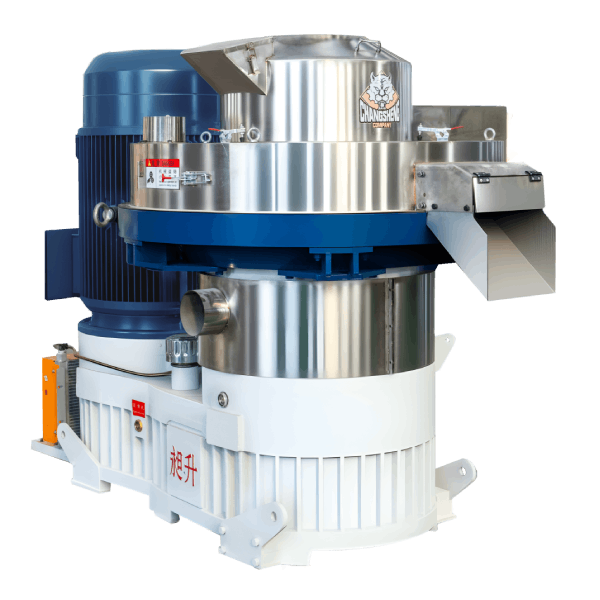
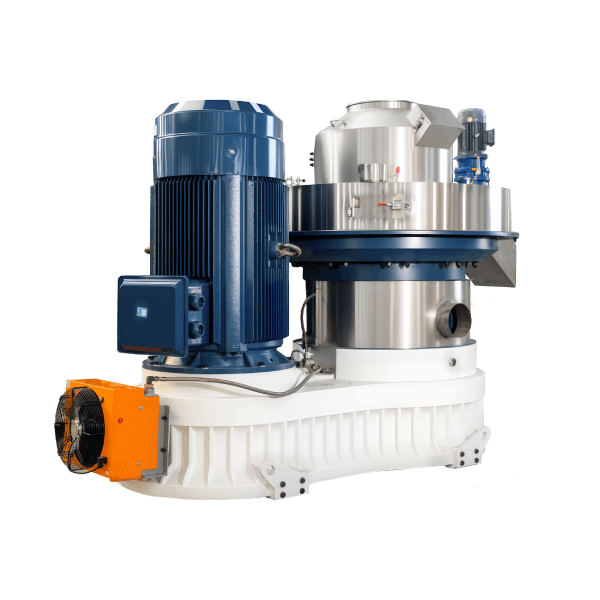
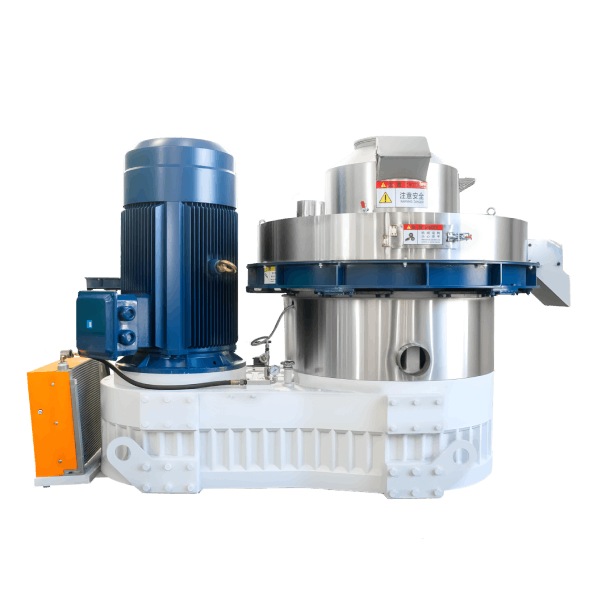
A wood pellet machine is designed to convert sawdust, wood chips, shavings, and other prepared wood residues into dense fuel pellets. The correct machine configuration depends on raw material moisture, particle size, required pellet diameter, production capacity, and whether the project requires a standalone pellet mill or a complete production line.
This guide is written for procurement managers, importers, EPC contractors, distributors, and end users. It covers wood raw materials, raw material preparation, the complete wood pellet production process, equipment requirements, capacity selection, project cost, pellet quality, and procurement. For generic pellet mill types and machine selection, see the separate pellet mill guide on this site.
What Is a Wood Pellet Machine?
A wood pellet machine, also called a wood pellet mill, compresses prepared wood material into dense cylindrical pellets used as fuel for heating, power generation, and industrial applications.
A wood pellet machine can be configured as a standalone unit or as part of a complete production line. Configuration depends on raw material condition, target pellet quality, and production scale. Typical target moisture before pelletizing is around 10 to 15 percent and typical particle size is 2 to 5 mm, but these values depend on wood species, die compression ratio, and machine type, so they should be confirmed with a pelletizing test.
How Wood Pellet Machines Work
Wood material is fed into the die chamber, pressed through die holes by rollers, heated by friction, and bound by natural binders such as lignin. Pellets exit the die and are cut to length, then cooled and screened.
The working principle is the same as other pellet mills. What makes wood pellet production different is the raw material preparation, especially crushing, drying, and fine grinding.
Wood Pellet Machine vs Pellet Mill
A pellet mill is the general term for the core compression machine. A wood pellet machine is a pellet mill configured for wood materials, with die compression ratio, feeding, and wear-resistant components selected for wood.
In practice, the terms are often used interchangeably. What matters for procurement is the die and roller specification, motor power, feeder type, and auxiliary equipment scope. For a full comparison of flat die and ring die types, see the separate pellet mill guide on this site.
What Raw Materials Can a Wood Pellet Machine Process?
Sawdust
Sawdust is the most common raw material for wood pellet production. Particle size is usually already suitable for pelletizing, so the main requirement is moisture control. Typical target moisture before pelletizing is around 10 to 15 percent, depending on wood species, die compression ratio, and machine configuration. The exact target should be confirmed with a pelletizing test.
Sawdust produces good pellet quality when moisture and particle size are consistent. If moisture is too high, drying is required. If moisture is too low, binding may be poor.
Wood Chips
Wood chips require grinding before pelletizing. A hammer mill is usually needed to reduce particle size to a range suitable for the die. Moisture control is also required. Wood chips from fresh timber may have high moisture and need drying.
Wood chips produce good pellets when ground to a consistent particle size and moisture range. Inconsistent chip size causes uneven feeding and unstable pellet quality.
Wood Shavings
Wood shavings are lighter and bulkier than chips. They require grinding and usually drying. Because shavings have low bulk density, storage and feeding equipment should be sized accordingly.
Shavings from clean, untreated wood pelletize well. Shavings with glue, paint, or other contaminants should be avoided.
Sawmill Waste
Sawmill waste usually has consistent quality and is one of the best raw materials for wood pellet production. Moisture varies by source, so drying may be required. Bark content should be controlled, because bark increases ash content.
Sawmill waste is often the preferred material for commercial wood pellet production because of consistent supply and quality.
Hardwood and Softwood
Hardwood and softwood can both be pelletized. Softwood usually has higher lignin content and produces strong pellets. Hardwood may require different die compression ratio and may produce slightly different pellet durability.
Mixing hardwood and softwood is common in commercial production. The mix ratio should be consistent to keep pellet quality stable.
Forestry Residues
Forestry residues include branches, tops, and thinning material. They usually require chipping, grinding, and drying before pelletizing. Bark and dirt content may be higher, which increases ash and die wear.
Forestry residues are suitable for wood pellet production when properly prepared. Ash content should be checked against the target pellet grade.
Wood Pellet Raw Material Preparation
Particle Size
Particle size affects feeding stability, compression, pellet density, and die wear. Target particle size for wood pelletizing is usually in the range of 2 to 5 mm. This range depends on die specification, machine type, and wood species. The exact target should be confirmed with a pelletizing test.
If particle size is too coarse, feeding becomes uneven and pellets are weak. If particle size is too fine, material may bridge in the feeder and die blockage risk increases.
Moisture Content
Moisture is the most important process variable in wood pellet production. Typical target moisture before pelletizing is around 10 to 15 percent. This range depends on wood species, die compression ratio, and machine configuration. It is a typical target range, not an absolute standard. The exact target should be determined by a pelletizing test with your actual material.
If material is too dry, binding is poor, pellets are weak, and fines increase. If material is too wet, compression is poor, the die may block, and throughput drops.
Contamination and Bark
Contaminants such as nails, stones, plastic, and treated wood damage dies and rollers. Bark increases ash content and reduces pellet grade. Clean, untreated wood is preferred for premium pellet production.
Crushing Requirements
Crushing reduces large wood pieces to a size suitable for hammer milling. A chipper or crusher is used for large pieces such as branches and slabs.
Drying Requirements
Drying reduces moisture to the range suitable for pelletizing. A rotary dryer or belt dryer is commonly used. Drying cost depends on initial moisture, target moisture, fuel type, and dryer efficiency.
Fine Grinding
Fine grinding is done with a hammer mill. Screen size determines final particle size. Consistent particle size improves feeding stability and pellet quality.
Moisture Conditioning Before Pelletizing
Moisture conditioning adjusts material moisture and temperature just before pelletizing. In wood pellet production, conditioning is usually limited compared with feed production, because wood relies mainly on lignin and friction heat. However, in cold climate or dry material conditions, light conditioning can improve binding and reduce fines. Conditioning requirements should be confirmed with a pelletizing test.
Wood Pellet Production Process
The complete wood pellet production process includes eight main stages. Each stage can be described by input, equipment, function, control point, and output.
1. Raw Material Receiving
Input: Wood waste from sawmill, forestry, or wood processing.
Equipment: Hopper, conveyor, storage area.
Function: Receive, inspect, and store material.
Control point: Consistent supply and quality.
Output: Stored wood material ready for crushing.
2. Crushing
Input: Large wood pieces.
Equipment: Chipper or crusher.
Function: Reduce piece size for hammer milling.
Control point: Output size suitable for the next stage.
Output: Small wood pieces.
3. Drying
Input: Wood material with high moisture.
Equipment: Rotary dryer or belt dryer.
Function: Reduce moisture to target range.
Control point: Final moisture within the range suitable for pelletizing.
Output: Dried wood material.
4. Fine Grinding
Input: Dried wood material.
Equipment: Hammer mill.
Function: Grind to consistent particle size.
Control point: Particle size within the range suitable for the die.
Output: Ground wood material.
5. Pelletizing
Input: Ground wood material.
Equipment: Pellet mill.
Function: Compress material through the die to form pellets.
Control point: Feed rate, die temperature, pellet quality.
Output: Hot, soft wood pellets.
6. Cooling
Input: Hot, soft pellets.
Equipment: Counterflow cooler.
Function: Cool and harden pellets.
Control point: Pellet temperature and moisture after cooling.
Output: Cooled, hardened pellets.
7. Screening
Input: Cooled pellets.
Equipment: Vibrating screen.
Function: Remove fines and oversize particles.
Control point: Fines content within target.
Output: Sized pellets and returned fines.
8. Packing
Input: Sized pellets.
Equipment: Packing machine.
Function: Bag or bulk-load finished pellets.
Control point: Bag weight, sealing, and labeling.
Output: Finished wood pellets ready for storage or sale.
Each stage has specific input, equipment, function, control point, and output. If any stage is poorly controlled, the final pellet quality and production cost are affected.
What Equipment Is Needed for Wood Pellet Production?
Equipment: Chipper or crusher
Function: Reduce large wood pieces
Equipment: Hammer mill
Function: Fine grinding to consistent particle size
Equipment: Dryer
Function: Reduce moisture to target range
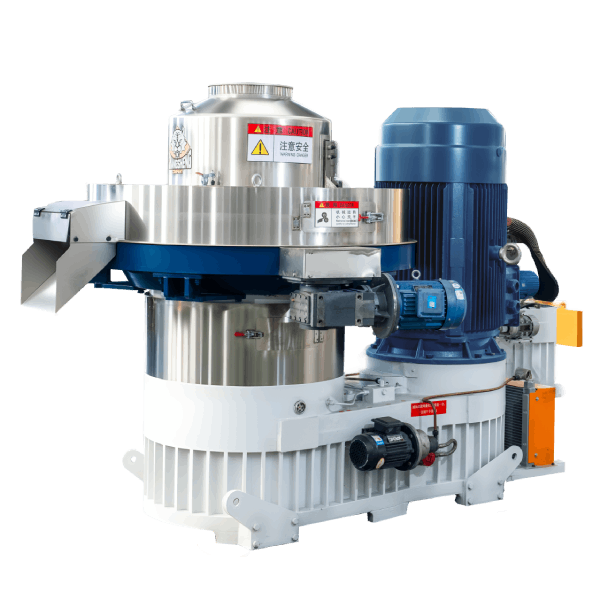
Equipment: Pellet mill
Function: Pellet formation
Equipment: Cooler
Function: Cooling and stabilization
Equipment: Screener
Function: Remove fines and oversize
Equipment: Packing machine
Function: Final packaging
Equipment scope depends on raw material condition and target pellet quality. A project using dry sawdust may need only a pellet mill, cooler, and screener. A project using wet wood chips may need a complete line with crushing, drying, and fine grinding.
Choosing a Wood Pellet Machine by Production Capacity
Small Production
Small production usually ranges from about 30 to 300 kg/h. This range depends on material, moisture, particle size, and die specification. It suits small farms, estates, and pilot projects. A flat die wood pellet machine is often used.
Commercial Production
Commercial production usually ranges from about 300 kg/h to 1.5 t/h. This range depends on material, moisture, particle size, and die specification. It suits pellet sales, cooperatives, and small plants. A small or medium ring die machine is often used.
Industrial Production
Industrial production usually ranges from about 1.5 to 5 t/h and above. This range depends on material, moisture, particle size, and die specification. It suits large-scale fuel production and export-oriented plants. A ring die machine with full auxiliary line is used.
Actual capacity depends on material type, moisture, particle size, pellet diameter, die specification, compression ratio, machine efficiency, and operating skill. A capacity figure without these conditions is not a technical commitment. For detailed comparison of flat die and ring die, see the separate pellet mill guide on this site.
Wood Pellet Machine Cost
Machine Cost
Machine cost depends on type, capacity, motor power, die specification, roller configuration, automation, and scope of supply.
Auxiliary Equipment
Auxiliary equipment may include chipper, crusher, hammer mill, dryer, cooler, screener, packing machine, and dust collection. Auxiliary equipment often represents a significant part of total project cost.
Complete Production Line
A complete wood pellet production line cost depends on capacity, raw material condition, drying requirement, automation level, cooling and screening scope, packing requirement, electrical system, and spare parts included.
Operating Cost
Operating cost includes raw material, power, labor, maintenance, spare parts, and downtime. For wood pellet production, drying fuel and power consumption are usually major cost items.
Wood pellet project cost is not the same as machine price. Final cost should be confirmed against a written scope of supply. For detailed price factor comparison, see the separate pellet mill guide on this site.
Wood Pellet Quality Requirements
Moisture
Finished wood pellets usually have moisture around 8 to 10 percent. The exact value depends on material and cooling conditions.
Ash
Ash content depends on raw material. Clean sawdust and debarked wood have lower ash. Bark, dirt, and contaminants increase ash.
Durability
Pellet durability depends on lignin content, compression ratio, moisture, and cooling. Higher durability means less fines and better handling.
Bulk Density
Bulk density depends on wood species, compression ratio, and pellet size. Higher bulk density improves storage and transport efficiency.
Fines
Fines content should be controlled by proper cooling and screening. High fines reduce fuel value and cause handling problems.
Pellet Diameter
Common wood pellet diameters are 6 to 8 mm for heating and industrial fuel. Other sizes are available depending on die specification and application.
ENplus and ISO 17225 Requirements
ENplus is a certification scheme for wood pellets, mainly used in Europe. It defines grades such as ENplus A1, A2, and B, with limits on ash, moisture, durability, and fines. The underlying fuel specification standard is ISO 17225, which defines solid biofuel classes. ENplus applies additional requirements on top of ISO 17225. Exact values should be confirmed against the current official standard, not estimated from general figures.
How Raw Material Affects Wood Pellet Quality
Sawdust
Clean sawdust produces strong pellets with low ash. Moisture and particle size must be controlled.
Hardwood
Hardwood may require different die compression ratio. Pellet durability depends on species and moisture.
Softwood
Softwood usually has higher lignin content and produces strong pellets. It is often preferred for premium grades.
Bark
Bark increases ash content and reduces pellet grade. Bark content should be controlled for premium applications.
Mixed Wood
Mixed wood produces acceptable pellets when the mix ratio is consistent. Variable mix ratio causes variable pellet quality.
Wood Chips
Wood chips must be ground to consistent particle size before pelletizing. Chip size variation causes unstable pellet quality.
Raw material affects moisture, lignin, ash, particle size, compression, and pellet durability. Consistent raw material is the foundation of consistent pellet quality.
Wood Pellet Machine vs Complete Production Line
A wood pellet machine alone may be sufficient when material is already dry and ground, such as dry sawdust, when production is for own use, and when pellet appearance is not critical.
A complete production line is usually needed when material is wet, coarse, or mixed, when production is for commercial sale or export, when pellet durability matters, or when storage time is long.
Decide based on material condition, target pellet quality, and sales channel, not on budget alone.
Wood Pellet Machine Procurement Checklist
Requirements: wood material type, moisture, particle size, target capacity, pellet diameter, power supply, operating hours, automation level.
Machine: die type, motor power, roller configuration, feeder type, lubrication, control mode.
Auxiliary equipment: chipper, crusher, hammer mill, dryer, cooler, screener, packing machine, dust collection.
Technical agreement: capacity with conditions, voltage, phase, frequency, control voltage, protection class, insulation class.
Spare parts: die, roller, bearings, belts, seals, with part numbers and recommended stock.
Supplier: factory capability, export experience, reference projects with wood material, test run, inspection terms, warranty process.
Frequently Asked Questions
What raw materials can a wood pellet machine process?
Sawdust, wood chips, wood shavings, sawmill waste, hardwood, softwood, mixed wood, and forestry residues. Clean, untreated wood is preferred.
What moisture content is suitable for wood pellet production?
Typical target moisture before pelletizing is around 10 to 15 percent, depending on wood species, die compression ratio, and machine configuration. The exact target should be confirmed by a pelletizing test.
Do wood chips need to be crushed before pelletizing?
Yes. Wood chips usually require grinding with a hammer mill to reach a consistent particle size suitable for the die.
Do I need a dryer for sawdust?
It depends on moisture. If sawdust moisture is above the suitable range for pelletizing, drying is required. Dry sawdust may not need a dryer.
What is the complete wood pellet production process?
Raw material receiving, crushing, drying, fine grinding, pelletizing, cooling, screening, and packing.
What equipment is needed for a wood pellet production line?
Chipper or crusher, hammer mill, dryer, pellet mill, cooler, screener, packing machine, and dust collection. Scope depends on raw material and target pellet quality.
Can hardwood and softwood use the same pellet machine?
Yes, but die compression ratio and process settings may differ. Mix ratio should be consistent to keep pellet quality stable.
What pellet diameter can a wood pellet machine produce?
Common wood pellet diameters are 6 to 8 mm for heating and industrial fuel, with other sizes available depending on die specification and application.
How do I calculate wood pellet production capacity?
Required hourly capacity equals annual production target divided by annual operating hours, plus a capacity margin of about 20 to 30 percent. The exact margin depends on material consistency, operating hours, and maintenance planning. Actual output depends on material, moisture, particle size, and die specification.
What affects wood pellet quality?
Moisture, lignin content, ash content, particle size, compression ratio, cooling, and screening all affect pellet quality.
Do I need a flat die or ring die machine?
Flat die machines suit small production and varied materials. Ring die machines suit commercial and industrial production. For detailed comparison, see the separate pellet mill guide on this site.
How much does a complete wood pellet production line cost?
Cost depends on capacity, raw material condition, drying requirement, automation, cooling and screening scope, packing, electrical system, and spare parts. A small line and an industrial line are in clearly different price categories. Final cost should be confirmed against a written scope of supply.
Author Introduction
This article was prepared by a technical content specialist with over ten years of experience in industrial equipment, wood and biomass processing machinery, and B2B export projects. The author has worked with wood pellet projects in Southeast Asia, the Middle East, Africa, Europe, and Latin America, and understands the practical challenges buyers face in raw material preparation, moisture control, production line configuration, and international procurement.
The content reflects real engineering practice in wood pellet machine selection, raw material preparation, production process design, quality control, and project execution. It is intended to help procurement managers, importers, EPC contractors, distributors, and end users make informed decisions and reduce project risk. The author is affiliated with Shandong Changsheng Machinery Co., Ltd.
Call to Action
If you are planning a wood pellet project and need help confirming raw material preparation, machine configuration, production line scope, capacity, or cost, you can request a technical proposal based on your wood material and required output. Share your wood material type, moisture, particle size, target capacity, pellet diameter, local power supply, and operating hours, and a suitable configuration can be recommended.
You can also request a quotation, ask for a process flow diagram, request a spare parts list, or arrange a video factory inspection before making a final decision. If you already have a quotation from another supplier, you can send the technical data for a comparison of configuration and total cost of ownership.