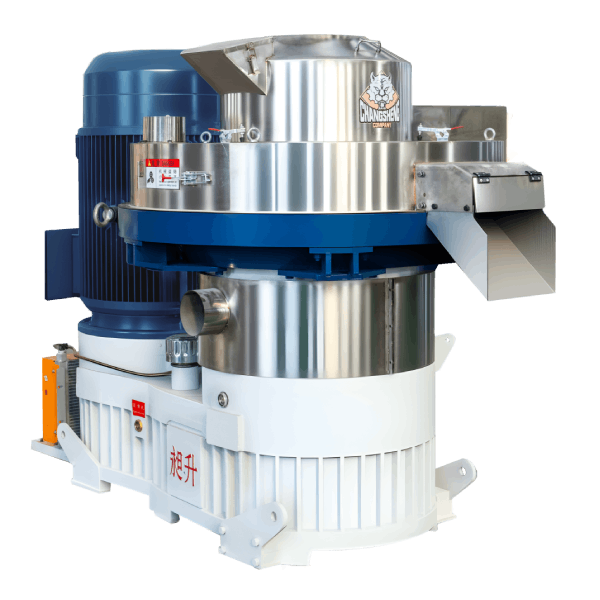
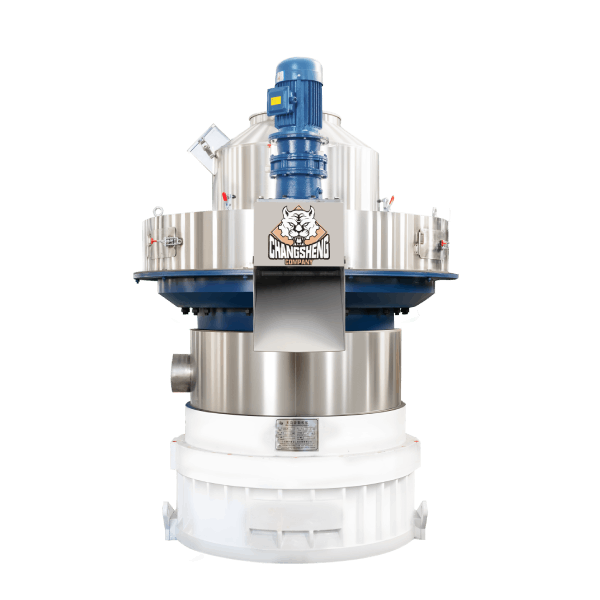
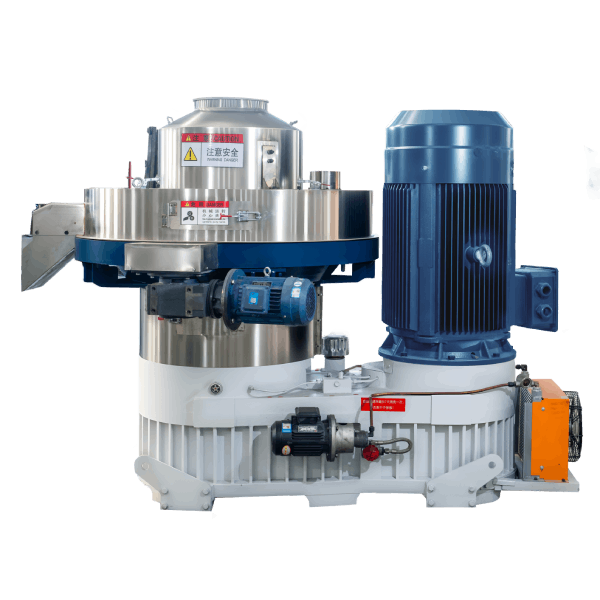
Page SEO Summary: This comprehensive comparison guide helps you understand the differences between pellet mills and briquette presses—covering products, equipment, applications, costs, and selection criteria.
When it comes to processing biomass into densified fuel, two main options exist: pellet mills and briquette presses. Both convert loose biomass into compact, high-density products, but they serve different markets, produce different products, and have different requirements.
Choosing between a pellet mill and a briquette press depends on your raw materials, target market, production scale, and budget. This guide provides a comprehensive comparison to help you make the right decision.
Basic Definitions
What Is a Pellet Mill?
Aspect
Detail
Product
Small cylindrical pellets (6-12 mm diameter, 10-30 mm length)
Larger blocks or logs (50-100 mm diameter, 100-500 mm length)
Process
High-pressure compaction in a chamber or through a die
Density
High (500-1,000+ kg/m³)
Typical capacity
50-3,000+ kg/h
Product Comparison: Pellets vs Briquettes
Physical Characteristics
Aspect
Pellets
Briquettes
Size
6-12 mm diameter
50-100 mm diameter
Length
10-30 mm
100-500 mm
Shape
Cylindrical
Cylindrical or rectangular
Density
600-750 kg/m³
500-1,000+ kg/m³
Moisture
8-12%
8-15%
Uniformity
Very uniform
Less uniform
Applications
Application
Pellets
Briquettes
Residential heating
Excellent
Good
Industrial combustion
Excellent
Good
Power generation
Excellent
Good
BBQ/cooking
Some
Yes (charcoal)
Export
High demand
Growing
Animal bedding
Yes
Limited
Household fuel
Good
Excellent (large logs)
Market Value
Aspect
Pellets
Briquettes
Market size
Very large
Smaller but growing
Price per ton
Higher
Lower to similar
Price per energy unit
Higher
Lower
Export potential
Very high
Moderate
Residential demand
High
Moderate-high
Equipment Comparison
Operating Principle
Aspect
Pellet Mill
Briquette Press
Principle
Extrusion through die holes
Compression in chamber/die
Key components
Die, rollers
Piston, screw, or rollers
Heat generation
High (friction)
Moderate
Binding mechanism
Lignin activation
Lignin activation + pressure
Types of Briquette Presses
Type
Description
Best For
Piston press
Reciprocating piston compresses material
High density; cylindrical briquettes
Screw press
Continuous screw extrusion
Consistent quality; high capacity
Roller press
Rollers compress material
Variable shapes; lower density
Capacity Comparison
Scale
Pellet Mill
Briquette Press
Small
30-100 kg/h
50-200 kg/h
Medium
100-500 kg/h
200-1,000 kg/h
Large
500-5,000+ kg/h
1,000-3,000+ kg/h
Advantages and Disadvantages
Pellet Mill Advantages
Advantage
Why It Matters
High-quality product
Premium market; higher price
Automated production
Continuous operation
Standardized product
Consistent quality
Wide market
Strong demand
Easy handling
Flows like grain
Good for export
Standard shipping
Pellet Mill Disadvantages
Disadvantage
Impact
Higher investment
More expensive equipment
Higher energy consumption
More power needed
More maintenance
Wear parts (die, rollers)
Milling required
Needs fine grinding
Material constraints
Requires certain properties
Briquette Press Advantages
Advantage
Why It Matters
Lower investment
Less expensive equipment
Lower energy consumption
Less power needed
Less grinding required
Accepts coarser material
Versatile material
Handles various biomass
Simple operation
Easier to operate
Lower maintenance
Fewer wear parts
Briquette Press Disadvantages
Disadvantage
Impact
Larger product
Requires more storage
Less uniform
Quality variations
Smaller market
Less demand
Lower price
Less value per ton
Less automation
More manual handling
Handling challenges
Bulky; harder to move
Application-Specific Recommendations
Residential Heating
Factor
Recommendation
Pellet stoves
Pellet mill
Wood boilers (pellet)
Pellet mill
Open fireplaces
Briquette press
Wood stoves
Briquette press
Both options
Consider both
Industrial Applications
Factor
Recommendation
Automated boilers
Pellet mill
Manual feed systems
Briquette press
Large-scale power
Pellet mill
Small industrial
Either
Export
Factor
Recommendation
Standard containers
Pellet mill
Bulk shipping
Pellet mill
Specialty markets
Briquette press
Farm/On-site Use
Factor
Recommendation
Small scale
Briquette press
Medium scale
Either
Commercial scale
Pellet mill
Cost Comparison
Investment Cost
Scale
Pellet Mill
Briquette Press
Difference
Small
$2,000-10,000
$1,500-5,000
Pellet 30-50% higher
Medium
$10,000-50,000
$5,000-20,000
Pellet 50-100% higher
Large
$50,000-200,000+
$20,000-80,000+
Pellet 50-100% higher
Operating Cost
Cost Item
Pellet Mill
Briquette Press
Energy per ton
Higher
Lower
Maintenance
Higher
Lower
Wear parts
More frequent
Less frequent
Labor
Lower (automated)
Higher (manual)
Cost per Ton Comparison
Aspect
Pellets
Briquettes
Production cost
Higher
Lower
Market price
Higher
Lower
Profit margin
Variable
Variable
Decision Framework
Questions to Ask Yourself
Question
Why It Matters
“What material will you process?”
Both handle different materials
“What is your target market?”
Product form matters
“What is your budget?”
Cost difference
“What scale do you need?”
Capacity requirements
“Who is your customer?”
Market demands
“What is your space?”
Equipment footprint
Decision Matrix
If You Need
Choose
Premium product, highest quality
Pellet mill
Large market, export
Pellet mill
Automated production
Pellet mill
Lower investment
Briquette press
Coarser raw material
Briquette press
Small scale, local market
Briquette press
Open fires, stoves
Briquette press
Procurement Checklist: Selecting the Right Equipment
Requirements Definition
□ Raw material type identified
□ Target capacity confirmed
□ Product form decided (pellets/briquettes)
□ Target market identified
□ Budget established
Equipment Assessment
□ Both options evaluated
□ Pros and cons considered
□ Costs compared
□ Space requirements confirmed
Market Assessment
□ Product demand confirmed
□ Price expectations realistic
□ Customer preferences known
□ Distribution plan developed
Final Decision
□ Best option selected
□ Supplier chosen
□ Order placed
Frequently Asked Questions
1. What is the difference between a pellet mill and a briquette press?
A pellet mill produces small cylindrical pellets (6-12 mm) through high-pressure extrusion. A briquette press produces larger logs or blocks (50-100 mm) through compression. Pellets are more standardized and automated; briquettes are larger and simpler to produce.
2. Which is better: pellets or briquettes?
It depends on your application. Pellets are better for automated heating systems, export, and premium markets. Briquettes are better for open fires, stoves, and small-scale local use.
3. Which is cheaper: pellet mill or briquette press?
Briquette presses are generally cheaper, with lower investment and operating costs. However, pellets command higher market prices.
4. Which is more profitable?
Both can be profitable. Pellets have higher market prices but higher costs. Briquettes have lower costs but lower prices. Profit depends on your specific situation.
5. Can I use the same raw materials for both?
Yes, most biomass materials can be used for both. However, pellets require finer grinding and more moisture control.
6. Which is easier to operate?
Briquette presses are generally simpler to operate and maintain. Pellet mills require more skill and maintenance.
7. Which has a larger market?
Pellets have a much larger global market, particularly for export and industrial use. The briquette market is smaller but growing.
8. Can I start with a briquette press and upgrade to a pellet mill later?
Yes. Starting with a briquette press is a good way to enter the biomass fuel business with lower investment. You can add a pellet mill later as your business grows.
Zhang Wei has over 12 years of experience in the biomass and feed pellet mill industry, with a background in mechanical engineering and international project execution. He has helped clients across Southeast Asia, the Middle East, Africa, Europe, and Latin America choose between pellet mills and briquette presses for their specific applications.
With hands-on experience in both technologies, Zhang brings practical insights into successful equipment selection—from the factory floor to the customer’s production site.