Pellet Production Line Cost 2026: 0.5-5 t/h Complete Systems
News 2026-04-14
1. Product Definition
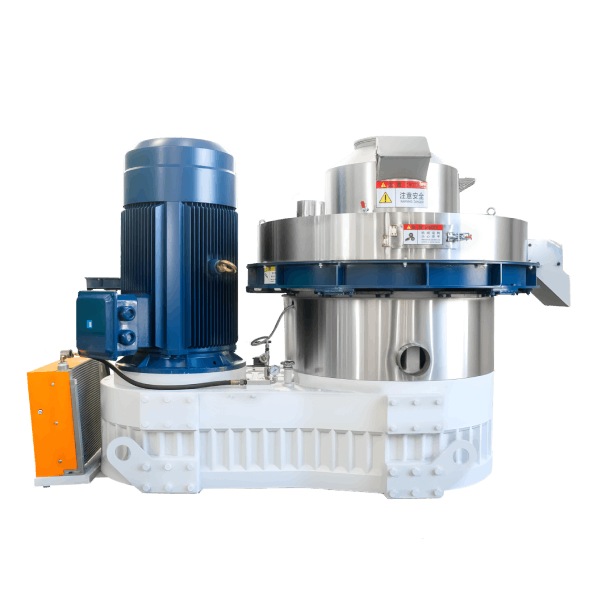
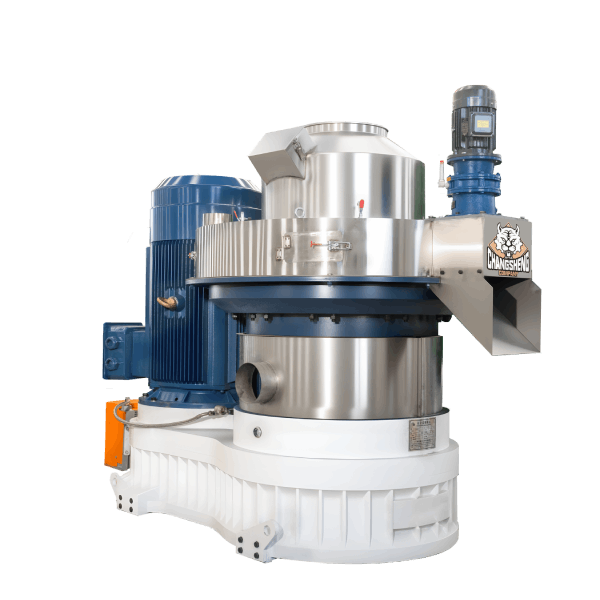
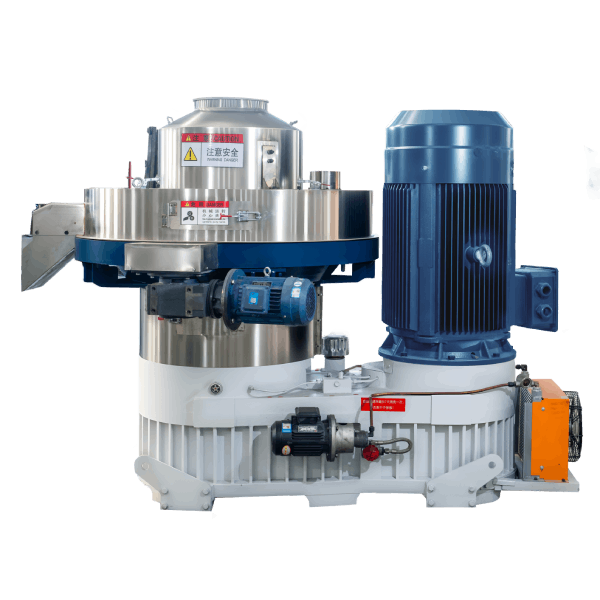
A pellet production line is an integrated system of equipment that processes raw biomass into finished pellets through grinding, drying, pelleting, cooling, and screening stages for fuel or feed applications.
2. Technical Parameters & Specifications
| Parameter | Value Range |
|---|---|
| Line Capacity (t/h) | 0.5 – 5 |
| Total Installed Power (kW) | 100 – 400 |
| Pellet Mill Main Motor (kW) | 55 – 160 |
| Ring Die Diameter (mm) | 320 – 760 |
| Finished Pellet Diameter (mm) | 6, 8, 10 |
| Finished Pellet Density (kg/m³) | 1,000 – 1,300 |
| Raw Material Moisture (in/out %) | 25-40% → 15-18% |
| Line Energy Consumption (kWh/t) | 80 – 150 |
| Core Wear Parts Life (hours) | 1,200 – 2,500 |
| Maintenance Team Size | 2 – 4 persons |
| Floor Space Required (m²) | 100 – 500 |
For complete line pricing: Request a system quotation with your target capacity and feedstock type.
3. Structure & Material Composition
Mechanical System (Core Equipment)
- Hammer mill: Hardened hammers (Cr alloy), screen thickness 6-10mm
- Pellet mill ring die: Forged GCr15 or 20CrMnTi, hardness HRC 52–58
- Roller shell: Cr26 high-chromium iron, hardness HRC 58–62
Material Handling System
- Screw conveyors: 304 stainless steel or carbon steel
- Bucket elevators: Belt or chain type with plastic buckets
- Magnetic separator: 10,000 Gauss permanent magnets
Drying & Cooling System
- Rotary dryer: Carbon steel with lifting flights, thickness 6-8mm
- Counterflow cooler: Stainless steel inner lining
Control System
- Central PLC control panel (Siemens or Schneider)
- Local control stations at each major equipment
- SCADA optional for larger lines (1,000+ points)
4. Manufacturing Process (Engineering Steps)
Step 1 – Raw Material Receiving & Pre-Cleaning
Equipment: Truck scale + magnetic separator + vibrating screen
Control: Remove tramp metal (>1mm) and oversized (>20mm)
Parameters: Screening capacity 1.5x line capacity
Step 2 – Drying to Target Moisture
Equipment: Rotary drum dryer with burner
Control: Reduce moisture from 25-40% to 15-18%
Parameters: Dryer outlet temperature 100-120°C; retention 8-15 minutes
Step 3 – Grinding to Particle Size
Equipment: Hammer mill with 4-8mm screen
Control: 95% of particles passing through screen
Parameters: Tip speed 70-90 m/s; magnet protection upstream
Step 4 – Pelletizing
Equipment: Ring die pellet mill with feeder and conditioner
Control: Die temperature 80-110°C; motor load 85-95%
Parameters: Specific compression force 20-35 kN/cm²
Step 5 – Cooling & Screening
Equipment: Counterflow cooler + rotary screener
Control: Cool pellets to ≤ ambient +5°C; remove fines
Parameters: Cooling air velocity 0.8-1.2 m/s; retention 10-15 minutes
Step 6 – Bagging or Bulk Loading
Equipment: Bagging scale (25-50kg bags) or bulk silo
Control: Bag weight accuracy ±0.2kg; dust collection
Parameters: 200-500 bags/hour depending on automation
5. Industry Comparison
| Parameter | Complete Pellet Line | Standalone Pellet Mill | Hammer Mill + Mill Only | Manual Batch System |
|---|---|---|---|---|
| Typical capacity (t/h) | 0.5–5 | 0.05–1.5 | 0.5–5 (no drying) | 0.1–0.5 |
| Initial capital cost | $25k – $350k | $2k – $80k | $15k – $100k | $10k – $30k |
| Labor per shift | 2–4 persons | 1–2 persons | 3–5 persons | 3–4 persons |
| Automation level | PLC fully automatic | Manual to semi-auto | Manual | Fully manual |
| Pellet quality consistency | High (automated) | Variable | Variable | Low |
| Downtime (hours/month) | 10–20 | 5–15 | 20–40 | 15–25 |
| Space required (m²) | 100–500 | 20–80 | 80–200 | 50–100 |
| Why Choose Shandong Changsheng | Integrated design, single source, performance guarantee | Limited to milling only | Missing dryer/cooler | High labor cost |
Compare complete line vs. component pricing: Request a cost breakdown for your capacity target.
6. Application Scenarios (By Buyer Role)
Distributors / Importers
Evaluating pellet production line cost for resale to pellet plants and feed mills. Decision focus: container fit (40ft HC per 1-2 t/h line), spare parts commonality, and installation cost.
EPC Contractors
Bidding on complete pellet plant projects (5,000-50,000 tons/year). Decision focus: turnkey cost including civil works, electrical, and commissioning. Require performance guarantees.
Engineering Consultants / Technical Advisors
Preparing capital cost estimates for client feasibility studies. Decision focus: equipment vs. installed cost ratio (typically 1:1.5 to 1:2.5 including civil/electrical).
End-user Facilities (Pellet plants, feed mills, biomass power stations)
Budgeting for new line or expansion. Decision focus: total cost of ownership (capital + 5-year operating), financing options, and delivery lead time.
7. Core Technical Pain Points & Engineering Solutions
Pain Point 1 – Underestimated Drying Cost
Problem: Drying consumes 40-60% of line energy. Many buyers underestimate this operating cost.
Root cause: Focus on pellet mill cost, ignoring dryer fuel (biomass, diesel, natural gas).
Solution: Calculate drying cost separately: Fuel consumption = 0.08-0.12 kg fuel per kg water removed. For 2 t/h line removing 20% moisture (400 kg water/h) = 32-48 kg/h biomass fuel.
Pain Point 2 – Inadequate Dust Explosion Protection
Problem: Dust collectors and cyclones without explosion vents create pressure vessel hazard.
Root cause: Budget lines omit safety features to reduce pellet production line cost.
Solution: Specify explosion vent panels on cyclones (NFPA 68 compliant). Install rotary airlock between cyclone and dust bin. Ground all equipment.
Pain Point 3 – Hidden Civil Works Cost
Problem: Equipment cost quoted as FOB, but foundation, building, electrical add 50-150% to project cost.
Root cause: Buyers compare equipment prices only, ignoring installation.
Solution: Request turnkey quotation including: concrete foundations, steel structure, electrical panel and wiring, dust collection, and commissioning. Typical ratio: equipment cost × 1.8 = installed cost.
Pain Point 4 – High Pellet Mill Wear Parts Cost
Problem: Ring die and roller replacement cost $5,000-15,000 per set for 2-5 t/h lines.
Root cause: Abrasive feedstock (high silica) or poor maintenance.
Solution: Specify 20CrMnTi die (2,500h life vs. 1,500h for GCr15). Install magnetic separator and air classifier ahead of mill. Calculate cost per ton: $1.50-3.00 per ton for wear parts.
8. Risk Warnings & Mitigation Strategies
Risk 1 – Performance Gap Between Quoted and Actual Capacity
Warning: Supplier quotes 2 t/h using ideal material (pine sawdust at 12% moisture, 6mm particle size). Your material (straw at 22% moisture, 15mm pieces) may achieve only 1.2 t/h.
Mitigation: Request performance guarantee with your actual feedstock. Require 48-hour test at factory using your material (send 5 tons). Include penalty clause: 1% of contract value per 1% capacity shortfall.
Risk 2 – Incomplete Scope in Quoted Pellet Production Line Cost
Warning: Quoted price excludes: electrical panel, cables, dust collection, structural steel, installation, freight, and commissioning. These add 40-100% to FOB price.
Mitigation: Request detailed bill of materials with quantities. Compare three suppliers on same scope. Ask for installed cost (DDP to your site including erection).
Risk 3 – Long Lead Time for Custom Components
Warning: Ring dies for non-standard diameters (e.g., 500mm) require 8-12 weeks manufacturing. Dryer flights and cooler screens also custom-fabricated.
Mitigation: Order spare ring die with initial machine. Specify standard sizes (320, 420, 520, 760mm) for faster replacement. Request 2-week expedite option for critical spares.
9. Procurement Selection Guide (6 Actionable Steps)
Step 1 – Define your feedstock specification
Document: material type (wood, straw, husk), moisture range (min/max/typical), bulk density (kg/m³), particle size (mm), ash content (%), and seasonal variation.
Step 2 – Calculate required line capacity
Multiply annual target tons by 1.2 (maintenance factor). Divide by annual operating hours (typically 5,000-6,500 for single shift). Example: 10,000 t/year × 1.2 ÷ 5,500h = 2.18 t/h nominal.
Step 3 – Request three levels of quotation
Level 1: FOB equipment only (for comparison). Level 2: CIF port (includes freight and insurance). Level 3: Turnkey installed (includes civil, electrical, commissioning). Compare cost differences.
Step 4 – Calculate 5-year total cost of ownership
Formula: Capital cost + (annual tons × [electricity cost + wear parts + maintenance + labor + fuel for dryer]). A line costing $50k less but consuming 30 kWh/t more costs $18,000 extra per year at 5,000 tons ($0.12/kWh).
Step 5 – Audit supplier references
Request three references for same capacity and similar feedstock. Call each. Ask: actual vs. quoted capacity, actual energy consumption, downtime, and spare parts availability.
Step 6 – Negotiate payment terms and performance bond
Target: 30% deposit, 40% against shipping, 30% after performance test. Request 5% performance bond (bank guarantee) held for 12 months. Include liquidated damages (1% per week delay, capped at 10%).
10. Engineering Case Study
Project Background: A wood pellet plant in Latvia planned 15,000 tons/year capacity using mixed softwood sawdust (pine, spruce) at 35-45% incoming moisture. Target pellet diameter 8mm for industrial boilers.
Initial Problem: The owner received three quotations for 2 t/h pellet production line cost ranging from $180,000 to $420,000 FOB. Lowest quote ($180,000) excluded dryer, electrical panel, dust collection, and installation. Middle quote ($290,000) included all equipment but not installation. Highest quote ($420,000) was turnkey.
Root Cause Analysis:
- Owner compared FOB equipment prices only (ignoring installation cost)
- No dryer in low quote — material would need pre-drying ($150,000 additional)
- Low quote had undersized cyclone (fire risk)
- No performance guarantee in low and middle quotes
Solution Implemented (Shandong Changsheng):
- Provided turnkey quotation at $385,000 including: rotary dryer (2 t/h inlet), hammer mill (45kW), 2 t/h ring die pellet mill (90kW), counterflow cooler, bagging scale, dust collection, electrical panel, structural steel, installation, and commissioning
- Signed performance guarantee: 2 t/h at 15-18% moisture sawdust, pellet PDI >97%
- Included 2-week on-site operator training
Final Data Results (12 months operation):
- Actual stable capacity: 1.95-2.05 t/h (verified monthly)
- Total installed cost (including foundation, building modifications): $490,000
- Energy consumption: 112 kWh/t (dryer 55 kWh/t + mill 57 kWh/t)
- Production cost: $68/ton (electricity $18, wear parts $4, labor $12, maintenance $8, amortization $26)
- Pellet selling price: $145/ton (industrial grade)
- Gross margin: $77/ton × 15,000 tons = $1.155 million/year
- Capital payback: 5.1 months (including building modifications)
Request a complete line capital cost estimate: Contact engineering team with your target capacity, feedstock moisture, and site location.
11. FAQ
Q1: What is the typical pellet production line cost for 1 t/h capacity?
$80,000 – $180,000 depending on automation level (manual vs. PLC), dryer type (rotary vs. belt), and included scope (equipment only vs. turnkey).
Q2: How much does a 5 t/h complete line cost?
$250,000 – $550,000 for equipment only. $500,000 – $1,000,000 turnkey installed (including civil, electrical, building modifications).
Q3: What is the largest cost component in a pellet line?
Pellet mill (25-35% of equipment cost). Dryer (20-30%). Hammer mill (10-15%). Conveying system (10-15%). Electrical and controls (10-15%).
Q4: How much does installation add to pellet production line cost?
50-150% of equipment FOB cost depending on local labor rates, civil works (concrete foundations), electrical work, and building modifications. Eastern Europe: 50-80%. Western Europe: 80-120%. North America: 100-150%.
Q5: What is the typical delivery lead time for a complete line?
90-150 days from order to FOB shipment. Installation: 4-8 weeks on-site. Commissioning: 1-3 weeks. Total: 5-8 months from order to production.
Q6: How much electricity per ton for a complete line?
80-150 kWh/t including hammer mill (15-30 kWh/t), dryer fans (20-40 kWh/t), pellet mill (45-85 kWh/t), cooler and conveying (10-20 kWh/t).
Q7: What fuel does the dryer use?
Biomass (sawdust, wood chips) is most common (cheapest). Options: diesel, natural gas, propane, or thermal oil. Biomass dryer adds $20,000-50,000 for combustion chamber.
Q8: How much floor space is required?
1 t/h line: 150-250 m². 2-3 t/h: 250-400 m². 5 t/h: 400-600 m². Plus storage (raw material: 7 days production; finished pellets: 30 days).
Q9: What is the typical return on investment for a pellet line?
12-30 months depending on pellet selling price ($120-200/ton), raw material cost ($10-50/ton), and capacity utilization (70-85% typical).
Q10: How many operators per shift?
1-2 t/h line: 2-3 operators (one at dryer, one at pellet mill, one at bagging). 3-5 t/h line: 3-4 operators plus 1 supervisor. Fully automated: 1-2 operators plus roaming maintenance.
Q11: What spare parts should I stock for a complete line?
One ring die, two roller sets, one set of hammer mill hammers (24-48 pieces), three belts per drive, motor bearings, dryer flight sections (10%), and control panel fuses/relays.
Q12: Is financing available for pellet production lines?
Yes. Equipment lenders offer 3-7 year terms at 6-12% interest. Require 20-30% down payment. Some manufacturers offer lease-to-own (higher monthly payment, lower down).
Q13: What certifications are required for a pellet line?
CE (Europe) mandatory. UL/CSA for North America. Local electrical code compliance. Dust explosion protection per NFPA (US) or ATEX (EU). Pressure vessel certification for dryer if applicable.
Q14: Can I expand capacity later?
Partial expansion: add second pellet mill (parallel). Full expansion: replace dryer and hammer mill. Plan for 30% spare space in building and electrical capacity.
Q15: Does the price include commissioning and training?
Typically 1-2 weeks commissioning included for equipment-only purchase. Turnkey includes 2-4 weeks on-site training. Additional training $500-1,000 per day plus travel.
12. Commercial Call-to-Action
For project managers and procurement professionals: Request a detailed pellet production line cost breakdown including equipment, installation, electrical, and commissioning for your target capacity.
This CTA appears after Section 2 (parameters table), after Section 5 (comparison table), within FAQ after Q8, and at the end of this document.
Ready to compare turnkey vs. equipment-only pricing? Submit your target capacity (t/h), feedstock type, moisture range, and site location for three-level quotations (FOB, CIF, turnkey).
Need a capital cost estimate for your feasibility study? Contact the project engineering team with your annual target (tons/year) and budget range for a preliminary line design.
To proceed: Send your inquiry via the contact form. Include target capacity (t/h), feedstock (wood, straw, husk), incoming moisture (%), and preferred delivery port or site location.
13. Author & E-E-A-T Credentials
Author: Zhang Wei
Senior Project Engineering Consultant & Pellet Plant Specialist
- 11 years in complete pellet line design, costing, and project management (2014–present)
- Managed 25+ pellet plant projects (1-10 t/h) across Europe, North America, and Southeast Asia
- Certified project management professional (PMP)
- Author of “Pellet Plant Capital Cost Estimation Guide” (China Machine Press, 2023)
- Member of the Pellet Fuels Institute (PFI)
Affiliation: Shandong Changsheng Machinery Co., Ltd.
The author has directly prepared capital cost estimates for pellet production lines from 0.5 to 10 t/h, negotiated turnkey contracts, and verified performance guarantees on installed systems. All cost data, operating parameters, and payback analyses are derived from actual projects from 2018–2026.