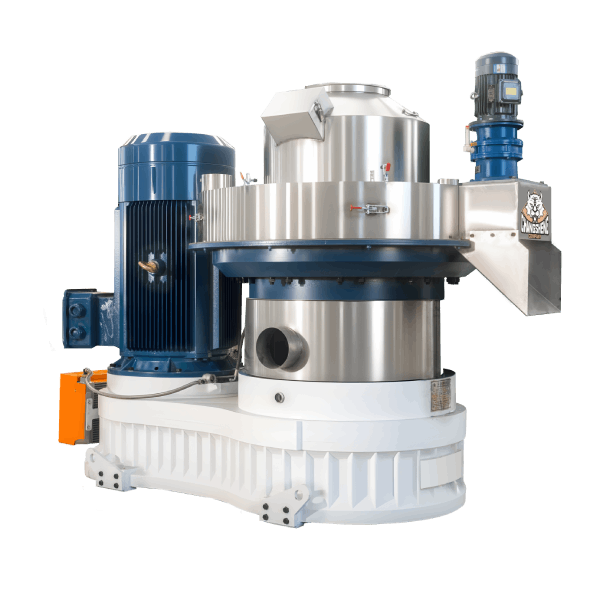
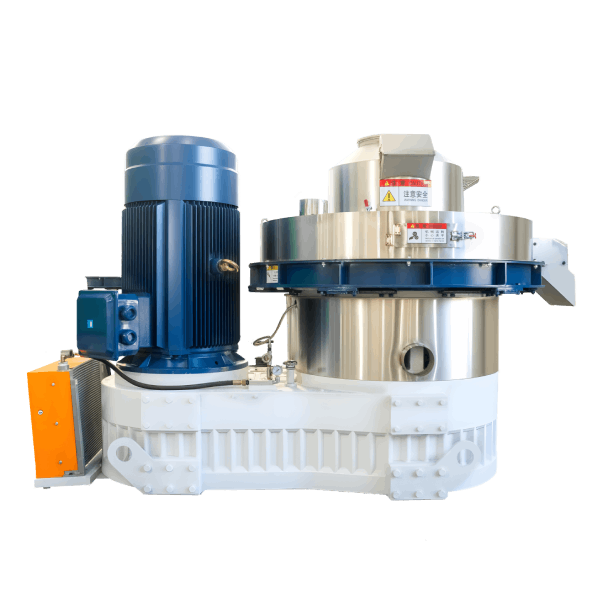
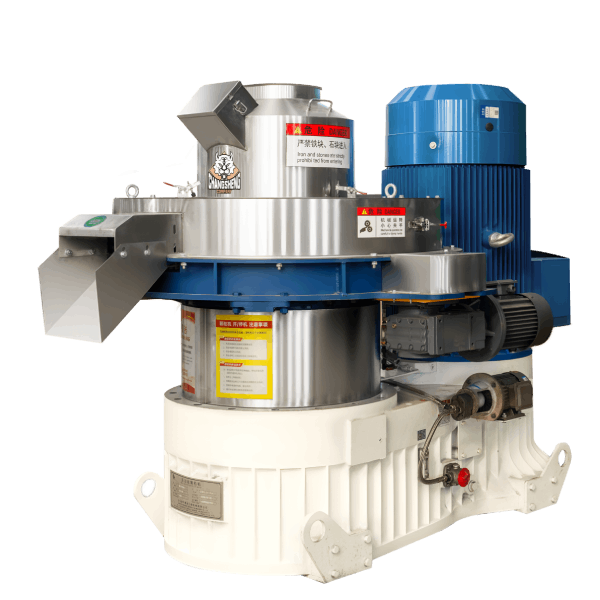
Wood Pellet Mill Price: What Determines the Total Cost?
News 2026-03-13
The price of an industrial wood pellet mill depends on more than its rated capacity. Raw material characteristics, die configuration, drive system, auxiliary equipment and the required production output all affect the final investment. Buyers should also distinguish between the cost of a single pellet mill and the budget for a complete wood pellet production line. This guide explains the main cost factors, the additional equipment to consider and the information needed to obtain a project-specific quotation.
Main Factors That Affect Wood Pellet Mill Price
Five factors drive most of the price difference between quotations. Each factor should be confirmed in writing before comparing suppliers.
Factor: Target capacity
What It Means: Rated capacity is not the same as actual output
What to Confirm: Feedstock conditions, guaranteed capacity, and test conditions. The actual output depends on feedstock type, moisture, particle size, and die specification.
Factor: Main motor and drive system
What It Means: Motor power, drive type, and configuration affect cost
What to Confirm: Motor power, drive type, and a full component list. Motor power also depends on altitude, ambient temperature, and power supply conditions.
Factor: Die and rollers
What It Means: Die size, die material, compression ratio, and wear cost
What to Confirm: Die specification, die material, and spare part prices. Common die materials include alloy steel with heat treatment and coated die surfaces; the correct choice depends on feedstock abrasiveness and target die life.
Factor: Feedstock preparation
What It Means: Grinding, screening, and drying may or may not be required
What to Confirm: Feedstock particle size, moisture, and required preparation. The actual requirement depends on feedstock type, initial moisture, and target pellet diameter.
Factor: Scope of supply
What It Means: Machine-only, machine with auxiliaries, or a complete line
What to Confirm: Included items and excluded items in the quotation.
A capacity figure quoted without feedstock, moisture, particle size, and die specification is not a technical commitment. Two quotations for “5 t/h” may refer to different real outputs on different feedstocks.
Wood Pellet Mill Price vs Complete Production Line Cost
A single pellet mill price and a complete production line budget are in different cost categories. A complete line includes the pellet mill and the equipment upstream and downstream of it.
Pellet mill: the core pelletizing machine and its immediate components.
Crushing and screening: to reduce particle size and remove oversize.
Drying system and heat source: to reduce moisture where required.
Conveying and storage: to move material between stages.
Cooling and screening: to harden pellets and remove fines.
Packing: for bagging or bulk loading.
Electrical and control system: motors, drives, panels, and wiring.
Installation and commissioning: on-site assembly, alignment, and trial run.
Spare parts, freight, and local costs: as applicable to the destination country.
Not every project needs every stage. If the feedstock is already dry and within the required particle size range, some preparation stages may not be required. The correct scope depends on the feedstock, the target output, and the target pellet quality. Buyers should always confirm what the quotation includes and what it excludes.
Quotation Scope Checklist
Use this checklist to compare quotations on the same basis.
Machine model and rated capacity.
Feedstock conditions used to define capacity.
Main motor power and drive type.
Die diameter, die hole diameter, and compression ratio.
Roller material and configuration.
Crushing, screening, and drying scope.
Conveying, storage, cooling, screening, and packing scope.
Electrical and control scope.
Installation and commissioning scope.
Spare parts list and prices.
Warranty terms and wear part definition. Wear parts usually include die, roller shell, bearings, belts, and seals, but the definition should be confirmed from the supplier.
Packing, shipping terms, and delivery time.
Payment terms.
A quotation that only lists the machine price is not a complete project budget. Buyers should compare quotations on scope, not on the top-line figure alone.
Budgeting for Different Production Capacities
Budget planning differs by capacity. The important point is not the absolute number, but what must be verified at each capacity level.
Around 1 t/h
At this capacity, verify the actual feedstock, whether a single machine can reach the target output under real conditions, whether preprocessing equipment is required, and whether future expansion is planned. A single machine may be sufficient, but the surrounding equipment still determines the final output.
3 to 5 t/h
At this capacity, verify the difference between multiple machines and one larger machine, the matching of auxiliary equipment, and the conveying and cooling capacity. At this scale, the line is usually more than one machine, and stage matching becomes a cost driver.
10 t/h and above
At this capacity, verify continuous operation capability, automation level, material buffering, system energy consumption, spare parts availability, and engineering delivery scope. At this scale, the project is an industrial plant, and the budget must include engineering, installation, and commissioning.
Where a real project quotation is available, it should be presented with the date, region, capacity, feedstock, configuration, and quotation boundary. Without a real reference, the page should explain the budgeting method only, not a fictional price.
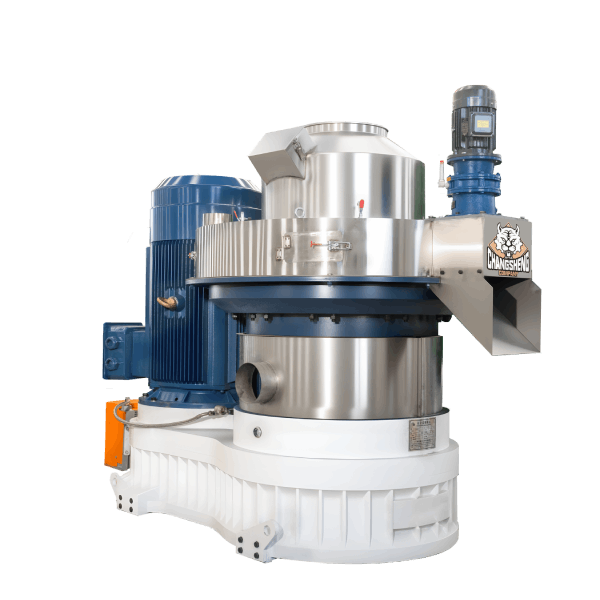
Which Machine Specifications Affect Purchase and Maintenance Costs?
Some specifications affect both the purchase price and the long-term cost of the machine.
Die and roller material. Die and roller life depends on material, heat treatment, and feedstock abrasiveness. Die and roller replacement is a recurring cost and is usually the largest spare parts cost over the machine life. Buyers should ask for expected working hours under similar feedstock conditions, and for the price per die and per roller set. In cost per ton terms, die and roller replacement often accounts for a significant share of the total operating cost in abrasive biomass projects, although the exact share is project-specific.
Drive system. Gearbox drive and belt drive differ in efficiency, maintenance, and cost. Gearbox drive is common in industrial ring die machines, but requires oil change and inspection at planned intervals.
Spare part supply. Die, roller, bearing, belt, and seal availability affects downtime. Buyers should ask for part numbers, unit prices, and lead time. A long spare part lead time can turn a one-day repair into a one-week shutdown, which increases cost per ton even if the part price itself is low.
Energy consumption. Energy consumption per ton depends on feedstock type, moisture, particle size, die specification, and machine condition. In many pellet plants, energy is one of the largest ongoing operating costs, although the exact share depends on local electricity price and on the actual running load.
Bearing and lubrication. Bearing type and lubrication system affect reliability and maintenance frequency.
Downtime cost. A machine with frequent unplanned downtime increases total cost even if the purchase price is lower.
How to Compare Wood Pellet Mill Quotes
Comparing quotations fairly requires the same scope, the same feedstock, and the same capacity definition.
First, confirm that both quotations target the same capacity and the same feedstock.
Second, confirm that the machine model, motor power, die, and roller configuration are equivalent.
Third, confirm whether installation, commissioning, and operator training are included.
Fourth, confirm the spare parts quantity, unit price, and future supply.
Fifth, confirm whether the supplier provides verifiable test results, with stated feedstock and moisture conditions.
Sixth, confirm packing, shipping terms, payment terms, and delivery time.
If the quotations differ significantly in price, the reason is usually one of these items, not only the machine itself. As a general guide, a difference of more than 15 to 20 percent between two quotations for the same nominal capacity and feedstock usually indicates a difference in scope, component quality, or commercial terms, and should be investigated before a decision is made.
Hidden Costs Buyers Should Check
Several costs are often excluded from the machine price and appear later in the project.
Preprocessing equipment for grinding, screening, and drying. The dryer size depends on initial moisture and required throughput, and the hammer mill size depends on feedstock particle size. Both should be sized against the actual feedstock, not against a general assumption.
Conveying, storage, cooling, screening, and packing equipment.
Electrical and control system, including transformer capacity if required. Voltage, frequency, and total connected load affect the electrical cost and should be confirmed with the local utility.
Civil works, foundation, and site preparation.
Installation, commissioning, and operator training.
Spare parts first order and planned replacement.
Freight, insurance, import duties, and port charges.
Inland transport and lifting equipment at the destination.
After-sales support and remote technical service.
Transportation cost and landed cost should be calculated based on the actual shipping terms. Common trade terms include EXW, FOB, CIF, and DDP. EXW means the buyer arranges everything from the supplier’s factory. FOB means the supplier delivers to the port of shipment. CIF means the supplier delivers to the destination port and includes insurance. DDP means the supplier delivers to the destination site with duties paid. Landed cost changes significantly between these terms, so buyers should compare quotations on the same trade term.
These items should be listed in the project budget from the beginning, and compared across suppliers on the same basis.
What to Check Before Comparing Pellet Mill Quotes
Before comparing quotations, verify the following items.
Whether both quotations target the same capacity and feedstock.
Whether machine model, motor power, die, and roller configuration are equivalent.
Whether installation, commissioning, and operator training are included.
Whether spare parts quantity, unit price, and future supply are stated.
Whether verifiable test results are provided, with feedstock and moisture conditions.
Whether packing, shipping terms, payment terms, and delivery time are equivalent.
Frequently Asked Questions About Wood Pellet Mill Price
What affects wood pellet mill price the most?
Target capacity, main motor power, die and roller specification, drive system, feedstock preparation requirements, and scope of supply are the main factors. Among these, die and roller specification and scope of supply usually have the largest effect on the total quotation, because they drive both the machine configuration and the auxiliary equipment. Feedstock characteristics and target pellet quality also affect the configuration and therefore the price.
How much does a wood pellet mill cost?
There is no single price that applies to all projects. Price depends on capacity, machine configuration, feedstock, and scope of supply. A single machine and a complete production line are in different cost categories. A project-specific quotation based on actual feedstock and target output is more useful than a general price list.
What is the difference between pellet mill price and production line cost?
Pellet mill price covers the machine itself and its immediate components. Production line cost includes the pellet mill plus crushing, screening, drying, conveying, storage, cooling, screening, packing, electrical and control, installation, commissioning, and spare parts.
Does higher motor power always mean higher output?
No. Output depends on feedstock type, moisture, particle size, die specification, compression ratio, feed rate, and machine condition. Motor power is one factor among several, and a larger motor does not automatically produce more output on a different feedstock.
What information is needed for a wood pellet mill quotation?
Provide feedstock type, moisture, particle size, target capacity, pellet diameter, operating hours, power supply conditions, and scope of supply, including whether preprocessing, drying, cooling, screening, packing, and installation are required. This allows the supplier to recommend a configuration and to state capacity with conditions.
How should buyers compare two pellet mill quotations?
Compare on the same feedstock, the same capacity definition, the same machine configuration, the same scope of supply, and the same commercial terms. Quotations with different scope cannot be compared on price alone. A difference of more than 15 to 20 percent for the same nominal capacity usually indicates a difference in scope or component quality.
What auxiliary equipment may be needed?
Crushing, screening, drying, conveying, storage, cooling, screening, packing, dust collection, and electrical and control equipment may be needed. The exact scope depends on feedstock condition and target pellet quality.
How do spare parts affect long-term costs?
Die and roller replacement is a recurring cost, and is usually the largest spare parts cost over the machine life. Bearing, belt, and seal replacement is also periodic. Spare part availability affects downtime, and a long lead time can turn a one-day repair into a one-week shutdown. Buyers should ask for part numbers, unit prices, lead time, and recommended first order.
Can a pellet mill be configured for different biomass materials?
Yes, but the configuration is not identical. Die compression ratio, feeder design, and wear-resistant components may differ by feedstock. A configuration that works for one feedstock may not run another at the same output or pellet quality. The correct configuration should be confirmed with a pelletizing test.
Request a Wood Pellet Mill Price for Your Project
If you are preparing a wood pellet project and need a project-specific quotation, provide the following information. This allows the supplier to recommend a configuration and to state capacity with conditions.
Feedstock type, for example sawdust, wood chips, straw, or other biomass.
Target capacity in t/h.
Feedstock moisture and particle size, where known.
Whether a single machine or a complete production line is required.
Target country or delivery location.
Whether crushing, drying, cooling, screening, and packing equipment are required.
Contact information.
A project-specific quotation is usually more useful than a general price list, because the configuration depends on the actual feedstock and target output.