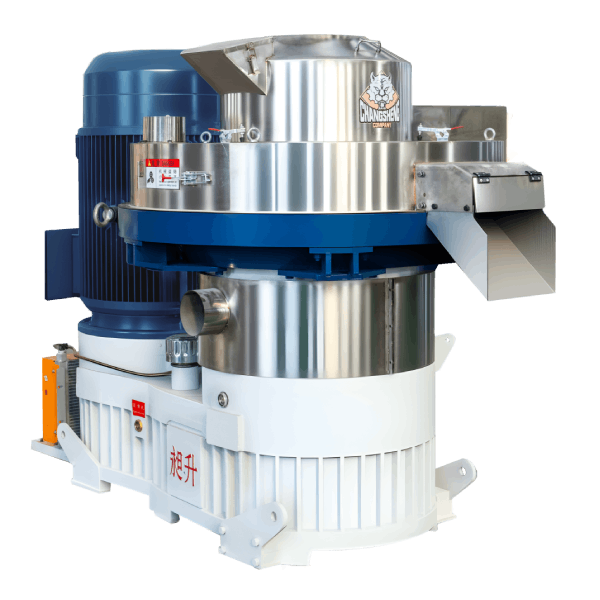
pellet production line price breakdown 2026
News 2026-02-05
Pellet Production Line Price Breakdown 2026: Engineering Cost Analysis for B2B Buyers
Product Definition (40–60 words)
Pellet production line price breakdown 2026 refers to a detailed cost allocation of industrial pellet manufacturing systems, covering equipment, materials, installation, utilities, and lifecycle factors required to convert biomass or residues into standardized pellets under continuous commercial operation.
Technical Parameters and Cost-Related Specifications
Pellet production line price breakdown 2026 must be evaluated against technical performance, not headline equipment price.
Typical Capacity Ranges
Single-line output: 1–20 tons per hour
Annual operating hours: 6,000–8,000 hours
Design load factor: 85–90% sustained operation
Raw Material Design Window
Feedstock moisture (input): ≤35%
Pelletizing moisture: 10–15%
Particle size before pelletizing: ≤5 mm (90% passing)
Finished Pellet Standards
Pellet diameter: 6–12 mm
Bulk density: 600–750 kg/m³
Pellet durability index (PDI): ≥95%
Fine content after cooling: ≤3%
Energy and Utilities
Electrical consumption: 90–120 kWh per ton (excluding thermal drying fuel)
Installed power range: 120–600 kW per line
Thermal source: biomass furnace, gas burner, or waste heat integration
Pellet Production Line Price Breakdown 2026 by System Components
A realistic pellet production line price breakdown 2026 separates capital cost by functional systems.
Core Equipment Cost Distribution (Typical Range)
Raw material handling and feeding: 8–12%
Size reduction system (hammer mills): 10–15%
Drying system (rotary or belt dryer): 25–35%
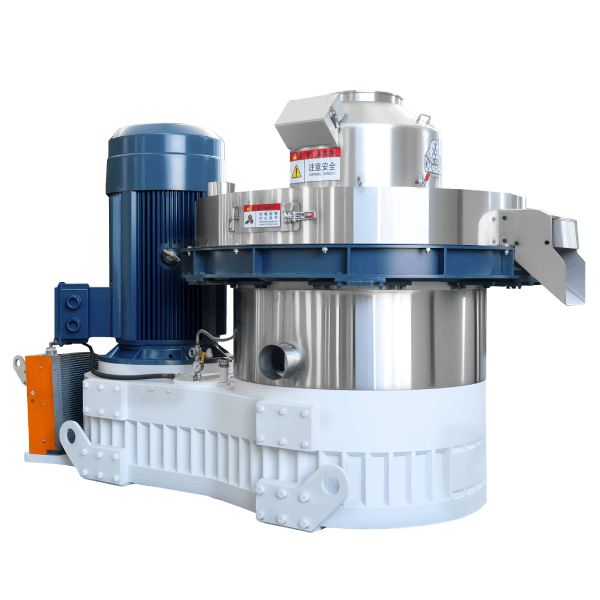
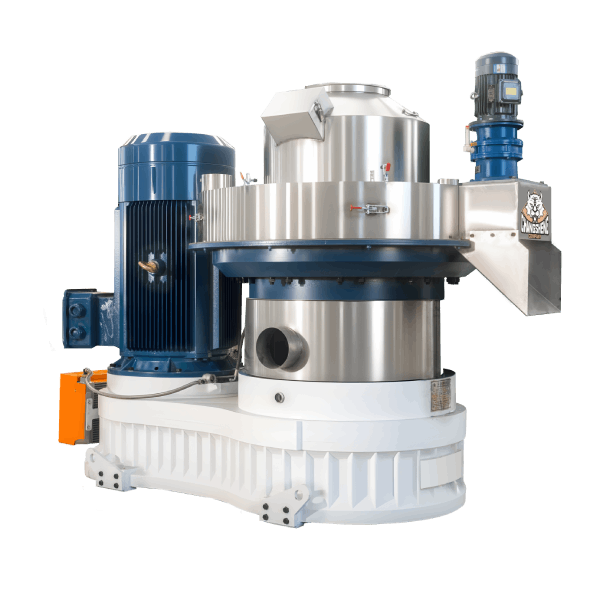
Pellet mill and conditioning unit: 18–25%
Cooling, screening, and conveying: 8–12%
Electrical, PLC, and automation: 6–10%
Dust collection and safety systems: 4–6%
Cost percentages vary by material type, automation level, and regional compliance requirements.
Structural and Material Composition
Pellet production line price breakdown 2026 is strongly influenced by material selection and duty rating.
Structural Framework
Carbon steel load-bearing structures
Galvanized platforms and maintenance walkways
Anti-vibration foundations for rotating equipment
Wear and Process Components
Hammer mills with alloy steel hammers and liners
Ring die pellet mills using 42CrMo or equivalent alloy steel
Heat-resistant steel in dryer hot zones
Electrical and Control
Industrial-grade motors (IE3 or higher efficiency)
PLC-based centralized control with VFD integration
IP54-rated electrical cabinets
Manufacturing Process and Cost Drivers
Each process stage directly impacts pellet production line price breakdown 2026.
- Raw Material Reception
Cost driver: storage capacity and handling automation
Equipment: hoppers, conveyors, magnetic separators - Size Reduction
Cost driver: material hardness and wear rate
Equipment: hammer mills with spare hammer sets - Drying
Cost driver: moisture removal load and heat source
Equipment: rotary dryer, hot air generator, cyclone - Conditioning
Cost driver: steam or thermal integration
Equipment: conditioners, control valves - Pelletizing
Cost driver: die size, compression ratio, motor power
Equipment: ring die pellet mill - Cooling and Screening
Cost driver: throughput and fines control
Equipment: counterflow cooler, vibrating screen - Packaging or Storage
Cost driver: bagging automation or bulk handling
Equipment: baggers, silos, palletizing systems
Industry Cost Comparison
Relative Cost and Value Comparison
Solution Type | Initial Investment | Operating Cost | Product Consistency | Scalability
Industrial Pellet Line | High | Medium | High | Excellent
Briquette Production Line | Medium | Medium | Medium | Limited
Loose Biomass Handling | Low | High | Low | Poor
Pellet production line price breakdown 2026 reflects higher upfront investment but lower long-term logistics and operating costs.
Application Scenarios
Pellet production line price breakdown 2026 is typically analyzed by the following users:
Distributors planning regional pellet supply
EPC contractors bidding turnkey biomass projects
Engineering consultants preparing feasibility studies
Importers evaluating resale-ready pellet systems
Industrial plants converting internal residues to fuel
Core Pain Points and Engineering Solutions
Unclear Total Investment Cost
Pain point: focusing only on pellet mill price
Solution: full line cost modeling including utilities and installation
Overestimated Nominal Capacity
Pain point: suppliers quoting peak output
Solution: design based on sustained industrial throughput
High Wear and Maintenance Cost
Pain point: low-grade dies and rollers
Solution: alloy steel wear parts and spare strategy planning
Energy Cost Volatility
Pain point: drying energy underestimated
Solution: integrate biomass or waste heat sources
Risk Warnings and Cost Avoidance Strategies
Ignoring Raw Material Variability
Risk: dryer and mill oversizing
Mitigation: pre-project material testing
Underestimating Installation Cost
Risk: budget overrun
Mitigation: include civil works and electrical installation early
Non-Standard Equipment Design
Risk: spare part dependency
Mitigation: select standardized industrial components
Lack of Performance Guarantees
Risk: output shortfall
Mitigation: require acceptance testing criteria
Procurement and Selection Guide
- Define target hourly and annual production volume
- Confirm raw material type and seasonal variation
- Establish pellet quality and applicable standards
- Request itemized pellet production line price breakdown 2026
- Evaluate lifecycle cost, not only initial investment
- Review installation, commissioning, and training scope
- Verify spare parts availability and lead time
- Assess supplier EPC or integration experience
Engineering Case Scenario
A 5-ton-per-hour biomass pellet plant was developed using a detailed pellet production line price breakdown 2026 for hardwood sawdust. The project included a rotary dryer, 160 kW ring die pellet mill, and automated bagging system. Total installed cost aligned with budget estimates, achieving stable operation at 92% design load and pellet durability above 96%.
Frequently Asked Questions (FAQ)
What mainly drives pellet production line cost?
Drying capacity, pellet mill size, and automation level.
Is dryer cost always the largest portion?
Yes, especially for high-moisture raw materials.
Can price vary significantly by region?
Yes, due to labor, electrical standards, and compliance costs.
Does higher automation reduce long-term cost?
Generally yes, through labor and quality control savings.
How accurate are budgetary quotations?
Typically ±10–15% at feasibility stage.
Is installation included in equipment price?
Often excluded unless EPC scope is specified.
How long is typical ROI?
Usually 2–4 years depending on feedstock cost.
Can systems be expanded later?
Yes, through parallel production lines.
Are spare parts included in pricing?
Usually optional and should be specified.
What documentation should buyers request?
Process flow, power balance, layout, and spare list.
Call to Action
For a project-specific pellet production line price breakdown 2026, procurement teams may request detailed cost sheets, technical specifications, process drawings, or material test evaluations to support budgeting and investment decisions.
E-E-A-T Author Credentials
This article is prepared by an industrial process engineer with more than 15 years of experience in biomass pellet plant engineering, EPC project coordination, and international equipment cost analysis for commercial-scale production facilities.