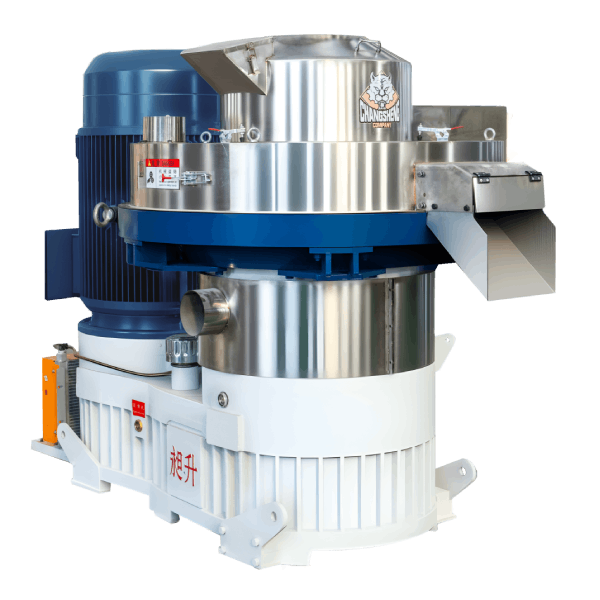
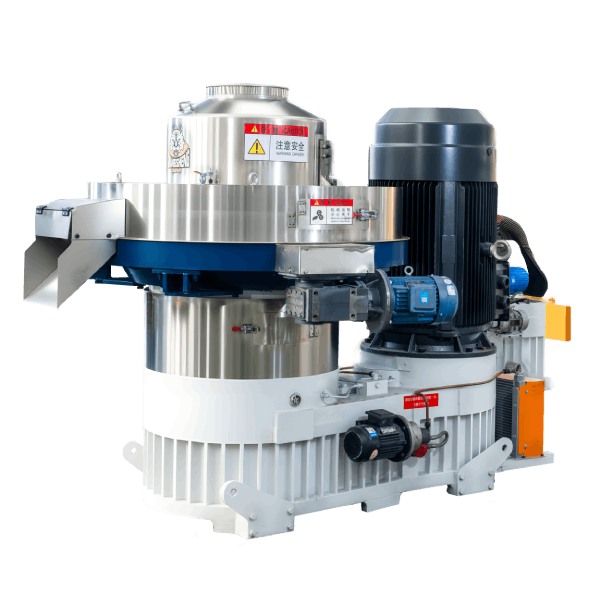
Turn Sawdust into Pellets: Process & Setup Guide
News 2026-10-09
Turn Sawdust into Pellets: How to Prepare, Pelletize and Cool Sawdust Without Losing Output
Turning sawdust into pellets is not only about buying a pellet mill. Sawdust is one of the easiest wood feedstocks to pelletize, but it still fails in real projects for three common reasons: moisture is not controlled, particle size is not consistent, and cooling and screening are undersized. When these three stages are wrong, the pellet mill runs below capacity and die life drops.
The practical question for a buyer is not which pellet mill is the cheapest. The real question is what the sawdust needs before it reaches the die, and what the pellet needs after it leaves the die. This guide answers both.
This page explains the full process of turning sawdust into pellets, how to prepare sawdust, how to choose the die and compression ratio, how to size cooling and screening, what auxiliary equipment is required, and what to confirm with the supplier before ordering. For sawdust-specific machine selection, see the sawdust pellet mill page on this site. For the general wood pellet production system, see the machine to make wood pellets page on this site. For the machine family itself, see the machine that makes wood pellets page on this site. For wood-specific pricing, see the wood pellet making machine price page on this site.
What Sawdust Actually Is
Sawdust is not a single material. It varies by source, species, and particle size. Common sawdust sources include sawmills, furniture factories, plywood and board plants, pallet workshops, and mixed collection points.
Sawmill sawdust is usually consistent in species and particle size. Moisture varies by sawing process and storage condition, and contamination is usually low.
Furniture factory sawdust may contain mixed species and glue residue. Moisture is often moderate, but glue residue can affect binding and die wear.
Plywood and board plant sawdust may contain resin and glue. Resin affects binding and can cause sticky material in the feeder. Moisture is often moderate.
Pallet and crate sawdust may contain nails, staples, and treated wood. Metal contamination is the main risk, and treated wood should be avoided for fuel pellets intended for certain markets.
Mixed collection sawdust varies in both species and particle size. Moisture and contamination are also variable.
These differences affect moisture control, grinding requirement, die selection, contamination risk, and pellet quality. Before selecting a machine, the buyer should confirm the sawdust source and test the actual material.
Can Sawdust Be Pelletized Directly?
Sawdust can sometimes be fed directly to the pellet mill when three conditions are met: moisture is within the suitable range, particle size is already consistent, and contamination is controlled.
If sawdust is too wet, drying is required. If sawdust contains coarse chips, shavings, or offcuts, grinding is required. If sawdust contains nails, stones, or treated wood, cleaning is required.
In practice, most sawdust projects require at least moisture control and screening. A smaller share of projects can run with only a pellet mill, cooler, and screener.
Sawdust Preparation Before Pelletizing
Moisture Control
Moisture is the most important variable in sawdust pelletizing. Typical target moisture before pelletizing is around 10 to 15 percent. This range depends on wood species, die compression ratio, and machine configuration. The exact target should be confirmed with a pelletizing test.
If sawdust is too dry, binding is poor, pellets are weak, and fines increase. If sawdust is too wet, compression is poor, the die may block, and throughput drops.
Drying options include rotary dryers, belt dryers, and in some climates, natural drying. Dryer heat source can be biomass-fired, gas, diesel, or waste heat. The choice affects both capital cost and operating cost.
Grinding and Particle Size
Particle size affects feeding stability, compression, pellet density, and die wear. Target particle size for sawdust pelletizing is usually in the range of 2 to 5 mm, depending on die specification.
If sawdust already falls in this range, grinding may not be needed. If sawdust contains chips, shavings, or offcuts, a hammer mill is required. Screen size in the hammer mill determines final particle size.
Very fine sawdust can bridge in the feeder and increase die blockage risk. In that case, moisture conditioning or feeder adjustment may be needed.
Feeder Design for Fine Sawdust
Fine sawdust is one of the more difficult materials to feed steadily, because it tends to bridge and to compact. A standard screw feeder may not deliver consistent flow. Practical solutions include a horizontal breaker shaft, a variable pitch screw, a hopper vibrator, and variable frequency feed control. The feeder should be selected based on the actual sawdust particle size distribution and bulk density, not only on the nominal capacity.
Cleaning and Contamination Control
Sawdust from pallets, plywood, or treated wood may contain nails, staples, plastic, sand, or glue residue. These damage dies and rollers and reduce pellet quality.
Magnetic separators remove ferrous metal. Screening removes oversize particles and some contaminants. Air classification removes sand and stones in projects where mineral contamination is high.
Clean, untreated sawdust is preferred for both fuel pellets and feed-adjacent applications.
Resin and Glue Residue in Sawdust
Sawdust from plywood, board plants, and some furniture factories may contain resin and glue residue. Resin affects binding, increases die wear, and can cause sticky material in the feeder. Glue residue can also reduce pellet durability in some cases.
For sawdust with resin or glue content, the die compression ratio may need adjustment, and feeder cleaning intervals should be shorter. In some projects, blending resin-containing sawdust with clean sawdust is used to reduce these effects. The correct approach should be confirmed with a pelletizing test.
Die Selection for Sawdust
Die Compression Ratio
Die compression ratio is the ratio of die hole length to die hole diameter. It determines how much resistance the material meets as it passes through the die. Higher compression ratio increases pellet density but also increases power demand and die wear.
Sawdust usually requires a moderate compression ratio because of its relatively high lignin content. Softwood sawdust usually requires a lower compression ratio. Hardwood sawdust and mixed wood waste may require a higher compression ratio to reach target pellet durability. The correct compression ratio should be confirmed with a pelletizing test using the actual sawdust.
Die Hole Diameter and Pellet Diameter
Die hole diameter determines pellet diameter. Common wood pellet diameters are 6 mm and 8 mm for heating and industrial fuel, with 10 mm and 12 mm available for some industrial applications. Pellet diameter should be selected against the boiler or stove feed system, not chosen independently.
Die Temperature and Roller Clearance
Die temperature is the friction-generated temperature inside the die chamber. It affects lignin softening, binding, and pellet durability. If temperature is too low, pellets are weak. If temperature is too high, material may scorch and die wear accelerates. A die temperature sensor and alarm are recommended, and feed rate should be adjusted to keep temperature within the target range.
Roller clearance is the gap between the roller and the die surface. If clearance is too large, material slips and output drops. If clearance is too small, rollers and die wear faster and motor load rises. Roller clearance should be set according to the supplier procedure and checked regularly.
Turning Sawdust into Pellets: The Process
The process of turning sawdust into pellets usually follows this sequence:
Sawdust receiving and storage.
Screening and cleaning.
Drying if moisture is above the suitable range.
Grinding if particle size is too coarse.
Pelletizing.
Cooling.
Screening.
Packing or bulk storage.
Each step has a specific function.
Receiving and storage should be covered and ventilated to prevent moisture regain. Screening and cleaning remove contaminants. Drying reduces moisture to the target range. Grinding reduces particle size. Pelletizing forms pellets. Cooling hardens pellets and reduces fines. Screening removes fines and oversize. Packing prepares pellets for storage or sale.
If any stage is undersized or skipped, the final product quality and output suffer.
Sizing the Line for Sawdust
Each stage in the line must be matched to the next. If one stage is undersized, the line runs below capacity. If one stage is oversized, energy cost rises unnecessarily.
A typical matching rule is to size each stage for the design capacity plus a margin of about 10 to 20 percent, except for drying, which is usually sized for the worst realistic moisture condition, not the average. The exact margin depends on sawdust consistency, operating hours, and maintenance planning.
Stage matching example for a 1 t/h line:
Screening and cleaning: sized for 1 to 1.2 t/h of raw sawdust.
Drying: sized for the highest realistic incoming moisture, not the average.
Grinding: sized for 1 to 1.2 t/h if grinding is required.
Pelletizing: one or more pellet mills sized for 1 t/h under stated sawdust conditions.
Cooling: sized for 1 t/h of hot pellets at design pellet diameter.
Screening: sized for 1 t/h plus fines recirculation.
Packing: sized for 1 t/h plus buffer storage.
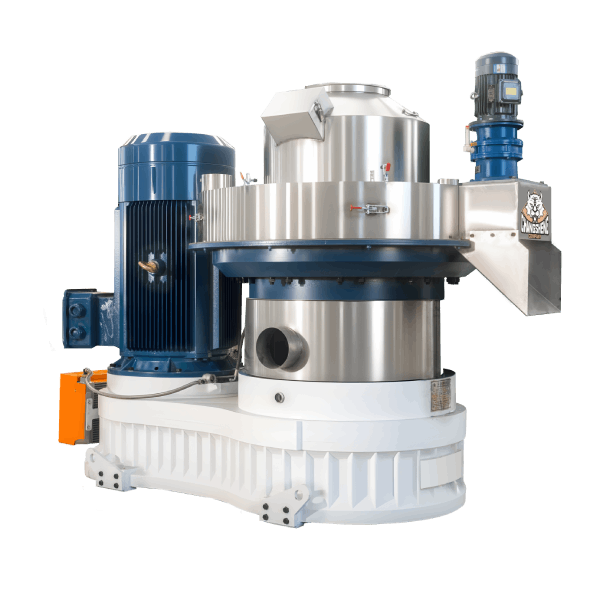
Cooling, Screening and Fines Control
Cooling hardens pellets and reduces fines. If cooling is undersized, pellets stay hot and produce more fines during screening and packing. Cooling time depends on pellet diameter, initial pellet temperature, and ambient conditions. Counterflow coolers are common in commercial lines.
After cooling, pellets can absorb moisture from ambient air if the storage environment is humid. This is called moisture regain. Moisture regain reduces pellet durability, increases fines, and can cause mold in storage. To control moisture regain, cooled pellets should be moved to covered, ventilated storage, and packing should be done in moisture-protected bags where required.
Screening removes fines and oversize particles. Fines can be returned to the pellet mill. Oversize is removed from the product stream. Screening capacity should be matched to line capacity plus fines recirculation.
Fines content in the finished product depends on pellet durability, cooling, and screening. High fines reduce fuel value and cause handling problems.
Finished Pellet Storage
Finished sawdust pellets must be stored in a dry, covered, ventilated area. Storage should protect against moisture regain and against self-heating. Pellet piles can self-heat if residual moisture, fines, or oil content is high. Storage time should be controlled, and silo or pile temperature should be monitored in large storage systems. First-in, first-out inventory practice helps reduce self-heating and mold risk.
Sawdust Dust Explosion Risk
Sawdust dust is combustible, and fine dust can form an explosive atmosphere inside dust collection systems, cyclones, and enclosed spaces. This risk is one of the main differences between sawdust and larger wood chips. Dust collection with high-efficiency cyclone and filters is required. Explosion venting, spark detection, grounding, and where applicable ATEX-rated equipment are recommended for commercial lines. In regions where NFPA standards apply, reference should be made to NFPA 652 for general combustible dust requirements and NFPA 664 for wood and biomass processing facilities. Local regulations should always be confirmed.
Pellet Quality from Sawdust
For local use, pellet quality requirements are usually set by the boiler or stove. For export or higher-grade markets, pellet quality may need to meet standards such as ISO 17225 for solid biofuels. Some markets also use certification schemes such as ENplus, and some North American markets use PFI specifications. Key quality parameters include moisture, ash content, durability, fines, and pellet diameter.
Ash content depends on sawdust species, bark content, and contamination. Clean softwood sawdust has lower ash. Mixed wood waste with bark or soil has higher ash. Boilers with ash removal systems can accept higher-ash pellets; home pellet stoves usually require low-ash pellets.
Durability depends on lignin content, compression ratio, die temperature, and cooling. Softwood sawdust usually produces stronger pellets than hardwood sawdust under the same die and moisture conditions, because of higher lignin content. Fines are produced when pellets are weak, when cooling is insufficient, or when screening is inadequate. Exact grade limits should be confirmed against the current official standard, not assumed from a general figure.
Energy Consumption and Operating Cost
Energy consumption per ton depends on sawdust species, moisture, particle size, die specification, compression ratio, feed rate, and motor efficiency. Hardwood and high-moisture sawdust usually require more energy per ton than dry softwood.
Operating cost includes raw material, power, labor, maintenance, spare parts, and downtime. Cost per ton of pellets is the figure that matters, not machine price alone. Die change frequency and downtime cost also affect cost per ton: a project without a spare die on site will face long downtime when the first die wears out, even if the die price itself was low.
Maintenance and Spare Parts
Dies and rollers are wear parts. Their life depends on sawdust abrasiveness, moisture, bark content, compression ratio, and operating conditions. For hardwood, bark-containing, or contaminated sawdust, die and roller life may be shorter than for clean softwood.
A practical spare parts plan includes at least one spare die, one or two spare roller shell sets, bearings, belts, seals, lubricants, and critical electrical spares.
Daily checks include lubrication, roller clearance, feeder condition, and motor current. Weekly checks include die and roller wear, belt tension, and electrical connections. Monthly checks include lubrication system condition, bearing temperature, and control panel inspection.
Common Mistakes When Turning Sawdust into Pellets
First, running sawdust directly to the pellet mill without checking moisture. Wet sawdust causes soft pellets and die blockage.
Second, skipping grinding when sawdust contains chips or shavings. Coarse material causes uneven feeding and weak pellets.
Third, undersizing the dryer. If drying capacity is too small, moisture varies and pellet quality fluctuates.
Fourth, undersizing cooling and screening. Hot pellets produce more fines, and undersized screening lets fines pass into the product.
Fifth, ignoring contamination. Nails, stones, and treated wood damage dies and rollers.
Sixth, buying a low-cost die for abrasive or contaminated sawdust. A low-cost die may wear faster and increase cost per ton.
Seventh, comparing machine price only. Landed project cost and scope of supply matter more than machine price alone.
Typical Project Scenario
The following summarizes typical project parameters from sawdust pellet projects. Specific customer names, locations, and contact details are not included.
Typical project: softwood sawmill sawdust pellet production.
Raw material: softwood sawdust from pine, fir, and spruce.
Moisture: reduced by drying to the range suitable for pelletizing.
Pellet diameter: 6 to 8 mm.
Configuration: ring die pellet machine with hammer mill, dryer, cooler, screener, and packing.
Application: industrial fuel pellets and local fuel market supply.
Acceptance: trial run with actual sawdust, output and pellet quality recorded before shipment.
The parameters above are typical ranges and should be confirmed with actual test records.
What to Confirm Before Ordering
Confirm sawdust source, species, moisture, particle size, and contamination level.
Confirm target capacity with stated sawdust conditions.
Confirm die compression ratio and die material.
Confirm die hole diameter and pellet diameter.
Confirm roller shell material and hardness.
Confirm drive system, gearbox or belt drive.
Confirm feeder type and whether variable frequency control is included.
Confirm drying and grinding scope, including dryer capacity and hammer mill screen size.
Confirm cooling, screening, and packing scope.
Confirm dust collection and explosion protection scope, including reference to applicable NFPA or local standards where relevant.
Confirm motor power, total connected load, voltage, phase, and frequency.
Confirm spare parts list with part numbers and recommended first order.
Confirm warranty scope, wear part definition, and response process.
Confirm inspection and acceptance method before shipment.
Frequently Asked Questions
Can sawdust be turned into pellets directly?
Sawdust can sometimes be fed directly to the pellet mill when moisture is within the suitable range, particle size is consistent, and contamination is controlled. In most projects, at least moisture control and screening are required.
What moisture is suitable for turning sawdust into pellets?
Typical target moisture before pelletizing is around 10 to 15 percent, depending on wood species, die compression ratio, and machine configuration. The exact target should be confirmed with a pelletizing test.
Do I need to grind sawdust before pelletizing?
If sawdust is already in the range of 2 to 5 mm, grinding may not be needed. If sawdust contains chips, shavings, or offcuts, a hammer mill is required.
Do I need to dry sawdust before pelletizing?
Drying is required when sawdust moisture is above the suitable range. Dry sawdust may not need a dryer. Wet sawdust from green wood usually does.
What kind of pellet machine is used to turn sawdust into pellets?
Both flat die and ring die machines can be used. Flat die machines suit small production and varied material. Ring die machines suit commercial and industrial production and consistent pellet quality.
How is capacity calculated for a sawdust pellet project?
Required hourly capacity equals annual production target divided by annual operating hours, plus a capacity margin of about 20 to 30 percent. Actual capacity depends on sawdust species, moisture, particle size, and die specification.
How much does it cost to turn sawdust into pellets?
Cost depends on machine type, capacity, die specification, drive system, automation, drying and grinding requirement, and scope of supply. Cost per ton of pellets is the figure that matters, not machine price alone. Final cost should be confirmed against a written scope of supply.