Pellet Machine for Biochar Production 0.5-5t/h | Supplier Guide
News 2026-07-07
Product Definition
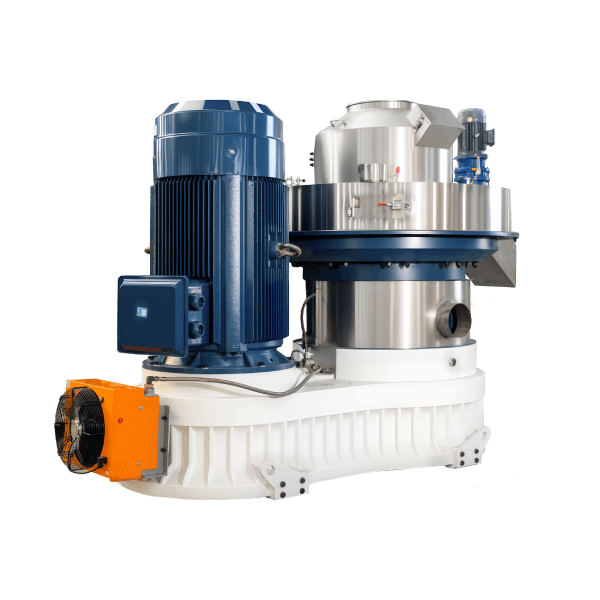
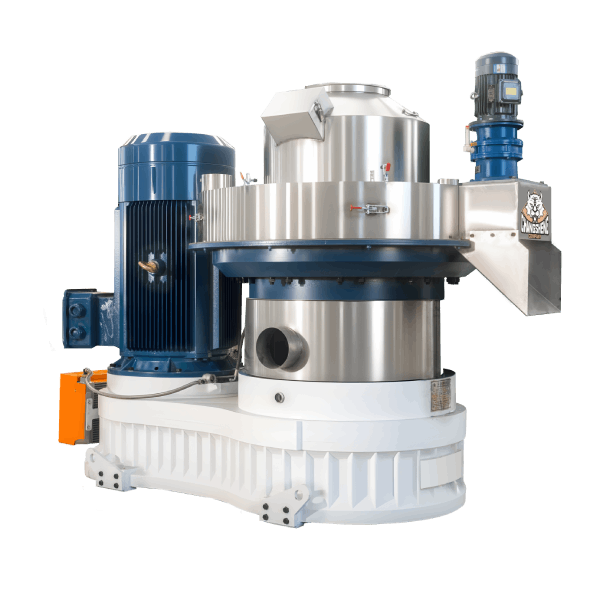
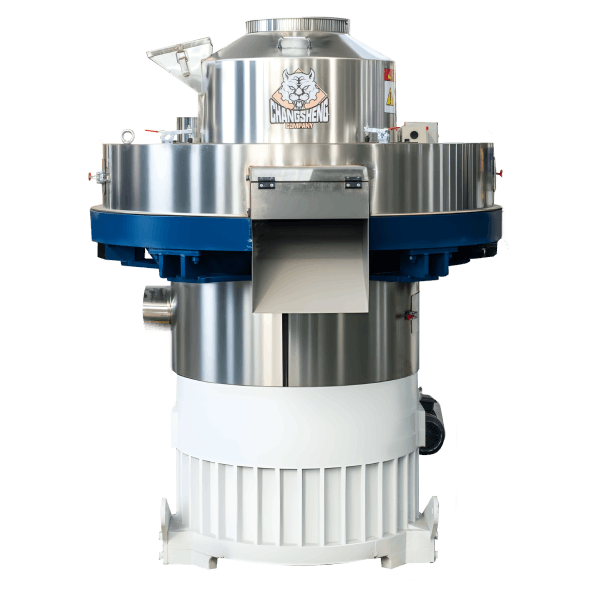
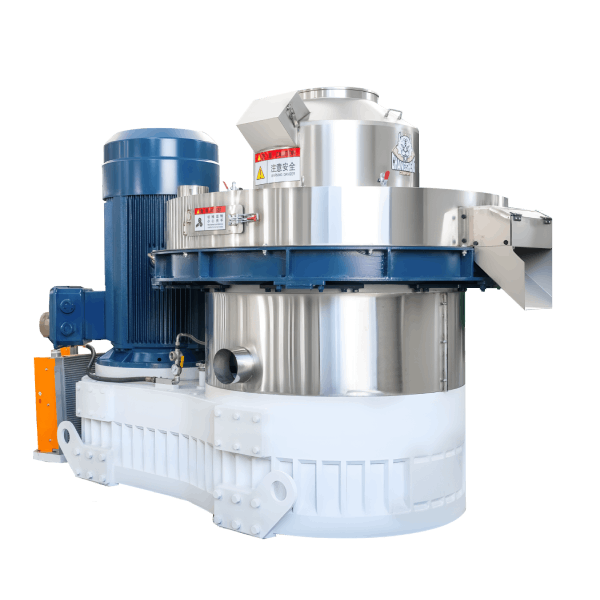
A pellet machine for biochar production is a ring die compaction system that densifies fine biochar powder, produced from pyrolyzed biomass, into uniform, transportable pellets for soil amendment, carbon sequestration, and industrial applications. The machine transforms lightweight, dusty biochar into stable pellets that improve handling, storage, and field application efficiency.
Technical Specifications & Performance Parameters
| Parameter | Value Range / Specification |
|---|---|
| Throughput capacity | 0.5 – 5.0 t/h (feedstock-dependent) |
| Main motor power | 55 – 160 kW (IE3 / IE4 compatible) |
| Ring die inner diameter | 400 – 800 mm |
| Pellet diameter | 6 – 13 mm (customisable) |
| Pellet bulk density | 600 – 764 kg/m³ |
| Raw material moisture | 6% – 10% (optimal for biochar) |
| Specific energy consumption | 0.04 – 0.10 kWh/kg |
| Pellet hardness (CWC) | 1,273 Pa |
| Pellet durability (CWC) | 87.48% |
| Granulation recovery (with binder) | 98.5% |
| Die service life | 700 – 1,000 hours |
| Roller shell service life | 500 – 800 hours |
| Maintenance man-hours | 4 – 6 h / month |
Structural Composition & Material Selection
The biochar pellet machine integrates four functional subsystems with defined material grades:
Mechanical System
- Ring die: Forged alloy steel with carburised hardening layer (HRC 58–62) – compression ratio 1:6 for optimal biochar densification
- Roller shells: High-chromium cast iron (Cr26) with wear-resistant overlay
- Main shaft: Heat-treated 42CrMo4 steel with induction-hardened journals
- Gearbox: Helical-gear configuration, case-hardened to HRC 58–60
Support System
- Bearing housings: Ductile cast iron (QT600-3) with precision-machined seating
- Base frame: Welded structural steel, stress-relief annealed, with vibration-damping mounts
Lubrication System
- Centralised grease lubrication for bearings (NLGI grade 2)
- Forced oil circulation for gearbox (ISO VG 460) with temperature monitor
Control System
- PLC with HMI touchscreen for process monitoring
- Motor current feedback for load control
- Optional VFD for speed variation
Manufacturing Process – Engineering Workflow
Step 1 – Biomass Carbonisation
Biomass (wood chips, agricultural residues) pyrolysed at 500–800°C in an oxygen-limited environment. Biochar production temperature significantly affects pelletability – higher carbonisation temperatures (e.g., 600°C) produce more easily densified biochar. Low-temperature biochar (400°C) exhibits lower pellet durability due to structural characteristics that reduce inter-particle bonding.
Step 2 – Grinding & Particle Size Reduction
Carbonised material milled to fine powder. Particle size consistency is critical for uniform pellet formation.
Step 3 – Binder Addition & Mixing
Biochar lacks natural binding agents, making binder addition essential. Cassava paste (10%–20% concentration) is commonly used in agricultural applications, achieving up to 98.5% granulation recovery at 20% binder level. For industrial applications, pyrolysis oil and lignosulphonate binders improve mechanical properties and thermal stability. Water addition (up to 15%–20%) is also beneficial in reducing die friction and improving pellet integrity.
Step 4 – Pelletising (Core Forming Process)
Main motor drives ring die rotation at 4–5 m/s peripheral speed. Rollers compress biochar-binder mixture through die holes (φ6–13mm). The die’s funnel-shaped holes and 1:6 compression ratio enable the compaction of biochar, which otherwise lacks elasticity and cannot be pelletised in standard machines without a binder. Machine efficiency ranges from 67.86% to 71.02%, irrespective of binder concentration.
Step 5 – Counterflow Cooling & Stabilisation
Pellets cooled to ambient temperature. Post-pelletising heat treatment (500–800°C) may be applied for metallurgical applications to enhance mechanical strength and thermal stability.
Step 6 – Screening & Packaging
Vibrating screener removes fines. Biochar pellets bagged for agricultural, horticultural, or industrial end-use.
Industry Comparison – Biochar Densification Options
| Densification Method | Capacity (t/h) | Pellet Quality | Binder Requirement | Typical Application |
|---|---|---|---|---|
| Ring Die Pellet Mill | 0.5 – 5.0 | Excellent – uniform, dense | Required | Commercial biochar production |
| Flat Die Pellet Mill | 0.05 – 0.8 | Good – cylindrical | Required | Small farms, pilot plants |
| Single Pellet Press | Laboratory scale | Variable | Required | Research, formulation testing |
| Extrusion System | 0.01 – 0.5 | Moderate | Required | Small-scale production |
Differentiation (Shandong Changsheng Machinery):
Our biochar pellet mills feature the critical 1:6 compression ratio and funnel-shaped die holes required for successfully densifying biochar powder. Low processing temperature preserves carbon content and pore structure essential for soil amendment applications. Complete systems including grinding, mixing, and cooling equipment available for integrated biochar processing lines.
Application Scenarios by Buyer Role
Distributors / Importers
Focus on machine suitability for diverse biochar feedstocks (wood, agricultural waste). Require binder options and die size flexibility for different end-use markets.
EPC Contractors
Integrating complete biochar production lines – pyrolysis, grinding, mixing, pelletising, packaging. Need system design support.
Engineering Consultants / Technical Advisors
Evaluate biochar pellet quality for specific applications (soil amendment, metallurgical). Require durability and density data for product specification.
End-user Production Facilities
Biochar producers, compost facilities, and metallurgical plants. Demand reliable densification of challenging biochar feedstocks.
Core Pain Points & Engineering Solutions
Pain Point 1 – Biochar’s lack of binding properties
Root cause: Biochar is composed of inert carbonised material with no natural elasticity or adhesive properties – cannot be pelletised without binders.
Solution: Cassava paste (10%–20%) achieves up to 98.5% granulation recovery. Pyrolysis oil binders improve mechanical properties for industrial applications. Water addition (15%–20%) reduces die friction and improves pellet integrity.
Pain Point 2 – Low biochar density making handling difficult
Root cause: As-produced biochar is lightweight, dusty, and difficult to transport.
Solution: Densification increases bulk density from loose powder (approximately 100–200 kg/m³) to pellet densities of 600–764 kg/m³, enabling efficient transport and mechanical field application.
Pain Point 3 – Variability in biochar feedstock
Root cause: Different feedstock types (wood chips, rice husk, coconut shell) have different carbonisation characteristics and pelletability.
Solution: Carbonised rice hull achieves the highest bulk density (764.22 kg/m³). Carbonised wood chips produce the hardest pellets (1,273 Pa) with best durability. Process parameters can be adjusted for different feedstocks.
Pain Point 4 – High die friction during biochar pelleting
Root cause: The abrasive nature of carbonised material increases die wear and friction.
Solution: Water addition (15%–20%) reduces die friction. Binder addition improves material flow. Optimised die compression ratio (1:6) minimises pressure requirements while achieving adequate densification.
Critical Risk Warnings & Mitigation Measures
Risk 1 – Self-heating of upgraded biochar pellets during storage
Mitigation: Monitor pellet storage temperature. Limit storage pile depth. Rotate inventory. Use passive cooling before packaging. Self-heating behavior must be seriously considered for industrial production and storage of upgraded biochar pellets.
Risk 2 – Low pellet durability affecting handling and application
Mitigation: Optimise binder concentration. Carbonised wood chips achieve highest hardness (1,272.75 Pa) and durability (87.48%). Test pellet durability before commercial production.
Risk 3 – Inconsistent biochar quality from variable pyrolysis conditions
Mitigation: Control pyrolysis temperature – higher temperatures (e.g., 600°C) produce more easily densified biochar. Maintain consistent carbonisation conditions. Batch quality testing.
Procurement Selection Guide – 7 Executable Steps
Step 1 – Define biochar feedstock type and end-use
Agricultural soil amendment, carbon sequestration, or metallurgical reductant. Different applications require different pellet properties.
Step 2 – Determine binder type and concentration
Cassava paste (10%–20%) for agricultural applications – 20% concentration achieves 98.5% recovery. Pyrolysis oil or lignosulphonate for industrial applications requiring high mechanical strength.
Step 3 – Select pellet diameter
6–8mm for agricultural application. 10–13mm for industrial (metallurgical) applications.
Step 4 – Verify moisture control
Biochar moisture typically 6%–10%. Add water (15%–20%) to reduce die friction and improve binding.
Step 5 – Confirm carbonisation temperature
Higher pyrolysis temperatures (≥600°C) produce more pelletable biochar. Temperature affects mechanical properties and thermal stability.
Step 6 – Plan for post-pelletising treatment
Second heat treatment at 500–800°C improves mechanical strength and thermal stability for metallurgical applications.
Step 7 – Establish quality control
Density testing (600–764 kg/m³ target). Durability testing (≥87% for commercial applications). Hardness testing for industrial grades.
Engineering Case Study – University of Tokyo Biochar Pelleting Research
Project Background
Research at the University of Tokyo and Hokkaido University investigated the pelleting of livestock manure compost mixed with biochar using a full-scale roller die pellet mill. The study addressed the challenge of biochar’s difficulty in forming pellets independently.
Initial Problem
Biochar has limited application in agriculture due to its dust form, making mechanical fertilisation difficult. Biochar cannot be granulated with standard pelletisers because it has no natural binding properties.
Root Cause Analysis
Carbonised materials lack elasticity and binding agents, preventing the formation of stable pellets during conventional compaction.
Solution Implemented
Biochar was mixed with livestock manure compost as a low-cost, high-availability binder. The mixture was pelleted using a roller die pellet mill designed for full-scale fertiliser production.
Final Data Results
| Parameter | Value |
|---|---|
| Machine efficiency | 67.86% – 71.02% |
| Granulation recovery (with 20% binder) | 98.50% |
| Pellet moisture content | 6.60% – 7.79% |
| Carbonised rice hull bulk density | 764.22 kg/m³ |
| Carbonised wood chips hardness | 1,272.75 Pa |
| Carbonised wood chips durability | 87.48% |
Frequently Asked Questions (FAQ)
1. What is biochar pelletisation?
The process of densifying fine biochar powder into uniform pellets using a pellet mill with binder addition, improving handling, transport, and field application.
2. Why is binder required for biochar pelleting?
Biochar has no natural elasticity or binding agents – cassava paste, pyrolysis oil, or lignosulphonate binders are essential for pellet formation.
3. What binder concentration is recommended?
Cassava paste at 20% concentration achieves up to 98.5% granulation recovery. Pyrolysis oil and lignosulphonate provide 100%–120% life extension.
4. What is the optimal pellet diameter for biochar?
6–8mm for agricultural soil amendment. 10–13mm for industrial (metallurgical) applications.
5. What moisture is required for biochar pelletising?
Biochar moisture is typically 6%–10%. Adding water (15%–20%) reduces die friction and improves pellet quality.
6. What is the typical capacity range?
0.5 – 5.0 t/h depending on model, feedstock, and binder formulation.
7. How does carbonisation temperature affect pelletability?
Higher pyrolysis temperatures (e.g., 600°C) produce biochar with better pelletability than low-temperature biochar (400°C).
8. What is the bulk density of biochar pellets?
600 – 764 kg/m³ – significantly denser than loose biochar powder.
9. Can biochar pellets be used for industrial applications?
Yes – biochar pellets are being tested as a renewable substitute for fossil coal in steel and silicon production.
10. What is self-heating risk in biochar pellets?
Upgraded biochar pellets blended with pyrolysis oil can self-heat during storage – monitor temperature and limit storage pile depth.
11. What is the specific energy consumption?
0.04 – 0.10 kWh/kg depending on feedstock and extruder diameter.
12. Can I pelletise different biochar feedstocks?
Yes – carbonised rice hull, coconut shell, wood chips, and sugarcane waste have all been successfully pelletised.
Author & E-E-A-T Credentials
Author: Dr. Chen Wei
Title: Senior Mechanical Engineer, Pelletising Systems Division
Experience: 14 years in biomass densification and feed processing equipment design
Notable Projects:
- Commissioned biochar pellet lines and conducted research on densification of carbonised biomass materials
- Developed binder and moisture optimisation protocols for biochar pelleting applications
- Co-author of “Industrial Pellet Mill Maintenance and Optimisation” (Engineering Press, 2022)
Affiliation: Shandong Changsheng Machinery Co., Ltd.