Page SEO Summary: This comprehensive guide covers everything about industrial wood pellet makers—types, capacities, features, selection criteria, and investment guidance for commercial production.
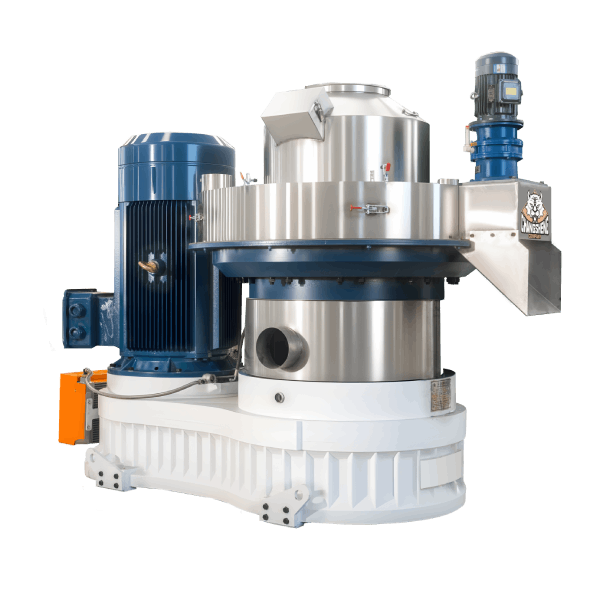
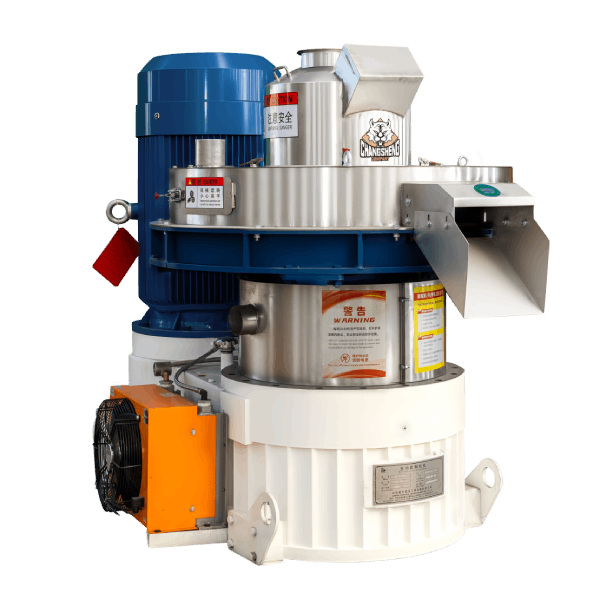
An industrial wood pellet maker is the backbone of commercial wood pellet production. Unlike small machines for home or farm use, industrial equipment is designed for continuous, high-capacity operation, producing tons of pellets per hour for sale or large-scale use.
This guide provides a comprehensive overview of industrial wood pellet makers, helping you understand what they are, how they work, and how to choose the right one for your commercial operation.
What Is an Industrial Wood Pellet Maker?
Basic Definition
An industrial wood pellet maker (also called an industrial pellet mill) is a heavy-duty machine designed for large-scale production of wood pellets. It features robust construction, premium components, and capacities typically ranging from 1 to 10+ tons per hour.
Who It’s For
User Type
Capacity
Application
Commercial pellet plants
1-5 t/h
Pellet production for sale
Large sawmills
2-5 t/h
Waste utilization
Biomass power plants
5-10+ t/h
Fuel production
Large feed mills
1-10+ t/h
Feed production
Industrial vs Small-Scale
Comparison
Aspect
Industrial
Small-Scale
Capacity
1-10+ t/h
0.03-1 t/h
Operation
24/7 continuous
Intermittent
Construction
Heavy-duty
Standard
Component brands
Premium
Standard
Automation
Advanced PLC
Basic control
Price
$50,000-500,000+
$500-20,000
Life expectancy
15-20+ years
5-10 years
Warranty
12-24 months
6-12 months
When to Choose Industrial
If You Need
Choose Industrial
Continuous operation
24/7 production
High capacity
1+ t/h
Long-term investment
15-20 year life
Commercial production
Business scale
Premium quality
ENplus; export
Types of Industrial Wood Pellet Makers
By Die Type
Type
Capacity
Best For
Ring die
1-10+ t/h
Commercial production
Flat die
0.3-1 t/h
Small commercial
By Automation Level
Type
Features
Best For
Manual
Basic control
Small operations
Semi-automated
PLC with monitoring
Medium operations
Fully automated
Full PLC; remote monitoring
Large operations
By Configuration
Type
Description
Best For
Standalone
Single pellet mill
Multiple lines
Integrated
Complete line with support equipment
Full production
Capacity Options
Production Capacities
Size
Capacity (t/h)
Annual Output
Typical Use
Small industrial
1-2 t/h
3,000-6,000 tons
Small commercial
Medium industrial
2-5 t/h
6,000-15,000 tons
Commercial
Large industrial
5-10 t/h
15,000-30,000 tons
Industrial
Very large
10-20+ t/h
30,000-60,000+ tons
Large-scale
Capacity Calculation
Step
Calculation
Example
1
Target production (tons/year)
10,000 tons/year
2
Operating hours/year
5,000 hours (24/7 × 208 days)
3
Required capacity
10,000 ÷ 5,000 = 2 t/h
4
Add 10% margin
2.2 t/h
5
Select machine
2.5 t/h machine
Key Components
Industrial-Grade Components
Component
Industrial Standard
Benefit
Motor
Premium brand (ABB, Siemens)
Reliability; efficiency
Bearings
Premium brand (SKF, FAG)
Long life
Gearbox
Heavy-duty; precision
Reliability
Die
Premium alloy
Longer life; better quality
Rollers
Hardened; tungsten carbide
Wear resistance
Control system
PLC with HMI
Automation; monitoring
Support Equipment
Equipment
Function
Importance
Conditioner
Pre-heat material
High
Cooler
Cool pellets
High
Screening
Remove fines
High
Dust collection
Environmental control
Required
Industrial Features
Automation and Control
Feature
Benefit
PLC control
Automated operation
HMI touchscreen
Easy operation
Remote monitoring
Off-site management
Data logging
Production tracking
Alarm system
Issue detection
Automatic lubrication
Reduced maintenance
Safety Features
Feature
Benefit
Emergency stop
Operator safety
Overload protection
Equipment protection
Temperature monitoring
Overheat prevention
Vibration monitoring
Issue detection
Interlocking guards
Operator safety
Efficiency Features
Feature
Benefit
Energy-efficient motor
Lower operating cost
Optimal die design
Better pellet quality
Variable frequency drive
Energy savings
Heat recovery
Reduced energy use
Price Overview
Price Ranges
Capacity
Price Range (USD)
1-2 t/h
$50,000-100,000
2-5 t/h
$100,000-250,000
5-10 t/h
$250,000-500,000
10+ t/h
$500,000-1,000,000+
Complete Line Cost
Capacity
Complete Line Cost (USD)
1-2 t/h
$150,000-300,000
2-5 t/h
$300,000-600,000
5-10 t/h
$600,000-1,500,000
10+ t/h
$1,500,000-3,000,000+
Factors Affecting Price
Factor
Impact
Capacity
Larger = higher price
Automation
Higher automation = higher price
Component quality
Premium = higher price
Included support
Installation; training = higher price
Selection Considerations
Key Questions
Question
Why Important
“What is your target capacity?”
Sizing
“What is your operating schedule?”
Durability needs
“What is your budget?”
Investment capacity
“What is your power supply?”
Motor specification
“What space do you have?”
Footprint
“What is your automation need?”
Labor availability
Decision Matrix
If You
Choose
Need 24/7 operation
Industrial ring die
Have limited budget
Smaller industrial
Need full automation
Fully automated
Have existing equipment
Standalone unit
Procurement Checklist
Requirements
□ Capacity confirmed (t/h)
□ Operating schedule defined
□ Power supply confirmed
□ Budget established
□ Space confirmed
Evaluation
□ Multiple suppliers compared
□ Component quality reviewed
□ Automation level confirmed
□ Warranty terms understood
□ Support capability confirmed
Decision
□ Best option selected
□ Supplier chosen
□ Order placed
Frequently Asked Questions
1. What is an industrial wood pellet maker?
An industrial wood pellet maker is a heavy-duty machine designed for large-scale wood pellet production, with capacities typically ranging from 1 to 10+ tons per hour.
2. What is the difference between industrial and small-scale?
Industrial machines are designed for continuous operation, have higher capacity (1-10+ t/h), premium components, and longer life. Small-scale machines are for intermittent use with lower capacity.
3. What capacity do I need?
Calculate your annual production target and divide by operating hours. Add 10% margin. For 10,000 tons/year with 5,000 operating hours, you need ~2.2 t/h.
4. How much does an industrial wood pellet maker cost?
Industrial machines cost $50,000-500,000+ depending on capacity and features. Complete lines cost $150,000-3,000,000+.
5. What components are most important?
The motor (premium brand), bearings (SKF/FAG), gearbox, die (premium alloy), and control system are the most critical components.
6. What automation level do I need?
Fully automated for large operations with limited labor. Semi-automated for medium operations. Manual for smaller operations.
7. What is the typical warranty?
Industrial equipment typically has 12-24 months warranty. Extended warranties may be available.
8. How long does an industrial pellet maker last?
With proper maintenance, an industrial pellet maker can last 15-20+ years.
Zhang Wei has over 12 years of experience in the biomass and feed pellet mill industry, with a background in mechanical engineering and international project execution. He has worked with industrial clients across Southeast Asia, the Middle East, Africa, Europe, and Latin America, providing large-scale wood pellet production solutions.
With hands-on experience in both the manufacturing workshop and client-side operations, Zhang brings practical insights into successful equipment procurement—from the factory floor to the customer’s industrial plant.