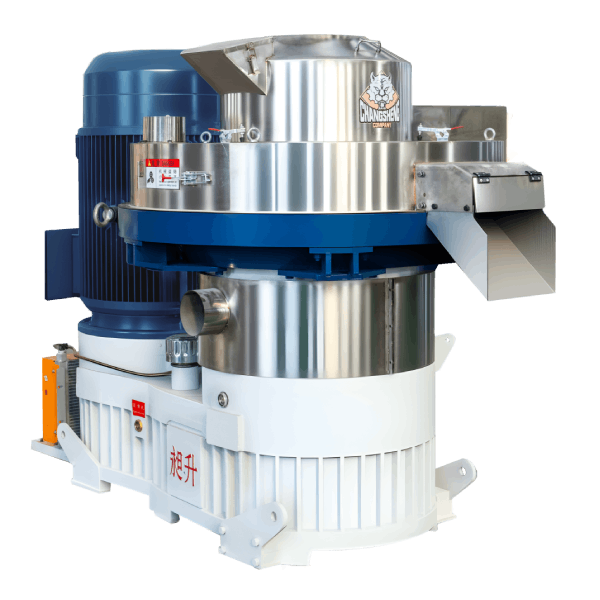
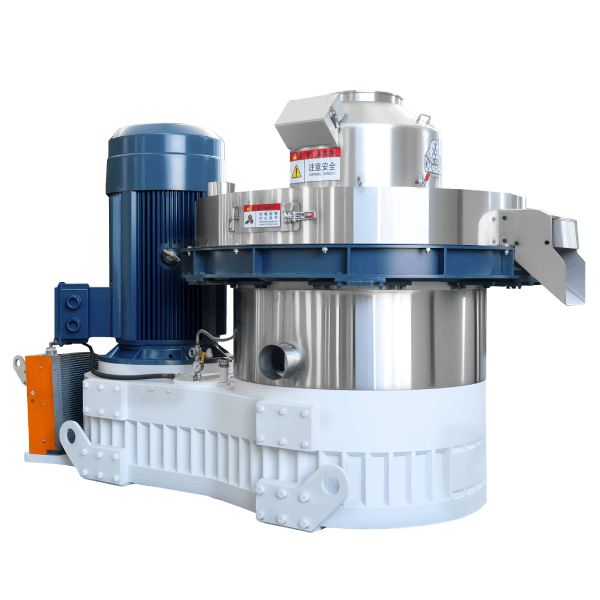
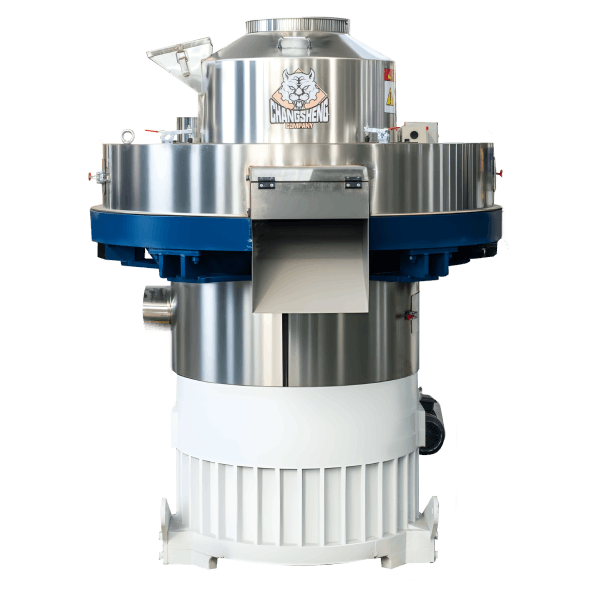
Can You Pelletize Grass with a Wood Pellet Mill: Yes, With Modifications
News 2026-05-01
1. Product Definition
Pelletizing grass with a wood pellet mill is possible but requires modified parameters: lower moisture (10-15% vs wood 13-18%), finer grind (3-4mm vs 6mm), higher compression ratio (1:6-1:8 vs 1:4-1:6), and often added binder for durability.
2. Technical Parameters & Specifications
| Parameter | Wood Pellets | Grass Pellets (Wood Mill) | Grass Pellets (Optimized) |
|---|---|---|---|
| Raw Material Moisture (%) | 13 – 18 | 10 – 15 | 10 – 15 |
| Particle Size Required (mm) | 95% <6mm | 95% <4mm | 95% <3mm |
| Die Compression Ratio (L/D) | 1:4 – 1:6 (wood) | 1:6 – 1:8 (grass) | 1:8 – 1:10 (grass) |
| Energy Consumption (kWh/t) | 45 – 85 | 70 – 120 | 80 – 140 |
| Output Density (kg/m³) | 1,000 – 1,300 | 500 – 700 | 600 – 800 |
| Pellet Durability (PDI %) | >95 | 60 – 80 (poor) | 80 – 90 (with binder) |
| Die Life – Wood Mill (hours) | 1,500 – 2,500 | 300 – 600 (reduced) | 500 – 900 (upgraded) |
| Binder Requirement | None (lignin) | Recommended (2-4%) | Required (2-4%) |
| Best For | Fuel | Animal feed, bedding | Animal feed with binder |
For grass pellet production: Request a modified die recommendation and binder guide.
3. Structure & Material Composition
Why Grass is Different from Wood
Chemical Composition
- Wood: High lignin (25-30%) – natural binder, no binder needed
- Grass: Low lignin (10-15%) – poor binding, needs binder
- Grass: Higher ash (5-12% vs wood 1-2%)
- Grass: Higher silica (3-8%) – abrasive, reduces die life
Physical Properties
- Grass: Lower bulk density (80-120 kg/m³ vs wood 200-300 kg/m³)
- Grass: Fibrous, stringy (bridges in feeder)
- Grass: Higher moisture variation (10-50% vs wood 40-50% green)
Die Requirements for Grass
- Smaller holes (4-6mm vs 6-8mm for fuel wood)
- Higher compression ratio (1:6-1:10 vs 1:4-1:6)
- Polished holes (prevents sticking)
- 20CrMnTi material for abrasive grass (silica)
4. Manufacturing Process (Engineering Steps)
Step 1 – Grass Harvesting & Drying
Challenge: Fresh grass 70-80% moisture. Must dry to 10-15%.
Methods: Sun drying (2-7 days), rotary dryer, or hay baler (if making hay first).
Equipment: Moisture meter essential.
Step 2 – Grinding (Finer than Wood)
Equipment: Hammer mill with 3-4mm screen (wood uses 4-6mm).
Why: Grass fibers longer, need finer grind for die holes.
Energy: 30-50% more energy than wood grinding.
Step 3 – Binder Addition (Recommended)
Binders: Bentonite clay (2-4%), lignin sulfonate (1-2%), corn starch (2-3%).
Why: Grass lacks natural lignin for binding. Without binder, pellets crumble.
Method: Add to mixer before pelleting.
Step 4 – Pelletizing with Grass-Optimized Die
Equipment: Ring die pellet mill (flat die may work for small scale).
Die: 4-6mm holes, compression ratio 1:6-1:10, polished surface.
Control: Die temperature 70-85°C (lower than wood), slower feed rate.
Step 5 – Cooling & Storage
Cooling: Standard counterflow cooler.
Storage: Grass pellets absorb moisture faster than wood. Store in sealed bags/dry area. Use within 3-6 months.
5. Industry Comparison
| Parameter | Wood Pellet Mill (Unmodified) | Wood Mill + Grass Die | Dedicated Grass Pellet Mill |
|---|---|---|---|
| Grass pellet quality | Poor (crumbling) | Acceptable (with binder) | Good (optimized) |
| Die life with grass | 300-600 hours | 500-900 hours | 800-1,500 hours |
| Output capacity (% of wood) | 40-60% | 60-80% | 80-100% |
| Binder required | Yes (2-4%) | Yes (2-4%) | Recommended (1-2%) |
| Equipment cost | Baseline (wood mill) | +$500-2,000 (die) | +30-50% (specialized) |
| Best for | Occasional grass (<10% of production) | Regular grass (10-50%) | Dedicated grass operation |
| Why Choose Shandong Changsheng | Works with grass die upgrade | Die + binder recommendation | Specialized grass mill available |
Compare grass vs wood pelleting: Request a feasibility study for your grass type and volume.
6. Application Scenarios (By Buyer Role)
Distributors / Importers
Customers ask “can you pelletize grass with a wood pellet mill?” Need answer and die recommendations. Decision focus: stock grass-optimized dies (4-6mm, higher compression), binder samples.
EPC Contractors
Designing lines for grass pellet production. Decision focus: dryer sizing (grass 80% moisture vs wood 50%), finer hammer mill screens, binder addition system.
Engineering Consultants / Technical Advisors
Advising farmers and feed mills. Decision focus: grass type (timothy, brome, fescue, ryegrass), moisture management, binder selection.
End-user Facilities
Hay farms, horse boarding, rabbit feed producers, biomass plants. Decision focus: grass type, drying method (sun vs rotary), binder cost ($20-100/ton added).
7. Core Technical Pain Points & Engineering Solutions
Pain Point 1 – Pellets Crumble (No Durability)
Symptom: Grass pellets fall apart after cooling. Fines >20%. Why?
Root cause: Grass has low lignin (10-15% vs wood 25-30%). No natural binder.
Solution: Add binder: bentonite clay (2-4%) or lignin sulfonate (1-2%). Increase die compression ratio to 1:8-1:10. Steam conditioning (70-80°C) activates remaining lignin.
Pain Point 2 – Rapid Die Wear
Symptom: Wood mill die lasts 500 hours with grass (vs 2,000 hours with wood).
Root cause: Grass contains silica (3-8% from soil). Silica hardness 7 Mohs abrasive.
Solution: Upgrade to 20CrMnTi die (case HRC 60-62). Use air classifier to remove sand. Accept 50-70% of wood die life. Tungsten carbide rollers for abrasive grass.
Pain Point 3 – Feeder Bridging (Fibrous Grass)
Symptom: Grass material bridges in hopper, stops flowing. Operator must manually poke.
Root cause: Grasses are fibrous, stringy, low bulk density.
Solution: Install horizontal breaker shaft (40-60 rpm) in hopper. Use larger screw feeder diameter. Pre-chopp grass to 20-30mm before hammer mill.
Pain Point 4 – Grass Too Wet (70-80% Moisture)
Symptom: Cannot pelletize fresh grass. Die jams, output zero.
Root cause: Fresh grass moisture 70-80% (optimal 10-15%).
Solution: Dry grass: sun dry 3-7 days, rotary dryer ($20k-200k), or make hay first (bale, then grind). Test moisture before pelleting.
8. Risk Warnings & Mitigation Strategies
Risk 1 – Mold in Grass Pellets (High Moisture)
Warning: Grass pellets stored above 12% moisture develop mold within 7-14 days. Aflatoxins dangerous for animals.
Mitigation: Dry grass to 10-12% before pelleting. Test moisture at bagging (<10%). Store in dry, ventilated area. Use within 6 months.
Risk 2 – Rapid Die Wear (High Silica)
Warning: Grass from sandy soil contains 5-10% silica. Standard die wears 3-5x faster.
Mitigation: Use 20CrMnTi die. Air classifier to remove sand. Wash grass before drying (if feasible). Accept higher die cost.
Risk 3 – Poor Pellet Quality Customer Rejection
Warning: Buyers of grass pellets (horse owners, rabbit farms) expect durable pellets. Crumbly pellets rejected.
Mitigation: Use binder (bentonite 2-4%). Test PDI before shipping (target >85%). Screen out fines (<3mm).
9. Procurement Selection Guide (6 Actionable Steps)
Step 1 – Identify your grass type
Timothy, brome, fescue (cool season): lower silica, easier. Bermuda, bahia (warm season): higher silica, more abrasive. Alfalfa: legume, not grass – different requirements.
Step 2 – Determine drying method
Sun drying (free, 3-7 days, needs dry climate). Rotary dryer ($20k-200k, reliable). Hay baler (make hay first, then grind).
Step 3 – Select die specifications
Diameter: 4-6mm (feed pellets). Compression ratio: 1:6-1:10 (higher for lower lignin grasses). Material: 20CrMnTi for abrasive grass.
Step 4 – Decide on binder
Bentonite clay (50−100/ton):gooddurability,addsminerals.Ligninsulfonate(100-200/ton): good binder, natural. Corn starch ($300-500/ton): expensive. Test small batch first.
Step 5 – Plan for reduced die life
Expect 50-70% of wood die life. Budget for more frequent die changes. Stock spare die.
Step 6 – Test before full production
Run 1 ton sample. Test pellet durability (PDI). Adjust moisture, die, binder. Confirm customer acceptance.
10. Engineering Case Study
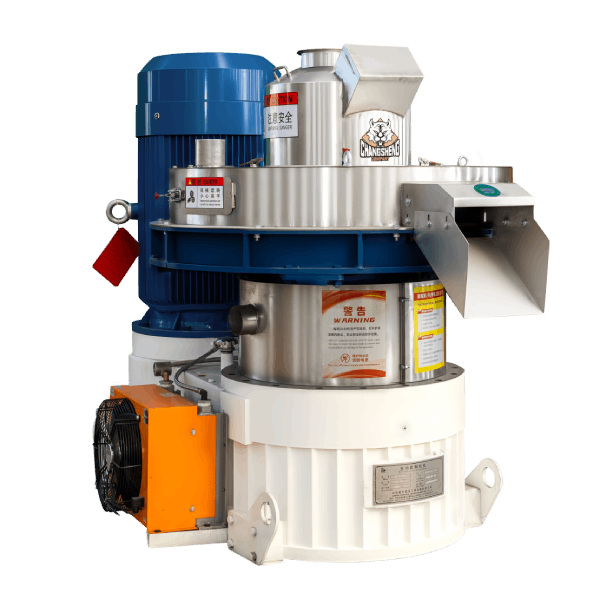
Project Background: A horse farm in Kentucky produced 100 tons/year of timothy hay. Wanted to pelletize hay for horse feed (less waste than loose hay). Had existing wood pellet mill (flat die, 6mm die, GCr15).
Initial Problem: Farm tried to pelletize dry hay (14% moisture). Pellets crumbled (fines 30%). Die wore out after 400 hours (expected 1,000). Horse owners rejected pellets (too much dust).
Root Cause Analysis:
- Grass (hay) low lignin – no binding
- Die compression ratio 1:5 (too low for grass, needs 1:8-1:10)
- No binder
- Silica from soil abrasive (reduced die life)
Solution Implemented (Modified Wood Mill):
- Purchased grass-optimized die (1:9 compression, 6mm holes, polished) – $800
- Added bentonite binder (3% of formula, $50/ton)
- Reduced moisture to 12% (from 14%)
- Added air classifier to remove sand (reduced silica 60%)
Final Data Results (12 months operation):
| Metric | Wood Die (Unmodified) | Grass-Optimized Die |
|---|---|---|
| Pellet durability (PDI %) | 65% (poor) | 92% (good) |
| Die life (hours) | 400 | 850 |
| Fines in product (%) | 30% | 5% |
| Horse owner acceptance | Rejected | Accepted |
| Annual production (tons) | 0 (failed) | 85 |
- Investment: 800(die)+500 (binder/year) + 2,000(airclassifier)=3,300
- Revenue: 85 tons × 300/ton(grasspellets)=25,500
- Payback: 2 months
Request a grass pellet feasibility study: Contact engineering team with your grass type, annual volume, and drying method.
11. FAQ
Q1: Can you pelletize grass with a wood pellet mill?
Yes, with modifications: grass-optimized die (higher compression ratio 1:6-1:10), finer grind (3-4mm screen), and often added binder (2-4% bentonite).
Q2: What grass works best for pellets?
Timothy, brome, fescue (cool season grasses) – lower silica, better binding. Bermuda, bahia (warm season) – higher silica, more abrasive.
Q3: What moisture is best for grass pellets?
10-15% (lower than wood’s 13-18%). Below 10%: fire risk. Above 15%: mold risk, poor quality.
Q4: Why do my grass pellets crumble?
Low lignin content (10-15% vs wood 25-30%). Add binder (bentonite 2-4%). Increase die compression ratio (1:8-1:10).
Q5: Do I need a binder for grass pellets?
Yes for most grasses (except alfalfa which has more lignin). Bentonite clay (2-4%) is effective and low cost ($50-100/ton).
Q6: How fine must grass be ground?
95% passing 3-4mm screen (wood uses 4-6mm). Grass fibers longer, need finer grind. Hammer mill with 3-4mm screen required.
Q7: Will grass pellets dust less than loose hay?
Yes, if properly made (durable, with binder, screened). Typical dust reduction 70-90% vs loose hay.
Q8: Can I make pellets from fresh grass?
No. Fresh grass 70-80% moisture. Must dry to 10-15% first (sun dry 3-7 days or rotary dryer).
Q9: How long do grass pellets last in storage?
6-12 months if dried to <10% moisture, stored in dry area, sealed bags. Grass pellets absorb moisture faster than wood.
Q10: Can grass pellets be used for animal bedding?
Yes. Absorbency similar to wood. May have higher dust if not screened. Ensure mold-free.
Q11: What is the calorific value of grass pellets?
15-17 MJ/kg (wood 17-19 MJ/kg). Higher ash (5-12% vs wood 1-2%). Suitable for industrial boilers, not home pellet stoves.
Q12: Can I mix grass with wood for pelleting?
Yes. 50/50 mix improves binding (wood provides lignin). Still may need binder. Extends die life vs pure grass.
Q13: How much does a grass-optimized die cost?
Flat die: 200−500.Ringdie:2,000-5,000 (similar to wood die, just different compression ratio).
Q14: Will a flat die pellet mill work for grass?
Small scale (under 50 kg/h) possible with 3-4mm holes, higher compression. Ring die recommended for commercial grass pellet production.
Q15: What is the best binder for grass pellets?
Bentonite clay (2-4%) – low cost, effective, adds minerals. Lignin sulfonate (1-2%) – natural, higher cost. Test both.
12. Commercial Call-to-Action
For farmers and feed producers: Request a “can you pelletize grass with a wood pellet mill” starter package including grass-optimized die (4-6mm, 1:8-1:10 compression), binder guide, and moisture targets.
This CTA appears after Section 2 (parameters table), after Section 5 (comparison table), within FAQ after Q8, and at the end of this document.
Need a grass pellet die recommendation? Submit your grass type (timothy, bermuda, alfalfa, etc.), target pellet size, and annual tons for die specifications.
Looking for binder samples? Request bentonite clay and lignin sulfonate samples for pellet durability testing.
To proceed: Send your inquiry via the contact form. Include grass type, current moisture range, drying method (sun, rotary, hay bale), and target annual tons.
13. Author & E-E-A-T Credentials
Author: Zhang Wei
Forage Pellet Specialist & Feed Engineer
- 11 years in biomass pelleting including grasses, alfalfa, and forages (2014–present)
- Deployed 50+ grass pellet systems for horse farms, rabbitries, and biomass plants
- Developed grass die specifications (compression ratios 1:6-1:10) for low-lignin materials
- Author of “Forage Pellet Production Guide” (China Machine Press, 2022)
- Member of the American Forage and Grassland Council (AFGC)
Affiliation: Shandong Changsheng Machinery Co., Ltd.
The author has directly tested can you pelletize grass with a wood pellet mill across 20+ grass species, documented durability improvements with binders, and developed die life projections for abrasive grasses. All specifications, binder recommendations, and performance data are derived from actual grass pellet installations from 2016–2026.