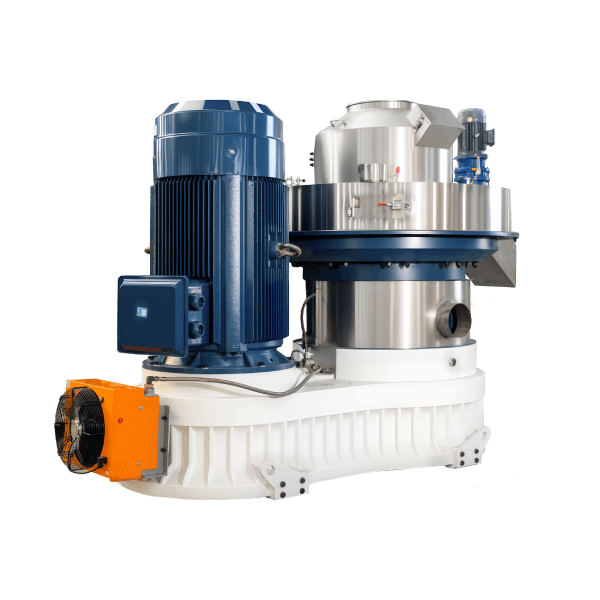
Feed Pellet Mill: Commercial Capacity, Types, Price & Selection Guide
News 2026-08-04
Commercial feed production requires equipment that can run continuously, produce consistent pellet quality, and integrate into a complete production line. The feed pellet mill is the core machine in that line, but selecting it correctly requires understanding capacity, die type, feed formulation, and the upstream and downstream equipment that supports it.
This guide is written for commercial feed producers, project investors, and procurement managers who are evaluating feed pellet mills for poultry, pig, cattle, or aquaculture feed production. It focuses on commercial and industrial applications—not hobby or small farm use. Where small-scale equipment is mentioned, it is only as a reference point for comparison.
What Is a Feed Pellet Mill?
A feed pellet mill is a machine that compresses ground feed ingredients into dense, uniform pellets using heat, moisture, and pressure. The process improves feed efficiency, reduces waste, and enhances animal nutrition compared to mash feed.
The core process stages are:
Grinding → Mixing → Conditioning → Pelletizing → Cooling → Screening
Grinding reduces raw materials (corn, soybean meal, etc.) to fine powder. Mixing blends ingredients with additives and binders. Conditioning adds steam and moisture to improve binding and pellet quality. Pelletizing forces material through die holes under pressure. Cooling stabilizes pellets for storage. Screening removes fines and oversized particles.
For commercial production, the pellet mill must be matched with a complete line—grinding, mixing, conditioning, cooling, and screening equipment—to achieve consistent output and quality. The pellet mill alone does not determine production capacity; the entire line does.
Types of Commercial Feed Pellet Mills
Commercial feed pellet mills fall into two categories: flat die and ring die. The choice affects capacity, pellet quality, energy efficiency, and maintenance requirements.
Flat Die Feed Pellet Mill
Flat die pellet mills are simpler in construction and lower in capital cost. They are suitable for small-scale production, on-farm use, and pilot projects. Typical capacity ranges from 30–500 kg/h.
Limitations for commercial production: limited continuous operation capability, lower energy efficiency, more variable pellet quality, and shorter die life. Flat die mills are generally not the preferred choice for commercial feed production.
Ring Die Feed Pellet Mill
Ring die pellet mills are the standard for commercial and industrial feed production. They offer higher capacity (typically 500 kg/h to 10 t/h+), better pellet consistency, higher energy efficiency, and longer die life. They are designed for continuous operation and integrate well with automated production lines.
For commercial feed production, ring die is almost always the correct choice.
Comparison for Commercial Production
| Factor | Flat Die | Ring Die |
|---|---|---|
| Capacity | Small (30–500 kg/h) | Medium–Large (500 kg/h – 10 t/h+) |
| Continuous operation | Limited | Better suited |
| Energy efficiency | Lower | Higher |
| Pellet consistency | Moderate | Better |
| Maintenance | Simple | More specialized |
| Best application | Small farms, pilot | Commercial feed mills |
The key reason commercial operations choose ring die is continuous production capability. A commercial feed mill runs 8–20 hours per day, requires consistent pellet quality, and cannot afford frequent die changes or inconsistent output. Ring die mills are designed for this operating pattern.
How to Choose Feed Pellet Mill Capacity
Capacity Calculation Formula
Required capacity = Daily feed requirement ÷ Effective operating hours
Daily feed requirement depends on the number and type of animals, feed conversion ratios, and the proportion of feed that is pelleted. Effective operating hours account for maintenance, changeover, and downtime.
Capacity Ranges for Commercial Production
| Capacity | Typical Application | Line Configuration |
|---|---|---|
| 0.5–1 t/h | Small commercial feed mill | Complete line with manual or semi-auto control |
| 1–2 t/h | Commercial feed mill | Complete line with automated batching and mixing |
| 2–3 t/h | Medium commercial feed mill | Automated line with PLC control |
| 3–5 t/h | Large commercial feed mill | Fully automated line with integrated packing |
| 5–10 t/h+ | Industrial feed plant | Multiple lines; centralized control |
Capacity should be selected according to daily feed demand, operating hours, raw materials, and expected future production. Do not size for current demand only—consider growth over the equipment’s service life.
Example: 2,000 kg/h Commercial Feed Mill
A commercial feed mill requires 2,000 kg/h of pelleted feed. Operating 16 hours per day, daily output is 32 tonnes. If the feed formulation includes 60% corn, 25% soybean meal, and 15% other ingredients, the line must handle these materials at the required ratio, with grinding, mixing, and conditioning capacity matched to the pellet mill.
The proportion of each ingredient affects grinding capacity, mixing time, and conditioning requirements. Confirm the line configuration with the supplier based on your actual formulation.
The line configuration would typically include:
- Hammer mill sized for 2–3 t/h
- Mixer sized for batch matching to pellet mill throughput
- Conditioner with steam control
- Ring die pellet mill rated at 2 t/h
- Counter-flow cooler
- Vibrating screener
- Packing system
Each component must be sized to match, not just the pellet mill.
Feed Pellet Mill for Different Feed Production
Poultry Feed
Poultry feed production requires small pellet diameters and precise formulation. Broiler starter feed typically uses 2.0–2.5 mm pellets; grower and finisher feeds use 3.0–4.5 mm. Layer feed uses 3.0–4.0 mm with higher calcium content.
Poultry feed typically requires die hole diameters of 2.0–4.5 mm, with compression ratios selected based on formulation and desired pellet durability.
Production considerations: raw materials include corn, soybean meal, and limestone. Conditioning temperature and moisture must be controlled to achieve pellet durability. A ring die feed pellet mill with fine die specification is typical for commercial poultry feed production.
Pig Feed
Pig feed varies by growth stage. Weaner feed uses 2.0–2.5 mm pellets; grower and finisher feeds use 2.5–4.5 mm; sow feed uses 4.0–5.0 mm.
Production considerations: pig feed formulations include corn, soybean meal, wheat bran, and mineral premix. Pellet durability is important for handling and transport. Ring die feed pellet mills with appropriate compression ratio are used for commercial pig feed production.
Cattle Feed
Cattle feed includes dairy and beef formulations. Dairy cow feed typically uses 5–6 mm pellets with high fiber content; beef cattle feed uses similar sizes with higher energy content.
Production considerations: cattle feed includes roughage, which affects pelletability. Conditioning and die selection must account for high-fiber ingredients. Ring die feed pellet mills with robust die specification are used for commercial cattle feed production.
Aquaculture Feed
Aquaculture feed requires small pellet sizes and high protein content. Trout feed uses 2–4 mm pellets; tilapia feed uses 2–6 mm; shrimp feed uses 0.3–1.5 mm micro pellets.
Production considerations: aquaculture feed formulations include fish meal, soybean meal, and oils. Pellet durability in water is critical. Specialized ring die feed pellet mills with fine die specification and precise conditioning control are used for commercial aquaculture feed production.
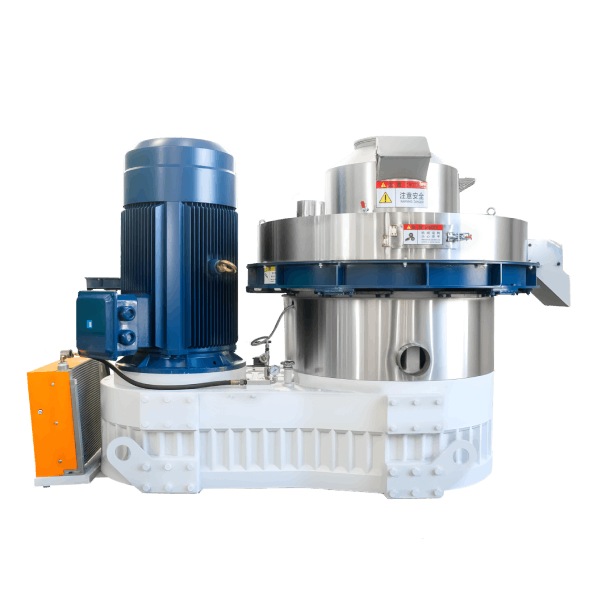
Commercial Feed Pellet Mill Production Line
Process Flow Overview
Raw material receiving → Cleaning → Grinding → Batching → Mixing → Conditioning → Pelletizing → Cooling → Screening → Packing
Each stage has a defined function. The feed pellet mill is the core machine, but the complete line determines production capacity and feed quality.
Role of the Feed Pellet Mill in the Line
The feed pellet mill forms pellets from conditioned material. Its capacity, die specification, and conditioning system determine pellet quality, production rate, and energy consumption. However, the pellet mill cannot compensate for inadequate grinding, inaccurate batching, or insufficient cooling. A commercial feed production line must be designed as an integrated system.
Key Equipment Beyond the Pellet Mill
| Equipment | Function | Key Consideration |
|---|---|---|
| Hammer mill | Grinding raw materials | Screen size; capacity match |
| Batching system | Accurate ingredient proportioning | Weighing accuracy |
| Mixer | Uniform blending | Mixing time; homogeneity |
| Conditioner | Steam and moisture addition | Temperature; retention time |
| Cooler | Pellet cooling | Counter-flow; retention time |
| Screener | Fines removal | Screen size; fines recycling |
| Packing system | Bag or bulk | Manual or automatic |
Each unit must be sized to match the feed pellet mill. A production line is only as productive as its bottleneck.
How to Select a Commercial Feed Pellet Mill
Commercial feed pellet mill selection depends on multiple project-specific factors:
| Factor | Why It Matters |
|---|---|
| Required capacity | Determines pellet mill size and line configuration |
| Feed type | Poultry, pig, cattle, or aquaculture; affects die and conditioning |
| Pellet diameter | Determines die specification |
| Raw material characteristics | Affects grinding, conditioning, and die wear |
| Motor power | Must match die and capacity; determines energy consumption |
| Die specification | Compression ratio, hole diameter, material |
| Roller durability | Affects die life and maintenance cost |
| Conditioning system | Determines pellet quality and durability |
| Cooling system | Determines pellet stability and storage life |
| Spare parts | Die, roller, bearings availability and lead time |
| Automation | Determines labor requirements and consistency |
| After-sales service | Installation, commissioning, training, support |
When evaluating an industrial feed pellet mill, confirm the manufacturer’s production capability, quality control process, and ability to provide references from similar commercial installations.
Each factor must be confirmed with the supplier before purchase. A pellet mill quoted without considering your specific feed formulation and raw materials is incomplete.
Commercial Feed Pellet Mill Price
Price by Capacity
| Capacity | Line Configuration | Typical Price Range (Equipment Only) |
|---|---|---|
| 0.5–1 t/h | Pellet mill + mixer + cooler | $15,000–40,000 |
| 1–2 t/h | Complete line with batching | $40,000–80,000 |
| 2–3 t/h | Automated line with PLC control | $80,000–150,000 |
| 3–5 t/h | Fully automated line with packing | $150,000–300,000 |
| 5 t/h+ | Multiple lines; centralized control | $300,000–800,000+ |
Costs shown are indicative equipment-only ranges for the feed pellet mill and core line equipment. Installation, commissioning, freight, duties, and civil works are additional. Actual costs depend on specifications, automation level, and supplier.
What Affects the Price
| Factor | Effect on Price |
|---|---|
| Motor | Brand, power rating, efficiency class |
| Die | Material, size, compression ratio |
| Roller | Material, hardness, number of rollers |
| Conditioner | Steam control, retention time, automation |
| Automation | Manual vs PLC; batching and mixing control |
| Cooling | Capacity, retention time, control |
| Packing | Manual, semi-auto, or automatic |
| Installation | On-site support, commissioning, training |
| Spare parts | Included or separate; initial stock |
Two quotes for the same capacity can differ significantly based on these factors. Normalize scope and specifications before comparing price.
Feed Pellet Mill Procurement Checklist
Requirements Definition
- Feed type and formulation confirmed
- Required capacity (t/h) calculated
- Pellet diameter determined
- Raw material characteristics confirmed
- Power supply confirmed
- Site space and layout confirmed
Equipment Selection
- Ring die or flat die selected based on application
- Die specification matched to feed type
- Motor power and actual output confirmed
- Conditioning system specified
- Cooling system specified
- Complete line configuration developed
Supplier Evaluation
- Multiple suppliers compared
- Material test report requested
- References from similar installations contacted
- Component brands reviewed (motor, gearbox, bearings)
- Spare parts availability and lead time confirmed
- Warranty terms and after-sales support clarified
- Installation and commissioning plan agreed
- Production test arranged
Total Cost
- Equipment price confirmed
- Shipping and duties calculated
- Installation and commissioning cost estimated
- Total delivered cost calculated
FAQ
What is a commercial feed pellet mill?
A commercial feed pellet mill is a machine designed for continuous feed production at capacities from 0.5 t/h to 10 t/h or more. It is typically a ring die pellet mill integrated into a complete production line with grinding, mixing, conditioning, cooling, and packing equipment.
What capacity feed pellet mill do I need?
Capacity depends on your daily feed requirement and operating hours. Use the formula: Required capacity = Daily feed requirement ÷ Effective operating hours. Consider future production growth when sizing.
Is a ring die or flat die better for commercial feed production?
Ring die is the standard for commercial feed production. It offers higher capacity, better pellet consistency, higher energy efficiency, and longer die life. Flat die is suitable for small-scale or pilot production only.
What feed materials can a pellet mill process?
Common feed materials include corn, soybean meal, wheat bran, fish meal, mineral premix, and binders. The specific formulation depends on the animal type and growth stage.
How much does a commercial feed pellet mill cost?
Commercial feed pellet mills typically range from $15,000 to $800,000+ depending on capacity, automation, and configuration. Complete lines with grinding, mixing, conditioning, cooling, and packing cost more. Confirm total delivered cost, not just machine price.
What is the difference between a feed pellet mill and a complete feed production line?
A feed pellet mill forms pellets from conditioned material. A complete feed production line includes raw material receiving, cleaning, grinding, batching, mixing, conditioning, pelletizing, cooling, screening, and packing. A complete line costs significantly more than a standalone pellet mill, but it also delivers higher output, more consistent quality, and lower labor cost per tonne. The right choice depends on your production target and budget.
How many tons per hour can a feed pellet mill produce?
Commercial feed pellet mills range from 0.5 t/h to 10 t/h or more. Actual output depends on feed formulation, raw material characteristics, moisture, and operating conditions.
What pellet diameter should I use for poultry and livestock?
Poultry: 2.0–4.5 mm depending on stage. Pigs: 2.0–5.0 mm depending on stage. Cattle: 5–6 mm. Aquaculture: 0.3–6 mm depending on species. Confirm with your feed formulation and animal requirements.
Does a commercial feed pellet mill need a conditioner?
Yes. Conditioning adds steam and moisture to improve pellet binding, durability, and feed quality. Commercial feed pellet mills typically include a conditioner as part of the production line.
How long does a feed pellet mill die typically last?
Die life varies with feed formulation, raw material abrasiveness, and operating conditions. For commercial feed production, die life typically ranges from several hundred to over a thousand hours. Confirm with the supplier based on your specific formulation.
About the Author
Zhang Wei – Senior International Sales Engineer, Shandong Changsheng Machinery Co., Ltd.
Zhang Wei has over 12 years of experience in the commercial feed and biomass pellet mill industry, with a background in mechanical engineering and international project execution. He has managed commercial feed pellet mill projects for poultry, livestock, and aquaculture operations across Southeast Asia, the Middle East, Africa, Europe, and Latin America.
With hands-on experience in both the manufacturing workshop and client-side operations, Zhang brings practical insights into successful equipment procurement—from capacity calculation and line configuration to commissioning and long-term support.