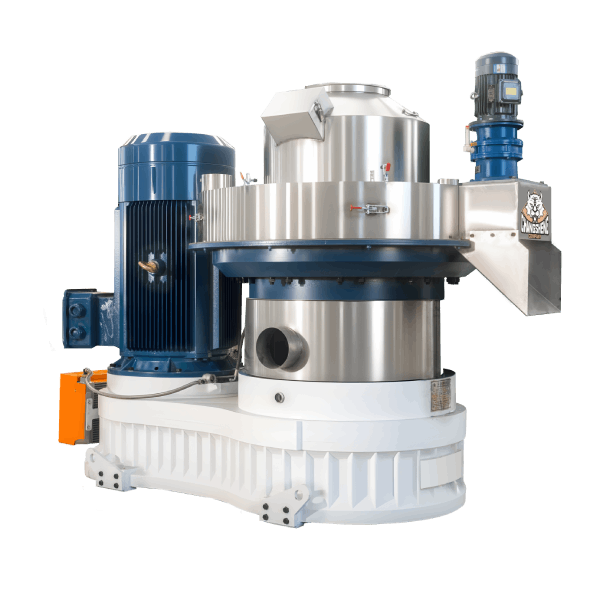
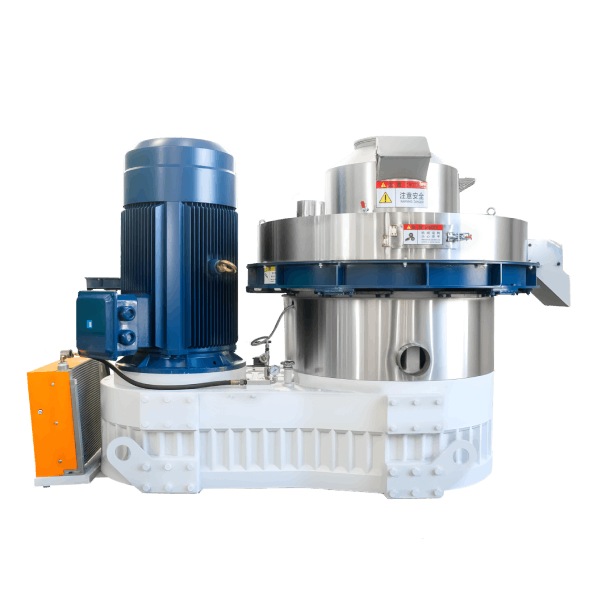
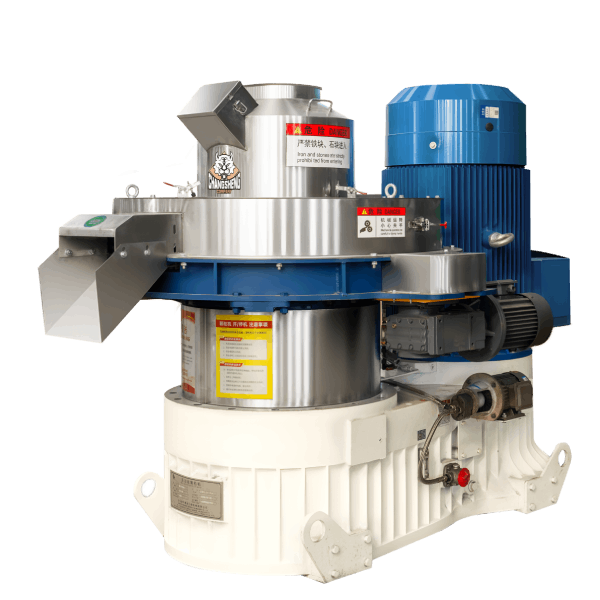
Pellet machine for eucalyptus wood pellets
News 2026-02-28
Pellet Machine for Eucalyptus Wood Pellets – Industrial Engineering Guide
Product Definition
A pellet machine for eucalyptus wood pellets is an industrial densification system engineered to process high-density eucalyptus chips or sawdust into standardized fuel pellets through controlled crushing, drying, conditioning, and high-pressure ring die compression for continuous commercial production.
Introduction
Eucalyptus is widely used in industrial biomass projects due to its fast growth cycle and high calorific value. However, its relatively high density and variable oil content create specific processing challenges. A pellet machine for eucalyptus wood pellets must be configured for stable compression, controlled moisture adjustment, and durable die performance.
For EPC contractors, distributors, and plant investors, selecting the correct configuration directly affects energy consumption, pellet durability, and long-term operating cost.
Technical Parameters and Specifications
Industrial configurations of a pellet machine for eucalyptus wood pellets typically include the following ranges:
Production capacity: 2–10 tons/hour per line
Main motor power: 160–400 kW
Die type: Alloy steel ring die
Pellet diameter: 6 mm or 8 mm (export standard)
Raw material moisture before pelletizing: 10%–14%
Maximum incoming moisture (before drying): up to 45%
Pellet density: 1.15–1.35 t/m³
Bulk density: 650–750 kg/m³
Energy consumption (pelletizing stage): 90–115 kWh/ton
Recommended particle size after grinding: ≤4 mm
Die compression ratio: 1:7–1:9 for eucalyptus fiber
Continuous duty cycle: 20–22 hours/day
Due to eucalyptus fiber strength, higher compression ratios are often required compared to softwood.
Structure and Material Composition
A pellet machine for eucalyptus wood pellets must emphasize mechanical durability and thermal stability.
Feeding System
– Variable frequency screw feeder
– Anti-blocking hopper design
– Level sensors for continuous supply
Conditioning Unit
– Steam conditioning port (optional)
– Moisture fine-adjustment system
Pelletizing Chamber
– Hardened alloy ring die (HRC 52–58)
– Two or three reinforced rollers
– Adjustable roller-die clearance
Transmission System
– High-efficiency motor
– Industrial-grade gearbox
– Overload protection mechanism
Lubrication and Monitoring
– Automatic centralized lubrication
– Bearing temperature monitoring
– Vibration detection interface
Frame Structure
– Heavy welded steel base
– Reinforced bearing housing
These structural reinforcements are necessary due to eucalyptus’ dense fiber structure and higher compression resistance.
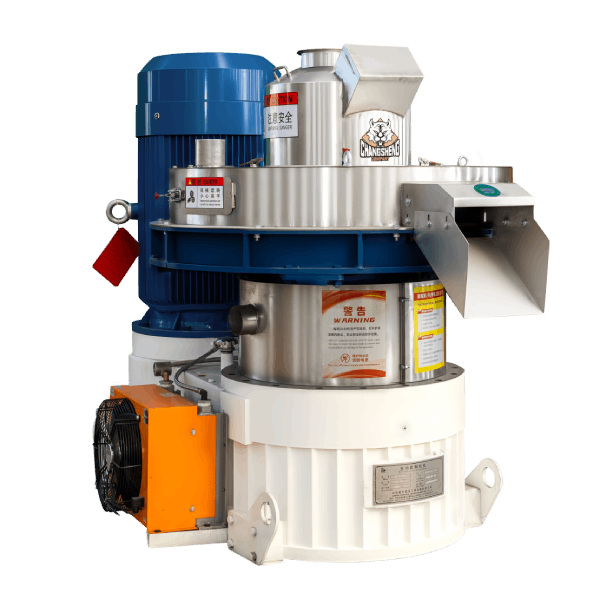
Manufacturing Process (Engineering Workflow)
Step 1: Raw Material Preparation
Eucalyptus logs or branches are chipped to uniform size.
Step 2: Grinding
Equipment: Hammer mill
Target particle size: ≤4 mm.
Step 3: Drying
Equipment: Rotary dryer
Target moisture: 10%–14%.
Step 4: Conditioning
Moisture equalization to ensure uniform fiber plasticity.
Step 5: Pelletizing
Equipment: Pellet machine for eucalyptus wood pellets
Control points:
– Stable feed rate
– Die temperature 75–95°C
– Consistent compression pressure
Step 6: Cooling
Equipment: Counter-flow cooler
Objective: Reduce internal pellet stress.
Step 7: Screening and Packaging
Remove fines and ensure consistent export-grade product.
Industry Comparison
Feedstock Type | Compression Difficulty | Energy Use | Pellet Durability | Die Wear
Softwood Sawdust | Low | Low | High | Low
Mixed Hardwood | Medium | Medium | High | Medium
Eucalyptus Wood | Medium–High | Medium | High | Medium
Agricultural Residue | Medium | Medium | Medium | Medium–High
A pellet machine for eucalyptus wood pellets must handle higher fiber density than softwood while maintaining stable throughput.
Application Scenarios
Distributors
– Export-grade fuel pellet production.
– Long-term supply contracts requiring consistent calorific value.
EPC Contractors
– Biomass power generation projects.
– Industrial steam boiler retrofits.
Engineering Firms
– Forestry waste utilization plants.
– Integrated pellet production lines near plantations.
Core Pain Points and Solutions
Problem 1: High Compression Resistance
Cause: Dense fiber structure.
Solution: Select appropriate die compression ratio and motor power.
Problem 2: Moisture Instability
Cause: Fresh eucalyptus may exceed 40% moisture.
Solution: Install adequate drying capacity with moisture sensors.
Problem 3: Die Wear
Cause: Hardwood fiber friction.
Solution: Use high-hardness alloy dies and optimize feed uniformity.
Problem 4: Energy Consumption Fluctuation
Cause: Inconsistent particle size or over-drying.
Solution: Maintain ≤4 mm grinding standard and controlled moisture.
Problem 5: Pellet Cracking After Cooling
Cause: Improper cooling rate.
Solution: Implement controlled counter-flow cooling.
Risk Warnings and Avoidance Strategies
Risk 1: Underestimating Dryer Capacity
High initial moisture may overload the system.
Risk 2: Incorrect Compression Ratio
Too low reduces density; too high increases energy cost.
Risk 3: Insufficient Electrical Infrastructure
Verify transformer and load stability before installation.
Risk 4: Ignoring Plantation Variability
Different eucalyptus species may vary in density and oil content.
Procurement Selection Guide
- Analyze eucalyptus moisture and density profile.
- Define annual production target and operating hours.
- Calculate drying capacity based on worst-case moisture.
- Select motor power suitable for hardwood compression.
- Confirm die compression ratio matches fiber characteristics.
- Verify electrical infrastructure and plant layout.
- Request supplier pilot testing with actual eucalyptus sample.
- Review spare parts availability and maintenance schedule.
Engineering Case Study
Project Location: South America
Raw Material: Plantation eucalyptus residues
Initial moisture: 35%–42%
Target output: 6 tons/hour
System Configuration:
Wood chipper → Hammer mill → Rotary dryer → Buffer silo → Pellet machine for eucalyptus wood pellets → Counter-flow cooler → Screening → Automated bagging
Operational Data:
Moisture before pelletizing: 12%
Stable output: 5.8–6.2 t/h
Pellet density: 1.25 t/m³
Energy consumption (pelletizing stage): approx. 102 kWh/ton
Pellet durability index: >96%
The system achieved stable export-grade pellet production for industrial boiler clients.
FAQ
- Is eucalyptus suitable for pellet fuel?
Yes, due to high calorific value and density. - Does eucalyptus require special die ratio?
Yes, typically 1:7–1:9 compression ratio. - What moisture is optimal?
10%–14% before pelletizing. - Is steam conditioning necessary?
Optional, depending on moisture balance. - Does eucalyptus increase die wear?
Moderately compared to softwood. - What pellet diameter is common?
6 mm and 8 mm for export markets. - Can fresh wood be pelletized directly?
No, drying is required. - Is continuous operation possible?
Yes, with industrial-duty configuration. - How to maintain pellet durability?
Control moisture, compression, and cooling rate. - Is eucalyptus suitable for power plants?
Yes, commonly used in biomass boilers.
Call to Action
For technical evaluation, eucalyptus sample testing, plant layout design, or a formal quotation for a pellet machine for eucalyptus wood pellets, contact our engineering team. We provide feasibility analysis, capacity calculation, and commissioning support for industrial biomass projects.
E-E-A-T Author Qualification
This article is prepared by a biomass engineering specialist with over ten years of experience in hardwood pellet production system design and EPC implementation. Technical references are based on operational data from commercial eucalyptus pellet plants and industrial biomass standards.