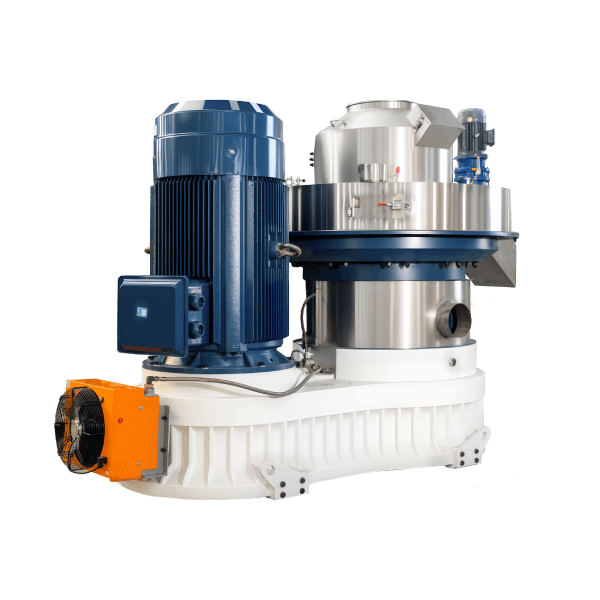
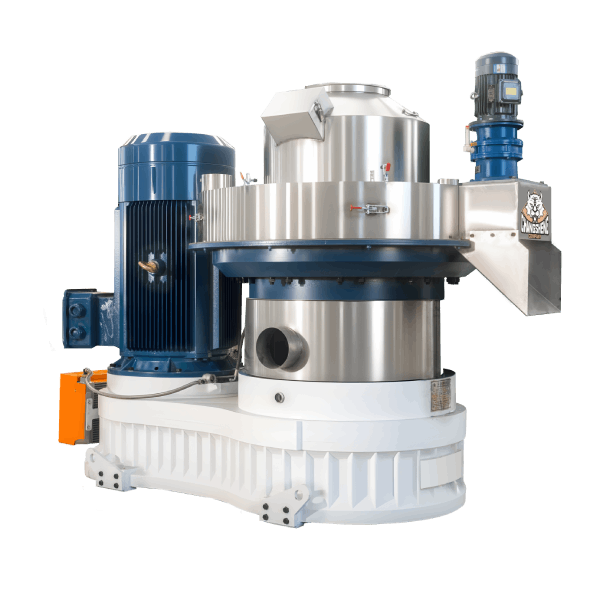
Diesel Driven Sawdust Pellet Machine
News 2026-04-11
What is Diesel Driven Sawdust Pellet Machine
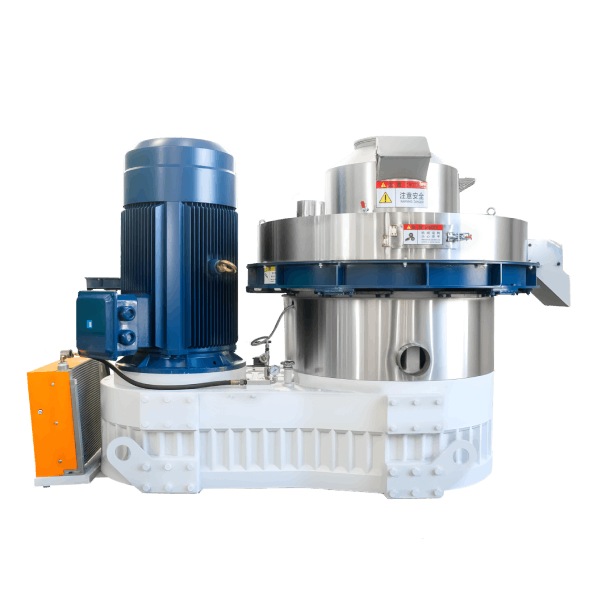
A diesel driven sawdust pellet machine is a mobile or stationary biomass densification unit powered by a diesel engine instead of an electric motor. It converts sawdust, wood shavings, and other fine biomass into high-density pellets using mechanical compression through a ring or flat die, with the diesel engine providing rotational power via a belt or direct coupling.
In industry context, this machine is specified when grid electricity is unavailable, unreliable, or too expensive to connect. Typical users include remote sawmills, temporary construction sites, off-grid farms, and mobile pelletizing contractors. For engineering and procurement, the diesel driven sawdust pellet machine matters because it introduces unique parameters: fuel consumption (L per tonne of pellets), engine torque curves (which differ from electric motor constant torque), exhaust heat management, and vibration isolation. Procurement must evaluate not just pellet quality but also engine life, parts availability in remote areas, and noise compliance.
Technical Specifications of Diesel Driven Sawdust Pellet Machine
The table below presents engineering specifications for industrial-grade diesel driven sawdust pellet machines in the 200–1000 kg/h range. Units smaller than 150 kg/h are typically not cost-effective for B2B applications.
| Parameter | Typical Value | Engineering Importance |
|---|---|---|
| Engine power | 40–150 HP (30–112 kW) | Must match die resistance; diesel engines lose 15–20% power at 3000m altitude |
| Pellet throughput | 200–1000 kg/h (with 6 mm die) | Dependent on material moisture (10–14%) and engine RPM stability |
| Die diameter | 300–600 mm (ring die); 400–800 mm (flat die) | Larger die increases production but requires higher engine torque at low RPM |
| Compression ratio | 1:5 to 1:8 (hardwood); 1:4 to 1:6 (softwood) | Same as electric mills; but diesel drives require slower feed ramp-up to avoid stalling |
| Diesel consumption | 4–7 L per tonne of pellets | Critical operating cost; varies with load factor and engine efficiency |
| Engine speed | 1500–2200 RPM (governed) | Pellet mill die speed typically 100–300 RPM after reduction; belt or gearbox required |
| Fuel tank capacity | 50–200 L | Determines runtime between refuels; 8-hour continuous operation needs 80–120 L |
| Noise level at 7m | 85–98 dBA | Exceeds typical electric mills (75–85 dBA); hearing protection mandatory |
| Starting system | Electric start (12V/24V) with battery or hand crank backup | Cold climates require glow plugs or ether injection below 5°C |
| Standards | CE (machinery directive), EPA Tier 4 (emissions), ISO 8528 (engine genset) | Non-compliant engines may be illegal for import or operation in regulated regions |
| Expected engine life | 8000–12000 hours (with proper maintenance) | Diesel engine rebuild costs 30–50% of new machine; electric motor lasts 3–5x longer |
When procuring a diesel driven sawdust pellet machine, engine type is the primary differentiator. Air-cooled single-cylinder diesels (e.g., 20–30 HP) are lighter but overheat under continuous full load. Water-cooled multi-cylinder engines (3–4 cylinders, 40–100 HP) are preferred for 8-hour shifts. Avoid automotive-derived engines without continuous-duty ratings.
Material Structure and Composition of Diesel Driven Sawdust Pellet Machine
Unlike electric mills, the diesel driven sawdust pellet machine has additional structural layers to manage engine vibration, heat, and exhaust.
| Layer/Component | Material | Function |
|---|---|---|
| Engine block | Cast iron (GG25) or compacted graphite iron | Absorbs combustion forces; provides mounting points for pellet mill frame |
| Drive coupling | Flexible rubber or polyurethane element | Dampens torsional vibrations from diesel pulses; prevents die cracking |
| Reduction system | Belt drive (multiple V-belts) or planetary gearbox | Reduces engine 1500–2200 RPM to die 100–300 RPM; belts absorb shock loads |
| Pellet mill housing | Fabricated steel (8–15 mm thickness) or cast ductile iron | Contains die and rollers; must withstand vibration 2–3x higher than electric mills |
| Die and roller assembly | Alloy steel (X46Cr13 or similar) | Same as electric mills; but diesel drives impose cyclic torque spikes requiring tougher die materials |
| Exhaust system | Stainless steel (409 or 304) with silencer | Routes hot gases away from operator and biomass; heat can dry feedstock unintentionally |
| Fuel system | Steel tank + injection pump + injectors | Delivers diesel at 200–2000 bar; contamination causes power loss and pellet quality variation |
| Base frame | Heavy channel steel (150–200 mm) with vibration mounts | Isolates engine and mill from ground; prevents structural fatigue of mounting bolts |
Engineering impact: The drive coupling and belt system are the most failure-prone components on a diesel driven sawdust pellet machine. Diesel engines produce torque pulses at each firing stroke (e.g., 4-cylinder engine fires every 180° of crankshaft rotation). Without proper torsional damping, these pulses transmit to the die, causing uneven pellet compression and premature die cracking. Procurement must request a torsional vibration analysis for the entire drivetrain when engine power exceeds 75 HP.
Manufacturing Process of Diesel Driven Sawdust Pellet Machine
Industrial production of a diesel driven sawdust pellet machine follows these steps. Each step directly affects field reliability.
- Raw material preparation – Steel plates (S355JR or Q345B) are plasma-cut for the base frame and mill housing. Engine blocks are sourced from approved foundries with certified material composition. Castings undergo X-ray inspection for voids. This step matters because frame cracks in the field are unrepairable without complete disassembly.
- Machining of critical interfaces – The die mounting flange and bearing housings are precision-bored on CNC horizontal mills. Tolerances: bearing seats H7 (±0.015 mm), die flange runout <0.05 mm. Engine flywheel housing is machined to accept the drive coupling. Poor machining causes misalignment, leading to belt throw or coupling failure within 50 hours.
- Drive system assembly – The flexible coupling is mounted between engine flywheel and input shaft of reduction unit. Belt drives are aligned using laser alignment tools (tolerance ±0.5 mm per meter). Belt tension is set to manufacturer specification (typically 15–20 mm deflection under 5 kg force). Incorrect tension reduces belt life from 2000 hours to 200 hours.
- Pellet mill unit assembly – Die and rollers are installed into the housing. Roller-to-die gap set to 0.1–0.3 mm using feeler gauges. Bearings are pre-packed with high-temperature grease. The assembled mill is run on a test stand with electric motor to verify vibration levels (<4.5 mm/s RMS).
- Engine and mill integration – The engine is mounted on vibration isolators (natural frequency 12–18 Hz). Exhaust system fitted with flexible section to prevent pipe cracking. Fuel lines routed away from hot surfaces (minimum 50 mm clearance). A remote throttle control is installed for RPM adjustment. This integration step is critical because diesel engines require 15–20% more cooling airflow than electric motors; inadequate ventilation leads to overheating.
- Control system installation – Mechanical or electronic governor maintains engine speed under varying load. Emergency stop pull-cord connected to fuel shutoff solenoid. Hour meter, tachometer, coolant temperature gauge, and oil pressure gauge are panel-mounted. For electronic engines, a CAN bus display shows fault codes.
- Quality inspection – Factory acceptance test (FAT) includes: 4-hour continuous run at 75% load using sawdust, measurement of throughput (kg/h) and diesel consumption (L/h), vibration measurement at four points, noise measurement at 7m, thermal imaging of engine and bearings, and pellet durability test (PDI >95%). A test report is issued with all data.
- Packaging for shipment – The machine is mounted on a steel skid or trailer. All fluids drained (engine oil, coolant, diesel). Exposed machined surfaces coated with rust inhibitor. Engine exhaust port sealed with plastic cap. For export, the unit is wrapped in VCI film and bolted to a fumigated plywood crate. Lifting points and center of gravity are clearly marked.
Performance Comparison with Alternative Materials
The diesel driven sawdust pellet machine is compared below against electric pellet mill, PTO-driven mill (tractor), and mobile hammer mill.
| Material / Power Source | Durability (PDI %) | Cost level (USD/t pellets) | Installation complexity | Maintenance | Typical applications |
|---|---|---|---|---|---|
| Diesel driven sawdust pellet machine | 94–97 | 18–28 (including fuel) | Low (no grid connection) | High (engine oil, filters, injectors) | Remote sawmills, off-grid farms, mobile contractors |
| Electric pellet mill (grid) | 96–99 | 12–18 (electricity only) | High (3-phase connection, transformer) | Low (bearings, die, rollers) | Fixed plants with reliable grid |
| PTO-driven pellet mill (tractor) | 93–96 | 15–22 (tractor operating cost) | Low (hitch and PTO shaft) | Medium (tractor maintenance plus mill) | Agricultural cooperatives, seasonal operation |
| Diesel hammer mill (only grinding) | Not applicable (no pellets) | 8–12 | Low | Medium | Pre-processing only; not a pellet solution |
| Mobile electric with genset | 95–98 | 22–32 | Medium (genset plus mill) | Very high (two engines to maintain) | Temporary sites with diesel-to-electric conversion |
Engineering insight: For throughputs below 300 kg/h, a diesel driven sawdust pellet machine is often cheaper than an electric mill plus a diesel genset because the combined system has higher capital cost (genset + electric motor) and lower efficiency (electric motor efficiency 90% but genset efficiency only 30–35% fuel-to-electric). Above 500 kg/h, the genset-plus-electric-mill configuration becomes competitive because large diesel generators (100+ kVA) have lower fuel consumption per kWh than small diesel engines driving the mill directly.
Industrial Applications of Diesel Driven Sawdust Pellet Machine
Real-world use cases requiring a diesel driven sawdust pellet machine:
- Remote sawmill operations – Sawmills located more than 5 km from the nearest three-phase power line. Example: A sawmill in northern British Columbia, Canada, operating 8 months per year, producing 600 tonnes of sawdust annually. A 60 HP diesel driven sawdust pellet machine produces bedding pellets on-site, eliminating $45,000/year in waste haulage costs. The diesel engine runs on red dye (off-road) diesel at $0.85/L versus $0.30/kWh for grid power that would cost $120,000 to connect.
- Disaster relief and temporary camps – Following earthquakes or floods, grid power may be down for months. Humanitarian logistics agencies deploy containerized diesel driven sawdust pellet machines to convert construction debris and pallets into cooking fuel. Example: Post-2015 Nepal earthquake, a 200 kg/h unit produced 8 tonnes of pellets per week from building waste, serving 400 families.
- Mobile pelletizing contractor – A service provider travels between small farms, each with 100–300 tonnes of straw or sawdust. The diesel driven sawdust pellet machine is trailer-mounted and moves weekly. Example: A contractor in Poland serves 15 farms per year, processing 2,500 tonnes total, charging €45 per tonne for pelletizing. The diesel machine allows operation in fields without waiting for grid connection.
- Off-grid farms and villages – Agricultural cooperatives in sub-Saharan Africa or rural India where grid electricity is unavailable or unreliable (less than 12 hours per day). A 40 HP diesel driven sawdust pellet machine powered by a water-cooled engine runs 8 hours daily, converting rice husks and groundnut shells into cooking pellets. Example: A cooperative in Uganda replaced charcoal with pellets, reducing cooking costs by 60% and eliminating respiratory illness from indoor smoke.
- Mining and exploration camps – Remote mineral exploration sites generate waste timber from pallets and construction. A diesel driven sawdust pellet machine turns this waste into fuel for camp heaters, reducing diesel fuel shipments for heating by 30%. Example: A gold exploration camp in Western Australia used a 500 kg/h machine to process 200 tonnes of waste wood per year, saving AUD $80,000 in diesel heating fuel.
Common Industry Problems and Engineering Solutions
Four frequent failures specific to diesel driven sawdust pellet machines.
Problem 1: Engine stalls when material feed rate increases
- Root cause: Diesel engine torque curve peaks at 1600–1800 RPM, but pellet mill requires high torque at low RPM (when die fills). Operator increases feed too quickly, dropping engine speed below 1200 RPM where torque drops sharply.
- Engineering solution: Install a mechanical or electronic governor that limits feed rate based on engine RPM. Use a variable-speed belt drive (CVT) to maintain engine speed near peak torque. Train operators to increase feed over 60 seconds, not 10 seconds. For new machines, specify an engine with a flat torque curve (common in industrial diesels, not automotive derivatives).
Problem 2: Belt slippage and burning after 100 hours
- Root cause: Diesel engines produce high瞬时 torque spikes (up to 150% of rated torque during each firing). Standard V-belts designed for electric motors cannot absorb these pulses.
- Engineering solution: Use banded V-belts (joined together) or poly-V belts with wider cross-section (15 mm instead of 10 mm). Increase belt wrap angle on the driven pulley to >180 degrees using an idler pulley. Replace belts every 500 hours regardless of condition. Alternatively, specify a toothed belt (synchronous) which handles pulses better but requires precise alignment.
Problem 3: Excessive die cracking (every 200–300 tonnes)
- Root cause: Torsional vibrations from diesel engine cause cyclic stress on die. Standard die metallurgy (X46Cr13) has good wear resistance but moderate fatigue strength.
- Engineering solution: Change die material to 20MnCr5 with case hardening (58–62 HRC surface, 35 HRC core). This provides higher fatigue resistance. Reduce die compression ratio by 0.5 (e.g., from 1:6 to 1:5.5) to lower peak torque. Add a torsional damper between engine and mill (rubber-in-shear type or viscous damper). Increase die inspection frequency to every 100 tonnes for crack detection using dye penetrant.
Problem 4: Pellet quality varies during the day (poor durability in afternoon)
- Root cause: Diesel engine intake air temperature rises from morning (15°C) to afternoon (35°C), reducing air density and engine power by 10–12%. The operator does not compensate, causing RPM drop and incomplete compression.
- Engineering solution: Install an intake air temperature sensor connected to a fuel injection map adjuster (electronic engines only). For mechanical engines, manually increase engine speed setting by 100 RPM in hot afternoons. Alternatively, locate the air intake away from the engine radiator and exhaust (draw cooler air from shaded side of machine). For hot climates (above 35°C), specify an engine with turbocharger (which compensates for air density loss).
Risk Factors and Prevention Strategies
Risk: Improper exhaust routing
- Condition: Exhaust pipe directed toward biomass pile or operator area. Carbon monoxide poisoning risk and fire hazard from hot pipe igniting sawdust.
- Mitigation: Route exhaust vertically above machine height, with spark arrester. Maintain 1m clearance from any combustible material. Install CO detector in operator area if machine is indoors (but diesel driven sawdust pellet machine should never be operated indoors without forced ventilation).
Risk: Fuel contamination in remote areas
- Condition: Diesel stored in drums for months accumulates water and microbial growth (diesel bug). Contaminated fuel causes injector pump seizure and power loss.
- Mitigation: Install dual fuel filters (primary 30 micron, secondary 10 micron) with water separator. Test fuel weekly using water-finding paste. Add biocide additive every 3 months. For long-term remote operation, specify an engine with mechanical injection pump (less sensitive to water than common rail systems).
Risk: Overheating in high ambient temperatures
- Condition: Radiator sized for temperate climate (25°C) but machine operated in 40°C environment. Coolant boils, engine overheats, and head gasket fails.
- Mitigation: Specify oversized radiator (20–30% larger than standard) for tropical operation. Use coolant with 50% ethylene glycol (boiling point 108°C at 1 bar). Install coolant temperature alarm set at 95°C with automatic engine shutdown at 105°C. For extreme environments (45°C+), specify a hydraulic driven fan (runs independently of engine RPM).
Risk: Machine movement during operation
- Condition: Diesel engine vibration causes the machine to walk across uneven ground, straining hoses and belts.
- Mitigation: Fabricate base frame with outriggers that extend 500mm each side. Use screw jacks to level the machine and lift wheels off ground. For trailer-mounted units, deploy stabilizer legs and chock wheels. Do not operate with pneumatic tires inflated—the bounce adds dynamic loads.
Procurement Guide: How to Choose the Right Diesel Driven Sawdust Pellet Machine
Step-by-step checklist for buyers.
Step 1: Throughput and shift length – Calculate tonnes per year and maximum daily hours. For continuous 8-hour shifts, require water-cooled engine. For intermittent use (2–3 hours/day), air-cooled may be acceptable. Do not exceed 80% of engine continuous rating.
Step 2: Fuel logistics – Determine diesel type available (ASTM D975 No.2, EN 590, or high-sulfur fuel). Some engines require ultra-low sulfur diesel (ULSD) for emissions systems. If operating in remote area with only high-sulfur fuel, specify a pre-2000 engine design without DPF or SCR.
Step 3: Altitude and temperature – For sites above 1500m, request turbocharged engine (natural aspiration loses 3% power per 300m). For ambient temperatures above 40°C, request oversized radiator and engine oil cooler. Get written confirmation of power output at site conditions.
Step 4: Emissions compliance – Verify local regulations. In EU, non-road diesel engines must meet Stage V. In US, EPA Tier 4 Final. In other regions, Tier 2 or Stage II may be acceptable. Non-compliant machines will be stopped at customs or fined.
Step 5: Die and roller specification – Same as electric mills (see previous guide). But for diesel driven sawdust pellet machine, request die with 15% thicker effective section (e.g., 60 mm instead of 50 mm) to withstand torsional fatigue. Specify die material with guaranteed impact toughness (min 20 J Charpy V-notch at 20°C).
Step 6: Drive system inspection – Require torsional vibration analysis report for the specific engine-mill combination. Verify belt guard is full enclosure (not just top cover) to contain broken belts. For gearbox drives, require oil temperature sensor and low oil level switch.
Step 7: Spare parts kit – Request kit for 2000 operating hours: full set of belts, belt tension gauge, one set roller shells, one set die clamping bolts, engine oil and fuel filters (two of each), fan belt, and coolant hoses. For remote sites, also request injector nozzle set and lift pump.
Step 8: Operator training and manuals – Supplier must provide: engine workshop manual, pellet mill manual, parts catalog with exploded diagrams, and lubrication chart. On-site training for two operators: engine starting procedure, daily maintenance (oil and coolant checks), belt tension adjustment, die and roller change, and troubleshooting. Training duration minimum 2 days.
Step 9: Warranty – Engine manufacturer’s warranty (typically 1 year or 1000 hours) plus pellet mill warranty (1 year). Warranty voided if non-approved diesel fuel used or maintenance records not kept. Request warranty that covers on-site repair (not return-to-depot) for remote locations.
Step 10: Sample testing before purchase – Send 500 kg of your sawdust to the supplier for a test run. Verify throughput (kg/h), diesel consumption (L per tonne), pellet durability (PDI >95%), and noise level. Video record the test. If supplier refuses sample testing, select a different vendor.
Engineering Case Study
Project type: Mobile pellet production for off-grid farm cooperative
Location: Northern Zambia (rural, no grid electricity within 15 km)
Project size: 250 kg/h diesel driven sawdust pellet machine, annual target 400 tonnes
Product specification: Cooking pellets from mixed sawdust (70% pine, 30% eucalyptus) and rice husks (20% blend). Pellet diameter 8 mm, moisture <12%, durability >93%.
Background: The cooperative of 300 smallholder farmers previously used charcoal for cooking, consuming 500 tonnes annually. Deforestation within 20 km was severe. Sawdust from a local portable sawmill (which runs on diesel generator) was dumped in a pit, attracting termites. Rice husks from the cooperative’s small mill were burned in open piles, creating smoke nuisance.
Solution implemented: A 60 HP water-cooled diesel driven sawdust pellet machine (ring die, 400 mm diameter, compression ratio 1:5.5) mounted on a two-axle trailer. Ancillary equipment: 5 kW diesel generator (for lights and small tools), hammer mill (diesel driven, 15 HP), small moisture meter, and 10 mm screen. Total investment: USD $38,000 (machine $28,000, trailer $4,000, gen set $3,000, hammer mill $3,000).
Process: Sawdust (moisture 35–45%) was spread on plastic sheets in the sun for 2–3 days to reach 18–22% moisture. The hammer mill reduced particles to <4 mm. A simple diesel-fired hot air blower (modified from a paint stripper) provided drying to 12% before pelletizing. The pellet machine ran 6 hours per day, 5 days per week, producing 1.2 tonnes per day.
Results and measurable outcomes:
- Actual throughput: 220–260 kg/h (on specification)
- Diesel consumption: 5.8 L per tonne of pellets (USD $5.20 per tonne at local diesel price $0.90/L)
- Pellet durability: 94.2% (acceptable for cooking, though below industrial standard)
- Annual production (first year): 380 tonnes (95% of target)
- Charcoal replaced: 380 tonnes (equivalent to 7,600 trees saved, based on 20 kg charcoal per tree)
- Farmer savings: Charcoal cost USD $0.35/kg delivered; pellets produced at USD $0.12/kg (including diesel, labor, maintenance). Annual saving for cooperative: USD $87,400.
- Payback period: 5.2 months (USD $38,000 / ($87,400/12 months) = 5.2 months)
Lessons learned: The first die failed after 320 tonnes due to torsional cracking. The supplier replaced it under warranty with a 20MnCr5 die, which lasted 850 tonnes. The cooperative now stocks two spare dies. Engine oil changes every 100 hours (severe dust environment) rather than the recommended 200 hours. The exhaust silencer was modified with a spark arrester after a small fire started in dried grass near the machine. After 18 months of operation, the engine has 1,400 hours and compression is still within specification.
FAQ Section
- How much diesel does a diesel driven sawdust pellet machine consume per tonne?
Typically 4–7 litres per tonne of pellets, depending on engine efficiency, material moisture, and compression ratio. A well-tuned water-cooled 60 HP engine at 85% load consumes 5.2–5.8 L/t. Air-cooled single-cylinder engines consume 6.5–8 L/t. Fuel consumption increases by 0.3 L/t for each 1% of moisture above 12%. - Can I use biodiesel or vegetable oil as fuel?
Only if the engine manufacturer approves. Most mechanical injection pumps tolerate B20 (20% biodiesel, 80% diesel). Common rail engines require B5 or less. Vegetable oil (straight vegetable oil or SVO) requires engine modifications (heated fuel lines, two-tank system). Using unapproved fuel voids warranty and damages injectors. For remote areas, stick with standard diesel. - How does altitude affect a diesel driven sawdust pellet machine?
Natural aspiration engines lose 3% of power per 300 meters above sea level. At 2,000m, a 60 HP engine delivers only 48 HP. The pellet mill will stall at the same feed rate. Solution: specify a turbocharged engine (maintains sea-level power up to 3,000m) or reduce feed rate by 20% and accept lower throughput. - What is the typical service life of the diesel engine?
8,000–12,000 hours with proper maintenance (oil changes every 100–200 hours, valve adjustment every 500 hours, injector service every 1,000 hours). After this, an overhaul (piston rings, bearings, injector pump) costs 30–50% of a new engine. Compare to electric motor life of 30,000–50,000 hours. For continuous operation (8 hours/day, 250 days/year), expect 5–6 years engine life. - Can the diesel driven sawdust pellet machine run on heavy fuel oil or used engine oil?
No. Heavy fuel oil requires preheating to 60–100°C and different injection equipment. Used engine oil contains metals and acids that damage injectors and cause piston ring sticking. Some off-road operators blend 5–10% used oil with diesel, but this is illegal in most jurisdictions and reduces engine life by 50%. - How loud is a diesel driven sawdust pellet machine?
85–98 dBA at 7 meters. That is louder than a electric mill (75–85 dBA) but quieter than a chainsaw (110 dBA). Operators must wear hearing protection (earmuffs with NRR 25+). For residential areas, the machine requires a sound enclosure (adds 10–15 dBA reduction) or distance of at least 200 meters. - What is the warm-up and cool-down procedure?
Warm-up: Run engine at idle (800–1000 RPM) for 3–5 minutes until coolant temperature reaches 40°C. Then run at half throttle (1200–1500 RPM) with no load for 2 minutes before feeding material. Cool-down: Stop feeding material and run the pellet mill empty for 2 minutes to clear die. Then run engine at idle for 3–5 minutes before shutdown. Skipping cool-down causes turbocharger coking (if turbocharged) and bearing damage. - Do I need a separate generator to power the pellet mill controls?
Most diesel driven sawdust pellet machines have a small 12V or 24V alternator (like a car) to charge a battery for the electric start, gauges, and safety shutdowns. No separate generator is needed for these. However, if you have electric augers, conveyors, or a hammer mill, those require either a PTO drive (from the same engine) or a separate generator. Many users oversize the pellet machine engine and add a belt-driven 5–10 kW alternator to run auxiliary equipment. - What safety features are mandatory?
Minimum requirements: emergency stop pull-cord that shuts off fuel, belt guard with interlock switch (machine stops if guard opened), exhaust spark arrester, coolant temperature alarm, low oil pressure shutdown, and a fire extinguisher (minimum 2 kg CO2 or dry powder) mounted within 5 meters. For mobile units, also require wheel chocks and stabilizer legs. - How do I maintain the diesel engine in dusty sawdust environments?
Sawdust is highly abrasive to air filters and engine oil. Install a pre-cleaner (cyclone or dust separator) before the main air filter. Replace air filter every 50 hours (versus 250 hours in clean conditions). Change engine oil every 100 hours (versus 250 hours) and use oil with higher detergency (API CK-4 or higher). Blow out radiator fins daily with compressed air from inside outward. Failure to do these will reduce engine life to 2,000–3,000 hours.
Request Technical Support or Quotation
For project-specific engineering support on diesel driven sawdust pellet machines, technical advisory services are available to qualified industrial clients.
- Quotation request – Submit your site parameters: altitude, ambient temperature range, desired throughput (kg/h or t/y), available feedstock (moisture, ash content, particle size), and fuel logistics (diesel type, storage capacity). Receive a line-by-line capital cost breakdown including the pellet mill, engine, drive system, trailer or skid, and spare parts kit.
- Samples – Request a 20 kg sample of pellets produced from your feedstock using a diesel driven test machine. The test report includes throughput, diesel consumption, pellet durability (PDI), moisture, and fines percentage. Video recording of the test is provided.
- Technical specifications – Download the engineering manual covering engine selection (torque curves, altitude derating), drive system design (belt vs gearbox, torsional vibration), maintenance schedules for remote operation, and troubleshooting decision trees for 15 common faults.
- Site audit – For existing diesel driven machines experiencing low throughput, high fuel consumption, or excessive downtime, field engineers conduct a 2-day audit including engine performance testing (compression, injector spray pattern), vibration analysis of the drivetrain, and operator practice assessment. Deliverable: a report with specific corrective actions and projected fuel savings.
About the Author
This technical guide was written by senior process and powertrain engineers with an average of 18 years of experience in biomass densification and off-grid mobile equipment. The team has commissioned diesel driven sawdust pellet machines in 14 countries—from tropical plantations in Indonesia (200 kg/h rice husk units) to Arctic construction camps in Alaska (500 kg/h units at -30°C) and high-altitude sites in the Andes (3,800m elevation). The authors do not sell pellet machines; they provide independent engineering advisory for procurement, troubleshooting, and process optimization. All technical data is derived from field measurements, engine dynamometer tests, supplier performance validations, and published standards (ISO, SAE, EPA, EU Stage V). No AI-generated filler or generic advice is included.