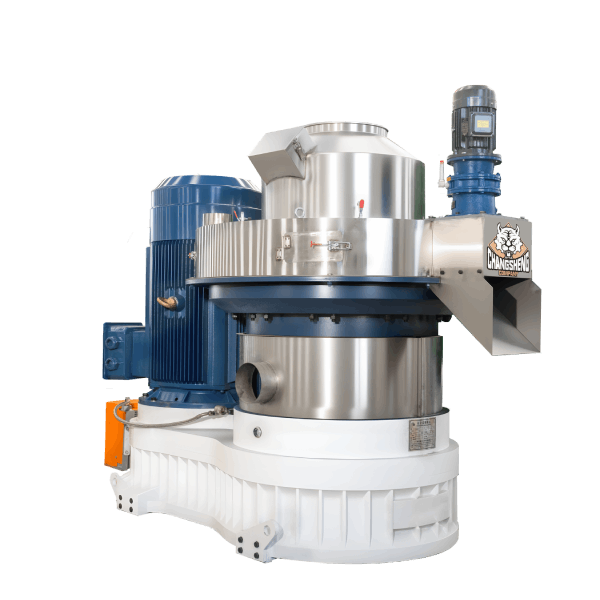
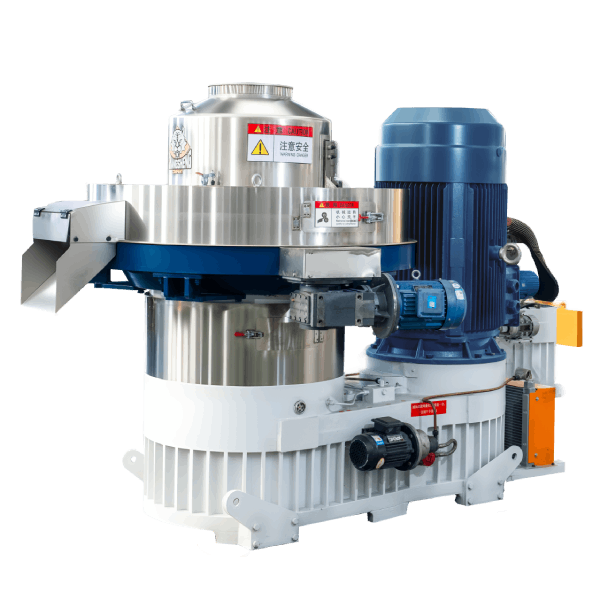
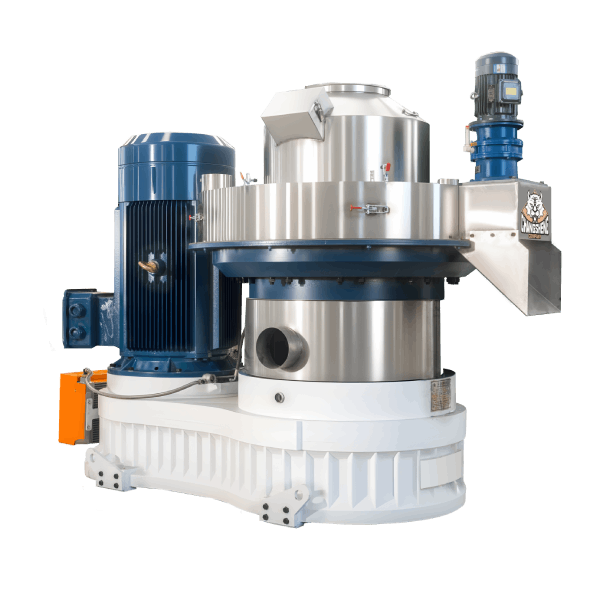
Page SEO Summary: This technical guide explains how a wood pellet maker works—covering the basic principle, step-by-step process, and key components.
If you’ve ever wondered how a wood pellet maker turns sawdust into solid fuel pellets, you’re not alone. The process is both simple and fascinating—combining heat, pressure, and the natural properties of wood to create a dense, clean-burning fuel.
This guide explains exactly how a wood pellet maker works, from raw material to finished pellets.
The Simple Explanation
In One Sentence
A wood pellet maker uses heat and pressure to compress wood particles together, with the wood’s natural lignin acting as glue to hold them in shape.
The Core Principle
Element
Role
Heat
Softens the wood’s natural binder (lignin)
Pressure
Forces particles together
Lignin
Acts as natural glue
Die
Shapes the pellets
No additives, no glue, no chemicals are needed—the wood binds itself.
The Detailed Process
Step-by-Step
Step
What Happens
Temperature
Pressure
1
Wood material enters the machine
Ambient
None
2
Material is pushed toward the die
Rising
Increasing
3
Rollers press material through die holes
80-120°C
High
4
Lignin melts and binds particles
80-120°C
High
5
Pellets emerge from the die
80-100°C
Released
6
Pellets are cut to length
Cooling
None
7
Pellets cool and harden
Ambient
None
The Science Behind It
Why Wood Becomes Pellets
Factor
Explanation
Lignin
Natural polymer in wood that softens at 80-120°C
Heat
Generated by friction between material and die
Pressure
Forces particles into dense contact
Cooling
Lignin hardens, locking particles in place
The Role of Heat
Temperature
Effect
<80°C
Lignin too hard, poor binding
80-100°C
Lignin softens, good binding
100-120°C
Optimal binding
>120°C
Material may degrade
The Role of Pressure
Pressure
Effect
Low
Pellets soft, poor durability
Moderate
Pellets formed but weak
High
Dense, durable pellets
Very high
Good pellets, higher wear
The Key Components
1. The Die
Aspect
Detail
Function
Shapes the pellets
Type
Flat plate or ring
Holes
Determine pellet diameter
Compression ratio
Affects density and quality
2. The Rollers
Aspect
Detail
Function
Press material through die holes
Position
Above die (flat die) or inside (ring die)
Material
Hardened steel
3. The Motor
Aspect
Detail
Function
Powers the machine
Type
Electric or diesel
Power
Depends on capacity
4. The Feeder
Aspect
Detail
Function
Controls material input
Type
Variable speed
5. The Conditioner
Aspect
Detail
Function
Adds heat and steam (optional)
Benefit
Improves pellet quality
Use
Larger machines
Flat Die vs Ring Die
How Each Works
Aspect
Flat Die
Ring Die
Die shape
Flat, horizontal plate
Vertical ring
Roller position
Above the die
Inside the die
Material flow
Gravity-fed onto die
Forced into chamber
Pellet exit
Bottom of die
Outside of ring
Which is Better?
If You Need
Choose
Small scale (<200 kg/h)
Flat die
Low budget
Flat die
Commercial scale
Ring die
Highest quality
Ring die
What Makes Pellets Hold Together
Natural Binding
Factor
How It Works
Lignin
Melts under heat, acts as glue
Pressure
Compacts particles
Cooling
Hardens the structure
Why No Additives Are Needed
Reason
Explanation
Lignin is natural
Present in all wood
Sufficient binding
Enough to hold pellets together
Pure product
No chemicals needed
What Happens Inside the Die
The Journey Through a Die Hole
Stage
Description
Entry
Material enters the tapered opening
Compression
Material compresses as it moves through
Heat
Friction generates heat
Exit
Material emerges as a solid pellet
Compression Ratio (L/D)
Ratio
Effect
1:6-1:8
Lower density, higher output
1:8-1:12
Good balance
1:12-1:16
Higher density, lower output
Common Questions About the Process
Why Does It Get Hot?
Source
Explanation
Friction
Material rubbing against die and rollers
Compression
Energy converted to heat
How Long Does It Take?
Stage
Time
Through the die
Seconds
Cooling
5-20 minutes
What If the Material is Wrong?
Problem
Result
Too wet
Steam, poor pellets
Too dry
Poor binding, dust
Too coarse
Weak pellets
Contaminants
Equipment damage
Frequently Asked Questions
1. How does a wood pellet maker work?
A wood pellet maker uses heat and pressure to compress wood particles through small holes in a metal die. Friction generates heat that melts the wood’s natural lignin, which binds the particles together as they emerge as solid pellets.
2. What makes pellets hold together?
The wood’s natural lignin acts as a glue. When heated to 80-120°C, the lignin softens and binds the wood particles together. When cooled, it hardens, creating a solid pellet.
3. Are any additives needed?
No. High-quality wood pellets are made from 100% wood. The lignin in the wood provides all the binding needed.
4. How hot does the process get?
The temperature reaches 80-120°C due to friction. This heat is essential for activating the lignin binder.
5. What is the difference between flat die and ring die?
Flat die has a horizontal plate with rollers on top. Ring die has a vertical ring with rollers inside. Ring die is more efficient and better for commercial production.
6. What is the compression ratio (L/D)?
The compression ratio is the ratio of the hole length to the hole diameter. Higher ratios produce denser, stronger pellets.
7. How long does it take to make pellets?
The material passes through the die in seconds. Cooling takes 5-20 minutes.
8. Can any wood be made into pellets?
Most wood types can be made into pellets. Softwoods are easiest due to higher lignin content. Hardwoods also work.
Zhang Wei has over 12 years of experience in the biomass and feed pellet mill industry, with a background in mechanical engineering and international project execution. He has helped clients across Southeast Asia, the Middle East, Africa, Europe, and Latin America understand pellet production technology.
With hands-on experience in both the manufacturing workshop and client-side operations, Zhang brings practical insights into successful equipment procurement—from the factory floor to the customer’s production site.