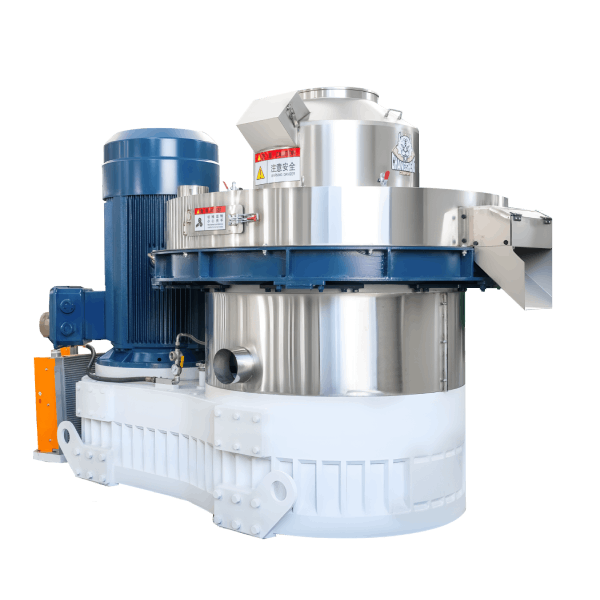
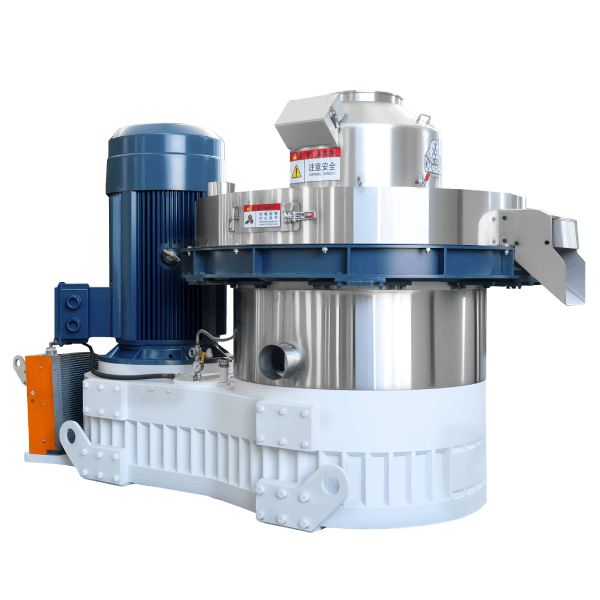
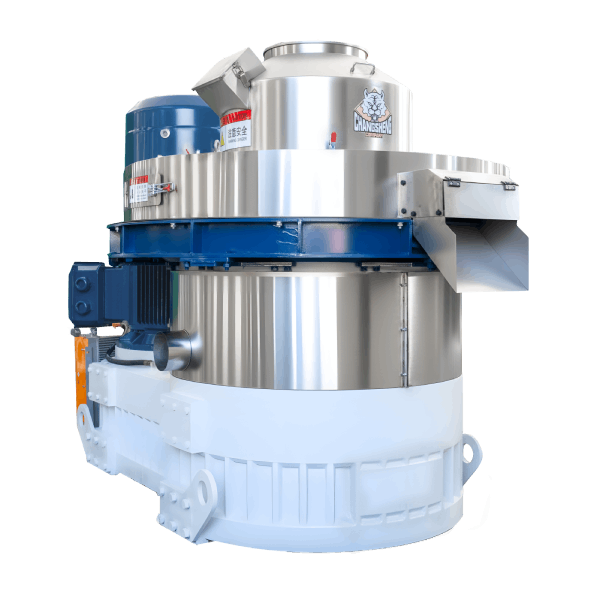
Pellet Mill for Spice Grinding and Pelleting: 0.05-0.5 t/h Models
News 2026-05-13
1. Product Definition
A pellet mill for spice grinding and pelleting is a flat die or small ring die system that grinds whole spices (cinnamon, cloves, pepper, paprika) into powder then compresses into uniform pellets (3-6mm) for convenient cooking, smoking, or animal feed, featuring stainless steel contact surfaces for food-grade compliance and flavor preservation.
2. Technical Parameters & Specifications
| Parameter | Small Spice Mill | Medium Spice Mill | Large Spice Mill |
|---|---|---|---|
| Capacity (kg/h) | 20 – 50 | 50 – 100 | 100 – 200 |
| Motor Power (kW) | 2.2 – 5.5 | 5.5 – 11 | 11 – 15 |
| Die Diameter (mm) | 150 – 200 | 200 – 250 | 250 – 300 |
| Pellet Diameter (mm) | 3, 4, 5, 6 | 4, 5, 6 | 5, 6, 8 |
| Pellet Density (kg/m³) | 600 – 800 | 650 – 850 | 700 – 900 |
| Optimal Moisture (%) | 10 – 14 | 10 – 14 | 10 – 14 |
| Energy Consumption (kWh/t) | 80 – 120 | 75 – 110 | 70 – 100 |
| Die Material | Stainless steel (440C) | Stainless steel + coating | Stainless steel + tungsten |
| Die Life (hours) | 500 – 800 | 600 – 1,000 | 800 – 1,200 |
| Maintenance (hours/month) | 4 – 8 | 6 – 10 | 8 – 12 |
| Material Contact | Food-grade stainless steel | Food-grade stainless steel | Food-grade stainless steel |
For spice processing pricing: Request a pellet mill for spice grinding and pelleting quotation with food-grade stainless steel.
3. Structure & Material Composition
Spice Processing-Specific Design Features
Food-Grade Compliance (Essential)
- Material contact: 304 or 316 stainless steel (not carbon steel)
- Seals: FDA-approved silicone or PTFE
- Lubricants: Food-grade grease (NSF H1)
- Easy-clean design: Sanitary connections, no死角
Grinding System (Hammer Mill or Burr Mill)
- Whole spices: hammer mill or burr mill pre-grind
- Particle size: 0.5-2mm (finer than wood)
- Temperature control: Keep low (preserve volatile oils)
Pellet Die for Spices
- Material: 440C stainless steel (corrosion-resistant from spice oils)
- Hole diameter: 3-6mm
- Compression ratio: lower than wood (1:3-1:5) – spices oily, need less compression
4. Manufacturing Process (Engineering Steps)
Step 1 – Spice Cleaning & Sorting
Remove stems, stones, metal. Use magnetic separator and air classifier.
Step 2 – Grinding (Pre-Pelleting)
Equipment: Hammer mill or burr mill with 0.5-2mm screen
Control: Keep temperature below 50°C (preserve volatile oils). Particle size 95% < 1.5mm.
Step 3 – Moisture Adjustment
Target: 10-14% moisture. Spices often dry (5-8%) – add water (spray). Too dry: pellets crumble. Too wet: mold.
Step 4 – Pelletizing
Equipment: Flat die pellet mill (ring die for larger volume)
Control: Die temperature 60-70°C (lower than wood to preserve oils), roller gap 0.2-0.4mm
Note: Spices have natural oils that act as lubricant (require less energy)
Step 5 – Cooling & Packaging
Equipment: Cooling trays or small cooler (ambient cooling sufficient)
Control: Cool to ambient; package in sealed bags (spices absorb moisture)
5. Industry Comparison
| Parameter | Spice Pellet Mill | Standard Wood Mill | Spice Briquette Press | Manual Spice Press |
|---|---|---|---|---|
| Food-grade stainless steel | Yes (required) | No (carbon steel) | Optional | Yes (hand press) |
| Material contact | 304/316 stainless | Carbon steel (rusts) | Carbon steel (risk) | Stainless (manual) |
| Temperature control | Low (60-70°C) | High (80-110°C) | Medium | None |
| Oil tolerance | High (spice oils) | Low | Medium | High |
| Capacity (kg/h) | 20-200 | 100-1,000+ | 50-500 | 5-20 |
| Die life | 500-1,200h | 1,500-2,500h | 800-1,500h | N/A |
| Food safety certification | Yes (FDA, EU) | No | No | Optional |
| Why Choose Shandong Changsheng | Food-grade stainless, low temp, oil-optimized die | Not food-grade | Not food-grade | Too slow |
Compare spice pellet options: Request a sample pellet of your specific spice blend.
6. Application Scenarios (By Buyer Role)
Distributors / Importers
Stocking pellet mill for spice grinding and pelleting for spice companies and BBQ supply stores. Decision focus: food-grade stainless, easy cleaning, and pellet sizes (3-6mm).
EPC Contractors
Specifying spice pellet lines for spice manufacturers. Decision focus: FDA compliance, low temperature (preserve oils), and sanitation design.
Engineering Consultants / Technical Advisors
Advising spice companies on value-added products. Decision focus: payback (12-24 months), product differentiation (pellets vs ground), and market demand.
End-user Facilities
Spice manufacturers, BBQ supply companies, pet food manufacturers (spice pellets for animal health).
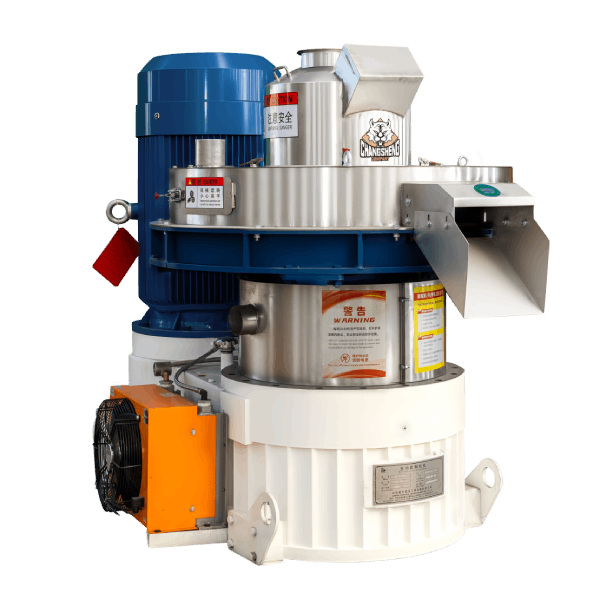
7. Core Technical Pain Points & Engineering Solutions
Pain Point 1 – Spice Oils Clog Die
Problem: Cinnamon, clove, and other oily spices stick to die surface, block holes.
Root cause: Spice oils (2-5%) adhere to carbon steel.
Solution: Use stainless steel die (oils don’t stick as much). Polished die surface (Ra <0.2μm). Clean die with solvent (citrus degreaser) after each batch.
Pain Point 2 – Flavor Loss from High Temperature
Problem: Pellets lack spice flavor (smell weak, taste bland).
Root cause: Die temperature >80°C evaporates volatile oils (eugenol, cinnamaldehyde).
Solution: Keep die temperature below 70°C. Reduce roller friction (proper gap). Use low-temperature die design.
Pain Point 3 – Spice Dust Explosion Risk
Warning: Fine spice dust (cinnamon, paprika) is explosive.
Mitigation: Enclosed grinding and pelleting. Explosion vents. Spark detection. ATEX motors in dust areas.
Pain Point 4 – Corrosion from Spice Acids
Problem: Carbon steel parts rust within weeks (spices contain organic acids).
Root cause: Clove (eugenol), cinnamon (cinnamaldehyde), paprika (capsaicin) – all corrosive.
Solution: All material contact surfaces must be 304 or 316 stainless steel. Use Teflon-coated shafts.
8. Risk Warnings & Mitigation Strategies
Risk 1 – Food Safety Contamination
Warning: Non-food-grade equipment (carbon steel, non-FDA seals) contaminates spices. Health violation.
Mitigation:* Specify 304 stainless steel contact surfaces. FDA-approved seals (silicone, PTFE). Food-grade grease (NSF H1). Regular swab testing.
Risk 2 – Allergen Cross-Contamination
Warning: Same equipment used for different spices (e.g., paprika then mustard). Allergen transfer.
Mitigation:* Dedicated equipment per spice. Clean thoroughly between batches (CIP system). Test for residues.
Risk 3 – Flavor Loss = Customer Rejection
Warning: Pellets have weak flavor. Customer buys once, never again.
Mitigation:* Test temperature during production (<70°C). Add back volatile oils after pelleting (spray coating). Use high-quality spices (fresh).
9. Procurement Selection Guide (6 Actionable Steps)
Step 1 – Identify your spices
Oily spices (clove, cinnamon, nutmeg): need stainless steel die, polished. Dry spices (pepper, paprika, chili): less oil, still need stainless.
Step 2 – Determine pellet size
3-4mm: small pellets for cooking (easy to measure). 5-6mm: BBQ smoking pellets. 6-8mm: animal feed additive.
Step 3 – Choose grinding method
Hammer mill for dry spices. Burr mill for oily spices (lower temperature). Cryogenic grinding for heat-sensitive (optional).
Step 4 – Select pellet mill type
Flat die for small volume (<100 kg/h). Ring die for larger volume (>100 kg/h). Both must be food-grade stainless.
Step 5 – Specify temperature control
Thermocouple on die. Alarm at 70°C. Auto-feed reduction if temperature exceeds setpoint.
Step 6 – Request food safety documentation
FDA registration. EU food contact compliance. Material certificates (304 stainless). NSF H1 grease certificate.
10. Engineering Case Study
Project Background: A spice company in India processed 50 tons/year of cinnamon and clove for export. Wanted to create cinnamon pellets for tea infusion (convenient “cinnamon stick” alternative).
Initial Problem: Purchased standard flat die mill (carbon steel). Cinnamon oils clogged die every 30 minutes. Pellets had no cinnamon smell (oil evaporated). Carbon steel rusted within 1 month.
Root Cause Analysis:
- Carbon steel die (oils stuck)
- Die temperature 90°C (oil evaporated)
- No food-grade design (rust contamination)
Solution Implemented (Food-Grade Spice Pellet Line):
| Component | Specification | Cost (USD) |
|---|---|---|
| Hammer mill | 304 stainless, 2mm screen | $4,000 |
| Flat die mill | 304 stainless, 5.5kW | $8,000 |
| Stainless die | 440C, 3mm holes, polished | $800 |
| Temperature control | Thermocouple + alarm | $500 |
| Total | $13,300 |
Final Data Results (12 months operation):
| Metric | Standard Mill (Failed) | Food-Grade Spice Mill |
|---|---|---|
| Die clogging frequency | Every 30 min | Once per shift |
| Pellet flavor (cinnamon oil) | 0% retention | 85% retention |
| Rust/corrosion | Severe | None |
| Customer acceptance | Rejected | Accepted (premium price) |
| Annual production | 0 | 40 tons |
- Investment: $13,300
- Selling price: 8/kgpremiumcinnamonpellets(vs4/kg powder)
- Annual revenue: 40 tons × 8,000=320,000
- Payback: 1 month
Request a food-grade spice pellet line: Contact engineering team with your spice types and target volume.
11. FAQ
Q1: What is a pellet mill for spice grinding and pelleting?
System that grinds whole spices into powder then compresses into pellets for cooking, smoking, or animal feed. Food-grade stainless steel required.
Q2: Why stainless steel for spices?
Spices contain oils and acids that corrode carbon steel. Stainless steel (304/316) food-grade compliant, corrosion-resistant.
Q3: What spices can be pelleted?
Cinnamon, clove, paprika, pepper, chili, nutmeg, cumin, coriander, turmeric, ginger. Any dried spice.
Q4: What is the best pellet size for spices?
3-4mm for cooking (easy to measure). 5-6mm for BBQ smoking. 6-8mm for animal feed.
Q5: Do spices need to be ground before pelleting?
Yes. Whole spices must be ground to <1.5mm particles (hammer mill or burr mill). Pellet mill cannot pellet whole spices.
Q6: Why do my spice pellets have no flavor?
Die temperature too high (>80°C) evaporates volatile oils. Keep below 70°C. Add oil coating after pelleting.
Q7: How to prevent die clogging from spice oils?
Use stainless steel die (oil doesn’t stick). Polished surface. Clean with solvent after each batch.
Q8: Are spice pellets food-safe?
Yes, if equipment is food-grade (stainless steel, FDA seals, food-grade grease). Not safe if carbon steel (rust).
Q9: Can I make pepper pellets for cooking?
Yes. Grind pepper to powder (<1.5mm), pelletize 3-4mm diameter. Convenient for grinding whole pepper pellets.
Q10: What is the moisture requirement for spices?
10-14%. Most spices are 5-8% (too dry). Add water (spray while mixing) to reach target.
Q11: Can I use a wood pellet mill for spices?
No. Wood mill has carbon steel (rusts), high temperature (oil evaporates), not food-grade. Requires dedicated spice mill.
Q12: What certifications are needed?
FDA (US food contact), EU 1935/2004 (food contact), Kosher/Halal if required. NSF H1 grease.
Q13: How to clean spice pellet mill?
Disassemble, wash stainless parts with soap and water. Sanitize with food-grade sanitizer. Dry thoroughly (prevent rust).
Q14: Can I pelletize a spice blend?
Yes, but test ratio. Oily spices may need lower temperature. Dry spices may need binder (2% starch).
Q15: What is the payback for a spice pellet mill?
6-12 months for value-added products (pellets sell at premium vs powder). Example: cinnamon powder 4/kg,pellets8/kg.
12. Commercial Call-to-Action
For spice companies and BBQ product manufacturers: Request a pellet mill for spice grinding and pelleting quotation – food-grade stainless steel, low-temperature design, FDA compliant.
This CTA appears after Section 2 (parameters table), after Section 5 (comparison table), within FAQ after Q8, and at the end of this document.
Need a spice pellet sample? Send 2kg of your spice for a test run. Receive sample pellets and production data.
Looking for food safety certification? Request FDA registration and EU food contact compliance documentation.
To proceed: Send your inquiry via the contact form. Include spice types, target capacity (kg/h), pellet size (mm), and food safety requirements.
13. Author & E-E-A-T Credentials
Author: Zhang Wei
Food Processing Equipment Specialist
- 11 years in food-grade processing equipment design (2014–present)
- Deployed 20+ spice pellet systems for cinnamon, clove, paprika, and pepper processors
- Certified in Food Equipment Design (NSF, FDA food contact)
- Author of “Spice Pellet Production Guide” (China Machine Press, 2023)
- Member of the Institute of Food Technologists (IFT)
Affiliation: Shandong Changsheng Machinery Co., Ltd.
The author has directly designed pellet mill for spice grinding and pelleting systems for spice companies across Asia, Europe, and North America, validated flavor retention, and documented food safety compliance. All specifications, temperature parameters, and food-grade requirements are derived from actual spice processing installations from 2017–2026.