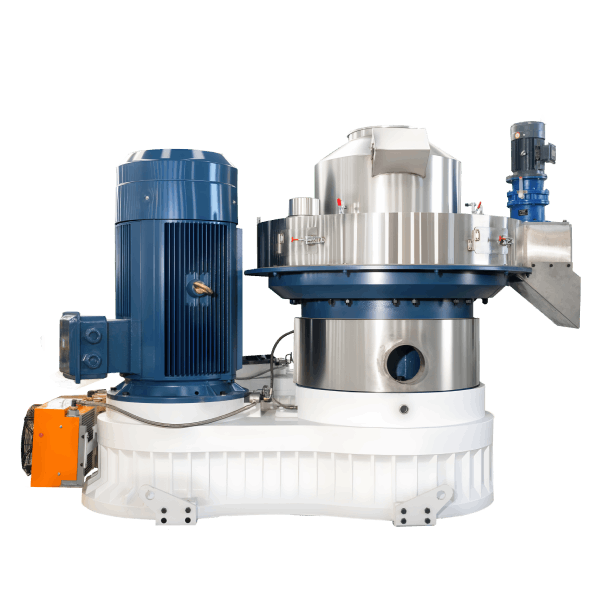
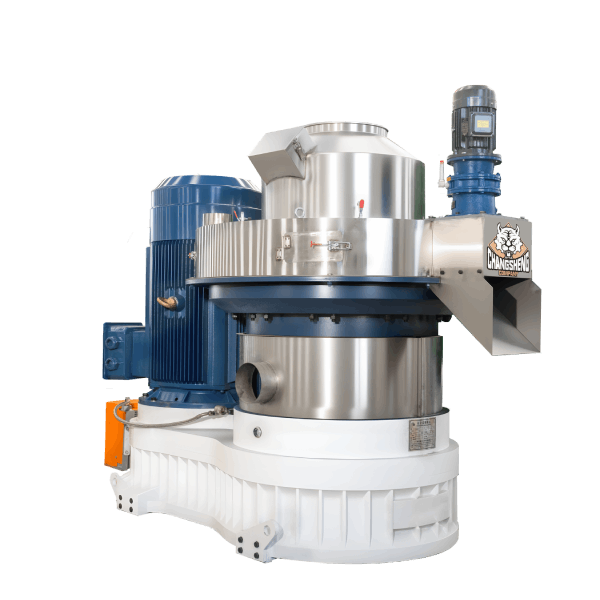
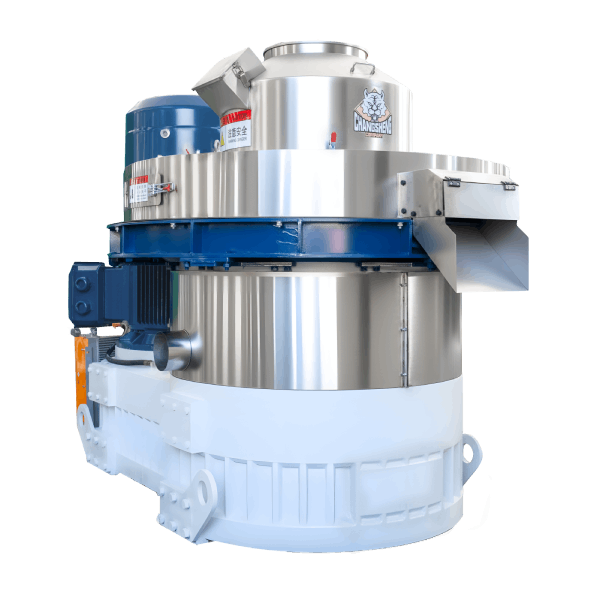
Feed Pellet Machine for Small Farms
News 2026-08-18
If you run a small farm, feed cost is one of your largest ongoing expenses. A feed pellet machine allows you to produce your own pellets from local raw materials—corn, soybean meal, wheat bran, grass, and other ingredients—at a fraction of the cost of commercial feed. It also gives you control over pellet size, formulation, and quality.
This guide is written for small farm owners who are evaluating whether to invest in a feed pellet machine. It covers machine types, capacity selection, animal-specific applications, raw materials, price factors, and small production setup. It focuses on small-scale, on-farm feed production—not commercial feed mills or industrial lines. For commercial-scale equipment, the requirements and economics are different.
What Is a Feed Pellet Machine?
A feed pellet machine compresses ground feed ingredients into dense, uniform pellets using pressure and, in some cases, steam conditioning. Compared to mash feed, pellets improve feed efficiency, reduce waste, and are easier to handle and store.
For small farms, the main reasons to invest in a feed pellet machine are:
- Self-produced feed: Use local raw materials—corn, soybean meal, wheat bran, grass, alfalfa—to produce feed on site.
- Lower feed cost: Reduce reliance on commercial feed and take advantage of local raw material prices.
- Reduced waste: Pellets are less likely to be scattered or rejected by animals.
- Control over pellet size: Produce the right pellet diameter for your animals, from 2 mm for chicks to 5–6 mm for cattle.
- Small-batch production: Produce feed in batches matching your animals’ consumption, reducing storage requirements.
For a small farm, a feed pellet machine is not a commercial-scale investment. It is a practical tool for reducing feed cost and improving feed quality on a manageable scale.
Who Should Use a Feed Pellet Machine?
A feed pellet machine is suitable for a range of small farm operations. The table below summarizes typical users and their scale.
| Farm Type | Typical Scale | Why a Feed Pellet Machine Helps |
|---|---|---|
| Small poultry farms | 50–500 birds | Control pellet size for different growth stages; reduce feed waste |
| Pig farms | 20–200 pigs | Produce weaner, grower, and finisher pellets on site |
| Dairy farms | Small dairy herds | Produce pellets from local roughage and grain; reduce purchased feed cost |
| Goat and sheep farms | Small herds | Produce fiber-rich pellets from grass, alfalfa, and grain |
| Rabbit farms | Small rabbitries | Produce high-fiber pellets with controlled size and composition |
| Small fish farms | Pond or small cage operations | Produce sinking or floating pellets from local ingredients |
| Feed retailers | Rural supply shops | Produce bagged feed for local customers |
| Small feed businesses | Micro feed production | Produce feed for local sale or contract processing |
For each of these operations, the machine type, capacity, and configuration depend on the animals, available raw materials, and daily feed requirement.
Small Feed Pellet Machine Types
Flat Die Feed Pellet Machine
Flat die feed pellet machines are the most common choice for small farms. They offer:
- Simple construction and easy operation
- Lower capital cost
- Suitable for small-scale production (typically 30–500 kg/h)
- Easier maintenance for operators without specialized training
- Compact footprint, suitable for farm buildings
Flat die machines are ideal for small poultry farms, pig farms, rabbitries, and mixed farms. They can produce pellets from a range of raw materials, including corn, soybean meal, wheat bran, and grass meal.
Limitations: die life is shorter than ring die machines (typically 300–600 hours), pellet quality can be more variable, and energy consumption per tonne is higher. For small farms with modest production, these limitations are usually acceptable.
Small Ring Die Feed Pellet Machine
Small ring die feed pellet machines are an upgrade option for farms that need higher capacity or more consistent pellet quality. They offer:
- Higher capacity (typically 200–500 kg/h for small models)
- Better pellet consistency and durability
- Longer die life
- Lower specific energy consumption
Small ring die machines are suitable for farms producing 200–500 kg/h, or for small feed businesses that need consistent output. They cost more than flat die machines and require more maintenance knowledge.
For most small farms producing under 200 kg/h, a flat die machine is the practical choice. For farms approaching 300–500 kg/h or producing for sale, a small ring die machine may be justified.
How Much Feed Pellet Machine Capacity Do I Need?
Capacity selection depends on your daily feed requirement, operating hours, and animal numbers. The table below provides guidance for common small farm capacities.
| Capacity | Daily Output (8-hour shift) | Typical Animal Scale | Operating Pattern |
|---|---|---|---|
| 50–100 kg/h | 400–800 kg/day | 50–200 poultry; 10–30 pigs | 2–4 hours/day |
| 100–200 kg/h | 800–1,600 kg/day | 200–500 poultry; 30–80 pigs | 4–8 hours/day |
| 200–300 kg/h | 1,600–2,400 kg/day | 500–1,000 poultry; 80–150 pigs | 8 hours/day |
| 300–500 kg/h | 2,400–4,000 kg/day | 1,000–2,000 poultry; 150–300 pigs | 8–10 hours/day |
Matching Capacity to Animal Numbers
Use the following formula to estimate your required capacity:
Required capacity = Daily feed requirement ÷ Effective operating hours
Daily feed requirement depends on animal type, weight, and growth stage. As a general reference:
| Animal | Daily Feed (approximate) |
|---|---|
| Poultry (broiler) | 0.1–0.2 kg/bird |
| Poultry (layer) | 0.1–0.15 kg/bird |
| Pig (grower) | 1.0–1.8 kg/pig |
| Pig (finisher) | 1.8–2.5 kg/pig |
| Dairy cow | 4–6 kg/cow (concentrate portion) |
| Rabbit | 0.08–0.15 kg/rabbit |
| Fish | 1–3% of body weight |
Actual feed intake varies with animal weight, genetics, production stage, and environmental conditions. Confirm with your feeding records or a nutritionist.
Example: A small pig farm has 50 finisher pigs, each consuming 2.2 kg/day. Total daily feed = 110 kg. If the machine runs 2 hours per day, required capacity = 55 kg/h. A 50–100 kg/h flat die machine is suitable.
This example is intentionally different from commercial-scale calculations to reflect small farm conditions.
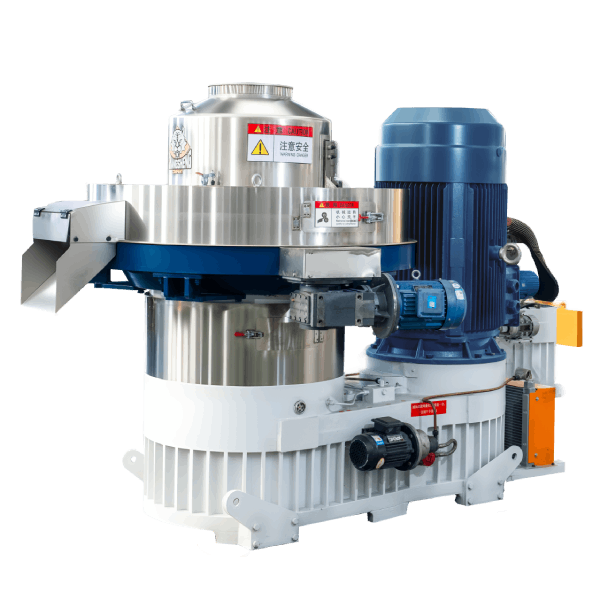
Feed Pellet Machine for Different Animals
Poultry (50–500 Birds)
Small poultry farms typically require 2.0–4.5 mm pellets depending on bird age. Broiler starter feed uses 2.0–2.5 mm; grower and finisher feeds use 3.0–4.5 mm. Layer feed uses 3.0–4.0 mm with higher calcium content.
Equipment recommendation: A 50–200 kg/h flat die machine is suitable for most small poultry operations. If producing for 500+ birds, a 200–300 kg/h machine may be more efficient.
Pigs (20–200 Pigs)
Small pig farms require 2.0–5.0 mm pellets depending on growth stage. Weaner feed uses 2.0–2.5 mm; grower feed uses 2.5–3.5 mm; finisher feed uses 3.5–4.5 mm; sow feed uses 4.0–5.0 mm.
Equipment recommendation: A 100–300 kg/h flat die machine is suitable for most small pig farms. For 100+ pigs, consider a 200–300 kg/h machine to reduce operating hours.
Cattle (Small Dairy and Beef Farms)
Small cattle farms typically require 5–6 mm pellets. Dairy cow feed includes a concentrate portion that can be pelletized; roughage is usually fed separately. Beef cattle feed may include a higher proportion of grain.
Equipment recommendation: A 200–500 kg/h machine is suitable for small dairy or beef operations. Pelletizing the concentrate portion reduces waste and improves handling.
Rabbits (Small Rabbitries)
Rabbit feed requires 3–4 mm pellets with high fiber content. Small rabbitries typically produce feed in small batches.
Equipment recommendation: A 50–150 kg/h flat die machine is suitable for most small rabbitries. The machine should handle high-fiber formulations, which may require slightly higher compression ratio.
Fish (Small Aquaculture Operations)
Small fish farms require 2–6 mm pellets, depending on species and fish size. Sinking or floating pellets may be required depending on the species.
Equipment recommendation: A 100–300 kg/h machine is suitable for small pond or cage operations. Pellet durability in water is important; confirm die specification with the supplier.
Feed Pellet Machine Raw Materials
Common Raw Materials for Small Farms
Small farms typically use locally available raw materials. The table below summarizes common ingredients.
| Raw Material | Function | Typical Inclusion | Grinding Required |
|---|---|---|---|
| Corn/maize | Energy | 50–65% | Yes (fine grind) |
| Wheat | Energy | 10–30% | Yes |
| Barley | Energy | 10–30% | Yes |
| Soybean meal | Protein | 15–25% | Yes |
| Wheat bran | Fiber | 5–15% | Typically not required if already fine; check for caking |
| Rice bran | Fiber/energy | 5–15% | Typically not required if already fine; check for caking |
| Grass meal | Fiber | 5–20% | Yes |
| Alfalfa meal | Fiber/protein | 5–20% | Yes |
| Fish meal | Protein | 2–5% | Minimal |
Grinding, Moisture, and Mixing Requirements
For small farms, raw material preparation is often the limiting factor.
- Grinding: Most feed pellet machines require ground material with particle size of 1–2 mm. A hammer mill is typically required if raw materials are not already ground.
- Moisture: Feed pelletizing typically requires 12–18% moisture. If raw materials are too dry, water may be added during mixing. If too wet, drying may be required.
- Mixing: Ingredients must be uniformly blended before pelletizing. A small mixer or manual mixing can be used, depending on batch size.
For small farms, a hammer mill and mixer are common additions to the feed pellet machine. These can often be sourced together as a small production set.
Feed Pellet Machine Price for Small Farms
Equipment Price vs Total Investment
The machine price is only part of the total investment. For a small farm feed pellet setup, the total cost includes:
- Feed pellet machine
- Motor (often included)
- Spare die and rollers
- Hammer mill (if needed)
- Mixer (if needed)
- Transport
- Electrical installation
- Foundation and installation
A complete small farm setup costs more than the machine alone, but also delivers more value.
Price Ranges for Small Farm Equipment
| Equipment | Capacity | Typical Price Range (USD) |
|---|---|---|
| Flat die feed pellet machine | 50–100 kg/h | $500–2,000 |
| Flat die feed pellet machine | 100–200 kg/h | $2,000–5,000 |
| Flat die feed pellet machine | 200–300 kg/h | $5,000–12,000 |
| Small ring die feed pellet machine | 200–500 kg/h | $8,000–20,000 |
| Hammer mill | 100–500 kg/h | $1,000–8,000 |
| Mixer | 100–500 kg per batch | $1,500–10,000 |
Costs shown are indicative equipment-only ranges. Transport, duties, electrical installation, and foundation are additional.
Batch mixers are sized by the weight of one mixing cycle. Choose a batch size that matches your daily production and pellet machine capacity.
What Affects the Price
| Factor | Effect on Price |
|---|---|
| Capacity | Higher capacity = higher price |
| Die type | Ring die more expensive than flat die |
| Motor | Brand and power rating |
| Die and roller material | Standard vs wear-resistant |
| Spare parts | Included or separate |
| Automation | Manual vs automatic feeding |
| Accessories | Hammer mill, mixer, conveyor |
For small farms, a complete set including pellet machine, hammer mill, and mixer is often the most practical purchase. Confirm what is included before comparing prices.
How to Choose a Feed Pellet Machine for a Small Farm
Small farm feed pellet machine selection depends on:
| Factor | Why It Matters |
|---|---|
| Capacity | Matches daily feed requirement |
| Power supply | Determines motor specification (single-phase or three-phase) |
| Pellet diameter | Determines die specification for your animals |
| Feed material | Affects die compression ratio and wear |
| Voltage | Must match your farm’s electrical supply |
| Machine size | Must fit available space |
| Ease of operation | Simple controls for farm operators |
| Spare parts | Die, roller, and bearings availability |
| Warranty | Terms and support availability |
For most small farms, a flat die machine with 100–300 kg/h capacity, matching die specification, and a hammer mill for grinding is a practical and cost-effective setup.
Small Farm Feed Pellet Production Setup
A small farm feed pellet production setup typically includes:
Grinder → Mixer → Feed Pellet Machine → Cooling → Storage
100–200 kg/h Setup
| Stage | Equipment | Typical Specification |
|---|---|---|
| Grinding | Hammer mill | 200–400 kg/h; 1–2 mm screen |
| Mixing | Small mixer | 100–200 kg per batch |
| Pelletizing | Flat die feed pellet machine | 100–200 kg/h |
| Cooling | Simple cooler or tray | Ambient cooling |
| Storage | Bags or bins | Protected from moisture |
This setup is suitable for small poultry, pig, and rabbit farms producing feed in batches.
300–500 kg/h Setup
| Stage | Equipment | Typical Specification |
|---|---|---|
| Grinding | Hammer mill | 500–800 kg/h; 1–2 mm screen |
| Mixing | Mixer | 250–500 kg per batch |
| Pelletizing | Flat die or small ring die | 300–500 kg/h |
| Cooling | Counter-flow cooler | Matched to output |
| Storage | Bags or bulk bins | Protected from moisture |
This setup is suitable for larger small farms or small feed businesses producing for sale or contract processing.
For both setups, confirm equipment capacity matching. A production line is only as productive as its bottleneck.
Freshly made pellets are hot and soft. They must be cooled before storage to prevent condensation, mold, and caking. Insufficient cooling is a common cause of pellet quality problems on small farms.
FAQ
What is a feed pellet machine?
A feed pellet machine compresses ground feed ingredients into dense, uniform pellets for livestock, poultry, and aquaculture. It is used on small farms to produce feed from local raw materials.
What size feed pellet machine do I need for a small farm?
Capacity depends on your daily feed requirement and operating hours. Use the formula: Required capacity = Daily feed requirement ÷ Effective operating hours. For small farms, 50–300 kg/h is common; larger small farms may use 300–500 kg/h.
How much does a small feed pellet machine cost?
Flat die machines: $500–12,000 depending on capacity. Small ring die machines: $8,000–20,000. Complete setups with hammer mill and mixer cost more. Confirm total delivered cost, not just machine price.
What is the best feed pellet machine for poultry?
For 50–500 birds, a 50–200 kg/h flat die machine is suitable. For larger flocks, a 200–300 kg/h machine may be more efficient. Pellet diameter should match bird age: 2.0–2.5 mm for starter, 3.0–4.5 mm for grower and finisher.
What is the best feed pellet machine for pigs?
For 20–200 pigs, a 100–300 kg/h flat die machine is suitable. Pellet diameter should match growth stage: 2.0–2.5 mm for weaner, 2.5–3.5 mm for grower, 3.5–4.5 mm for finisher.
Can a feed pellet machine make cattle feed?
Yes. Cattle feed typically uses 5–6 mm pellets. A 200–500 kg/h machine is suitable for small dairy or beef operations. The concentrate portion is usually pelletized; roughage may be fed separately.
Can I make feed pellets from corn and soybean meal?
Yes. Corn and soybean meal are common ingredients in small farm feed formulations. They should be ground to 1–2 mm before pelletizing. Other ingredients such as wheat bran, fish meal, and mineral premix can be added.
Do I need a hammer mill for a feed pellet machine?
Yes, if your raw materials are not already ground. Most feed pellet machines require ground material with particle size of 1–2 mm. A hammer mill is typically required for corn, soybean meal, and other whole ingredients.
What size pellets should I make for chickens?
Broiler starter: 2.0–2.5 mm. Broiler grower: 3.0–3.5 mm. Broiler finisher: 3.5–4.5 mm. Layer: 3.0–4.0 mm. Choose based on bird age and feeding stage.
How much electricity does a small feed pellet machine use?
A 100–200 kg/h flat die machine typically uses 7.5–15 kW. A 300–500 kg/h machine may use 22–37 kW. Actual consumption depends on material, moisture, and operating conditions.
Can one machine make different pellet sizes?
Yes, if the machine allows die changes. Different pellet sizes require different dies. Die changeover typically takes 30–60 minutes on small flat die machines, depending on design. If you frequently switch pellet sizes, consider a machine with quick-change die capability or a spare die.
Can I use a feed pellet machine for multiple animal feeds?
In principle, yes. However, different feeds may require different die specifications and operating parameters. Switching between feeds requires cleaning and adjustment. Cross-contamination between feed types must be managed through cleaning and flushing. For farms producing multiple feed types, a dedicated die or separate production runs may be required.
About the Author
Zhang Wei – Senior International Sales Engineer, Shandong Changsheng Machinery Co., Ltd.
Zhang Wei has over 12 years of experience in the feed pellet machine industry, with a focus on small farm and on-farm feed production applications. His background in mechanical engineering and international project execution has helped small farm owners across Southeast Asia, the Middle East, Africa, Europe, and Latin America select feed pellet machines for poultry, pig, dairy, rabbit, and fish operations.
With hands-on experience in both the manufacturing workshop and client-side operations, Zhang brings practical insights into successful equipment procurement—from capacity selection and raw material preparation to installation and long-term support.