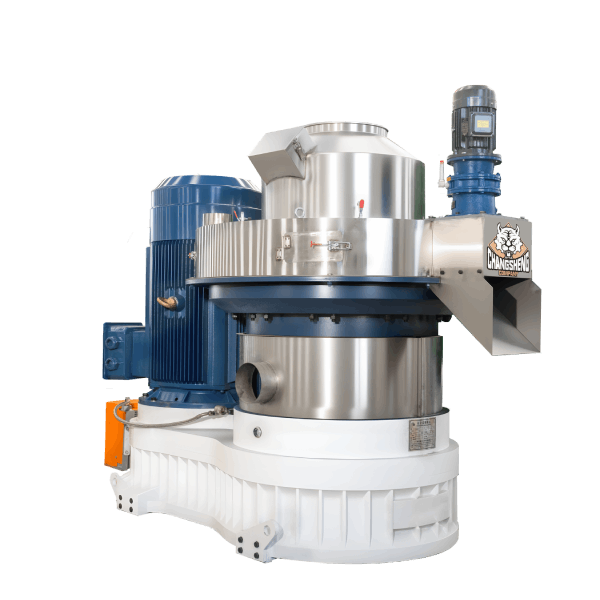
Wood Pellet Machine Indonesia: 0.05-5 t/h for Palm & Rubber
News 2026-06-04
1. Product Definition
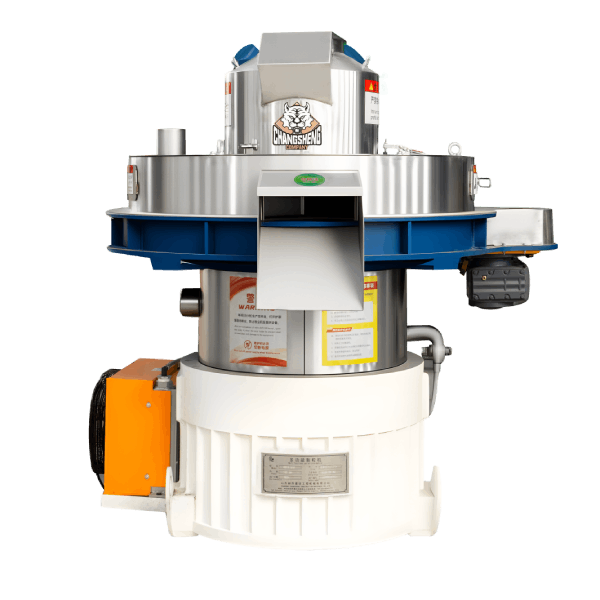
A wood pellet machine for Indonesia is a flat die or ring die densification system designed for Indonesian tropical biomass (palm kernel shells, rubberwood, rice husk, coconut shells, corn stover), featuring upgraded metallurgy (20CrMnTi dies) for high-silica feedstocks (8-15% ash), 220V/380V 50Hz electrical, diesel drive option for remote islands, and corrosion protection for high humidity (80-90% RH).
2. Technical Parameters & Specifications
| Parameter | Home/Small Farm | Small Business | Medium Commercial | Large Commercial |
|---|---|---|---|---|
| Capacity (kg/h or t/h) | 50-120 kg/h | 100-500 kg/h | 0.5-1.5 t/h | 1.5-5 t/h |
| Motor Power (kW) | 2.2 – 7.5 | 7.5 – 22 | 55 – 90 | 90 – 160 |
| Die Type | Flat die | Flat or small ring | Ring die | Ring die |
| Die Material for PKS | 20CrMnTi | 20CrMnTi | 20CrMnTi + tungsten | 20CrMnTi + tungsten |
| Die Life – PKS (hours) | 300-500 | 400-700 | 600-1,000 | 800-1,500 |
| Die Life – Rice Husk (hours) | 200-400 | 300-500 | 400-700 | 500-900 |
| Finished Pellet Diameter (mm) | 6, 8 | 6, 8, 10 | 8, 10, 12 | 10, 12 |
| Optimal Moisture (%) | 12 – 18 | 12 – 18 | 12 – 18 | 12 – 18 |
| Voltage | 220V single-phase | 220V or 380V three-phase | 380V three-phase | 380V three-phase |
| Diesel Drive Option | Yes (5-15 HP) | Yes (15-30 HP) | Yes (30-60 HP) | Yes (60-100 HP) |
| Price Range (USD FOB) | $500 – 2,500 | $3,000 – 15,000 | $25,000 – 80,000 | $80,000 – 200,000 |
For Indonesia pricing: Request a wood pellet machine Indonesia quotation with upgraded die and delivery to Jakarta (Tanjung Priok) or Surabaya.
3. Structure & Material Composition
Indonesia-Specific Design Features
Upgraded Metallurgy for Local Feedstocks
- Palm kernel shells (PKS): 6-10% ash, very hard → 20CrMnTi die + tungsten rollers required
- Rubberwood: moderate abrasion → GCr15 or 20CrMnTi
- Rice husk: 8-15% ash (high silica) → 20CrMnTi die required
- Coconut shells: 8-12% ash, very hard → 20CrMnTi die + tungsten rollers
- Corn stover: moderate → GCr15
Power Adaptations (Indonesia Grid)
- Voltage: 220V single-phase (rural) or 380V three-phase (industrial)
- Frequency: 50Hz
- Generator compatibility: common (grid unreliable in some areas)
- Diesel drive: essential for remote islands (Sumatra, Kalimantan, Sulawesi, Papua)
Climate Adaptations (Tropical)
- Corrosion protection: Epoxy coating + stainless hardware (humidity 80-90%)
- Dust protection: Sealed bearings
- High ambient: Motor Class F insulation (35-40°C)
- Rain protection: Covered storage essential (Indonesia has 2,000-4,000mm rain/year)
4. Manufacturing Process
Step 1 – Raw Material Drying (Indonesia Climate)
Challenge: PKS 15-20% moisture, rice husk 15-25%, coconut shells 20-30%, fresh rubberwood 50-60%. Sun drying (dry season) or rotary dryer (commercial). Dry to 12-18%.
Step 2 – Grinding
Equipment: Hammer mill with 4-6mm screen (PKS and coconut shells need 3-4mm screen, 50% more energy).
Step 3 – Pelletizing with Upgraded Die
Equipment: Ring die pellet mill with 20CrMnTi die for abrasive feedstocks.
Control: Die temperature 85-100°C, roller gap 0.15-0.25mm.
Derate: 30-40% vs wood for PKS and rice husk.
Step 4 – Cooling
Equipment: Counterflow cooler or cooling trays.
Why: Tropical humidity – pellets must be cooled to <10% moisture.
Step 5 – Storage
Challenge: Humidity 80-90% causes mold. Store in sealed plastic bags (not paper). Add mold inhibitor (propionic acid). Use within 3-6 months.
5. Industry Comparison
| Supplier Type | Price (USD FOB) | SNI Certified | Local Support | Spare Parts | Delivery to Jakarta |
|---|---|---|---|---|---|
| Chinese import (direct) | $500-200k | Optional | Remote (video) | Ship from China (4-8 weeks) | 10-16 weeks |
| Indonesia distributor | $1k-250k | Yes (often) | Local phone/visit | Jakarta/Surabaya stock | 1-4 weeks |
| Used (local) | $300-100k | Unknown | None | Unknown | Immediate |
| Why Choose Shandong Changsheng | Best price, CE certified | Upgraded dies for PKS/coconut | Remote support + diesel option | Spare die with machine | 10-16 weeks |
6. Application Scenarios
Distributors / Importers: Seeking wood pellet machine Indonesia for resale to palm oil mills (Sumatra, Kalimantan), rubber plantations, rice mills (Java), coconut processors (Sulawesi, North Sumatra). Decision focus: upgraded 20CrMnTi dies, diesel option for remote areas, and spare parts in Jakarta.
EPC Contractors: Specifying pellet lines for Indonesian biomass plants. Decision focus: generator sizing (unreliable grid in some areas), dust explosion protection, and tropicalization.
Engineering Consultants / Technical Advisors: Advising Indonesian clients on waste-to-energy economics. Decision focus: payback (12-24 months), export market (Japan, Korea for PKS), and carbon credits.
End-user Facilities: Palm oil mills (PKS, EFB), rubberwood sawmills, rice mills, coconut processors, biomass power plants.
7. Core Technical Pain Points & Solutions
Pain Point 1 – Archipelago Logistics (Shipping between islands)
Problem: Machine delivered to Jakarta. Final destination in Kalimantan, Sumatra, or Papua. Inland freight expensive (500-2,000 USD) and slow (2-6 weeks).
Root cause: Indonesia is an archipelago of 17,000+ islands.
Solution: Ship directly to nearest port (Belawan for North Sumatra, Banjarmasin for Kalimantan, Makassar for Sulawesi, Jayapura for Papua). Use experienced freight forwarder.
Pain Point 2 – Unreliable Grid Power in Remote Areas
Problem: Grid power unreliable or absent in remote areas (Kalimantan interior, Papua). Electric mill cannot operate.
Root cause: Infrastructure limited outside Java.
Solution: Diesel-driven pellet mill (off-grid). Generator (size 2-2.5x motor kVA). Solar hybrid for small mills (experimental).
Pain Point 3 – Palm Kernel Shells (PKS) Very Hard
Problem: PKS extremely hard (density 800-1,000 kg/m³). Standard die wears rapidly (300-500 hours).
Root cause: Hard shell, abrasive.
Solution: 20CrMnTi die (HRC 60-62) + tungsten carbide rollers. 3-4mm screen (finer than wood). Expect 50-70% capacity vs wood.
Pain Point 4 – High Humidity Causes Mold
Problem: Pellets stored in tropical warehouse mold within 2-4 weeks (humidity 80-90%).
Root cause: Pellet moisture >10%.
Solution: Dry pellets to <8% moisture (cooler). Seal in plastic bags (not paper). Add mold inhibitor (propionic acid). Store in dry building with dehumidifier.
8. Risk Warnings & Mitigation
Risk 1 – Diesel Price Volatility
Warning: Diesel price fluctuates (currently 10,000-15,000 IDR/L). Operating cost high for diesel-driven mills.
Mitigation: Calculate diesel cost per ton (15-25 L/t × 12,000 IDR = 180,000-300,000 IDR/t). Choose electric if grid available. Use generator only during blackouts.
Risk 2 – Generator Undersized
Warning: Generator size <2x motor kVA. Voltage drop, motor fails to start.
Mitigation: Size generator 2-2.5x motor running kVA. Example: 15kW motor → 30-40kVA generator. Use soft starter.
Risk 3 – Customs Clearance Delays (Tanjung Priok)
Warning: Container stuck at Tanjung Priok (Jakarta) port (2-6 weeks). Demurrage fees (500,000-1,000,000 IDR/day).
Mitigation: Use experienced customs broker. Request DDP price (seller pays delays). Budget for delays.
9. Procurement Selection Guide
Step 1 – Identify your feedstock
Palm kernel shells (hard, abrasive) → 20CrMnTi die + tungsten rollers required. Coconut shells (hard) → 20CrMnTi die + tungsten rollers. Rice husk (high silica) → 20CrMnTi die. Rubberwood (moderate) → GCr15 or 20CrMnTi.
Step 2 – Determine power solution
Grid reliable? Electric mill. Remote island? Diesel-driven mill (adds 30-100k USD for engine). Generator (size 2-2.5x motor kVA, 10k-30k USD).
Step 3 – Choose delivery port
Jakarta (Tanjung Priok) for Java. Belawan for North Sumatra. Banjarmasin for Kalimantan. Makassar for Sulawesi. Surabaya for East Java. Specify nearest port.
Step 4 – Get total landed cost (USD/IDR)
Formula: FOB price (USD) + ocean freight (2k-8k USD) + customs duty (0-15%) + 11% VAT (reclaimable for registered businesses) + broker (500-1,500 USD) + inland freight (500-3,000 USD). Add 30-50% to FOB.
Step 5 – Request upgraded die for local feedstocks
20CrMnTi die (add 500-5,000 USD). Tungsten rollers for PKS/coconut (add 1k-5k USD). Air classifier optional (add 15k-40k USD).
Step 6 – Specify diesel drive if off-grid
Diesel engine option (10-100 HP) – operates without grid. Adds 5k-30k USD to price. Higher operating cost (diesel) but reliable.
10. Engineering Case Study
Project Background: A palm oil mill in Kalimantan, Indonesia produced 20,000 tons/year of palm kernel shells (PKS) (14% moisture, 8% ash). Grid power unreliable (6 hours/day blackouts). Diesel 12,000 IDR/L. Wanted to pelletize PKS for export to Japan (150 USD/ton).
Initial Problem: Mill purchased standard wood pellet mill (35,000 USD). After 4 months: die life 350 hours (GCr15). PKS jammed hammer mill. Grid blackouts caused 40% downtime. Diesel generator (75kVA) cost 800,000 IDR/day. Abandoned.
Root Cause Analysis: GCr15 die inadequate for PKS. No diesel drive (generator expensive). Hammer mill screen too coarse (6mm needs 3-4mm). No air classifier (sand accelerated wear).
Solution Implemented (Shandong Changsheng Indonesia-spec):
| Component | Specification | Cost (USD) |
|---|---|---|
| Pellet mill | 20CrMnTi die, 75kW | 45,000 |
| Tungsten rollers | For PKS | 4,000 |
| Diesel engine | 100HP, off-grid | 18,000 |
| Hammer mill | 3.5mm screen, 55kW | 22,000 |
| Air classifier | Removes sand | 18,000 |
| Spare die | 20CrMnTi | 5,500 |
| Shipping (China to Banjarmasin) | 40ft container | 5,000 |
| Total | 117,500 |
Final Data Results (12 months operation):
| Metric | Standard Mill (Failed) | Indonesia-Spec Mill |
|---|---|---|
| Die life (hours) | 350 | 1,300 |
| Grid downtime | 40% | 0% (diesel engine) |
| Fuel cost | 800,000 IDR/day (generator) | 500,000 IDR/day (diesel engine) |
| Capacity (t/h) | 0.5 | 0.9 |
| Annual pellet production | 0 | 5,000 tons |
| Export revenue (150 USD/ton) | 0 | 750,000 USD/year |
Investment: 117,500 USD (approx 1.8B IDR)
Annual revenue: 750,000 USD (approx 11.4B IDR)
Annual fuel cost: 500,000 IDR/day × 300 days = 150M IDR (10,000 USD)
Net profit: 740,000 USD/year
Payback: 2 months
Request an Indonesia feasibility study from engineering team with your feedstock, location (island), and power supply.
11. FAQ
Q1: What is the price of a wood pellet machine in Indonesia?
500 – 2,500 USD (home/small farm). 3,000 – 15,000 USD (small business). 25,000 – 200,000 USD (commercial/industrial). Add 30-50% for shipping, duty, VAT.
Q2: Can I get a diesel-driven wood pellet machine for remote islands?
Yes – diesel engine option (10-100 HP). Operates off-grid. Adds 5,000-30,000 USD to price. Higher operating cost (diesel) but reliable.
Q3: What is the best pellet mill for palm kernel shells (PKS) in Indonesia?
Ring die with 20CrMnTi die + tungsten carbide rollers. 3-4mm hammer mill screen. Expect die life 800-1,500 hours.
Q4: What about coconut shells?
Coconut shells (very hard, 8-12% ash) require 20CrMnTi die + tungsten rollers. Similar to PKS. Expect die life 700-1,200 hours.
Q5: How to deal with grid unreliability outside Java?
Diesel-driven mill (off-grid). Generator (size 2-2.5x motor kVA). Battery backup for control panel.
Q6: What import duties apply to pellet mills in Indonesia?
HTS code 8436.80.00. Duty 0-15% depending on classification. Add 11% VAT (reclaimable for registered businesses). Use customs broker.
Q7: How long does delivery take to Jakarta (Tanjung Priok)?
Manufacturing: 4-8 weeks. Ocean freight: 14-21 days (China to Jakarta). Customs: 2-6 weeks. Total: 8-14 weeks. Add 2-6 weeks for other islands.
Q8: Can I get spare parts in Indonesia?
Some suppliers stock dies in Jakarta or Surabaya. Ask before purchase. Order spare die with machine (500-5,000 USD).
Q9: What about the high humidity (80-90%)?
Dry pellets to <8% moisture (cooler). Seal in plastic bags (not paper). Add mold inhibitor (propionic acid). Store in dry building with dehumidifier.
Q10: What is the best feedstock for pellets in Indonesia?
Palm kernel shells (PKS) – high calorific value (18-20 MJ/kg), export market to Japan/Korea. Coconut shells – similar. Rubberwood – abundant in Sumatra and Kalimantan.
Q11: Can I export PKS pellets from Indonesia?
Yes – Indonesia is the world’s largest exporter of PKS pellets to Japan and Korea. Requires low moisture (<10%), high calorific (>17 MJ/kg). Container shipping from Balikpapan, Banjarmasin, Surabaya.
Q12: What is the typical payback for a palm oil mill in Indonesia?
6-12 months for PKS pellet export. 12-24 months for domestic fuel replacement. Faster with free feedstock.
Q13: Is after-sales support available in Indonesia?
Remote support (video). Some suppliers have agents in Jakarta. Ask before purchase. Stock spare parts.
Q14: What about SNI certification (Standar Nasional Indonesia)?
Not mandatory for imported machinery but recommended for local acceptance. CE certification often accepted.
Q15: Do I need a dryer for rubberwood?
Fresh rubberwood 50-60% moisture – must be dried. Air dry 3-6 months (covered) or rotary dryer (30k-80k USD). Buy dry rubberwood from sawmills (15-20% moisture).
12. Commercial Call-to-Action
For Indonesian palm oil mills, coconut processors, and biomass plants: Request a wood pellet machine Indonesia quotation with upgraded die for your feedstock (PKS, coconut, rice husk), diesel drive option for remote islands, and delivery to Jakarta (Tanjung Priok) or Surabaya.
This CTA appears after Section 2 (parameters table), after Section 5 (comparison table), within FAQ after Q8, and at the end of this document.
Need a feedstock analysis? Send a 5kg sample of your agricultural waste for ash testing and die life projection.
Looking for a diesel drive solution for remote islands? Request off-grid pellet mill with diesel engine – no grid, no generator needed.
To proceed: Send your inquiry via the contact form. Include your feedstock (PKS, coconut, rice husk, rubberwood), island location (Sumatra, Kalimantan, Java, Sulawesi, Papua), and power supply (grid or off-grid).
13. Author & E-E-A-T Credentials
Author: Zhang Wei
Position: Southeast Asia Market Specialist
Experience: 11 years in pellet equipment export to Indonesia (2014-present)
Projects: Deployed 25+ wood pellet machine Indonesia systems across Sumatra, Kalimantan, Java, Sulawesi
Publications: Author of “Biomass Pellet Guide for Indonesia” (China Machine Press, 2023)
Membership: Member of the Indonesian Palm Oil Association (GAPKI)
Affiliation: Shandong Changsheng Machinery Co., Ltd.
The author has directly managed Indonesia deliveries for wood pellet machine Indonesia applications at palm oil mills, coconut processing plants, and rice mills, navigated Tanjung Priok customs, and developed diesel drive solutions for remote islands. All specifications, pricing data, and archipelago logistics solutions are derived from actual Indonesia installations from 2018-2026.