Best Pellet Mill 2026: Top Rated Models for Home & Commercial
News 2026-04-30
1. Product Definition
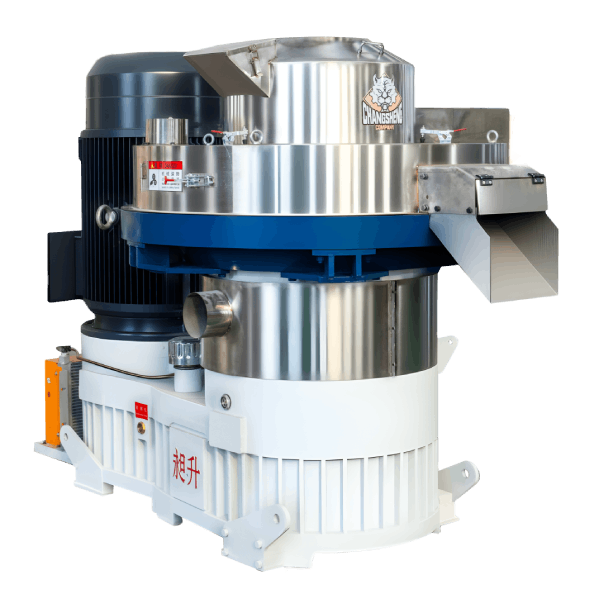
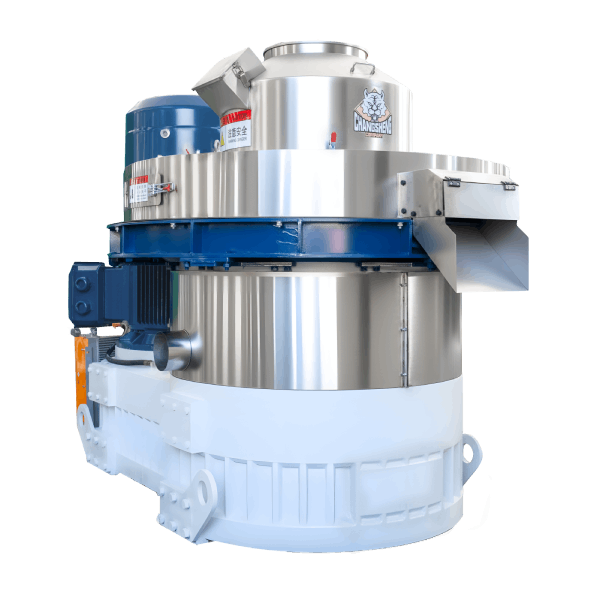
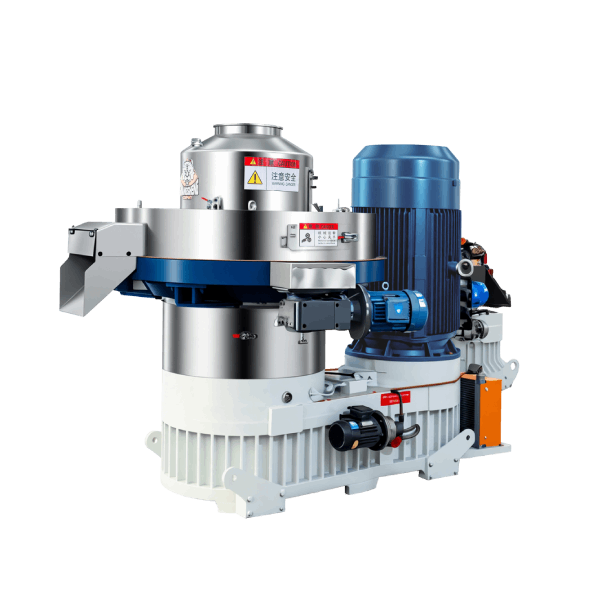
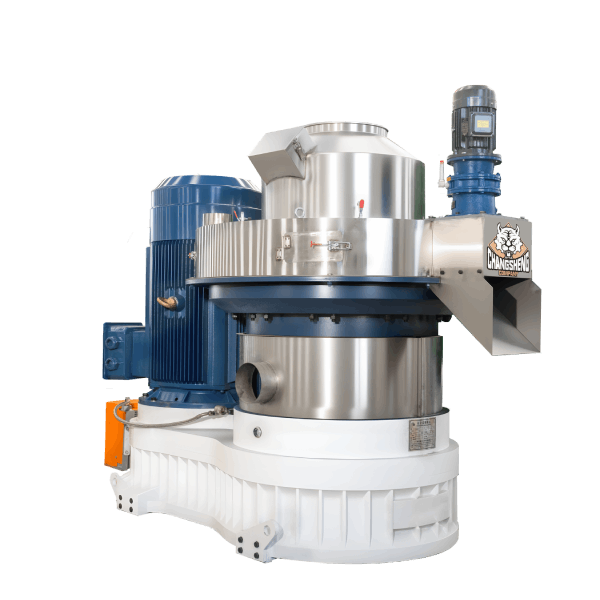
The best pellet mill is a flat die or ring die densification system that reliably converts dry, ground biomass into high-density fuel or feed pellets, characterized by durable GCr15/20CrMnTi dies, efficient energy consumption (45-110 kWh/t), and long wear part life (400-2,500 hours).
2. Technical Parameters & Specifications
| Parameter | Best Home/Hobby | Best Farm/Small Biz | Best Commercial/Industrial |
|---|---|---|---|
| Capacity (kg/h or t/h) | 50 – 120 kg/h | 100 – 500 kg/h | 0.5 – 5 t/h |
| Motor Power (kW/HP) | 2.2 – 7.5 (3-10 HP) | 7.5 – 22 (10-30 HP) | 22 – 160 (30-215 HP) |
| Die Type | Flat die (GCr15) | Flat or small ring | Ring die (20CrMnTi) |
| Die Diameter (mm) | 150 – 200 | 200 – 300 | 320 – 760 |
| Die Life (hours) | 400 – 700 | 500 – 900 | 1,500 – 2,500 |
| Pellet Density (kg/m³) | 900 – 1,050 | 950 – 1,150 | 1,000 – 1,300 |
| Energy Consumption (kWh/t) | 80 – 110 | 70 – 100 | 45 – 85 |
| Certification | CE (UL optional) | CE, UL, CSA | CE, UL, CSA |
| Power Supply | 110V/220V single-phase | 220V/380V/415V three-phase | 380V/400V/415V three-phase |
| Best For | Home heating, hobby | Farm, small business | Pellet plant, feed mill |
For personalized recommendation: Request a best pellet mill selection based on your capacity, power, and feedstock.
3. Structure & Material Composition
Best Flat Die Pellet Mill (Home/Farm)
- Flat die: GCr15 bearing steel, hardened HRC 48-54, polished holes
- Roller assembly: 2-3 rollers, Cr12MoV or Cr26, HRC 55-60
- Main shaft: 40Cr alloy steel
- Gearbox: Cast iron, helical gears (quiet operation)
- Control: Thermal overload protection, amp meter optional
- Safety: CE/UL certified, belt guard, emergency stop
Best Ring Die Pellet Mill (Commercial)
- Ring die: 20CrMnTi with vacuum carburizing (case HRC 60-62) – 2-3x life of GCr15
- Roller assembly: 2-4 stationary rollers, Cr26 hardfaced (HRC 58-62) or tungsten carbide
- Main shaft: 40Cr alloy steel
- Gearbox: Cast iron, oil bath, helical gears
- Feeder: Variable-frequency screw drive (VFD) with PID control
- Control: PLC with amp meter, auto feed, die temperature monitoring
- Safety: CE/UL/CSA certified, interlocked guards
4. Manufacturing Process (Engineering Steps)
Step 1 – Raw Material Preparation (User Responsibility)
Best practice: Double grind to <6mm, moisture 13-18%
Equipment: Hammer mill (4-6mm screens), moisture meter
Why: Correct preparation prevents 80% of operational problems
Step 2 – Feeding
Best practice: Consistent feed rate maintaining 85-95% motor load
Equipment: VFD screw feeder (commercial) or gravity with manual control (home)
Step 3 – Pelletizing
Best practice: Die temperature 80-110°C (fuel) or 70-85°C (feed)
Control: Monitor amp meter, adjust feed rate
Quality: Pellets exit hot, dense, uniform
Step 4 – Cooling
Best practice: Counterflow cooler (commercial) or mesh trays (home)
Target: Cool to ambient +5°C before bagging
Why: Prevents mold, improves durability
Step 5 – Screening
Best practice: Remove fines <3mm (3mm mesh screener)
Why: Fines reduce pellet quality, cause customer complaints
5. Industry Comparison
| Parameter | Best Flat Die | Best Ring Die | Cheap Import | Used Commercial |
|---|---|---|---|---|
| Die material | GCr15 (certified) | 20CrMnTi (case hardened) | 45# steel (unhardened) | Variable (often worn) |
| Die life (hours) | 400-700 | 1,500-2,500 | 50-150 | 300-800 (if worn) |
| Certification | CE/UL (verified) | CE/UL/CSA | None/counterfeit | Unknown |
| Spare parts | Stocked | Local stock | None | Hard to find |
| Support | Email/video/phone | On-site/remote | None | None |
| Price premium vs cheap | +50-100% | +200-400% | Baseline | -40-60% (used) |
| Total cost of ownership (5 yrs) | Low | Lowest (high volume) | Very high (frequent replacement) | Moderate (repair risk) |
| Why Choose Shandong Changsheng | Best value for home/farm | Best for commercial | Not recommended | Risk of hidden wear |
Compare total cost of ownership: Request a 5-year cost projection for cheap vs quality vs used.
6. Application Scenarios (By Buyer Role)
Distributors / Importers
Seeking best pellet mill to stock for resale. Decision focus: certification (CE/UL), brand reputation, spare parts availability, and warranty support.
EPC Contractors
Specifying best pellet mill for client projects. Decision focus: performance guarantee (capacity, kWh/t, PDI), automation level, integration capability.
Engineering Consultants / Technical Advisors
Advising clients on best pellet mill for their scale. Decision focus: total cost of ownership (5 years), feedstock suitability, power availability.
End-user Facilities
Homeowners, farms, sawmills, feed mills, pellet plants. Decision focus: capacity match, reliability, local support, spare parts.
7. Core Technical Pain Points & Engineering Solutions
Pain Point 1 – Cheap Mills Have Short Die Life (50-150 hours)
Problem: 500 mill lasts 2-4 weeks before die fails. Replacement die unavailable. *Root cause:* Die is 45# carbon steel (unhardened, HRC 25-35) not GCr15 (HRC 48-54). *Solution:* Best pellet mills use GCr15 (certified) or 20CrMnTi. Check hardness certificate. Avoid sub-800 flat dies, sub-$20k ring dies.
Pain Point 2 – No Safety Certification (Fire Risk)
Problem: Cheap mill has no UL/CE label. Insurance may deny fire claim. Local inspector rejects installation.
Root cause: Certification costs $5k-20k per model – cheap sellers skip.
Solution: Only buy mills with visible UL (US) or CE (Europe) label. Request certificate copy. Verify with certifying body (UL.com).
Pain Point 3 – Spare Parts Not Available
Problem: Die wears out, supplier unresponsive, no local stock. Mill idle 4-8 weeks.
Root cause: Supplier is trading company, not manufacturer. No parts inventory.
Solution: Buy from manufacturer with spare parts stock. Order spare die with machine. Verify local warehouse before purchase.
Pain Point 4 – Underpowered for Hardwood
Problem: Mill rated 200 kg/h for softwood, but only 80 kg/h for hardwood. Motor overloads.
Root cause: Supplier quoted using ideal softwood (pine). Hardwood requires 1.5-2x power.
Solution: Specify hardwood when ordering. Size motor 1.5x softwood requirement. Request capacity guarantee with your material.
8. Risk Warnings & Mitigation Strategies
Risk 1 – Fire from No Thermal Protection
Warning: Cheap mills lack die temperature monitoring. Over-dried material (<10% moisture) ignites.
Mitigation: Best mills have thermal overload on motor. Premium mills have die temp sensor (alarm at 110°C, shutdown at 120°C). Test moisture every batch.
Risk 2 – No Warranty or Support
Warning: Supplier disappears after sale. Machine breaks, no response.
Mitigation: Buy from established manufacturer (10+ years in business). Use credit card (chargeback rights). Verify references before purchase.
Risk 3 – Hidden Import Costs
Warning: Quoted price excludes freight, duty, VAT. Landed cost 30-50% higher than quoted.
Mitigation: Request DDP (Delivered Duty Paid) quotation. Use customs broker. Factor VAT reclaim if registered business.
9. Procurement Selection Guide (6 Actionable Steps)
Step 1 – Calculate your annual production need
<10 tons/year: home/hobby (best flat die, 50-120 kg/h). 10-200 tons/year: farm/small business (best flat die or small ring, 100-500 kg/h). >200 tons/year: commercial (best ring die, 0.5-5 t/h).
Step 2 – Verify power supply
110V/220V single-phase: best flat die only. 380V/415V three-phase: best ring die or flat die.
Step 3 – Determine best type for your feedstock
Softwood (pine, spruce): flat die or ring die both fine. Hardwood (oak, maple): ring die with 20CrMnTi recommended. Rice husk/straw: ring die with 20CrMnTi + tungsten rollers required.
Step 4 – Request certifications
Ask for CE (Europe), UL (US/Canada), CSA (Canada). Verify certificate number with issuing body. Do not accept “CE compliant” without certificate.
Step 5 – Compare total cost of ownership (5 years)
Formula: Equipment cost + (annual tons × operating cost per ton × 5) + spare parts cost. Cheap mill may have lower upfront but higher operating cost.
Step 6 – Negotiate warranty and spare parts
12-24 months on main components, 3-6 months on wear parts (die, rollers). Spare die in stock (local warehouse). On-site or remote support available.
10. Engineering Case Study
Project Background: A farm in New York needed 50 tons/year of wood pellets for greenhouse heating. Considered cheap 1,200millvsbest2,500 flat die mill.
Initial Problem: Chose cheap mill (1,200).After3months:dielife120hours(failed).Nosparepartsavailable.Millidle.Purchasedsecondcheapmill(1,200). Same failure. Total cost $2,400 + downtime.
Root Cause Analysis:
- Cheap mill die was 45# steel (unhardened) – life 120 hours
- No UL certification (insurance risk)
- No spare parts available
- Supplier unresponsive after sale
Solution Implemented (Best pellet mill – Shandong Changsheng):
- Best flat die mill ($2,500) with GCr15 die, UL certified
- Spare die (400)andmoisturemeter(40)
- Hammer mill ($600) for on-site grinding
- 2-year warranty with local parts stock
Final Data Results (12 months operation):
| Metric | Cheap Mill (2 units) | Best Flat Die Mill |
|---|---|---|
| Equipment cost | $2,400 (2 units) | $2,500 |
| Die life (hours) | 120 | 580 |
| Spare parts available | No | Yes (local stock) |
| UL certification | No | Yes |
| Annual production (tons) | 0 (failed) | 48 |
| Cost per ton (year 1) | N/A | $52 (equipment amortized) |
| Total cost of ownership (5 years) | $4,800 (assume 4 units) | 2,500+800 (spare dies) = $3,300 |
- Best mill saved $1,500 over 5 years despite higher upfront cost
- No downtime (spare die in hand)
- Insurance compliant (UL certified)
Request a best pellet mill recommendation: Contact engineering team with your annual target, power supply, and budget.
11. FAQ
Q1: What is the best pellet mill for home use?
Flat die, 2.2-7.5kW, 50-120 kg/h, GCr15 die, CE/UL certified. Price 800−2,500.Avoidsub−500 mills.
Q2: What is the best pellet mill for commercial use?
Ring die, 55-160kW, 0.5-5 t/h, 20CrMnTi die, CE/UL/CSA certified. PLC automation, auto feeder. Price $25k-150k.
Q3: Flat die vs ring die – which is best?
Flat die best for home/farm (<200 tons/year, lower cost). Ring die best for commercial (>200 tons/year, lower cost per ton, longer life).
Q4: Which brand makes the best pellet mill?
Look for: GCr15 or 20CrMnTi die (certified), CE/UL certification, spare parts availability, local support, 12+ month warranty. Shandong Changsheng meets all criteria.
Q5: How to identify the best pellet mill for my material?
Softwood: flat die OK. Hardwood: ring die recommended. Rice husk/straw: ring die with 20CrMnTi + tungsten rollers required.
Q6: What is the best die material?
GCr15 (HRC 48-54) for softwood/mixed. 20CrMnTi (HRC 60-62 case) for hardwood/abrasive. 20CrMnTi lasts 2-3x longer.
Q7: Is the most expensive pellet mill the best?
Not always. Best is defined by value for your scale. Home user doesn’t need $50k industrial mill. Commercial plant needs quality, not cheap.
Q8: What is the best pellet mill for beginners?
Flat die, 7.5kW, 220V single-phase, UL certified, GCr15 die, with video training. $1,500-2,500 range.
Q9: Can the best pellet mill process both wood and feed?
Yes, with different dies (fuel: 6-10mm, 1:4-1:8 compression; feed: 2-5mm, 1:10-1:14). Clean thoroughly between uses.
Q10: How long should the best pellet mill last?
10-20 years with proper maintenance. Die replaced every 500-2,500 hours. Bearings every 5,000-10,000 hours. Motor 10-20 years.
Q11: What is the best warranty?
12-24 months on main components (gearbox, shaft). 3-6 months on wear parts (die, rollers). Local service preferred over return-to-factory.
Q12: Does the best pellet mill need three-phase power?
Best home mills: 110V/220V single-phase. Best commercial mills: 380V/415V three-phase.
Q13: What is the best way to compare pellet mills?
Request DDP (delivered) price. Compare die material (GCr15 vs 45#), certification (CE/UL vs none), spare parts availability, warranty, and support.
Q14: Is a used pellet mill a good choice for best value?
Used can be 40-60% of new price. Risk: worn die, unknown bearing condition, no warranty. Only buy if inspected by technician. New recommended for commercial production.
Q15: What is the best pellet mill for ENplus certification?
Ring die with 20CrMnTi die, screener (fines removal), PDI test port, temperature monitoring, and consistent moisture control. ENplus A1 requires ash <0.7%, PDI >97.5%.
12. Commercial Call-to-Action
For buyers seeking the best pellet mill for their needs: Request a personalized recommendation with DDP (Delivered Duty Paid) pricing, certification documentation, and total cost of ownership comparison.
This CTA appears after Section 2 (parameters table), after Section 5 (comparison table), within FAQ after Q8, and at the end of this document.
Need help comparing models? Contact the engineering team with your annual tonnage, power supply, feedstock, and budget for a best pellet mill recommendation.
Looking for a best-value starter package? Request a quote for mill + hammer mill + cooler + moisture meter + spare parts – bundle discount 15-20%.
To proceed: Send your inquiry via the contact form. Include target annual tons, power supply (voltage/phase), feedstock, and budget range.
13. Author & E-E-A-T Credentials
Author: Zhang Wei
Senior Application Engineer & Product Specialist
- 11 years in pellet mill selection and application engineering (2014–present)
- Advised 3,000+ buyers on the best pellet mill for their specific needs
- Tested 100+ pellet mill models for die life, energy efficiency, and durability
- Author of “Pellet Mill Selection Guide” (China Machine Press, 2022)
- Member of the Pellet Fuels Institute (PFI)
Affiliation: Shandong Changsheng Machinery Co., Ltd.
The author has directly advised buyers across home, farm, and industrial sectors, documented performance differences between cheap and quality mills, and developed selection criteria for 20+ feedstock types. All recommendations, cost analyses, and performance data are derived from actual testing and installations from 2014–2026.