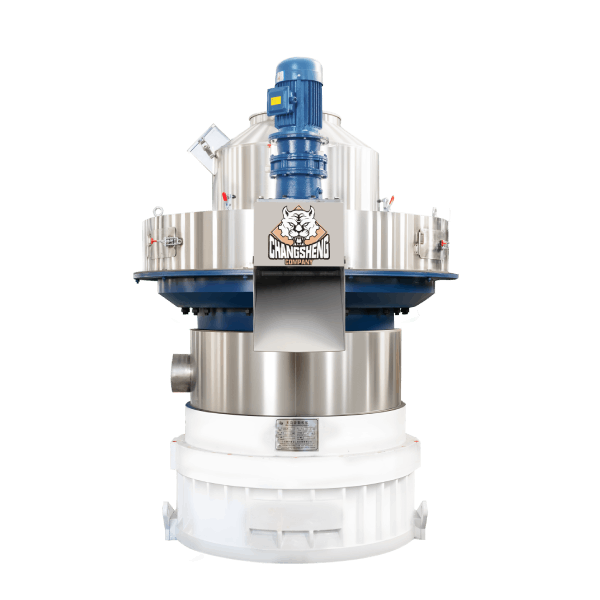
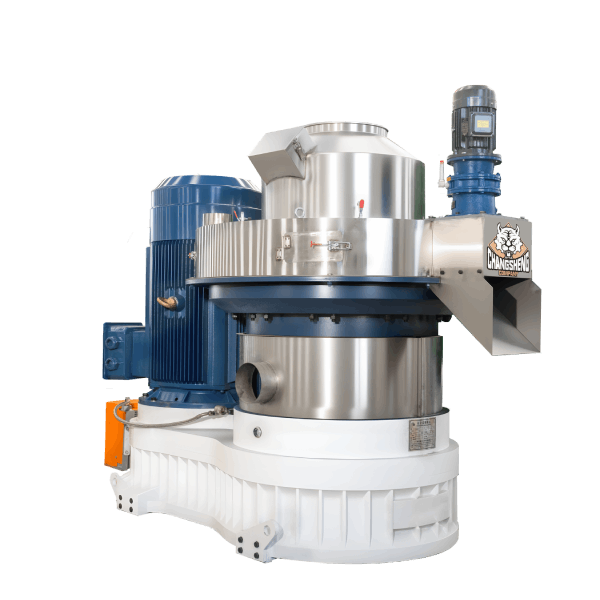
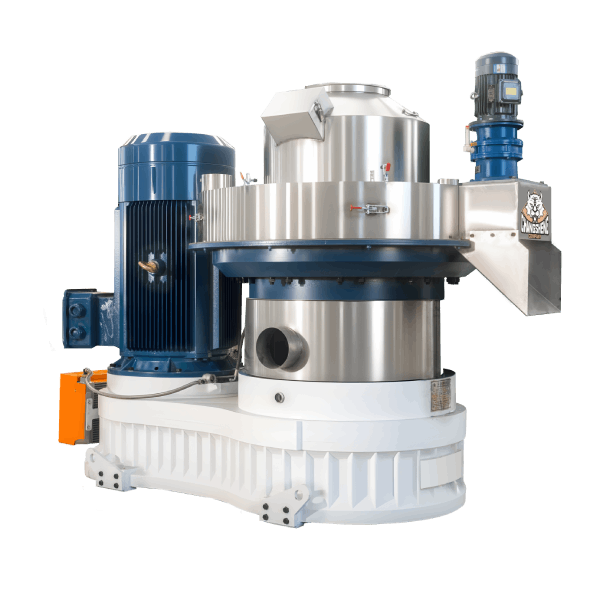
Pellet Machine with Wear Indicator: Complete Selection Guide
News 2026-07-20
Page SEO Summary: This technical guide helps procurement professionals and maintenance engineers evaluate pellet machines with wear indicators—covering wear monitoring technology, predictive maintenance benefits, and selection criteria for reducing downtime.
A pellet mill’s die wears gradually, unnoticeably, until one day the pellets are no longer meeting quality standards—or worse, the die fails catastrophically. The operator had no way of knowing when the die had reached its wear limit. The result: hours of unexpected downtime, emergency replacement costs, and frustrated production schedules.
Wear is inevitable in pellet production. The die, rollers, hammers, and other components are constantly exposed to abrasive materials and high pressures. What is not inevitable is the element of surprise. A pellet machine with wear indicator provides visibility into the condition of critical components, enabling planned maintenance before failure occurs.
This guide provides a comprehensive framework for understanding wear monitoring technology, evaluating its value for maintenance optimization, and making informed procurement decisions.
Understanding Wear in Pellet Machines
Critical Wear Components
| Component | Wear Type | Impact of Wear | Monitoring Priority |
|---|---|---|---|
| Die | Hole diameter enlargement; surface wear | Reduced quality; lower output | Highest |
| Roller shells | Surface wear; profile change | Reduced compression; quality loss | High |
| Hammers (hammer mill) | Tip wear; edge rounding | Reduced grinding efficiency | High |
| Screens (hammer mill) | Hole enlargement; breakage | Oversize particles; quality loss | High |
| Gearbox gears | Tooth wear; pitting | Noise; reduced efficiency; failure | Medium |
| Bearings | Raceway wear; cage damage | Vibration; heat; eventual failure | Medium-High |
Why Wear Monitoring Matters
| Issue | Consequence | Prevention Value |
|---|---|---|
| Unplanned downtime | Production loss; emergency repairs | Schedule maintenance |
| Quality variation | Off-spec product; customer dissatisfaction | Maintain quality standard |
| Catastrophic failure | Expensive repairs; extended downtime | Replace before failure |
| Increased energy consumption | Worn components require more power | Maintain efficiency |
| Secondary damage | One worn part damages others | Identify issues early |
Wear Indicator Technology Types
1. Visual Wear Indicators
| Type | How It Works | Application | Accuracy | Cost |
|---|---|---|---|---|
| Wear mark | Visual mark on component that disappears with wear | Dies; roller shells | Low-Medium | Very Low |
| Wear arrow | Arrow pointing to wear limit | Various components | Low-Medium | Very Low |
| Color indication | Color change indicates wear | Various components | Medium | Low |
| Inspection window | View wear through window | Various components | Medium | Low |
2. Measurement-Based Indicators
| Type | How It Works | Application | Accuracy | Cost |
|---|---|---|---|---|
| Thickness measurement | Measure remaining material | Dies; roller shells | High | Medium |
| Diameter measurement | Measure hole diameter | Die holes | Very High | High |
| Weight measurement | Measure component weight | Dies; hammers | High | Medium |
| Dimension check | Measure critical dimensions | Various components | High | Medium |
3. Sensor-Based Indicators
| Type | How It Works | Application | Accuracy | Cost |
|---|---|---|---|---|
| Vibration monitoring | Detect changes in vibration signature | Bearings; gearbox | High | Moderate-High |
| Temperature monitoring | Detect temperature changes | Bearings; die | High | Moderate |
| Current monitoring | Detect load changes due to wear | Motor; drive | High | Moderate |
| Oil analysis | Detect wear particles in lubricant | Gearbox | Very High | Moderate-High |
4. Advanced Wear Monitoring
| Type | How It Works | Application | Accuracy | Cost |
|---|---|---|---|---|
| Ultrasonic thickness | Measure thickness with ultrasound | Dies; structural components | Very High | High |
| On-line particle counting | Continuous oil analysis | Gearbox | Very High | Very High |
| Acoustic emission | Detect crack propagation | Critical components | Very High | Very High |
| Temperature profiling | Thermal imaging | Various components | High | Very High |
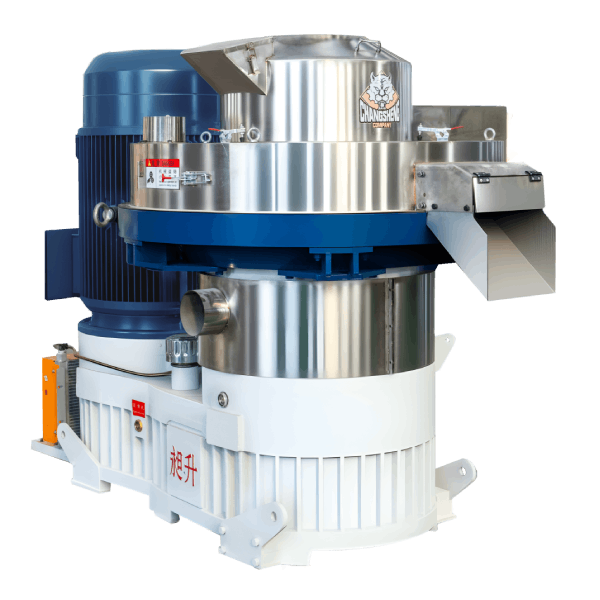
Visual Wear Indicators in Detail
Wear Marks on Dies
| Feature | Description | Use |
|---|---|---|
| Die life indicator | Mark on die face or side | Visual check of remaining life |
| Wear limit mark | Line or groove indicating wear limit | Know when to replace |
| Countersunk indicator | Depth increases with wear | Measure remaining material |
Roller Shell Wear Indicators
| Feature | Description | Use |
|---|---|---|
| Thickness groove | Groove showing remaining material | Visual wear assessment |
| Wear limit mark | Line showing replacement point | Know when to replace |
| Color band | Color change at wear limit | Quick visual check |
Hammer Wear Indicators
| Feature | Description | Use |
|---|---|---|
| Wear limit line | Line on hammer showing maximum wear | Know when to rotate/replace |
| Thickness mark | Mark showing remaining material | Measure wear |
| Weight marks | Reference weight for comparison | Track material loss |
Predictive Maintenance Integration
Maintenance Strategy Continuum
| Strategy | Description | Wear Indicator Role |
|---|---|---|
| Reactive | Fix after failure | None |
| Preventive (time-based) | Replace on schedule | Limited; schedule may not match actual wear |
| Condition-based (CBM) | Maintain based on actual condition | Essential; provides condition data |
| Predictive | Predict future failure | Enables forecasting and planning |
| Prescriptive | Recommend actions | Advanced analytics on wear data |
Wear Data to Maintenance Action
| Data Source | Analysis | Maintenance Action |
|---|---|---|
| Die wear mark | Visual check | Order replacement die |
| Thickness measurement | Calculate remaining life | Schedule replacement |
| Vibration trend | Detect increasing vibration | Investigate; plan maintenance |
| Oil analysis | Detect wear particles | Investigate; replace if needed |
| Current trend | Detect increasing load | Check for wear; adjust process |
Investment Value
Benefits of Wear Indicators
| Benefit | Value |
|---|---|
| Reduced unplanned downtime | Schedule maintenance at convenient times |
| Extended component life | Replace at optimum time, not too early or late |
| Lower maintenance cost | Avoid emergency repairs and rush charges |
| Consistent quality | Replace before quality is affected |
| Better spare parts planning | Know what to order and when |
| Improved safety | Reduce risk of catastrophic failure |
Cost-Benefit Example
Assumptions:
- One die replacement per year (planned vs. unplanned)
- Die cost: $8,000
- Unplanned replacement cost (emergency + production loss): $12,000
- Hourly production value: $500
- Die wear indicator cost (integrated): $1,000
| Scenario | Annual Cost | Savings |
|---|---|---|
| No wear indicator | $12,000 (unplanned) | Base |
| With wear indicator | $8,000 (planned) + $1,000 | $3,000 |
| With predictive system | $8,000 (planned) + $5,000 | -$1,000* |
*Note: Predictive systems often provide additional benefits beyond die replacement, including reduced other failures and optimized maintenance.
Procurement Checklist
Wear Monitoring Requirements
- Critical wear components identified
- Wear indicator type selected (visual, measurement, sensor)
- Monitoring frequency determined
- Replacement criteria defined
System Specifications
- Wear marks/indicators included on dies
- Roller shell wear indicators included
- Hammer wear indicators included
- (If sensor-based) sensors and monitoring included
- HMI display of wear status (if applicable)
Maintenance Integration
- Wear data integrated with maintenance system
- Replacement schedule established
- Spare parts planning based on wear data
- Operator training on wear monitoring
Supplier Evaluation
- Supplier includes wear indicators as standard
- Wear indicators are clear and easy to read
- Replacement components available
- Support for wear monitoring
Frequently Asked Questions
1. What is a wear indicator in a pellet machine?
A wear indicator is a feature that helps operators assess the remaining life of critical components such as dies, roller shells, and hammers. It can be visual (mark, line), measurement-based (thickness gauge), or sensor-based (vibration, temperature).
2. Why is wear monitoring important in a pellet mill?
Wear monitoring enables planned maintenance, reduces unplanned downtime, extends component life, and maintains consistent pellet quality. It prevents catastrophic failures and supports proactive maintenance.
3. How does a die wear indicator work?
Common die wear indicators include: wear marks on the die face that disappear with wear, wear limit lines showing maximum safe wear, thickness measurement points for checking remaining material, and sensor-based monitoring of die condition.
4. How can I tell when a die needs replacement?
Signs include: visual wear indicator reaches limit, pellet quality decline (lower durability, higher fines), reduced output capacity, increased energy consumption (higher motor current), and physical inspection showing hole enlargement or surface damage.
5. What maintenance intervals should I use with wear indicators?
The wear indicator should be checked at regular intervals (e.g., daily for visual marks, weekly for measurements, continuous for sensors). Replacement should be planned when the indicator reaches the specified limit.
6. Can wear indicators help with spare parts planning?
Yes. Wear data allows you to forecast when components will need replacement, so you can order spare parts in advance rather than paying emergency prices or waiting for delivery.
7. Are wear indicators standard or optional on pellet machines?
It depends on the manufacturer and model. Visual wear marks are often standard. Sensor-based wear monitoring is typically optional.
8. Do wear indicators eliminate the need for regular inspection?
No. Wear indicators complement—they do not replace—regular inspection. They make inspection easier and more objective but still require operator attention.
About the Author
Zhang Wei – Senior International Sales Engineer, Shandong Changsheng Machinery Co., Ltd.
Zhang Wei has over 12 years of experience in the biomass and feed pellet mill industry, with a background in mechanical engineering and international project execution. He has managed pellet mill supply projects for clients across Southeast Asia, the Middle East, Africa, Europe, and Latin America, with extensive experience in maintenance optimization, component wear management, and reliability engineering.
With hands-on experience in both the manufacturing workshop and client-side operations, Zhang brings practical insights into successful equipment procurement—from the factory floor to the customer’s production site.