Pellet Machine for Cardboard Recycling: 0.5-3 t/h Paper Fuel Models
News 2026-05-12
1. Product Definition
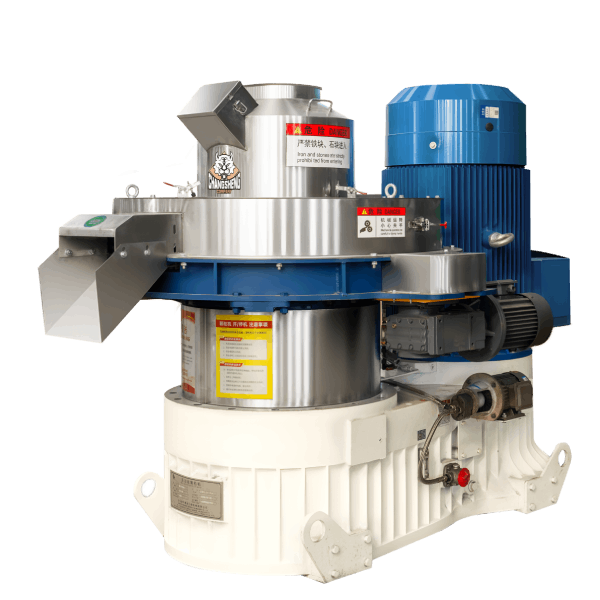
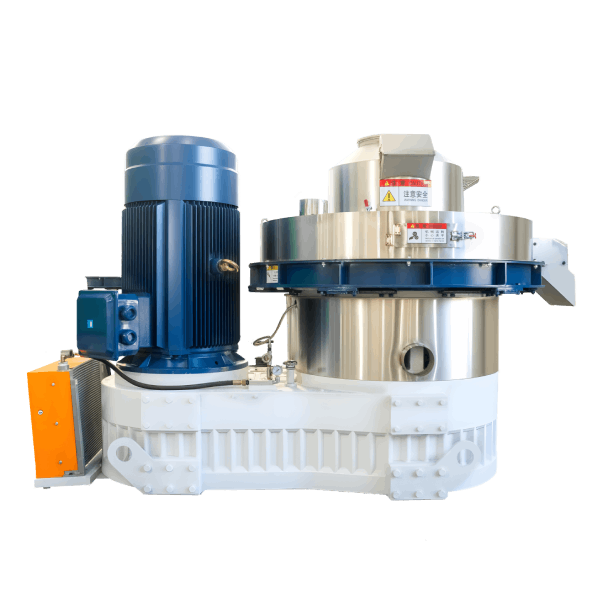
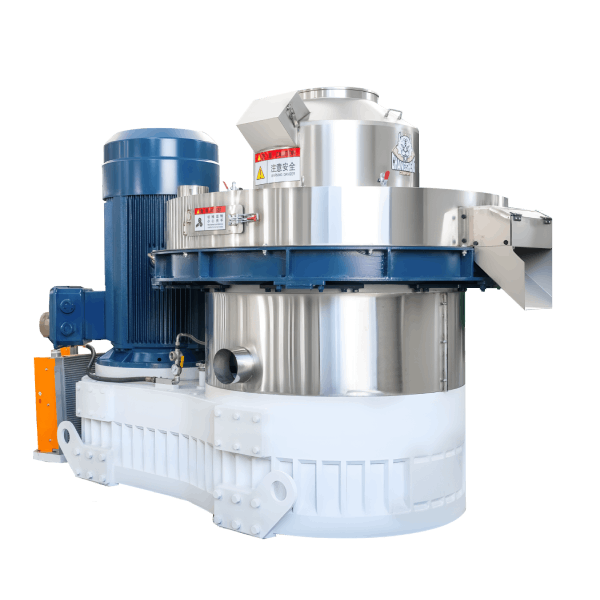
A pellet machine for cardboard recycling is a ring die densification system that compresses shredded and ground cardboard (OCC – old corrugated cardboard) into high-calorific fuel pellets (18-20 MJ/kg, 5-10% ash) for industrial boilers, featuring corrosion-resistant dies to handle paper fibers and adhesives, with 8-12% optimal moisture.
2. Technical Parameters & Specifications
| Parameter | Small Operation | Medium Operation | Large Operation |
|---|---|---|---|
| Capacity (t/h) | 0.3 – 0.8 | 0.8 – 1.5 | 1.5 – 3.0 |
| Motor Power (kW) | 45 – 75 | 75 – 110 | 110 – 160 |
| Ring Die Diameter (mm) | 320 – 420 | 420 – 520 | 520 – 650 |
| Die Material | GCr15 or 20CrMnTi | 20CrMnTi + coating | 20CrMnTi + tungsten rollers |
| Die Life (hours) | 1,200 – 1,800 | 1,500 – 2,500 | 1,800 – 3,000 |
| Finished Pellet Diameter (mm) | 6, 8, 10 | 8, 10, 12 | 10, 12, 15 |
| Pellet Density (kg/m³) | 900 – 1,100 | 950 – 1,150 | 1,000 – 1,200 |
| Calorific Value (MJ/kg) | 18 – 20 | 18 – 20 | 18 – 20 |
| Optimal Moisture (%) | 8 – 12 | 8 – 12 | 8 – 12 |
| Ash Content (%) | 5 – 10 | 5 – 10 | 5 – 10 |
| Energy Consumption (kWh/t) | 60 – 90 | 55 – 85 | 50 – 80 |
| Maintenance (hours/month) | 8 – 15 | 10 – 20 | 12 – 25 |
For cardboard pellet pricing: Request a pellet machine for cardboard recycling quotation for your OCC volume.
3. Structure & Material Composition
Cardboard-Specific Design Features
Die & Roller Considerations
- Ring die: GCr15 or 20CrMnTi (paper less abrasive than wood)
- Roller shells: Cr26 standard (paper not abrasive)
- Corrosion protection: Optional stainless steel for wet cardboard
Pre-Processing Requirements
- Shredder: Reduces cardboard to 30-50mm pieces (primary)
- Hammer mill: Fine grinding to 3-6mm particles (secondary)
- Magnetic separator: Removes staples, paper clips (ferrous metal)
Drying System (Critical)
- Cardboard as-received moisture: 10-15% (often ideal)
- May require drying if stored outdoors (rain exposure)
- Target moisture 8-12% for optimal pelleting
4. Manufacturing Process (Engineering Steps)
Step 1 – Cardboard Collection & Sorting
Source: Recycling centers, warehouses, retail stores, manufacturing plants
Remove: Plastic, tape, polystyrene, metal (staples, clips)
Equipment: Manual sorting + magnetic separator
Step 2 – Shredding (Primary)
Equipment: Industrial shredder – reduces cardboard to 30-50mm strips
Why: Hammer mill cannot accept whole cardboard boxes
Step 3 – Grinding (Secondary)
Equipment: Hammer mill with 3-6mm screen
Control: 95% passing 4-5mm (paper fibers are long)
Energy: Cardboard requires 20-30% less grinding energy than wood
Step 4 – Moisture Adjustment
Target: 8-12% moisture. Cardboard often 8-12% as-received. If wet (>15%), dry: sun drying or small rotary dryer. If too dry (<6%), add water (spray).
Step 5 – Pelletizing
Equipment: Ring die pellet mill (standard metallurgy sufficient)
Control: Die temperature 70-85°C (lower than wood), roller gap 0.2-0.4mm
Capacity: Similar to wood (paper compresses easily)
Step 6 – Cooling & Storage
Equipment: Counterflow cooler
Control: Cool to ambient temperature; pellets may absorb moisture (paper hygroscopic)
5. Industry Comparison
| Parameter | Cardboard Pellets | Wood Pellets | Cardboard Briquettes | Direct Burning (Baled Cardboard) |
|---|---|---|---|---|
| Calorific value (MJ/kg) | 18-20 | 17-19 | 16-18 | 15-17 |
| Ash content (%) | 5-10 | 1-2 | 5-10 | 5-10 (plus contaminants) |
| Moisture requirement | 8-12% | 13-18% | 8-12% | Any (inefficient) |
| Die life (hours) | 1,500-3,000 | 1,500-2,500 | 1,000-1,800 | N/A |
| Grinding energy | Lower (paper) | Baseline | Lower | N/A |
| Contaminant sensitivity | Medium (tape, plastic) | Low | Medium | Low |
| Market price ($/ton) | $100-180 | $120-250 | $80-150 | $30-80 |
| Best for | Industrial boilers | Residential & industrial | Industrial boilers | Landfill (avoid) |
| Why Choose Shandong Changsheng | Standard metallurgy sufficient | Wood requires upgraded | Lower density | Low efficiency |
Compare cardboard vs wood pellets: Request a cost analysis for your recycling operation.
6. Application Scenarios (By Buyer Role)
Distributors / Importers
Stocking pellet machine for cardboard recycling for recycling centers and waste-to-energy plants. Decision focus: pre-processing equipment (shredder, hammer mill), magnetic separator, and contaminant removal.
EPC Contractors
Specifying cardboard pellet lines for MRFs (Material Recovery Facilities). Decision focus: shredding stage (primary), hammer mill (secondary), dryer (if needed), and fire suppression (paper dust).
Engineering Consultants / Technical Advisors
Advising recycling operations on waste-to-energy economics. Decision focus: payback (12-24 months), landfill diversion revenue, and cardboard feedstock consistency.
End-user Facilities
Recycling centers, cardboard manufacturers, warehouses, power plants.
7. Core Technical Pain Points & Engineering Solutions
Pain Point 1 – Contaminants (Tape, Plastic, Staples)
Problem: Tape and plastic wrap around rollers, cause jamming. Staples damage die.
Root cause: Cardboard not properly sorted before shredding.
Solution: Manual sorting line before shredder. Magnetic separator for staples. Air classifier for plastic film (lighter than paper). Accept some contamination – pellets still usable for fuel.
Pain Point 2 – Paper Dust Explosion Risk
Warning: Paper dust is highly explosive (lower ignition energy than wood). Cardboard pellet line must have explosion protection.
Mitigation: Explosion vent panels on cyclones and dust collectors. Spark detection with water mist. ATEX-rated motors in dust areas. Ground all equipment.
Pain Point 3 – Pellets Absorb Moisture (Hygroscopic)
Problem: Cardboard pellets stored in humid warehouse absorb moisture, swell, disintegrate.
Root cause: Paper is hygroscopic (absorbs moisture from air).
Solution: Store pellets in sealed plastic bags or dry silo. Use within 3-6 months. Add moisture barrier liner to bags.
Pain Point 4 – Low Bulk Density of Ground Cardboard
Problem: Ground cardboard bulk density 80-120 kg/m³ (vs wood 200-300 kg/m³). Feeder bridging, lower pellet mill output.
Root cause: Paper fibers are light and fluffy.
Solution:* Install breaker shaft in hopper. Use larger screw feeder diameter. Pre-compress material (paddle mixer) before feeding.
8. Risk Warnings & Mitigation Strategies
Risk 1 – Paper Dust Explosion
Warning: Paper dust (cardboard) has lower ignition energy than wood dust. Explosion risk higher.
Mitigation: Explosion vents (NFPA 68). Spark detection with water mist. ATEX motors (Zone 21/22). Regular cleaning (no dust accumulation). Ground all equipment.
Risk 2 – Corrosion from Wet Cardboard
Warning: Wet cardboard (stored outdoors) contains acids (from decomposition). Corrodes carbon steel die.
Mitigation:* Dry cardboard to <12% moisture before pelleting. Use stainless steel die if processing wet cardboard regularly.
Risk 3 – Fire from Over-Dried Cardboard (<8% Moisture)
Warning: Cardboard below 6% moisture highly combustible. Friction in die can ignite.
Mitigation:* Test moisture before pelleting. Add water if <8%. Keep die temperature below 90°C.
9. Procurement Selection Guide (6 Actionable Steps)
Step 1 – Assess your cardboard volume and quality
Calculate tons/year available. Clean cardboard (OCC) best. Mixed paper (magazines, office paper) higher ash, lower calorific value.
Step 2 – Determine contaminant level
Staples: need magnetic separator. Tape/plastic: need manual sorting or air classifier. Waxed cardboard (wet-strength): difficult to pellet.
Step 3 – Calculate pre-processing requirements
Shredder (primary) + hammer mill (secondary). Shredder reduces boxes to 30-50mm strips. Hammer mill to 3-6mm particles.
Step 4 – Select die metallurgy
GCr15 standard (cardboard less abrasive than wood). 20CrMnTi optional for longer life. Stainless steel for wet cardboard.
Step 5 – Verify moisture control
Cardboard as-received often 8-12% (ideal). If stored outdoors, may need dryer. Budget $20k-80k for rotary dryer if necessary.
Step 6 – Request fire safety package
Explosion vents, spark detection, ATEX motors. Non-negotiable for paper dust.
10. Engineering Case Study
Project Background: A recycling center in Germany processed 5,000 tons/year of cardboard (OCC). Previously baled and sold for €80/ton. Wanted to pelletize for higher value (€150/ton fuel pellets).
Initial Problem: Center purchased standard wood pellet mill (€40,000). No pre-shredder. Fed whole cardboard boxes into hammer mill – jammed. Paper dust explosion hazard ignored. Local inspector shut down operation.
Root Cause Analysis:
- No primary shredder (hammer mill cannot accept boxes)
- No dust explosion protection
- No magnetic separator for staples
- Cardboard moisture 15% (needs drying)
Solution Implemented (Complete Cardboard Pellet Line):
| Component | Specification | Cost (EUR) |
|---|---|---|
| Primary shredder | 50mm strips, 30kW | €35,000 |
| Hammer mill | 4mm screen, 55kW | €25,000 |
| Magnetic separator | 10,000 Gauss | €2,000 |
| Rotary dryer | 1.0m × 6m, gas burner | €45,000 |
| Pellet mill | 90kW ring die, GCr15 | €50,000 |
| Cooler + bagging | Counterflow + scale | €30,000 |
| Fire safety | Explosion vents + spark detection | €15,000 |
| Total | €202,000 |
Final Data Results (12 months operation):
| Metric | Standard Mill (Failed) | Complete Cardboard Line |
|---|---|---|
| Capacity (t/h) | 0 | 1.2 |
| Annual production | 0 | 2,500 tons |
| Pellet selling price | – | €150/ton |
| Revenue | – | €375,000/year |
| Operating cost | – | €180,000/year |
| Net profit | – | €195,000/year |
- Investment: €202,000
- Payback: 12.5 months
Request a cardboard recycling feasibility study: Contact engineering team with your cardboard volume (tons/year), moisture, and contaminant level.
11. FAQ
Q1: What is cardboard recycling pellet machine?
System that shreds, grinds, and pellets cardboard (OCC) into fuel pellets for industrial boilers.
Q2: Can cardboard be pelleted with a standard wood pellet mill?
Yes, with pre-processing: shredder (primary) + hammer mill (secondary). Standard GCr15 die sufficient (cardboard less abrasive than wood).
Q3: What is the calorific value of cardboard pellets?
18-20 MJ/kg (higher than wood due to paper’s higher carbon content). Ash content 5-10% (vs wood 1-2%).
Q4: What moisture is best for cardboard pellets?
8-12% (lower than wood’s 13-18%). Cardboard as-received often 8-12% – ideal.
Q5: Does cardboard require drying?
Usually no. Cardboard stored indoors 8-12% moisture. Stored outdoors may be wet (15-20%+) – needs drying.
Q6: What contaminants are problematic?
Staples (magnetic separator). Tape/plastic (manual sorting). Waxed cardboard (difficult to pellet – avoid).
Q7: Do I need a shredder before the hammer mill?
Yes. Hammer mill cannot accept whole cardboard boxes. Shredder reduces to 30-50mm strips.
Q8: Are cardboard pellets suitable for home pellet stoves?
Not recommended. Higher ash (5-10%) clogs burn pots. May contain tape/plastic residue. Use in industrial boilers.
Q9: What is the typical die life for cardboard?
1,500-3,000 hours (GCr15). Cardboard less abrasive than wood, so die life longer.
Q10: Is paper dust explosive?
Yes. Paper dust has lower ignition energy than wood dust. Must have explosion vents, spark detection, ATEX motors.
Q11: Can I pellet mixed paper (magazines, office paper)?
Yes, but higher ash (10-15%), lower calorific value (15-17 MJ/kg). Acceptable for industrial boilers.
Q12: Do cardboard pellets absorb moisture?
Yes (hygroscopic). Store in sealed bags or dry silo. Use within 3-6 months.
Q13: What is the market for cardboard pellets?
Industrial boilers (Europe, Asia). Co-firing with coal. Price $100-180/ton depending on ash content.
Q14: What is the payback for a cardboard pellet line?
12-24 months depending on volume (2,000+ tons/year), selling price, and feedstock cost (often free from recycling).
Q15: Do I need permits for cardboard pellet production?
Yes – air quality (dust emissions), fire safety (paper dust), zoning. Check local regulations.
12. Commercial Call-to-Action
For recycling centers and waste management: Request a pellet machine for cardboard recycling quotation with complete line (shredder, hammer mill, pellet mill, fire safety) – turnkey solution.
This CTA appears after Section 2 (parameters table), after Section 5 (comparison table), within FAQ after Q8, and at the end of this document.
Need a contaminant assessment? Send a 50kg sample of your cardboard for contaminant analysis (tape, plastic, staples) and pellet quality test.
Looking for fire safety compliance? Request an ATEX/NFPA compliant package for paper dust explosion protection.
To proceed: Send your inquiry via the contact form. Include your cardboard volume (tons/month), moisture (%), contaminant level, and target pellet market.
13. Author & E-E-A-T Credentials
Author: Zhang Wei
Paper Waste-to-Energy Specialist
- 11 years in biomass and paper waste processing (2014–present)
- Deployed 15+ cardboard pellet systems across Europe and North America
- Developed dust explosion safety protocols for paper pellet lines
- Author of “Paper Waste Pellet Production Guide” (China Machine Press, 2023)
- Member of the National Fire Protection Association (NFPA)
Affiliation: Shandong Changsheng Machinery Co., Ltd.
The author has directly designed pellet machine for cardboard recycling systems for MRFs and recycling centers, validated fire safety for paper dust, and optimized pre-processing for contaminants. All specifications, safety data, and economic analyses are derived from actual recycling installations from 2018–2026.