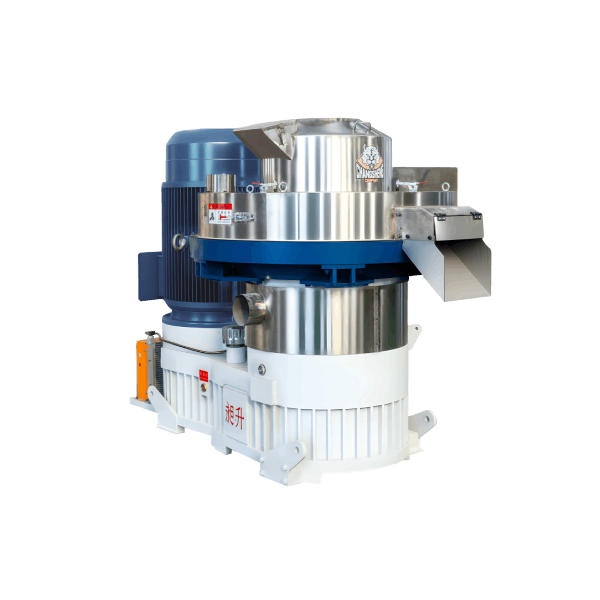
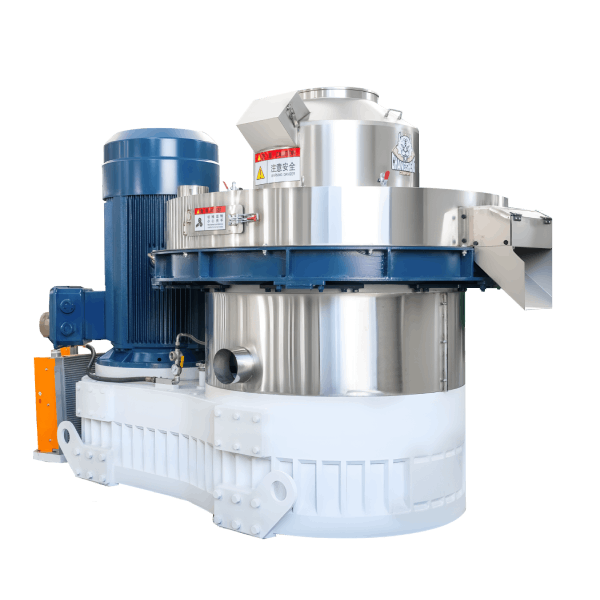
Pellet Mill Roller Stuck: How to Diagnose and Free a Stuck Roller Without Damaging the Die
News 2026-10-12
A pellet mill roller stuck is a specific failure. It is not the same as a worn die or a jammed die chamber. A stuck roller means the roller cannot rotate freely on its shaft or its bearing, so it cannot press material into the die. The mill may still run, but output drops, motor load rises, and if the roller cannot rotate, the die surface wears unevenly and the roller surface flats.
The practical question for an operator or maintenance engineer is not whether the roller is broken. The real question is where the roller stopped rotating freely, and why. This guide answers that question in order.
This page is written for plant operators, maintenance engineers, and procurement managers who need to diagnose and free a stuck roller without damaging the die or the roller assembly. It covers the definition of a stuck roller, the common causes, a step-by-step diagnosis, the difference between flat die and ring die roller behavior, the difference between feed pellet and biomass pellet roller behavior, cold climate and humid climate effects, and the operating and design changes that prevent the problem from returning. For the die wear problem, see the pellet machine die worn out page on this site. For the jamming problem, see the pellet machine keeps jamming page on this site. For the general machine concept, see the pellet mill page on this site.
What “Roller Stuck” Actually Means
“Roller stuck” is used to describe several different symptoms. They should be separated before diagnosis begins.
The roller cannot rotate at all, even by hand.
The roller rotates by hand but does not rotate during operation.
The roller rotates with high resistance or with a rough feeling.
The roller rotates but stops when material enters the die chamber.
One roller rotates freely, another roller is stuck.
The roller rotates but the surface has developed flat spots or grooves.
Each symptom points to a different cause. Treating them as one problem leads to unnecessary part replacement.
The Roller Assembly: Where Movement Can Stop
A roller assembly has several parts that must move freely for the roller to rotate.
The roller shell surface against the die.
The roller bearing inside the shell.
The roller shaft and the shaft mounting.
The roller clearance adjustment mechanism.
The lubrication path to the bearing.
The die surface against the roller.
Movement can stop at any of these points. Diagnosis should follow the movement path in order, from the roller surface to the bearing and to the shaft.
Roller Bearing Types and Their Behavior
Roller bearings differ in load capacity and in sensitivity to lubrication. The main types used in pellet mill rollers are spherical roller bearings, cylindrical roller bearings, and tapered roller bearings.
Spherical roller bearings carry high radial load and tolerate some shaft misalignment. They are common in ring die rollers. They require good lubrication and are sensitive to contamination.
Cylindrical roller bearings carry very high radial load and run with low friction. They require precise alignment and are less tolerant of misalignment than spherical roller bearings.
Tapered roller bearings carry combined radial and axial load. They require correct preload and are sensitive to incorrect installation and to lubrication failure.
The correct bearing type depends on the machine design and on the roller load. A bearing that is undersized or of the wrong type for the application will run hot and may seize earlier than expected. The correct type should always come from the equipment manufacturer’s manual.
Roller Shell Material and Surface Hardness
Roller shell material and surface hardness affect roller behavior. Hardened roller shells resist wear and maintain their grip on the material. Softer roller shells wear faster and can develop flat spots and grooves, which affect roller rotation and pellet formation. The correct roller shell material and hardness depend on the feedstock abrasiveness and on the die specification, and should be confirmed with the equipment manufacturer.
Roller Shaft and Mounting
Roller shaft material and mounting method affect roller movement. A shaft that is bent, worn, or incorrectly mounted prevents the roller from rotating freely. The mounting must allow the roller to rotate with the correct clearance and must hold the roller in alignment with the die. A bent shaft or a damaged mounting is usually the result of an impact event or of incorrect assembly.
Roller Lubrication System
Roller lubrication may be manual, automatic, or centralized. Manual lubrication depends on the operator and is sensitive to missed intervals. Automatic lubrication delivers lubricant at set intervals and is more reliable, but requires correct lubricant type and correct settings. Centralized lubrication delivers lubricant to multiple points from a single source and is common in larger mills.
The lubrication system type affects roller reliability. A manual system with missed intervals is more likely to cause bearing seizure than an automatic system with correct settings. The correct lubricant type and grade depend on the bearing type, operating temperature, and machine design, and should be confirmed with the equipment manufacturer.
Flat Die vs Ring Die Roller Behavior
Roller behavior differs between flat die and ring die machines.
A flat die machine uses a flat plate die. Rollers sit on top of the die, and material is spread across the die by roller rotation and gravity. In flat die machines, rollers rotate in a horizontal plane. A stuck roller in a flat die machine usually shows up as an uneven ring of material on the die surface, or as a section of the die that produces no pellets. Roller access is usually from the top, which makes inspection easier.
A ring die machine uses a vertical ring die. Rollers sit inside the ring and press material outward against the die. In ring die machines, rollers rotate in a vertical plane. A stuck roller in a ring die machine usually shows up as an uneven load on the motor, or as a section of the die that fills with material. Roller access is from the side, and the die chamber must be opened carefully.
In practice, the same “roller stuck” symptom may have different causes on flat die and ring die machines. The diagnosis should start by confirming which machine type is in use.
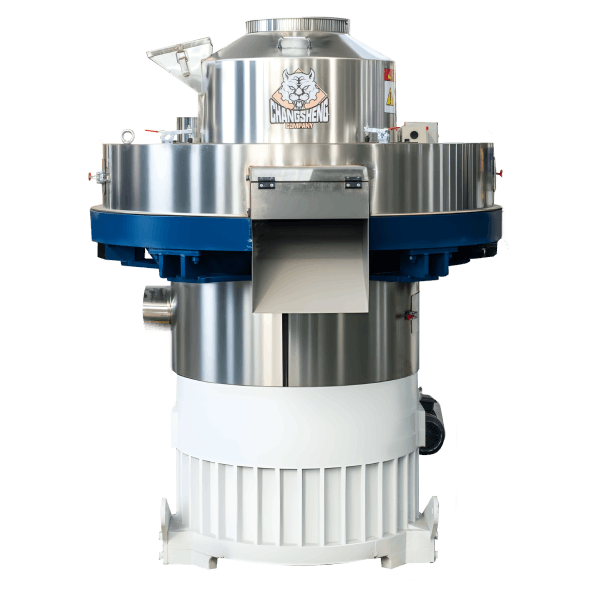
Feed Pellet vs Biomass Pellet Roller Behavior
Roller behavior also differs between feed pellet and biomass pellet production.
Feed pellets usually use steam conditioning. The material enters the die chamber warm and with a controlled moisture, which improves binding and reduces friction. Feed pellet roller seizure is usually related to moisture consistency, conditioner performance, and lubrication condition.
Biomass pellets usually rely on friction heat generated in the die. The material enters the die chamber at ambient temperature, and friction is higher. Biomass pellet roller seizure is usually related to high die temperature, abrasive material, and lubrication condition. High roller temperature reduces lubricant viscosity and can accelerate bearing wear.
A roller specification that works for feed pellets may not work for biomass pellets, and vice versa. The roller material, hardness, and clearance should be selected based on the actual application.
Cold Climate and Humid Climate Effects
Climate affects roller behavior.
In cold climate, lubricant viscosity increases, which reduces lubricant flow to the bearing at startup. If the bearing does not receive lubricant, it can run dry and seize. Cold climate also makes material stiffer, which increases roller load. Cold climate roller problems are usually related to lubricant flow and to insufficient warm-up before full load.
In humid climate, material can absorb moisture from the air. High moisture can cause material to build up between the roller and the die, which can lock the roller. Humid climate also increases corrosion risk on the roller shaft and mounting. Humid climate roller problems are usually related to material build-up and to corrosion protection.
In both climates, the roller should be inspected more frequently than in stable indoor conditions.
Startup vs Steady-State Roller Behavior
Roller behavior differs between startup and steady-state operation.
During startup, the die is cold, material is not yet soft, and lubricant may not have reached the bearing. Roller load is high and lubrication is weak. Startup is the period with the highest risk of roller seizure and of material build-up.
During steady-state operation, die temperature is stable and lubricant has reached the bearing. Roller load is more even. Steady-state is the period when gradual wear, contamination, and clearance drift are more likely to cause roller problems.
The diagnosis should consider which phase the problem occurred in, because the cause is often different.
Material Slip Between Roller and Die
Material slip occurs when the roller cannot grip the material and the material slides between the roller and the die instead of being pressed into the die holes. Material slip increases roller friction, roller temperature, and bearing load. It is usually caused by moisture out of range, particle size out of range, roller clearance out of adjustment, or a worn roller surface. Material slip often appears before a roller seizes, and it should be treated as an early warning sign.
Common Causes of a Stuck Pellet Mill Roller
Bearing Seizure
Bearing seizure is the most common cause of a stuck roller. The bearing loses lubrication, overheats, and seizes. After seizure, the roller cannot rotate. Bearing seizure is usually caused by insufficient lubrication, contaminated lubricant, or a worn bearing. The likelihood depends on bearing type, lubrication system, and operating temperature.
Insufficient or Wrong Lubrication
Insufficient lubrication causes the bearing to run dry and overheat. Wrong lubricant type or wrong lubricant grade causes the bearing to run with high resistance or to lose lubrication at high temperature. Common lubricant types for roller bearings include lithium-based grease and high-temperature polyurea grease. The correct type and grade depend on the bearing type, operating temperature, and machine design, and should be confirmed with the equipment manufacturer.
Contaminated Lubricant
Dust, moisture, and metal particles in the lubricant cause the bearing to wear faster and to seize. Contamination is more common in biomass pelletizing, where dust is present in the die chamber. Contamination can be checked by inspecting the lubricant color, texture, and by checking for metal particles with a magnet or by oil analysis where available.
Worn or Damaged Bearing
A worn bearing produces vibration and heat, which can lead to seizure. Vibration can be checked with a vibration meter at the bearing housing, or by hand-feel on the roller housing where the design permits. A temperature rise at the bearing housing compared to the normal baseline is also an indicator. A damaged bearing, such as a cracked race or a broken cage, seizes quickly and can damage the roller shaft.
Roller Clearance Out of Adjustment
If roller clearance is too small, the roller is pressed against the die with excessive force, which increases bearing load and heat. If clearance is too large, the roller does not grip material, and material can build up between the roller and the die, which can lock the roller. Roller clearance should be set according to the supplier procedure, and the correct value depends on die size, roller size, feedstock, and machine design.
Material Build-Up Between Roller and Die
Hard material, sticky material, or foreign material can build up between the roller and the die, which stops the roller from rotating. This is common when material is wet, when particle size is inconsistent, or when foreign material enters the die chamber. The effect depends on feedstock type, die specification, and feeder design.
Die Surface Damage
A damaged die surface, such as a raised burr or a broken die hole edge, can stop the roller from rotating or can cause the roller to rotate with high resistance. Die surface damage can be checked with a straight edge, a feeler gauge, and by visual inspection of the die hole edges.
Roller Shaft or Mounting Damage
A bent roller shaft or a damaged roller mounting prevents the roller from rotating freely. Shaft condition can be checked by rotating the roller by hand and by checking for runout with a dial indicator. Mounting condition can be checked by inspecting the mounting surfaces and the fasteners for damage or wear.
Abnormal Operating Load
Repeated overload events, high die temperature, and unstable feed increase the load on the roller bearing, which can lead to seizure.
Step-by-Step Diagnosis
The diagnosis should follow the movement path in order.
Step 1: Confirm the Symptom
Record exactly what happens. Does the roller rotate by hand? Does it rotate during operation? Does it stop when material enters? Does one roller behave differently from another? Write down the sequence, because the sequence points to the cause. Note whether the problem occurred during startup or during steady-state operation.
Step 2: Stop the Machine and Lock Out the Power
Before opening the die chamber, stop the machine, lock out the power, and confirm that the die chamber is at a safe temperature. Do not open the die chamber while the machine is running or while the die is hot.
Step 3: Check the Roller by Hand
With the power locked out, try to rotate the roller by hand. A roller that rotates freely is not seized. A roller that does not rotate is seized or blocked. A roller that rotates with high resistance or with a rough feeling has a bearing problem. A roller that rotates but has flat spots or grooves has a surface problem.
Step 4: Check for Material Build-Up
Inspect the space between the roller and the die. Look for compacted material, hard lumps, or foreign objects. If material is built up between the roller and the die, the roller may be locked by the material rather than by the bearing.
Step 5: Check the Die Surface
Inspect the die surface for burrs, raised edges, or broken die hole edges. A damaged die surface can stop the roller from rotating.
Step 6: Check Roller Clearance
Check roller clearance against the supplier specification. If clearance is too small, the roller may be pressed against the die. If clearance is too large, material may build up between the roller and the die.
Step 7: Check Lubrication
Check the lubrication system. Confirm that lubricant is reaching the bearing, and that the lubricant type and grade match the machine specification. Check for contaminated lubricant, discolored lubricant, or metal particles in the lubricant. For manual systems, confirm that the lubrication interval has been followed.
Step 8: Check the Bearing and Roller Shaft
If the roller does not rotate after material build-up and die damage have been ruled out, the bearing or the roller shaft is the likely cause. The roller assembly should be removed according to the supplier procedure, and the bearing, shaft, and mounting should be inspected. Check for shaft runout, mounting surface damage, and bearing condition.
Step 9: Check the Operating Record
Review the operating record for overload events, die temperature, moisture variation, and feed rate. These conditions affect roller load and can point to the cause.
How to Free a Stuck Roller Safely
The method depends on the cause. The following actions are listed in order of increasing risk.
If the cause is material build-up, remove the material with the correct tool, then rotate the roller by hand to confirm that it moves freely.
If the cause is die surface damage, correct the die surface according to the supplier procedure, then rotate the roller by hand.
If the cause is roller clearance, adjust clearance according to the supplier procedure, then rotate the roller by hand.
If the cause is lubrication, restore lubrication and rotate the roller by hand. If the roller still does not rotate, the bearing may already be damaged.
If the cause is bearing seizure or shaft damage, do not force the roller to rotate. Forcing a seized roller can damage the die surface and the roller shaft. The roller assembly should be removed and repaired or replaced according to the supplier procedure.
What to Check Before Restarting
Before restarting the machine, the following should be checked.
Roller clearance should be correct.
Roller surface should be free of flat spots, grooves, and material build-up.
Die surface should be flat, clean, and free of burrs.
Lubrication should be restored and confirmed to be reaching the bearing.
Bearing should rotate freely and without noise.
Die temperature should be within the normal range for the current feedstock.
Feed rate should be set for the current feedstock and moisture.
Preventive Measures
Roller seizure can be prevented with a few routine practices.
Check lubrication before each production run, and confirm that lubricant is reaching the bearing. For manual systems, use a checklist to confirm the interval.
Check roller clearance at planned intervals.
Check roller surface condition for flat spots and grooves.
Check for material build-up between the roller and the die after any jam or overload event.
Keep a log of lubrication, roller clearance, die temperature, motor current, and output, so that changes are visible before they become failures.
Use the correct lubricant type and grade for the operating temperature.
Keep spare bearings, roller shells, and shaft components on site for quick replacement.
In cold climate, warm up the machine and the lubricant before full load. In humid climate, check for corrosion and for material build-up more frequently.
Effect on Energy Consumption, Die Life and Pellet Quality
A stuck roller increases energy consumption and reduces die life. When the roller cannot rotate, the motor continues to draw power while producing no output. When the roller surface develops flat spots, the roller does not press material evenly, which causes uneven die wear and reduces pellet quality. When the roller stops during production, material builds up in the die chamber, which can lead to a jam and to further damage.
The effect on cost per ton is significant. Output drops while power consumption continues. Fines increase, which reduces usable product. Die wear accelerates, which increases die replacement frequency. Downtime increases, which reduces effective production hours. For these reasons, a stuck roller should be corrected quickly, not only for output reasons but also for cost per ton, die replacement frequency, and product quality.
When to Call the Supplier
Contact the supplier if the roller does not rotate after material build-up and die damage have been ruled out, if the bearing has seized, if the roller shaft is bent or damaged, if the roller mounting is damaged, if the roller surface has flat spots or grooves that cannot be corrected, or if the problem returns after corrective action. These conditions require technical support, and often require new roller components.
Frequently Asked Questions
Why is my pellet mill roller stuck?
A stuck roller is usually caused by bearing seizure, insufficient or wrong lubrication, contaminated lubricant, worn or damaged bearing, roller clearance out of adjustment, material build-up between roller and die, die surface damage, roller shaft or mounting damage, or abnormal operating load. Diagnosis should follow the movement path from the roller surface to the bearing and to the shaft. The cause is often different when the problem occurs during startup compared to steady-state operation.
Can a stuck roller be freed without removing it?
If the cause is material build-up, die surface damage, or roller clearance, the roller can usually be freed without removing it. If the cause is bearing seizure or shaft damage, the roller should not be forced to rotate. Forcing a seized roller can damage the die surface and the roller shaft.
How do I check if the bearing is the problem?
With the power locked out, try to rotate the roller by hand. A roller that rotates with high resistance or with a rough feeling has a bearing problem. A roller that does not rotate at all may be seized. Confirm the cause by removing the roller assembly and inspecting the bearing, shaft, and mounting. Vibration measurement at the bearing housing and a temperature rise at the bearing housing are also useful indicators.
Can roller clearance cause the roller to stick?
Yes. If clearance is too small, the roller is pressed against the die with excessive force, which increases bearing load and heat. If clearance is too large, material can build up between the roller and the die, which can lock the roller. Roller clearance should be set according to the supplier procedure, and the correct value depends on die size, roller size, feedstock, and machine design.
How can I prevent roller seizure in the future?
Check lubrication before each run, check roller clearance at planned intervals, check roller surface condition, check for material build-up after any jam or overload, keep a log of lubrication, clearance, die temperature, motor current, and output, use the correct lubricant type and grade, keep spare bearings and roller components on site, and adjust the warm-up and inspection routine for cold and humid climates.
When should I replace the roller instead of repairing it?
The roller should be replaced when the roller surface has flat spots or grooves that cannot be corrected, when the bearing seat is damaged, when the shaft is bent or damaged, when the roller shell is cracked, or when the roller has reached the end of its recommended service life under the current operating conditions. The correct decision should be confirmed with the supplier based on the actual condition of the roller.