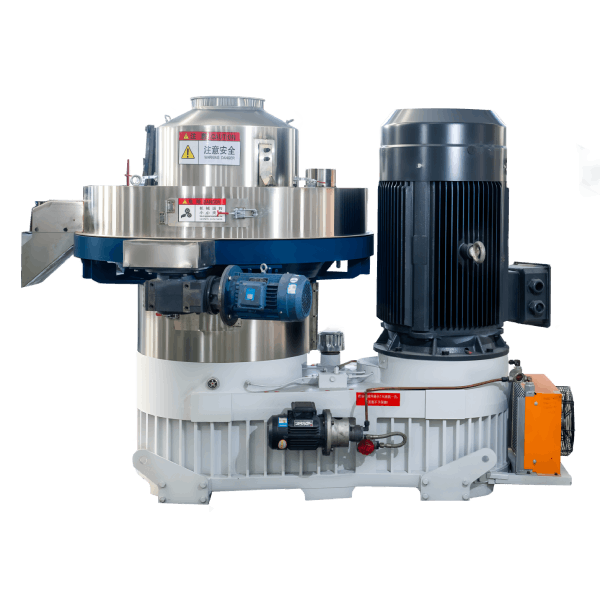
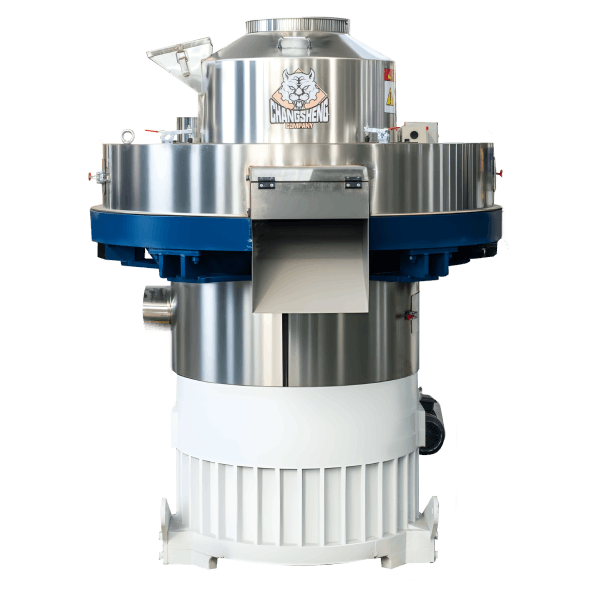
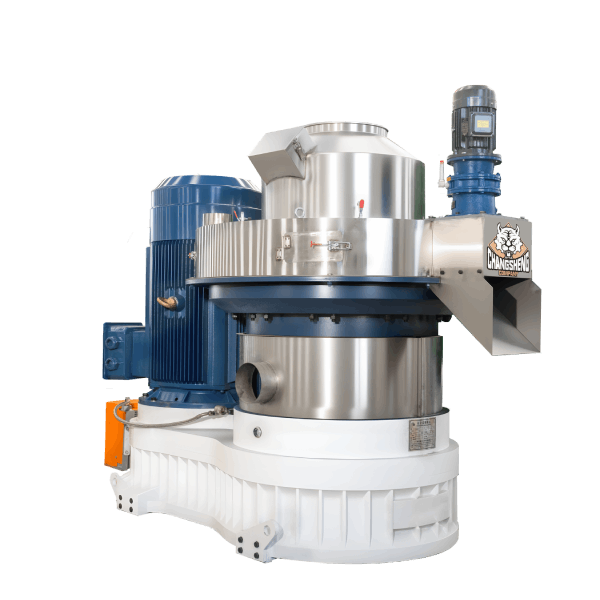
Pellet Mill for Tree Surgeon: Selection & Cost Guide
News 2026-09-17
If you run a tree surgery or arboricultural business, you deal with woody waste every working day—branches, trunk sections, prunings, and green material from felling, pruning, and stump grinding. For most tree surgeons, this waste is either chipped and sold as wood chips, given away, or disposed of at a cost. What many tree care business owners have not fully evaluated is whether this material can be converted into pellets—and whether the investment makes sense compared to selling wood chips or continuing current practices.
This guide is written for tree surgeons, arboricultural contractors, and tree care business owners who are evaluating whether a pellet mill fits their operation. It covers material feasibility, equipment selection, realistic costs, installation, maintenance, and the procurement decisions that determine whether the investment works or becomes an expensive mistake.
A note before we begin: tree surgery waste is different from sawmill sawdust or woodworking shavings. It is often wetter, more variable in size, and includes a mix of woody and green material. These characteristics affect equipment selection and operating cost. This guide addresses those differences directly.
Why Tree Surgeons Consider Pellet Mills
The Real Value of Tree Surgery Waste
Tree surgery waste has value, but most tree surgeons capture only part of it. Wood chips are sold or given away as mulch or biomass fuel. Branches and trunk sections may be sold as firewood or taken to landfill. In both cases, the material leaves the business at a relatively low value per tonne.
Pelletizing offers a different route: converting woody waste into a dense, consistent fuel product that can be used for heating or sold into the pellet market. The value per tonne is typically higher than wood chips, but the processing requirements—drying, grinding, densifying—are also higher.
The question for a tree surgeon is whether the additional value justifies the additional investment and operational complexity.
Selling Wood Chips vs Pelletizing
Most tree surgeons already have a chipper. The comparison between selling wood chips and pelletizing is not about replacing the chipper—it is about adding a step that increases the value of the material.
| Route | Product | Typical Value | Requirements |
|---|---|---|---|
| Wood chips | Chipped material | Low to moderate | Chipper only |
| Firewood | Cut and split logs | Moderate | Chainsaw, splitter, drying |
| Pellets | Densified fuel | Higher | Chipper, grinder, dryer, pellet mill |
Wood chips are the simplest product but have the lowest value per tonne. Pellets require more equipment and processing but produce a higher-value fuel. The right choice depends on your waste volume, available time, capital, and local market.
When Pelletizing Does Not Make Sense for Tree Surgeons
A pellet mill is not the right choice for every tree surgery business. It may not make sense if:
- Your waste volume is small or highly seasonal.
- You do not have time to manage drying, grinding, and pelletizing alongside tree work.
- Your site has limited power and no budget for an upgrade.
- You have no use for pellets and no local market.
- You lack storage for raw material and finished pellets.
Be honest about these constraints. A pellet mill that sits idle because the operator is busy with tree work is worse than no pellet mill at all.
What Tree Surgery Waste Can Be Pelletized?
Material Suitability for Arboricultural Waste
Not all tree surgery waste pelletizes equally. The table below summarizes common materials.
| Material | Pelletability | Notes |
|---|---|---|
| Branches and prunings | Good | Requires chipping and grinding; lignin content aids binding |
| Trunk sections | Good | Requires chipping and grinding; consistent material |
| Softwood branches (pine, spruce, fir) | Excellent | Natural lignin content acts as binder |
| Hardwood branches (oak, ash, beech) | Good | Higher density; may need more compression |
| Mixed tree waste | Good | Consistency varies; blending recommended |
| Leaves and green material | Poor | Low lignin; high moisture; difficult to pelletize alone |
| Stump grindings | Poor to fair | Mixed with soil and stones; requires screening |
| Treated or painted wood | Prohibited | Chemical contamination; regulatory violation |
The best feedstock for a tree surgery pellet mill is clean, untreated woody material—branches, trunk sections, and prunings. Leaves, green material, and stump grindings are difficult to pelletize on their own because of low lignin content, high moisture, and contamination. They can be blended in small proportions with woody material, but should not be the primary feedstock.
The Moisture Challenge with Fresh Tree Waste
Moisture is the single biggest challenge in pelletizing tree surgery waste. Fresh branches and trunk wood typically contain 40–60% moisture. For pelletizing, the ideal moisture range entering the pellet mill is 12–15% (wet basis).
This means drying is almost always required, and the drying load is significant. A tree surgery operation processing fresh woody waste needs a dryer sized for high moisture removal, not a small auxiliary unit.
Options for tree surgery operations include:
- Natural air drying: Spreading chipped material in a covered, ventilated area. Slow but low-cost. Suitable for small volumes and dry climates.
- Rotary dryer: Heated by gas, biomass, or waste wood. Suitable for consistent production and high moisture loads.
- Belt dryer: Gentler drying, better for mixed material. Higher capital cost.
- Blending: Mixing wet and dry material to reach target moisture. Requires careful measurement.
Do not underestimate the drying requirement. Many small-scale pellet operations fail because the drying system is undersized for the actual moisture content of the feedstock.
Chipping, Grinding, and Particle Size Requirements
Pellet mills perform best with consistent particle size. For wood pellets, the ideal range is typically 3–6 mm. Tree surgery waste arrives in highly variable sizes—branches, trunk sections, and chips.
Pre-processing typically includes:
- Chipping: Reduces branches and trunk sections to wood chips. Most tree surgeons already own a chipper.
- Grinding: Reduces chips to consistent particle size using a hammer mill.
- Screening: Removes oversized pieces and foreign objects.
If you already own a chipper, you may only need a hammer mill to reduce chips to the required particle size. If you are starting from raw branches or trunk sections, you will need both chipping and grinding equipment.
Materials to Avoid
Some materials should never go into a pellet mill:
- Treated or painted wood: Contains chemicals that are regulated and must not be burned or pelletized.
- Pressure-treated lumber: Contains preservatives that contaminate pellets and damage equipment.
- Stump grindings with soil and stones: Contaminants damage dies and reduce pellet quality.
- Leaves and green material in high proportion: Low lignin and high moisture make them unsuitable as primary feedstock.
- Contaminated waste: Material mixed with plastic, metal, or other debris must be excluded.
Segregating waste streams at the source is the most effective way to ensure consistent pellet quality.
Flat Die vs Ring Die for Tree Surgery Operations
Flat Die Mills for Small Tree Surgery Businesses
Flat die pellet mills are suitable for small tree surgery operations. They offer:
- Lower capital cost
- Simpler construction and easier maintenance
- Suitable for capacities under 500 kg/h
- Easier to operate without specialized training
- Compact footprint
Flat die mills have limitations. Die life is shorter (typically 300–600 hours), pellet quality can be more variable, and energy consumption per tonne is higher. For a tree surgery business processing less than 500 kg/h of pellets, a flat die mill is often the practical choice.
Ring Die Mills for Larger Operations
Ring die pellet mills are suitable for larger tree surgery operations or businesses that process significant volumes of woody waste. They offer:
- Higher capacity (typically 500 kg/h – 5 t/h+)
- Better pellet quality and density
- Longer die life (typically 800–1,500 hours)
- Lower specific energy consumption at scale
For a tree surgery business producing more than 500 kg/h of pellets, or planning to sell pellets commercially, ring die is the appropriate technology.
Comparison Table
| Factor | Flat Die | Ring Die |
|---|---|---|
| Typical capacity | 30–500 kg/h | 500 kg/h – 5 t/h+ |
| Pellet quality | Moderate, variable | High, consistent |
| Die life | 300–600 hours | 800–1,500 hours |
| Specific energy | Higher per tonne | Lower at scale |
| Capital cost | Lower | Higher |
| Maintenance complexity | Low | Moderate |
| Best for | Small tree surgery operations | Larger or commercial production |
How to Size a Pellet Mill for Your Tree Surgery Business
Measuring Your Actual Waste Volume
Sizing begins with your actual waste generation, not your desired output. Follow this sequence:
- Measure your woody waste production. Weigh or estimate the woody waste you generate over a typical month, accounting for seasonal variation.
- Separate woody from green material. Only woody material is suitable for pelletizing. Leaves and green material should be excluded from the calculation.
- Account for moisture loss. Fresh woody waste at 50% moisture dried to 14% loses roughly 42% of incoming weight.
- Determine operating hours. A pellet mill running 4 hours per day at 200 kg/h produces 800 kg per day. Running 8 hours produces 1.6 tonnes.
- Match capacity to feedstock. Do not size the mill larger than your reliable woody waste supply.
- Add a margin. A 10–15% capacity buffer accommodates variability and maintenance downtime.
Seasonal Variability and Storage
Tree surgery waste is seasonal. In many regions, the majority of woody waste is generated during pruning and felling seasons, while winter months produce less. A pellet mill sized for peak season will be underutilized for part of the year.
Options for managing seasonal variability:
- Storage: Stockpile chipped material for processing during off-season. Requires covered storage to prevent moisture increase.
- Sizing for average: Size the mill for average annual throughput, and accept occasional processing delays during peak season.
- Contract processing: Process waste from other tree surgeons or landscapers during off-season to improve utilization.
Power Supply Constraints
Pellet mills require significant electrical power. A small flat die mill may need 7.5–30 kW, depending on capacity. A ring die mill for 1 t/h may require 90–160 kW. Confirm your site’s electrical supply can handle the connected load.
If your site has limited power, you may need to:
- Operate the pellet mill during off-peak hours
- Upgrade your electrical service
- Choose a smaller mill with lower power demand
- Use a diesel-powered option if grid power is unavailable
Common Sizing Errors
- Sizing for total tree waste, not woody fraction. Leaves and green material are not suitable feedstock.
- Ignoring moisture variability. A mill sized for dry chips will struggle with fresh tree waste.
- Underestimating power requirements. Confirm the actual connected load, not just the pellet mill motor.
- Forgetting about storage. Pellets and raw material both need protected storage.
- Overlooking seasonal variability. A mill sized for peak season may be underutilized for much of the year.
Complete Setup for Tree Surgery Operations
Process Flow for Arboricultural Waste Pelletizing
The standard process flow for tree surgery waste pelletizing is:
Woody waste collection → Chipping → Storage → Grinding → Drying → Pellet mill → Cooling → Screening → Storage/Bagging
Each stage has a defined function. Skipping or undersizing any stage creates a bottleneck that limits real output.
Drying Options for High-Moisture Material
Drying is the most challenging and energy-intensive part of tree surgery waste pelletizing. Options include:
- Natural air drying: Low cost but slow and weather-dependent. Suitable for small volumes and dry climates.
- Rotary dryer: Heated by gas, biomass, or waste wood. Suitable for consistent production and high moisture loads.
- Belt dryer: Gentler drying, better for mixed material. Higher capital cost.
- Blending: Mixing wet and dry material to reach target moisture. Requires careful measurement.
For tree surgery operations, a rotary dryer is the most common choice because it handles high moisture content and variable material. Using chipped waste wood as fuel can reduce drying cost.
Cooling, Screening, and Storage
Freshly made pellets are hot (70–90°C) and soft. They must be cooled before storage or bagging. A counter-flow cooler or perforated tray system can work for small volumes. Screening removes fines and oversize particles; fines can be recycled.
Storage must protect pellets from moisture. Covered, ventilated storage is essential. Fines and moisture degrade pellet quality quickly.
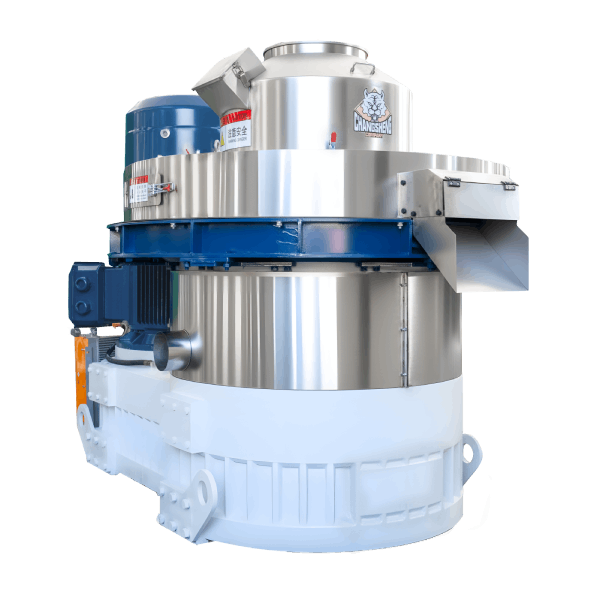
Integration with Existing Chipper Operations
Most tree surgeons already own a chipper. Integrating a pellet mill into existing operations means adding grinding, drying, and pelletizing equipment after the chipper. The chipper output—wood chips—becomes the input for the hammer mill.
This integration has advantages:
- The chipper is already owned and operated.
- Chips can be stockpiled for processing during off-season.
- The existing material handling workflow is partially reused.
It also has challenges:
- The chipper output may need screening before grinding.
- Chip moisture varies and must be managed.
- Additional equipment requires additional space and power.
Investment and Payback for Tree Surgeons
CAPEX Breakdown
Capital cost for a tree surgery pellet operation varies widely. As a general reference for a 200–500 kg/h line:
| Item | Approximate Share |
|---|---|
| Pellet mill | 30–40% |
| Hammer mill | 5–10% |
| Dryer | 15–25% |
| Cooler and screener | 5–10% |
| Conveyors and feeding | 5–10% |
| Electrical and control | 5–10% |
| Installation and commissioning | 10–15% |
These are indicative ranges. Actual costs depend on specifications, local labor, import duties, and freight. If you already own a chipper, that cost is not included.
OPEX Breakdown
Operating cost per tonne of pellets typically includes:
- Electricity: The largest single cost. Wood pelletizing consumes roughly 80–120 kWh per tonne, depending on feedstock and equipment efficiency.
- Thermal energy for drying: Significant for high-moisture tree waste. Using chipped waste wood as fuel can reduce this cost.
- Labor: A small tree surgery line may need 1–2 operators, depending on automation.
- Wear parts: Dies and rollers are the main consumables.
- Maintenance: Bearings, belts, screens, and lubrication.
Payback Calculation Example
Assume a tree surgery business generates 200 tonnes per year of woody waste suitable for pelletizing. After drying and processing, yield is approximately 150 tonnes of pellets.
If pellets are used for heating and displace $200/tonne of heating oil, the annual savings are $30,000. If operating cost is $70/tonne, the net savings are $19,500 per year. If total capital investment is $80,000, simple payback is approximately 4.1 years.
If pellets are sold instead of used, the calculation changes. At $150/tonne, gross revenue is $22,500. After operating costs of $10,500, gross margin is $12,000. Payback is approximately 6.7 years.
The self-supply model usually offers faster payback because you are displacing retail energy prices.
Comparison with Selling Wood Chips
For tree surgeons who already sell wood chips, the incremental investment in pelletizing must be justified by additional return. Wood chips have lower processing requirements but also lower value per tonne. Pellets require drying, grinding, and densification equipment but produce a higher-value fuel product.
The decision depends on:
- Whether you have a use for pellets (heating) or a market to sell them
- The volume of woody waste available
- Your willingness to manage a more complex operation
- Local wood chip prices and pellet market prices
Key Technical Parameters
Motor Power, Die Size, and Compression Ratio
- Motor power: Must match the die and feedstock. Undersized motors stall; oversized motors waste energy. For a 200–500 kg/h flat die mill, typical motor power is 15–30 kW.
- Die diameter and compression ratio: The ratio of die hole length to diameter. Higher ratio increases pellet density but also energy consumption and die wear. For wood pellets, compression ratios of 1:5 to 1:8 are common.
- Die speed: Affects pellet quality and throughput. Higher speed increases capacity but may reduce density.
These parameters must be specified together. A pellet mill is not a commodity—it is a system that must be matched to your material and production targets.
Die and Roller Material
Dies are typically made from alloy steel or stainless steel. For wood pellets, hardened alloy steel with proper heat treatment offers the best balance of wear life and cost. Rollers should be matched to the die material and surface hardness.
Ask the supplier for material certificates and hardness test reports. This is a standard procurement practice for industrial equipment.
Safety and Compliance
Depending on your location, the equipment may need to comply with:
- CE marking (European Union)
- UKCA marking (United Kingdom)
- UL or CSA standards (North America)
- Local electrical codes
- Dust hazard classification (if applicable)
Confirm compliance requirements before purchase. Retrofitting for compliance is expensive and delays commissioning.
Installation and Operational Integration
Space, Dust, and Noise
A small pellet line (200–500 kg/h) typically requires 50–150 m² of covered space, depending on configuration and storage needs. Allow access for maintenance, material handling, and pellet storage.
Dust collection is essential for safety, environmental compliance, and housekeeping. Noise levels vary by machine type and can exceed 85 dB. Hearing protection and sound enclosure may be required.
Commissioning Checklist
- Foundation and anchor bolt drawings approved
- Power supply capacity confirmed
- Dust collection ductwork planned
- Material handling access clear
- Spare parts and tools on site
- Operator training scheduled
Maintenance and Troubleshooting
Daily and Weekly Checks
- Daily: Inspect die and rollers, check lubrication, monitor motor current, verify moisture.
- Weekly: Check belts, bearings, screens, and dust collection.
- Monthly: Inspect gearbox oil, coupling alignment, and electrical connections.
Wear Parts and Replacement
- Die: Replace when pellet quality drops, energy consumption rises, or visible wear exceeds limits.
- Rollers: Replace when surface wear reduces pellet density or throughput.
- Bearings: Monitor temperature and vibration. Replace at first sign of failure.
Common Problems and Fixes
- Pellets too soft: Check moisture, die compression ratio, and feedstock particle size.
- Mill choking: Reduce feed rate, check moisture, inspect die holes for blockage.
- Excessive die wear: Verify feedstock cleanliness, moisture, and compression ratio.
- High fines: Check cooler operation, screener condition, and pellet durability.
Most early-stage issues trace back to moisture control, feedstock consistency, or incorrect operating parameters. Supplier technical support is critical during this phase.
How to Evaluate a Pellet Mill Supplier
Questions to Ask
- What is the rated capacity for woody tree waste?
- What die and roller material are used?
- What is the expected die life for my feedstock?
- What is the warranty and spare parts pricing?
- What technical support is available after purchase?
- Can you provide references from similar tree surgery or arboricultural installations?
- Can you test my material?
Test Reports and Sample Validation
Before purchase, request:
- Material test report for die and roller
- Performance test data for similar feedstock
- Sample pellets produced from your material
- Warranty terms and spare parts pricing
After-Sales Support
Confirm:
- Installation and commissioning support
- Operator training availability
- Remote troubleshooting capability
- Spare parts delivery time
- Response time for technical issues
A supplier who cannot provide these is a risk, regardless of price.
Case Study: Tree Surgery Business in Northern Europe
Project Background
A tree surgery business in Northern Europe generating approximately 250 tonnes per year of woody waste faced rising disposal costs and high winter heating expenses. The business already owned a chipper and wanted to convert chipped waste into pellets for heating its workshop and drying facility.
Configuration and Results
The installed line included a hammer mill, a rotary dryer heated by waste wood, a flat die pellet mill (300 kg/h), a counter-flow cooler, and manual bagging. Feedstock was chipped branch wood and trunk sections, dried to 14% moisture.
Results after one year:
- Pellet output: approximately 180 tonnes per year
- Pellets used for heating, displacing heating oil
- Annual savings: approximately €28,000
- Payback period: 3.4 years
- Disposal cost eliminated
Lessons Learned
- Moisture control was the most critical factor for consistent pellet quality.
- Separating woody waste from leaves and green material improved pellet quality and reduced die wear.
- Storage capacity for chipped material was essential to manage seasonal variability.
- A chipper already owned by the business reduced capital cost significantly.
FAQ
Can I pelletize all my tree surgery waste?
No. Only clean, untreated woody material—branches, trunk sections, and prunings—is suitable for pelletizing. Leaves and green material have low lignin and high moisture, making them unsuitable as primary feedstock.
What is the minimum capacity for a pellet mill in a tree surgery business?
For self-supply heating, 100–200 kg/h can be viable. For selling pellets, 300–500 kg/h is generally the minimum for commercial viability.
How long does a pellet die last?
Die life varies with feedstock, moisture, and operation. For wood pellets in a flat die mill, 300–600 hours is typical. Ring die mills achieve 800–1,500 hours.
Do I need a dryer for tree surgery waste?
Almost always. Fresh tree waste contains 40–60% moisture. For pelletizing, moisture must be reduced to 12–15%. A dryer sized for high moisture removal is essential.
Can I use the same pellet mill for wood and other biomass?
In principle, yes, but dies and operating parameters must be matched to the material. Switching feedstocks requires adjustment and may reduce die life.
What certifications should I look for?
CE for Europe, UKCA for the UK, UL or CSA for North America, and ISO 9001 for quality management. Confirm requirements for your market.
How much space does a small pellet line need?
A 200–500 kg/h line typically requires 50–150 m², including storage and access.
What is the biggest mistake tree surgeons make when buying a pellet mill?
Underestimating moisture control and drying capacity. Tree surgery waste is wetter and more variable than sawmill or woodworking waste. The drying system must be sized for the actual moisture load.
About the Author
Zhang Wei – Senior International Sales Engineer, Shandong Changsheng Machinery Co., Ltd.
Zhang Wei has over 12 years of experience in the biomass pelletizing equipment industry, with extensive experience supporting tree surgery, arboricultural, and forestry projects across Europe, North America, and other regions. His background in mechanical engineering and international project execution has helped clients evaluate and select pellet mills for woody tree waste and mixed biomass materials.
With hands-on experience in both the manufacturing workshop and client-side operations, Zhang brings practical insights into successful equipment procurement—from material testing and moisture control to commissioning and long-term support.
CTA:
If you are evaluating a pellet mill for your tree surgery business and want a technical assessment based on your actual woody waste and production targets, contact our engineering team to request a preliminary configuration and budgetary estimate. We can also arrange a video factory tour and provide reference installations in your region.