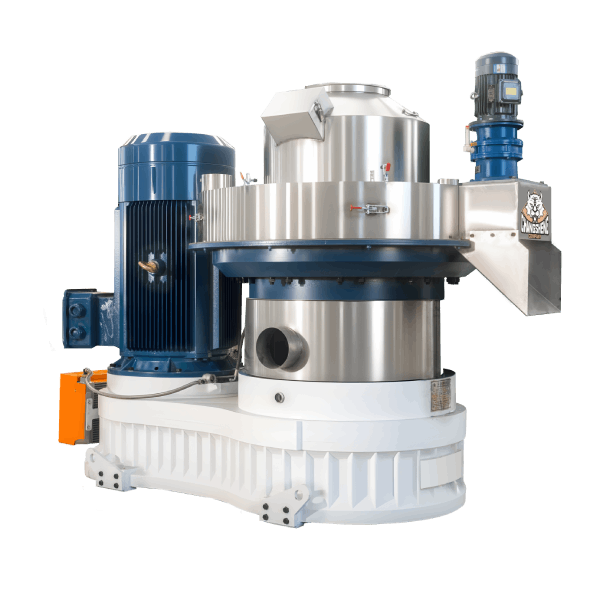
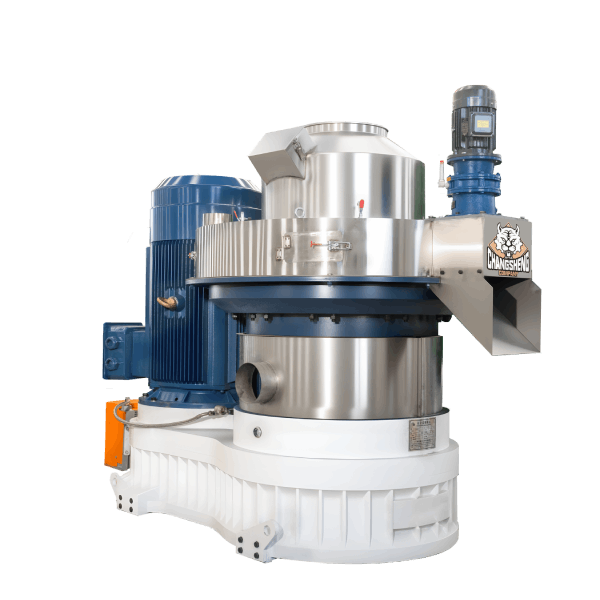
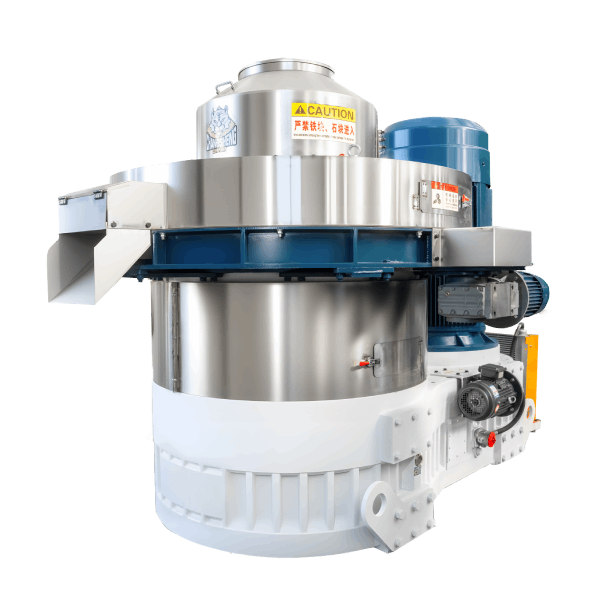
Pellet Machine Die Clamping Bolts M16-M30 | Hardware Guide
News 2026-06-26
Product Definition
Pellet machine die clamping bolts are high-strength fasteners that secure the ring die to the die holder or drive flange of a pellet mill, resisting extreme centrifugal forces and torsional loads during operation. These precision-ground bolts are critical safety components that require periodic inspection, torque verification, and replacement to prevent die loosening or catastrophic failure.
Technical Specifications & Performance Parameters
| Parameter | Value Range / Specification |
|---|---|
| Throughput capacity | 0.5 – 5.0 t/h (feedstock-dependent) |
| Main motor power | 30 – 160 kW (IE3 / IE4 compatible) |
| Ring die outer diameter | 400 – 800 mm |
| Bolt size (standard) | M16, M20, M24, M30 (depending on model) |
| Bolt grade | 10.9 or 12.9 (ISO 898-1) |
| Bolt length | 60 – 120 mm (grip length varies by die thickness) |
| Head type | Hexagon socket (ISO 4762) or standard hex head |
| Thread pitch | Fine (x1.5, x2.0) or coarse (x2.0, x2.5) |
| Torque specification | 300 – 800 Nm (depending on bolt size and grade) |
| Bolt quantity per die | 6 – 24 bolts (depending on die diameter) |
| Replacement interval | 2 – 4 die changes, or inspect annually |
| Bolt material | Chromium-molybdenum alloy steel (42CrMo4 or equivalent) |
| Surface treatment | Black oxide or zinc-plated (corrosion resistance) |
| Hardness | HRC 32 – 38 (Grade 12.9) |
| Yield strength (Grade 12.9) | ≥1,100 MPa |
| Tensile strength (Grade 12.9) | ≥1,220 MPa |
Structural Composition & Material Selection
Die clamping bolts comprise precision-engineered components with defined material grades:
Bolt Assembly
- Bolt body: Chromium-molybdenum alloy steel (42CrMo4 / AISI 4140)
- Thread rolling: Class 6g (ISO 965) for precise fit
- Head: Hexagon socket with broached recess for torque wrench
- Hardened layer: Induction-hardened thread roots (optional)
Washers (Included)
- Hardened flat washers: Spring steel (HRC 42–47)
- Belleville washers: Spring steel (for constant preload) – optional
Lubricant (Required)
- Anti-seize compound: Copper-based or molybdenum disulfide (MoS₂)
- Thread lubricant: For accurate torque application
Torque Hardware
- Torque wrench: Calibrated (±3% accuracy)
- Socket: Hexagon (for standard bolts) or hex key (for socket head bolts)
Manufacturing Process – Engineering Workflow
Step 1 – Die Removal Preparation
Stop pellet mill and lockout/tagout. Clean bolt heads and surrounding area to prevent contamination of bolt recesses.
Step 2 – Bolt Loosening & Removal
Loosen bolts in criss-cross pattern (one-quarter turn increments) to prevent die distortion. Remove bolts and inspect for wear, galling, or damage.
Step 3 – Die Replacement & Cleaning
Clean bolt holes and mating surfaces. Chase threads if damaged (use thread repair kit). Apply anti-seize compound to new bolts before installation.
Step 4 – Bolt Installation
Install bolts finger-tight, then torque in criss-cross pattern to specification (300–800 Nm). Use calibrated torque wrench. Apply two-stage torque: 60% then 100% of final torque. Mark each bolt after torquing.
Step 5 – Post-Installation Check
Rotate die manually to verify free movement. Re-torque bolts after 8 hours of operation (thermal expansion and seating). Check torque monthly.
Industry Comparison – Bolt Hardware Options
| Bolt Type | Grade | Tensile Strength | Torque Range | Typical Application |
|---|---|---|---|---|
| Premium Grade 12.9 Bolt | 12.9 | ≥1,220 MPa | 300 – 800 Nm | 24/7 industrial pellet mills |
| Standard Grade 10.9 Bolt | 10.9 | ≥1,040 MPa | 250 – 650 Nm | Intermittent operation |
| Economy Grade 8.8 Bolt | 8.8 | ≥800 MPa | 180 – 500 Nm | Low-duty applications |
| Hydraulic Clamping System | N/A | Hydraulic | N/A | Quick-change systems |
Differentiation (Shandong Changsheng Machinery):
Our die clamping bolts are manufactured to Grade 12.9 specification with induction-hardened thread roots for maximum fatigue resistance. Bolts are supplied with matched hardened washers and anti-seize compound – eliminating the need to source components separately. All bolts are serial-numbered and supplied with torque certification (traceable to ISO 6789). Replacement sets include sufficient bolts for complete die change (20–24 bolts per die).
Application Scenarios by Buyer Role
Distributors / Importers
Focus on bolt inventory for standard die sizes. Require cross-reference to OEM bolt specifications for popular pellet mill models.
EPC Contractors
Integrating die clamping hardware into maintenance kits. Need torque specifications and bolt grade documentation for contractor installation.
Engineering Consultants / Technical Advisors
Evaluate bolt safety – Grade 12.9 vs 10.9 fatigue performance. Require torque data for maintenance procedure development.
End-user Production Facilities
Operating with frequent die changes. Demand reliable bolts with consistent torque requirements and extended service life.
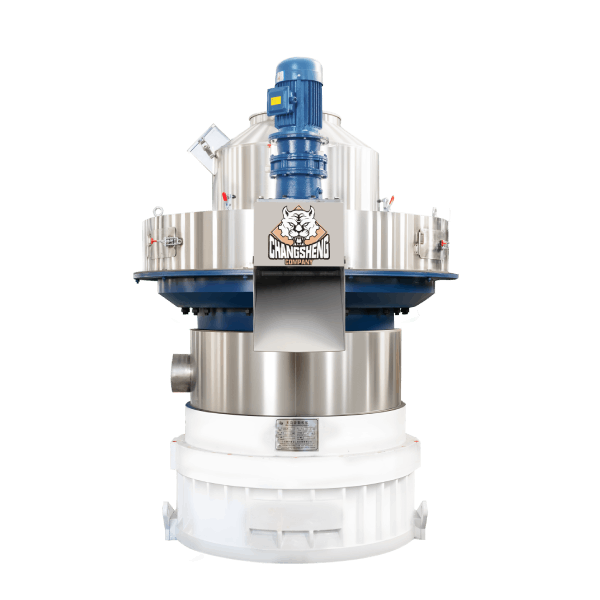
Core Pain Points & Engineering Solutions
Pain Point 1 – Bolt breakage during operation
Root cause: Over-torquing, fatigue from repeated use, or bolt grade below specification (Grade 8.8 rather than 12.9).
Solution: Grade 12.9 bolts with induction-hardened thread roots. Torque wrench (±3% accuracy) to prevent over-torquing. Replace bolts every 2–4 die changes.
Pain Point 2 – Bolts seizing in die holder
Root cause: Corrosion, galling, or insufficient anti-seize compound.
Solution: Use anti-seize compound at each installation. Fine thread pitch reduces galling risk. Replace corroded bolts immediately.
Pain Point 3 – Inconsistent torque application
Root cause: No torque wrench or uncalibrated wrench. Cross-tightening pattern not followed.
Solution: Calibrated torque wrench (annual recalibration). Criss-cross tightening pattern (4-stage: 25%, 50%, 75%, 100%). Mark bolts after torquing.
Pain Point 4 – Hidden damage from fatigue cracks
Root cause: Bolts undergo cyclic stress during operation – micro-cracks develop before visible failure.
Solution: Replace bolts every 2–4 die changes (or annual, whichever sooner). Magnetic particle inspection for critical applications.
Critical Risk Warnings & Mitigation Measures
Risk 1 – Torque below specification causing die loosening
Mitigation: Use calibrated torque wrench. Verify torque in criss-cross pattern. Re-torque after 8 hours operation. Monthly torque check.
Risk 2 – Over-torquing causing bolt elongation or breakage
Mitigation: Use torque wrench set to specified torque. Never use extension bars on torque wrench. Know torque specification for bolt size and grade.
Risk 3 – Mixed bolt grades in same die
Mitigation: Replace all bolts as a set – never mix Grade 8.8, 10.9, and 12.9 bolts. Use bolts from same production batch.
Procurement Selection Guide – 7 Executable Steps
Step 1 – Identify existing bolt specification
Record bolt size (M16–M30), grade (10.9 or 12.9), length, and thread pitch. Check if fine or coarse thread.
Step 2 – Verify torque specification
Consult manufacturer manual for torque specification (300–800 Nm based on bolt size and grade). Confirm with bolt supplier.
Step 3 – Determine replacement interval
Based on die change frequency and bolt condition. Standard: replace every 2–4 die changes. Annual replacement minimum.
Step 4 – Select bolt grade
Grade 12.9 for 24/7 industrial operation. Grade 10.9 for intermittent operation. Grade 8.8 not recommended for pellet mills.
Step 5 – Choose bolt material and coating
Chromium-molybdenum alloy steel (42CrMo4). Black oxide for standard, zinc-plated for corrosion resistance.
Step 6 – Procure complete bolt set
Buy full set (20–24 bolts per die) to ensure consistency. Include hardened washers and anti-seize compound in procurement.
Step 7 – Calibrate torque wrench
Calibrate torque wrench annually or after any impact. Document calibration certificate. Use torque wrench for every installation.
Engineering Case Study – Feed Mill in Vietnam
Project Background
A feed mill in Ho Chi Minh City operates a 75kW pellet mill with M24 die clamping bolts. Die changes occur every 800 hours – 4–5 changes annually.
Initial Problem
Bolts failed twice in 12 months – one complete bolt fracture requiring 8 hours downtime ($4,000 production loss). Inspection showed Grade 10.9 bolts were used – below specification. Torque was applied by “feel” – no calibrated torque wrench.
Root Cause Analysis
Grade 10.9 bolts insufficient for 24/7 operation – Grade 12.9 required. Inconsistent torque application (300–600 Nm variation) – no calibrated wrench. No replacement schedule – bolts reused 6+ times.
Solution Implemented
Replaced all bolts with Shandong Changsheng Grade 12.9 bolts (M24, 400 Nm specification). Supplied calibrated torque wrench (400 Nm). Implemented bolt replacement schedule (every 3 die changes). Torque log introduced.
Final Data Results (12-month average)
| Metric | Before (Grade 10.9, No Schedule) | After (Grade 12.9, Scheduled) |
|---|---|---|
| Bolt failures / year | 2 | 0 |
| Unplanned downtime (bolt failures) | 16 h/year | 0 h/year |
| Torque variation | ±150 Nm | ±20 Nm |
| Annual production loss (bolt failures) | $8,000 | $0 |
| Bolt replacement cost (annual) | $240 (only failed bolts) | $280 (full set, planned) |
Frequently Asked Questions (FAQ)
1. What grade of bolts are used for die clamping?
Grade 12.9 (ISO 898-1) for industrial pellet mills – maximum strength and fatigue resistance.
2. What torque is required for die clamping bolts?
300–800 Nm depending on bolt size (M16–M30) and grade. Consult manufacturer manual for specific specification.
3. How often should die clamping bolts be replaced?
Every 2–4 die changes, or annually – whichever occurs first. Replace as a complete set, not individual bolts.
4. What anti-seize compound should I use?
Copper-based or molybdenum disulfide (MoS₂) anti-seize. Apply to threads and under bolt head.
5. How do I prevent bolts from seizing?
Apply anti-seize compound each installation. Use fine thread pitch (reduces galling risk). Replace corroded bolts.
6. What happens if I over-torque the bolts?
Bolt elongation, reduced clamping force, or bolt fracture. Use calibrated torque wrench – never over-torque.
7. What happens if I under-torque the bolts?
Die loosening, vibration, accelerated wear, and potential catastrophic die dislodgement.
8. Can I reuse die clamping bolts?
Limited reuse – maximum 3–4 die changes. Inspect for wear, galling, or stretching. Replace if any damage visible.
9. What torque wrench accuracy is required?
±3% accuracy – calibrated annually. Digital torque wrench or dial-type for best accuracy.
10. What is the bolt tightening pattern?
Criss-cross pattern (opposite bolts) – in 4 stages (25%, 50%, 75%, 100% of final torque). Mark bolts after torquing.
11. How do I know if bolts are stretched?
Check bolt length against new specification. Replace if length increased >0.5mm. Visible necking (reduction in diameter) indicates stretching.
12. Can I mix bolt grades on the same die?
No – never mix grades. Replace all bolts as a set from the same production batch.
Author & E-E-A-T Credentials
Author: Dr. Chen Wei
Title: Senior Mechanical Engineer, Pelletising Systems Division
Experience: 14 years in biomass densification and feed processing equipment design
Notable Projects:
- Developed die clamping bolt specification and torque protocol for 50+ pellet mills across Asia (2015–2025)
- Authored bolt failure prevention and torque management guidelines
- Co-author of “Industrial Pellet Mill Maintenance and Optimisation” (Engineering Press, 2022)
Affiliation: Shandong Changsheng Machinery Co., Ltd.