Pellet production line environmental impact analysis
News 2026-02-11
Pellet Production Line Environmental Impact Analysis: Engineering-Based Assessment for Industrial Projects
Product Definition (40–60 words)
Pellet production line environmental impact analysis is a structured engineering evaluation of emissions, energy consumption, waste streams, and compliance risks generated by industrial pellet manufacturing systems, covering raw material preparation, pelletizing, drying, cooling, and auxiliary operations under continuous production conditions.
Technical Parameters and Environmental Performance Indicators
A standard industrial pellet production line typically operates within the following environmentally relevant technical ranges:
• Production capacity: 1–10 tons per hour per line
• Main motor installed power: 250–1200 kW depending on capacity
• Specific electricity consumption: 80–120 kWh per ton of finished pellets
• Thermal energy demand (drying): 800–1400 MJ per ton of wet raw material
• Dust emission after filtration: ≤20 mg/Nm³
• Noise level at 1 meter (with enclosure): ≤85 dB(A)
• Wastewater generation: near zero for dry-process lines
• Solid waste rate: <1.5% of total input (mainly fines and rejects)
These parameters form the baseline for environmental compliance modeling and impact benchmarking.
Structure and Material Composition of a Pellet Production Line
The environmental footprint is directly linked to system structure and material selection:
Raw material handling section
• Carbon steel belt conveyors with sealed transfer points
• Wear-resistant liners at high-abrasion zones
Size reduction system
• Hammer mills with hardened alloy steel rotors
• Integrated dust aspiration ports
Drying system
• Rotary drum dryer (carbon steel shell, refractory-lined)
• Hot air furnace using biomass or natural gas
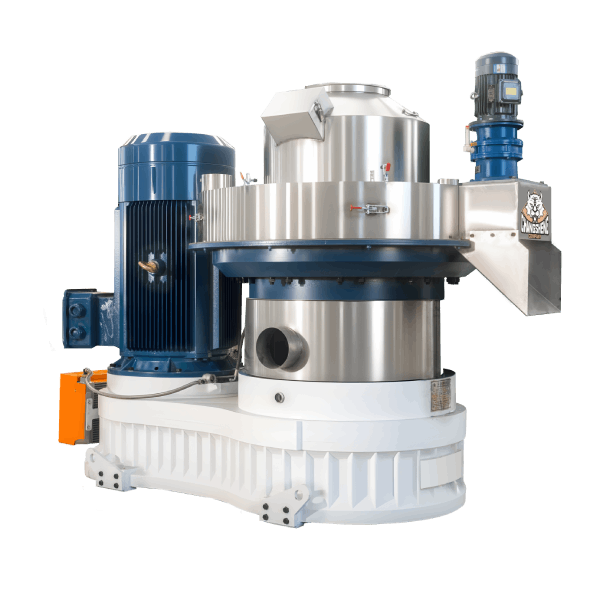
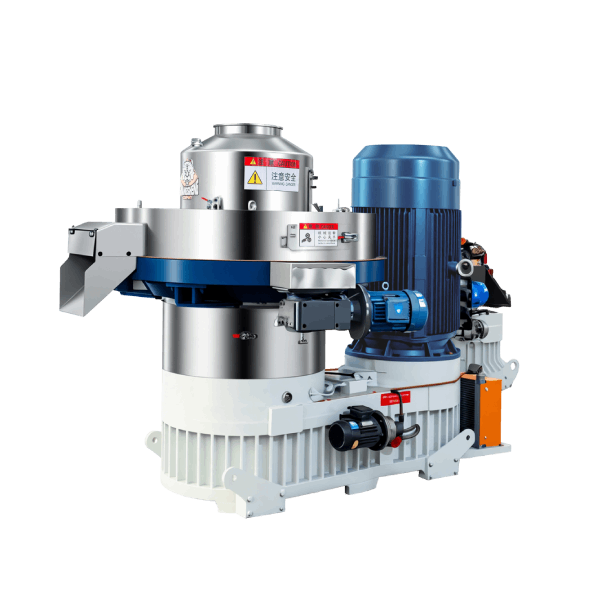
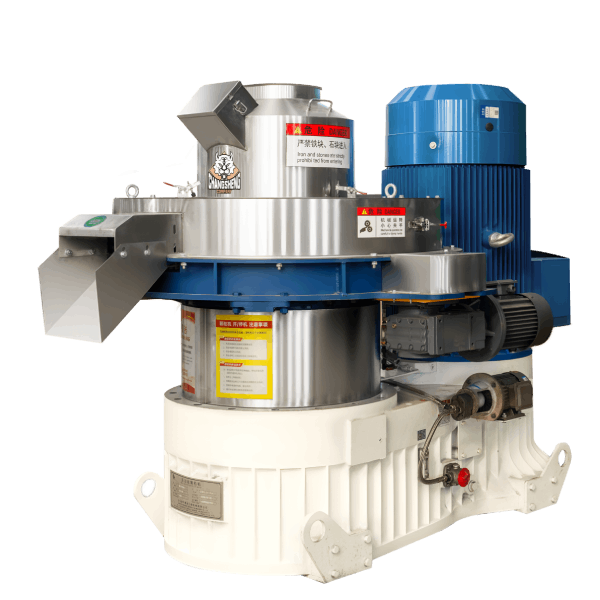
Pelletizing unit
• Ring die pellet mill with alloy steel die and rollers
• Forced lubrication and oil cooling system
Cooling and screening section
• Counterflow cooler with galvanized steel housing
• Vibrating screen for fines separation
Dust control system
• Cyclone pre-separator
• Pulse-jet baghouse with polyester or PTFE filter media
Each structural choice influences emissions, maintenance waste, and lifecycle environmental performance.
Manufacturing Process and Environmental Control Points
Step 1: Raw material receiving and storage
Key impact: fugitive dust
Control measures: covered storage, local exhaust ventilation
Step 2: Crushing and grinding
Key impact: airborne particulates, noise
Control measures: enclosed mills, acoustic insulation, bag filters
Step 3: Drying
Key impact: thermal emissions, exhaust gases
Control measures: indirect heating, temperature control, exhaust filtration
Step 4: Pelletizing
Key impact: electrical load, lubricant usage
Control measures: high-efficiency motors, centralized lubrication systems
Step 5: Cooling and screening
Key impact: dust and fines
Control measures: sealed coolers, fines recycling loop
Step 6: Packaging or bulk loading
Key impact: localized dust release
Control measures: telescopic loading spouts, negative pressure zones
Industry Comparison: Environmental Impact by Fuel Type
| Parameter | Biomass Pellet Line | Coal Processing Line | Plastic Pellet Line |
|---|---|---|---|
| CO₂ footprint | Low (biogenic) | High (fossil) | Medium |
| Dust generation | Medium | High | Low |
| Wastewater | Minimal | Moderate | Low |
| Odor risk | Low | Medium | Low |
| Regulatory pressure | Medium | Very High | Medium |
| Renewable classification | Yes | No | No |
This comparison highlights why pellet production lines require balanced environmental design rather than heavy chemical treatment systems.
Application Scenarios and Stakeholder Roles
Distributors
Evaluate environmental compliance to meet import and resale regulations.
EPC contractors
Integrate emission control systems during plant design to avoid retrofits.
Engineering consultants
Perform environmental impact assessments and permitting documentation.
Industrial operators
Optimize energy consumption and waste recovery to reduce operating cost.
Each stakeholder uses environmental analysis as a risk-control and cost-optimization tool.
Core Environmental Pain Points and Engineering Solutions
Pain Point 1: Excessive dust emissions
Solution: Multi-stage dust collection with cyclone + baghouse combination
Pain Point 2: High thermal energy consumption
Solution: Waste heat recovery from dryer exhaust
Pain Point 3: Noise exceeding industrial limits
Solution: Acoustic enclosures and vibration isolation foundations
Pain Point 4: Pellet fines waste accumulation
Solution: Closed-loop fines recycling back to pellet mill
These solutions are proven across industrial-scale installations.
Environmental Risk Warnings and Avoidance Strategies
• Underestimating dryer exhaust volume leads to filter overload
Mitigation: Calculate airflow with 20–30% safety margin
• Ignoring local noise regulations causes operational restrictions
Mitigation: Perform noise mapping during design phase
• Using low-grade filter media increases maintenance waste
Mitigation: Select industrial-grade, washable filter bags
• Poor ash disposal planning creates secondary pollution
Mitigation: Design sealed ash and fines handling systems
Procurement and Project Selection Guide
Step 1: Define regulatory emission thresholds for the target country
Step 2: Audit raw material moisture and dust characteristics
Step 3: Calculate total installed power and energy intensity
Step 4: Specify dust and noise control equipment upfront
Step 5: Require supplier environmental performance data
Step 6: Validate reference projects with similar capacity
Step 7: Plan environmental monitoring instrumentation
This approach minimizes compliance and operational risk.
Engineering Case Example
A 5 t/h biomass pellet plant in Eastern Europe required compliance with strict particulate emission limits. The project integrated a two-stage dust collection system and indirect biomass-fired dryer. Final measured dust emissions remained below 18 mg/Nm³, and energy recovery reduced thermal fuel consumption by approximately 12%. The plant passed environmental inspection without post-installation modifications.
Frequently Asked Questions
- Is pellet production considered environmentally friendly?
It depends on energy source, emission control, and raw material sustainability. - What is the main environmental impact of pellet lines?
Dust emissions and thermal energy consumption. - Does pellet production generate wastewater?
Modern dry-process lines generate almost none. - How is dust typically controlled?
Through cyclones and pulse-jet baghouse systems. - Are biomass dryers high-emission units?
They can be if not properly designed and filtered. - Can fines be reused?
Yes, most systems recycle fines back into pelletizing. - Is noise a major issue?
It can be without acoustic treatment. - What regulations usually apply?
Industrial air quality, noise, and solid waste standards. - How often should filters be replaced?
Typically every 12–24 months depending on usage. - Does environmental design affect operating cost?
Yes, efficient systems reduce long-term energy and maintenance costs.
Call to Action
For a project-specific pellet production line environmental impact analysis, request detailed emission calculations, energy balance data, or engineering reference layouts from qualified equipment suppliers or engineering consultants.
E-E-A-T Author Credentials
This analysis is prepared by industrial process engineers with over 15 years of experience in pellet production line design, environmental compliance consulting, and EPC project execution across Europe, Asia, and emerging markets, specializing in emission control and energy optimization systems.