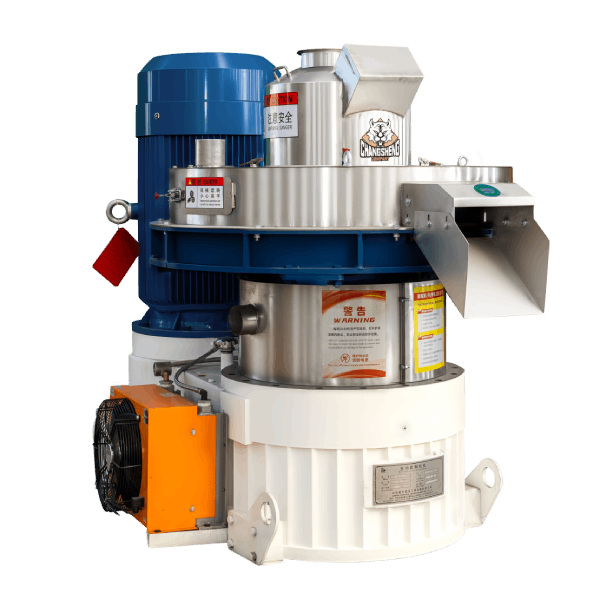
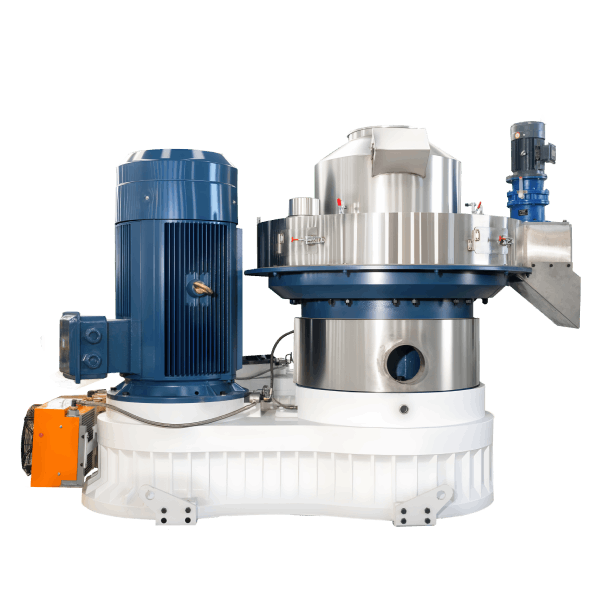
Trusted Pellet Mill Manufacturer: How to Identify Reliable Partners
News 2026-08-28
Page SEO Summary: This guide helps procurement professionals identify trusted pellet mill manufacturers—covering trust signals, verification methods, supplier types, and strategies for risk-free sourcing.
In pellet mill procurement, the equipment itself is only half the equation. The manufacturer behind it determines whether you get reliable performance, responsive support, and long-term value—or costly downtime, unfulfilled promises, and frustrating delays.
When procurement professionals search for a “trusted pellet mill manufacturer,” they are not looking for another product list. They are looking for confidence. Confidence that the manufacturer will deliver what they promise. Confidence that support will be there when needed. Confidence that the partnership will last.
This guide provides a systematic framework for identifying, evaluating, and selecting a trusted pellet mill manufacturer.
What “Trusted” Really Means in Industrial Equipment
Trust is not a feeling. It is a pattern of demonstrated behavior. A trusted pellet mill manufacturer consistently demonstrates:
| Trust Factor | What It Means |
|---|---|
| Delivery reliability | Equipment ships when promised |
| Quality consistency | Every machine meets the same standard |
| Transparency | Honest about capabilities and limitations |
| Responsiveness | Issues are addressed promptly |
| Long-term commitment | Service and parts available years later |
| Financial stability | Company will be around to honor commitments |
The Trust Test: A manufacturer is trustworthy not when everything goes right, but when something goes wrong. How they handle problems reveals their true character.
6 Trust Signals of a Reliable Manufacturer
1. Verifiable Manufacturing Presence
| Signal | What to Look For | Red Flag |
|---|---|---|
| Factory address | Industrial area, specific building/workshop numbers | PO box, office building, vague location |
| Production equipment | Visible machining, fabrication, assembly | Showroom only |
| Employee count | Consistent with production capacity | Vague or inconsistent |
| Factory tour | Welcomed, transparent | Resisted, excuses |
Procurement Note: If you cannot visit in person, a scheduled video walkthrough should be standard practice for legitimate manufacturers. Scammers hide behind photos.
2. Component Transparency
| Component | Trustworthy Answer | Red Flag |
|---|---|---|
| Bearings | “SKF/FAG/NSK” | “Premium quality” or brand omitted |
| Motors | “ABB/Siemens/WEG” | “High efficiency” or brand omitted |
| Gearbox | Specific specification, gear type, brand | “Heavy duty” with no details |
| Die material | “X46Cr13” or specific alloy | “Premium steel” with no grade |
Procurement Note: A manufacturer that does not clearly state component brands is either using inferior components or has something to hide. Neither is acceptable.
3. Quality Documentation
| Document | Trustworthy | Red Flag |
|---|---|---|
| ISO 9001 | Certified, verifiable certificate number | Claims of certification but no certificate |
| CE marking | Valid certificate for the specific machine | “CE compliant” but no documentation |
| Test reports | Detailed, dated, signed | Vague “quality control” statements |
| Warranty | Clear terms, duration, coverage | “Standard warranty” with no details |
Procurement Note: Verify certificates through issuing bodies. A certificate number that cannot be verified is not a certificate.
4. Track Record and References
| Signal | What to Check | Red Flag |
|---|---|---|
| Years in business | 10+ years | Less than 5 years |
| Export history | Multiple countries, regular shipments | No export experience |
| References | Willing to provide, recent customers | Reluctant or vague |
| Repeat customers | Indicates satisfaction | None |
Procurement Note: When contacting references, ask specifically about after-sales support, warranty claims, and responsiveness to issues. These reveal more than initial equipment quality.
5. Engineering Capability
| Signal | What to Check | Red Flag |
|---|---|---|
| Engineering staff | Exists, accessible | Sales-only operation |
| Customization | Can modify designs | “Standard only” |
| Problem-solving | Identifies issues proactively | Defers to “sales” |
Procurement Note: A manufacturer with real engineering capability can answer technical questions without hesitation. A sales-only operation will need to “check with their engineers” for every technical question.
6. Financial Stability
| Signal | What to Check | Red Flag |
|---|---|---|
| Company registration | Verified, consistent | New registration, multiple names |
| Business longevity | 10+ years | Less than 5 years |
| Physical assets | Owned or long-term leased | Temporary, shared |
Procurement Note: A manufacturer that has survived 10+ years in the industry has proven resilience. Survival through multiple market cycles is a powerful trust signal.
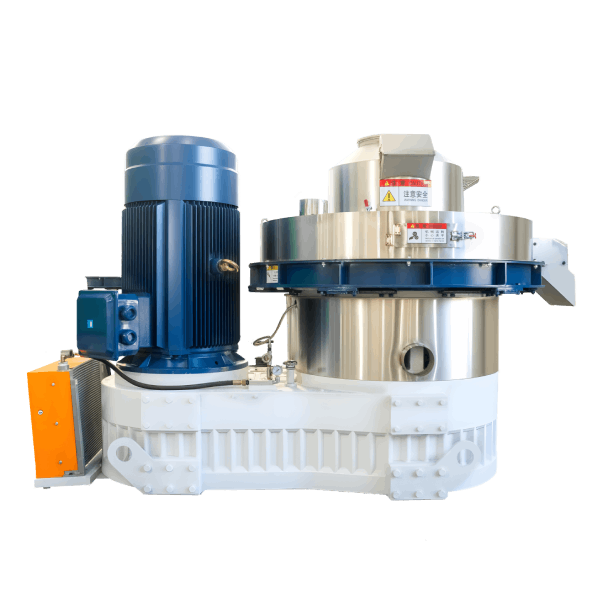
The Verification Process: 3 Steps to Certainty
Step 1: Desk Research
| Action | What to Verify |
|---|---|
| Company registration | Legitimacy, business scope |
| Years in business | Stability |
| Online presence | Professionalism, consistency |
| Customer feedback | Reputation |
| Export records | Capability |
Step 2: Remote Verification
| Action | What to Verify |
|---|---|
| Video factory tour | Production capability |
| Component documentation | Quality standards |
| Certification verification | Legitimacy |
| Reference calls | Customer satisfaction |
Step 3: Final Verification
| Action | What to Verify |
|---|---|
| In-person visit (if possible) | Everything firsthand |
| Pre-shipment inspection | Quality control |
| Payment terms | Flexibility, risk-sharing |
Manufacturer Types: Trustworthiness by Category
The Vertically Integrated Manufacturer
| Characteristic | Trust Level |
|---|---|
| Owns casting, machining, assembly | High |
| Full engineering capability | High |
| 10+ years in business | High |
| Direct pricing | High |
| Risk Level | Low |
Best For: Long-term relationships, custom equipment, large orders.
The Assembly Manufacturer
| Characteristic | Trust Level |
|---|---|
| Assembles components from suppliers | Moderate-High |
| Limited engineering capability | Moderate |
| Competitive pricing | Moderate |
| Quality depends on supply chain | Variable |
| Risk Level | Moderate |
Best For: Standard machines, budget-conscious projects, shorter timelines.
The Trading Company
| Characteristic | Trust Level |
|---|---|
| Sources from multiple manufacturers | Variable |
| No direct quality control | Moderate-Low |
| Wide product range | Moderate |
| Higher prices | Moderate |
| Risk Level | Moderate-High |
Best For: Buyers seeking wide selection, convenience over direct relationship.
The “Virtual Manufacturer”
| Characteristic | Trust Level |
|---|---|
| No verifiable factory | Very Low |
| Vague about manufacturing | Very Low |
| Too-good-to-be-true prices | Very Low |
| No references | Very Low |
| Risk Level | Very High |
Best For: Never. Avoid completely.
Red Flags: Warning Signs You Should Not Ignore
| Red Flag | What It Signals | Action |
|---|---|---|
| No verifiable factory address | Trading company or scam | Do not proceed |
| Cannot answer technical questions | Sales-only operation | Verify engineering |
| No references willing to speak | Poor reputation | Investigate further |
| Unclear warranty terms | Support likely inadequate | Get in writing |
| Pressure to pay 100% upfront | Financial risk | Negotiate milestones |
| Vague component specifications | Inferior components | Request specifics |
| Stock photos instead of real images | No actual production | Request new photos |
Building Trust: What to Look for in the Relationship
Trust-Building Behaviors
| Behavior | What It Indicates |
|---|---|
| Clear, detailed quotations | Transparency |
| Responsive to pre-sales questions | Post-sales likely same |
| Offers factory acceptance testing (FAT) | Quality confidence |
| Provides technical documentation | Engineering capability |
| Warranty claims processed fairly | Long-term commitment |
| Proactive communication | Professionalism |
The Partnership Test
| Test Question | What It Reveals |
|---|---|
| “What happens if we have a problem?” | After-sales approach |
| “How do you handle warranty claims?” | Commitment to resolve |
| “Will you still be here in 10 years?” | Financial stability |
| “Can you help us with technical challenges?” | Engineering support |
Procurement Checklist: Trusted Manufacturer Selection
Initial Assessment
- □ Company registration verified
- □ Years in business confirmed (10+ preferred)
- □ Factory address verified
- □ Export experience confirmed
Quality Verification
- □ ISO 9001 certificate verified
- □ CE marking verified (if applicable)
- □ Component brands confirmed in writing
- □ Die material specification confirmed
- □ Warranty terms reviewed
Capability Verification
- □ Video factory tour completed
- □ Engineering capability assessed
- □ References contacted (minimum 3)
- □ Customization capability confirmed
Decision
- □ Trust signals evaluated
- □ Red flags checked
- □ Best option selected
Frequently Asked Questions
1. What makes a pellet mill manufacturer “trusted”?
A trusted manufacturer demonstrates delivery reliability, quality consistency, transparency, responsiveness, long-term commitment, and financial stability over time.
2. How can I verify a manufacturer without visiting?
Video factory tour, component brand verification, certification verification, and reference calls provide good remote verification.
3. What are the most important trust signals?
Verifiable factory presence, component transparency (SKF bearings, ABB motors), and willingness to provide references are the most important trust signals.
4. How many references should I check?
Contact at least 3 references, preferably recent customers in your region or with similar applications.
5. Is a 10-year-old company necessarily trustworthy?
Not necessarily, but 10+ years in business is a strong indicator of stability and survival through multiple market cycles.
6. What is the biggest risk with unverified manufacturers?
The biggest risks are: poor quality (higher operating costs), no support (unresolved problems), and disappearing (lost investment).
7. How can I test a manufacturer’s responsiveness before purchase?
Send a detailed technical inquiry. If they are slow or vague before the sale, they will likely be worse after.
8. Should I pay 100% upfront?
No. Milestone payments (deposit, pre-shipment, after commissioning) share risk and give you leverage if issues arise.
About the Author
Zhang Wei – Senior International Sales Engineer, Shandong Changsheng Machinery Co., Ltd.
Zhang Wei has over 12 years of experience in the biomass and feed pellet mill industry, with a background in mechanical engineering and international project execution. He has helped clients across Southeast Asia, the Middle East, Africa, Europe, and Latin America identify and partner with trusted manufacturers.
With hands-on experience in both the manufacturing workshop and client-side operations, Zhang brings practical insights into successful equipment procurement—from the factory floor to the customer’s production site.