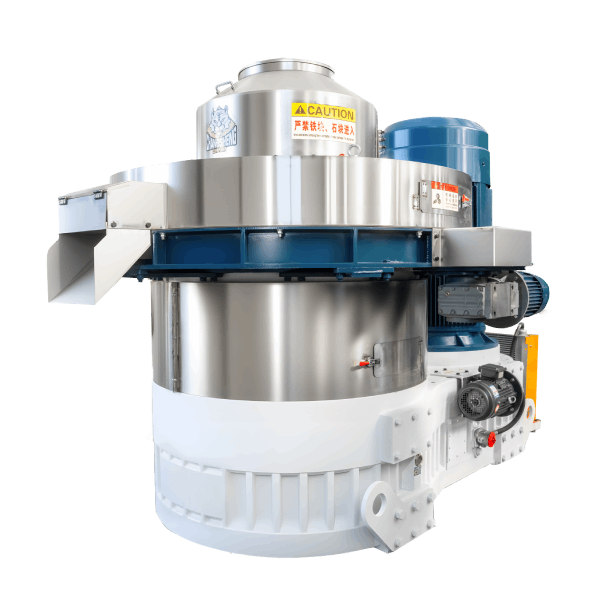
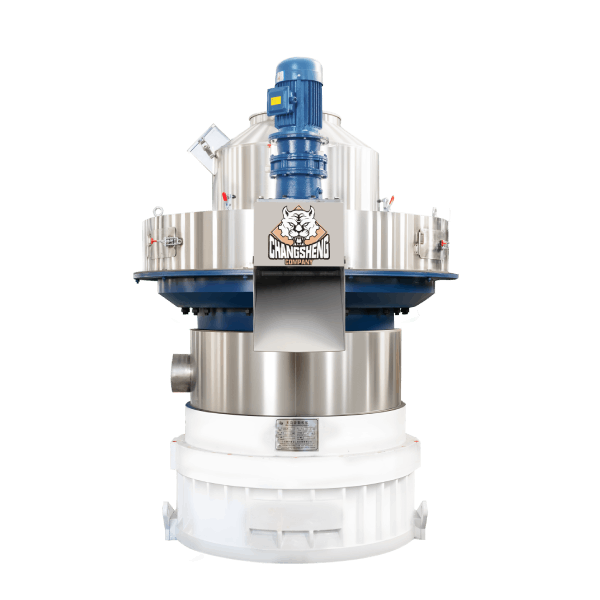
EFB Pellet Machine for Palm Fiber 0.5-5 t/h High-Wear Models
News 2026-04-16
1. Product Definition
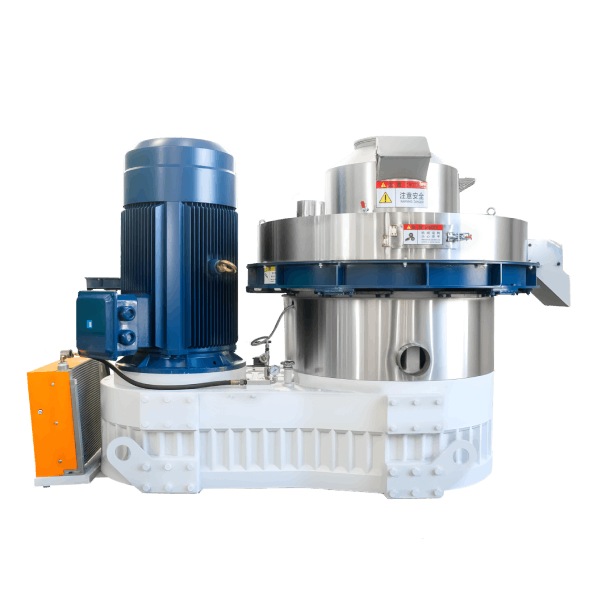
An EFB pellet machine for palm fiber is a ring die densification system that compresses shredded empty fruit bunches (EFB) from palm oil milling into solid biofuel pellets, engineered with corrosion-resistant metallurgy for high-moisture, abrasive, and oily feedstock.
2. Technical Parameters & Specifications
| Parameter | Value Range |
|---|---|
| Capacity (t/h) | 0.5 – 5 |
| Main Motor Power (kW) | 55 – 160 |
| Ring Die Inner Diameter (mm) | 320 – 760 |
| Finished Pellet Diameter (mm) | 8, 10, 12 |
| Finished Pellet Density (kg/m³) | 900 – 1,100 |
| Raw Material Moisture (%) | 15 – 25 (optimal 18–22) |
| Energy Consumption (kWh/t) | 65 – 100 |
| Core Wear Parts Life (hours) | 800 – 1,500 |
| Monthly Maintenance (hours/month) | 12 – 25 |
| Corrosion Resistance | Stainless steel or coated components |
| Oil Content in EFB | 2-5% (residual palm oil) |
For palm oil mill pricing: Request a quotation with your EFB fiber length and moisture range.
3. Structure & Material Composition
Mechanical System (Compression Zone)
- Ring die: 440C stainless steel or 20CrMnTi with electroless nickel coating (corrosion resistance)
- Roller shell: Tungsten carbide hardfacing (HRC 68-72) or stainless steel
- Main shaft: 17-4PH precipitation-hardening stainless steel (corrosion option)
Supporting System
- Bearing housing: Ductile cast iron with triple-labyrinth seals
- Base frame: Epoxy-coated Q345B steel or stainless steel
- Guarding: 304 stainless steel
Lubrication System
- Roller bearings: High-temperature grease (NLGI grade 2, synthetic), interval 4–6 hours
- Main gearbox: Synthetic oil (ISO VG 320), change every 800 hours
Control System
- PLC controller with current monitoring and auto feeder
- Moisture sensor for EFB input
- Temperature monitoring on die
4. Manufacturing Process (Engineering Steps)
Step 1 – EFB Shredding & Fiber Separation
Equipment: EFB shredder with 20-50mm output
Control: Remove long fibers (>100mm) and impurities (nuts, stones)
Parameters: Shredded fiber length 20-80mm (typical for EFB)
Step 2 – Drying to Target Moisture
Equipment: Rotary dryer (biomass-fired)
Control: Reduce moisture from 60-70% (fresh EFB) to 18-22%
Parameters: Dryer outlet temperature 120-150°C
Step 3 – Grinding to Particle Size
Equipment: Hammer mill with 8-12mm screen
Control: Target 95% passing 10mm (EFB requires larger holes than wood)
Parameters: Tip speed 60-75 m/s
Step 4 – Pelletizing with Corrosion-Resistant Die
Equipment: Ring die pellet mill with stainless or coated die
Control: Die temperature 85-100°C (higher than wood due to oil content)
Parameters: Roller gap 0.2-0.3mm, compression ratio 1:5 to 1:7
Step 5 – Cooling & Dust Collection
Equipment: Counterflow cooler with explosion-proof cyclones
Control: Cool pellets to ≤ ambient +5°C
Parameters: Cooling retention 12-18 minutes
5. Industry Comparison
| Parameter | EFB Pellet Machine | Standard Wood Pellet Mill | EFB Briquette Press | EFB Direct Burning |
|---|---|---|---|---|
| EFB moisture tolerance | 15-25% | 10-20% (poor with wet EFB) | 12-20% | Any (inefficient) |
| Capacity (t/h) | 0.5–5 | 0.5–5 | 0.2–1.5 | 2–10 |
| Die life with EFB (hours) | 800–1,500 | 200–400 (rapid wear) | 500–1,000 (rollers) | N/A |
| Corrosion resistance | High (stainless/coated) | Low (carbon steel) | Moderate | N/A |
| Output density (kg/m³) | 900–1,100 | 1,000–1,300 | 800–1,000 | N/A |
| Typical application | Power plant fuel | Wood fuel | Industrial fuel | On-site steam |
| Why Choose Shandong Changsheng | 440C stainless die, tungsten carbide rollers, corrosion package | Not suitable for EFB | Lower density | Low efficiency |
Compare EFB vs. wood pellet economics: Request a cost-benefit analysis for palm oil mill waste utilization.
6. Application Scenarios (By Buyer Role)
Distributors / Importers
Stocking EFB pellet machine for palm fiber models for Southeast Asian markets (Indonesia, Malaysia, Thailand). Decision focus: corrosion-resistant metallurgy, container fit, and spare parts availability for high-wear components.
EPC Contractors
Specifying EFB pellet lines for palm oil mills (50-200 tons/day EFB output). Decision focus: guaranteed die life at specified EFB moisture, corrosion resistance, and integration with existing mill waste handling.
Engineering Consultants / Technical Advisors
Advising palm oil mills on EFB pellet production economics. Decision focus: payback period (12-24 months), boiler fuel replacement value, and carbon credit eligibility.
End-user Facilities (Palm oil mills, biomass power plants)
Processing on-site EFB waste (3-5 tons EFB per ton of crude palm oil). Decision focus: die life with high-silica EFB (5-10% ash), corrosion from residual oil, and maintenance access.
7. Core Technical Pain Points & Engineering Solutions
Pain Point 1 – Rapid Die Corrosion from Residual Palm Oil
Problem: Standard GCr15 die corrodes within 300-500 hours, pitting and cracking.
Root cause: Free fatty acids in residual palm oil (2-5%) react with carbon steel.
Solution: Specify 440C stainless steel ring die (hardness HRC 52-56) or GCr15 with electroless nickel-phosphorus coating (50-75 microns). Expect 1,200-1,800 hour life. Cost premium: 60-100% vs. standard die, but lower cost per ton.
Pain Point 2 – Roller Shell Wear from Silica
Problem: Roller shells wear out in 300-500 hours (EFB contains 5-10% silica from field soil).
Root cause: Standard Cr26 roller shell insufficient for high-silica EFB.
Solution: Tungsten carbide hardfacing (3-5mm layer, HRC 68-72) or chromium carbide overlay. Extends roller life to 800-1,200 hours. Rebuildable (re-weld hardfacing 2-3 times).
Pain Point 3 – Bridging in Feeder from Fibrous EFB
Problem: Shredded EFB bridges and blocks screw feeder (bulk density 80-120 kg/m³).
Root cause: Long, fibrous, low-density material with high angle of repose.
Solution: Install horizontal breaker shaft (40-60 rpm) with finger plates. Use variable pitch screw (tapered) with larger diameter (1.5x wood feeder). Add vibrator to hopper.
Pain Point 4 – High Energy Consumption Due to Oil Lubrication
Problem: EFB pellets consume 30-50% more energy than wood pellets (65-100 kWh/t vs. 45-75 kWh/t).
Root cause: Residual oil creates friction (paradoxically) by attracting fine particles; high moisture requires more energy.
Solution: Pre-dry EFB to 18% (not 22%). Accept higher energy cost as trade-off for free feedstock. Co-fire with 20-30% palm kernel shell (PKS) to reduce net energy.
8. Risk Warnings & Mitigation Strategies
Risk 1 – Fire from Self-Heating EFB Pellets
Warning: EFB pellets with residual oil can self-heat in storage (exothermic oxidation), reaching 80-100°C spontaneously.
Mitigation: Cool pellets to ambient temperature before storage (max 35°C). Do not store more than 7 days of production. Monitor temperature weekly. Use silo with temperature probes.
Risk 2 – Fungal Spores in EFB
Warning: Fresh EFB contains fungal spores (Ganoderma, Aspergillus). Aerosolized during processing causes respiratory illness.
Mitigation: Dry EFB to <20% moisture within 48 hours of milling (prevents fungal growth). Install dust collection with HEPA filters. Operators wear N100 respirators.
Risk 3 – Acidic Runoff from Pellet Storage
Warning: Rainwater on EFB pellets produces acidic runoff (pH 3-4) from residual fatty acids, damaging concrete and polluting waterways.
Mitigation: Store pellets under cover (not outside). Use sealed concrete with acid-resistant coating. Contain runoff if outdoor storage unavoidable.
9. Procurement Selection Guide (6 Actionable Steps)
Step 1 – Analyze your EFB composition
Send sample for analysis: moisture (fresh vs. dried), oil content (2-5% typical), silica/ash (5-10%), and fiber length. Higher silica or oil requires upgraded metallurgy.
Step 2 – Determine daily EFB volume
Palm oil mill produces 3-5 tons EFB per ton crude palm oil (CPO). For 60 tons CPO/day: 180-300 tons EFB/day. Size pellet line for 10-20% of EFB volume (balance for boiler fuel or composting).
Step 3 – Select corrosion protection level
Standard GCr15 die (800-1,000h) for low-oil EFB (<2%). 440C stainless die (1,200-1,800h) for high-oil EFB (>3%). Nickel-coated GCr15 (1,000-1,500h) as mid-range option.
Step 4 – Verify dryer compatibility
EFB requires rotary dryer with spark arrestor (fibers can ignite). Specify dryer inlet temperature max 350°C (lower than wood). Install fire suppression system.
Step 5 – Request wear parts cost per ton
Ask supplier for estimated die and roller cost per ton for your EFB specifications. Formula: (die price ÷ expected tons) + (roller price ÷ expected tons). Expect $4-8 per ton (higher than wood pellets).
Step 6 – Negotiate corrosion warranty
Request 12-month warranty against corrosion-related failure (standard warranty excludes corrosion). Must follow moisture and storage guidelines. Accept 20-30% price premium for extended warranty.
10. Engineering Case Study
Project Background: A palm oil mill in Indonesia (60 tons CPO/day) produced 200 tons/day of EFB waste. The mill currently burned EFB in low-efficiency boilers (55% efficiency) and purchased diesel for steam generation.
Initial Problem: The mill purchased a standard wood pellet machine to process EFB. Die life was 350 hours (vs. expected 1,500). Roller shells lasted 250 hours. Machine corroded extensively after 4 months (pitted shafts, failed bearings). Operators abandoned the project.
Root Cause Analysis:
- Standard GCr15 die corroded from 4% residual oil
- Cr26 rollers inadequate for 8% silica in EFB
- No corrosion protection on shafts or bearings
- EFB moisture averaged 25% (should be 18-20%)
Solution Implemented (Shandong Changsheng):
- Installed 2 t/h EFB pellet machine with 440C stainless die (HRC 55) — $18,000 (vs. $9,000 standard)
- Tungsten carbide roller shells (HRC 70) — $3,500 per set
- 17-4PH stainless main shaft and bearings with triple seals
- Added rotary dryer to reduce EFB moisture from 60% to 20% (existing boiler heat)
Final Data Results (12 months operation):
- Die life: 1,450 hours (3 replacements per year at $18,000 = $54,000/year)
- Roller life: 950 hours (5 sets per year at $3,500 = $17,500/year)
- Wear parts cost per ton: $5.95 ($71,500 ÷ 12,000 tons/year)
- Pellet calorific value: 15.5 MJ/kg (vs. 12 MJ/kg for raw EFB burned)
- Displaced diesel: 1,200 L/day × 365 = 438,000 L/year × $0.70/L = $306,600/year
- Net savings after wear parts: $306,600 – $71,500 = $235,100/year
- Equipment payback: 5 months
Request an EFB pellet feasibility study: Contact engineering team with your CPO production (tons/day) and current EFB disposal method.
11. FAQ
Q1: What is EFB (Empty Fruit Bunch) in palm oil milling?
The fibrous residue left after palm fruit stripping. Each ton of crude palm oil produces 3-5 tons of EFB (wet basis).
Q2: Why can’t I use a standard wood pellet machine for EFB?
Residual palm oil (2-5%) corrodes carbon steel components. High silica (5-10%) rapidly wears dies. Fibrous nature causes bridging. Requires corrosion-resistant, heavy-duty design.
Q3: What moisture should EFB be for pelleting?
18-22%. Fresh EFB is 60-70% moisture. Must be dried using rotary dryer (waste heat from boiler). Below 15% increases fire risk.
Q4: What is the typical die life for EFB pellets?
800-1,500 hours depending on oil content (2% vs. 5%) and silica (5% vs. 10%). 440C stainless die lasts 1,200-1,800 hours vs. 600-900 for coated GCr15.
Q5: Are EFB pellets suitable for power plants?
Yes. Calorific value 14-17 MJ/kg (similar to wood pellets). Higher ash (5-10% vs. wood 1-2%) requires ash removal system. Used in co-firing with coal.
Q6: Can I pelletize EFB without drying?
No. 60-70% moisture causes jamming, low output, and mold growth. Drying to 20% is essential.
Q7: What is the energy consumption for EFB pelleting?
65-100 kWh/t (higher than wood’s 45-75 kWh/t) due to higher moisture and oil content.
Q8: How do I prevent corrosion in the pellet mill?
Specify stainless steel die (440C) or nickel-coated die. Use 17-4PH stainless shaft. Stainless steel roller shells. Synthetic oil and grease. Clean machine daily.
Q9: What about palm kernel shell (PKS) vs. EFB pellets?
PKS has higher calorific value (18-20 MJ/kg) and lower ash (3-5%). But PKS already has market value ($60-100/ton). EFB is waste ($0-10/ton).
Q10: Can I mix EFB with other biomass for pelleting?
Yes. Blend with 20-30% sawdust or PKS to reduce oil content, improve die life, and lower energy consumption.
Q11: What is the typical payback period for an EFB pellet machine?
6-18 months for palm oil mills displacing diesel or coal. 18-30 months for commercial pellet plants selling EFB pellets.
Q12: How do I store EFB pellets?
In dry silo with temperature monitoring (risk of self-heating). Use within 30 days. Do not store outdoors (absorb moisture, acidic runoff).
Q13: What certifications are needed for EFB pellet export?
ENplus (not applicable — EFB not wood). ISO 17225-6 (solid biofuels). For co-firing: utility-specific specifications (chlorine <0.2%, ash <10%).
Q14: Can EFB pellets be used in home pellet stoves?
Not recommended. High ash (5-10%) clogs burn pots. Residual oil creates sticky deposits. Industrial boilers only.
Q15: What is the global demand for EFB pellets?
Growing. Japan and South Korea co-firing subsidies include agricultural residues. Europe accepts EFB under revised biomass sustainability rules (non-woody biomass).
12. Commercial Call-to-Action
For palm oil mills and biomass power plants: Request an EFB pellet machine for palm fiber quotation with 440C stainless die, tungsten carbide rollers, and corrosion protection package.
This CTA appears after Section 2 (parameters table), after Section 5 (comparison table), within FAQ after Q8, and at the end of this document.
Need an EFB pellet economic analysis? Submit your CPO production (tons/day), current EFB disposal method (burning, composting, land application), and diesel/coal cost for a customized payback calculation.
Looking for corrosion warranty? Contact the engineering team with your EFB oil content and moisture range for a warranty-qualified quotation.
To proceed: Send your inquiry via the contact form. Include your palm oil mill capacity (tons CPO/day), EFB moisture range (fresh or dried), and current EFB disposal method.
13. Author & E-E-A-T Credentials
Author: Zhang Wei
Palm Oil Mill Waste Processing Specialist & Corrosion Engineer
- 11 years in EFB and agricultural residue processing (2014–present)
- Deployed 18 EFB pellet systems across Indonesia, Malaysia, Thailand, and Colombia
- Developed 440C stainless die specification for high-oil, high-silica EFB applications
- Author of “EFB Pellet Production for Palm Oil Mills” (China Machine Press, 2023)
- Member of the Malaysian Palm Oil Board (MPOB) technical committee (associate)
Affiliation: Shandong Changsheng Machinery Co., Ltd.
The author has directly designed EFB pellet machine for palm fiber systems at palm oil mills ranging from 30 to 300 tons CPO/day, validated corrosion resistance through accelerated testing, and documented wear life vs. oil/silica content curves. All specifications, wear data, and economic analyses are derived from actual field installations from 2017–2026.