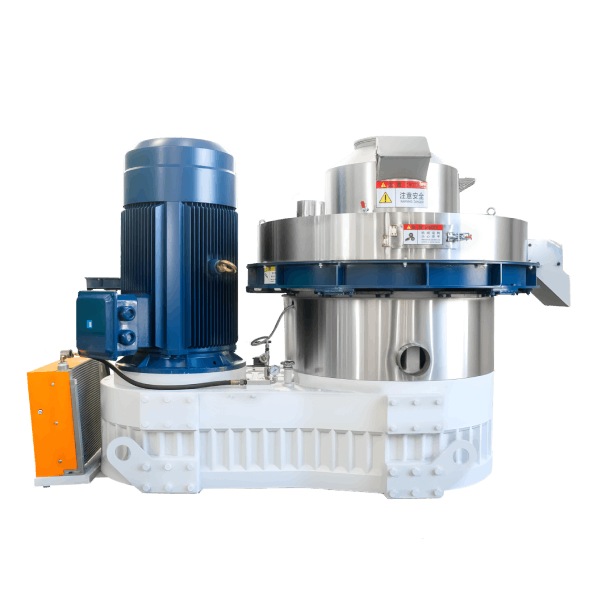
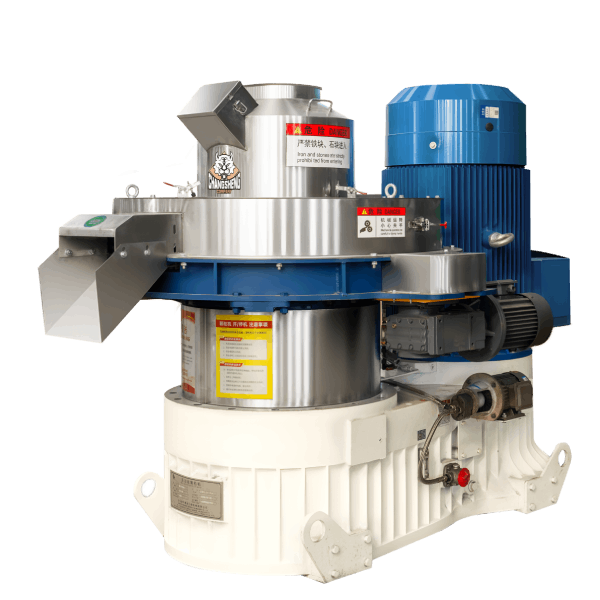
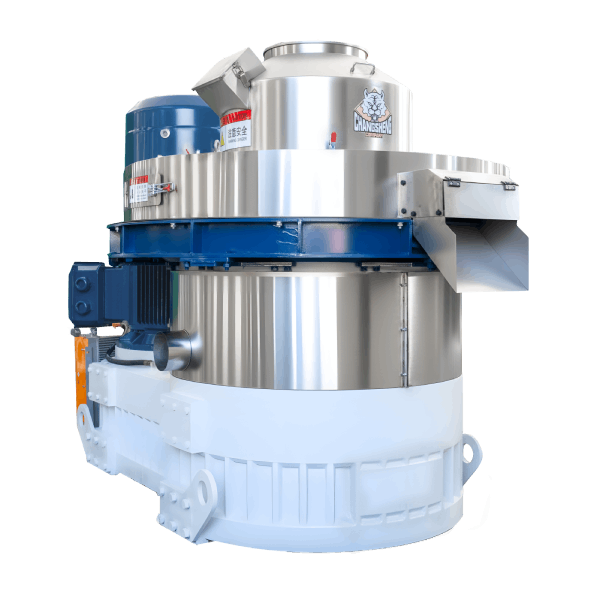
What Is a Pellet Mill: Complete Beginner’s Guide
News 2026-08-04
Page SEO Summary: This beginner’s guide explains what a pellet mill is—covering the basic definition, how it works, common uses, types, and why you might need one.
If you’ve come across the term “pellet mill” and wondered what it means, you’re not alone. Pellet mills are essential machines in agriculture, biomass energy, and animal feed production, but many people are unfamiliar with them.
This guide provides a simple, straightforward introduction to pellet mills—what they are, how they work, and why they matter.
What Is a Pellet Mill?
Simple Definition
A pellet mill is a machine that compresses loose, powdery, or fibrous materials into small, dense, cylindrical pellets.
Analogy
Think of a pellet mill like a meat grinder or pasta maker—but instead of grinding meat or making pasta, it compresses materials like sawdust, grain, or agricultural waste into solid, uniform pellets.
What Pellets Look Like
| Characteristic | Description |
|---|---|
| Shape | Small cylinders (like rabbit food pellets) |
| Size | Typically 2-12 mm diameter, 10-30 mm length |
| Color | Varies by material |
| Density | Dense and solid |
What Is a Pellet Mill Used For?
Main Applications
| Application | Description | Examples |
|---|---|---|
| Animal feed | Making feed pellets for livestock and poultry | Chicken feed, pig feed, cattle feed |
| Biomass fuel | Making fuel pellets for heating and power | Wood pellets, biomass pellets |
| Pet food | Making pet food pellets | Dog food, cat food |
| Aquaculture | Making fish and shrimp feed | Fish feed pellets |
| Waste utilization | Converting waste into valuable products | Agricultural residues |
Why People Use Pellet Mills
| Reason | Benefit |
|---|---|
| Reduce waste | Turn waste materials into valuable products |
| Save money | Make your own feed or fuel |
| Improve efficiency | Pellets are easier to handle and transport |
| Create income | Sell pellets for profit |
| Sustainability | Use renewable materials |
How Does a Pellet Mill Work? (Simple Version)
The Basic Process
| Step | What Happens |
|---|---|
| 1 | Ground material enters the pellet mill |
| 2 | Rollers press material through small holes in a metal plate (die) |
| 3 | Friction creates heat, which helps bind the material |
| 4 | Material exits the die as solid pellets |
| 5 | Pellets are cut to length and cooled |
The Key Principle
Heat + Pressure + Binders = Pellets
The machine uses pressure to force material through small holes. The friction from this process creates heat, which activates natural binders in the material (like lignin in wood or starch in grain). When the material exits the die, it holds its shape as a solid pellet.
Types of Pellet Mills
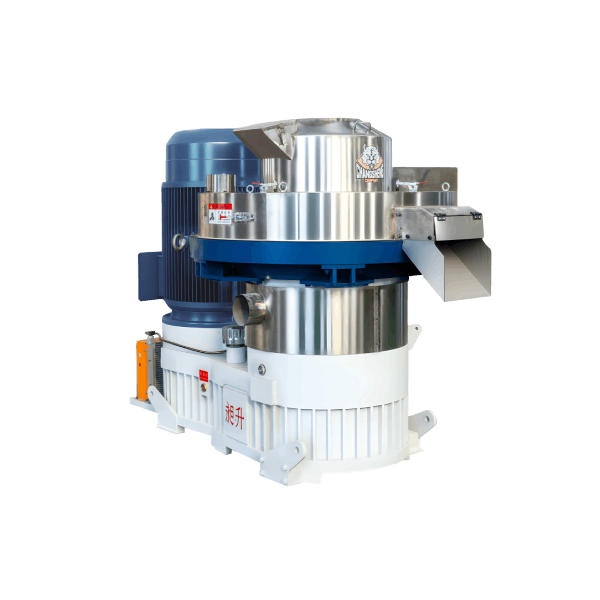
Two Main Types
| Type | Description | Best For |
|---|---|---|
| Flat die | Flat plate with holes; rollers on top | Small-scale; farms; beginners |
| Ring die | Vertical ring with holes; rollers inside | Commercial; industrial; high capacity |
Quick Comparison
| Aspect | Flat Die | Ring Die |
|---|---|---|
| Size | Smaller | Larger |
| Capacity | 30-300 kg/h | 200-5,000+ kg/h |
| Price | Lower ($500-$5,000) | Higher ($5,000-$80,000+) |
| Complexity | Simpler | More complex |
| Best for | Small farms, hobbyists | Commercial production |
What Materials Can Be Pelleted?
Common Materials
| Material | Application | Notes |
|---|---|---|
| Sawdust | Fuel pellets | Best quality pellets |
| Wood chips | Fuel pellets | Must be ground first |
| Corn | Animal feed | Common feed ingredient |
| Soybean meal | Animal feed | Common feed ingredient |
| Straw | Fuel pellets | Challenging; may need binders |
| Rice husk | Fuel pellets | Abrasive; requires hard die |
| Grass/hay | Animal feed | Good for ruminants |
| Bagasse | Fuel pellets | Good energy value |
Why Use a Pellet Mill?
For Farmers
| Reason | Benefit |
|---|---|
| Reduce feed costs | Make feed from your own grain |
| Improve animal health | Pellets reduce waste and improve nutrition |
| Use farm waste | Turn crop residues into valuable products |
For Biomass Producers
| Reason | Benefit |
|---|---|
| Renewable energy | Produce sustainable fuel |
| Waste utilization | Use agricultural and forestry waste |
| Income generation | Sell pellets to power plants or homeowners |
For Small Businesses
| Reason | Benefit |
|---|---|
| New revenue stream | Sell pellets to local farmers |
| Value addition | Process raw materials into higher-value products |
| Sustainability | Green business model |
Key Parts of a Pellet Mill
Main Components
| Component | Function |
|---|---|
| Die | The metal plate with holes that shapes the pellets |
| Rollers | Press material through the die holes |
| Motor | Powers the machine |
| Feeder | Controls how much material enters |
| Cutter | Trims pellets to the desired length |
Frequently Asked Questions
1. What is a pellet mill in simple terms?
A pellet mill is a machine that turns loose, powdery materials into small, dense, solid pellets—like making rabbit food pellets from grain and other ingredients.
2. What is a pellet mill used for?
Pellet mills are used to make animal feed pellets, wood fuel pellets, biomass pellets, fish feed, and pet food. They compress materials like grain, sawdust, and agricultural waste into dense, uniform pellets.
3. How does a pellet mill work?
A pellet mill works by forcing material through small holes in a metal die using high-pressure rollers. The friction creates heat, which helps the material bind together and hold its shape as it exits the die.
4. What is the difference between flat die and ring die?
Flat die has a flat plate with holes and is simpler, cheaper, and suited for small-scale use. Ring die has a vertical ring with holes and is more efficient, higher capacity, and suited for commercial production.
5. Can I make my own pellets?
Yes, with a pellet mill you can make your own feed pellets, wood pellets, or biomass pellets from your own materials.
6. What materials can I use?
Common materials include sawdust, grain, corn, soybean meal, straw, grass, rice husk, and many agricultural and forestry residues.
7. Is a pellet mill expensive?
Prices range from $500 for small flat die machines to $80,000+ for large industrial ring die machines. The cost depends on size, capacity, and quality.
8. Why would I want a pellet mill?
To reduce feed costs, use waste materials, create renewable energy, improve animal nutrition, or generate income by selling pellets.
About the Author
Zhang Wei – Senior International Sales Engineer, Shandong Changsheng Machinery Co., Ltd.
Zhang Wei has over 12 years of experience in the biomass and feed pellet mill industry, with a background in mechanical engineering and international project execution. He has helped hundreds of clients understand pellet mill technology and select the right equipment for their needs.
With hands-on experience in both the manufacturing workshop and client-side operations, Zhang brings practical insights into successful equipment procurement—from the factory floor to the customer’s production site.