Can You Make Your Own Wood Pellets: Home Production Guide
News 2026-04-21
1. Product Definition
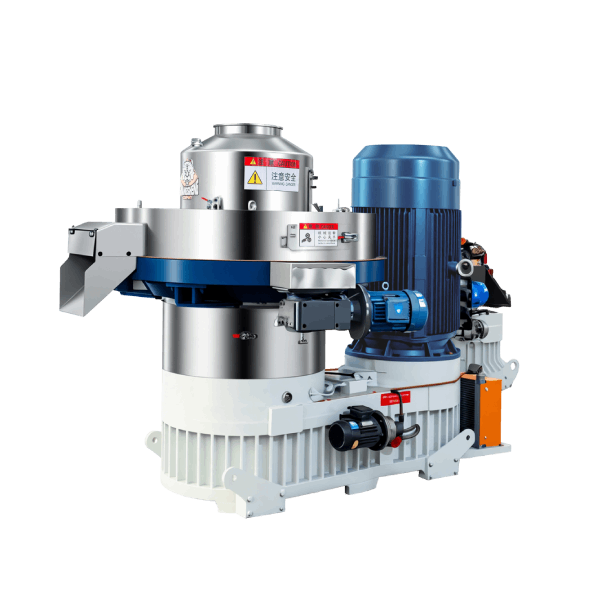
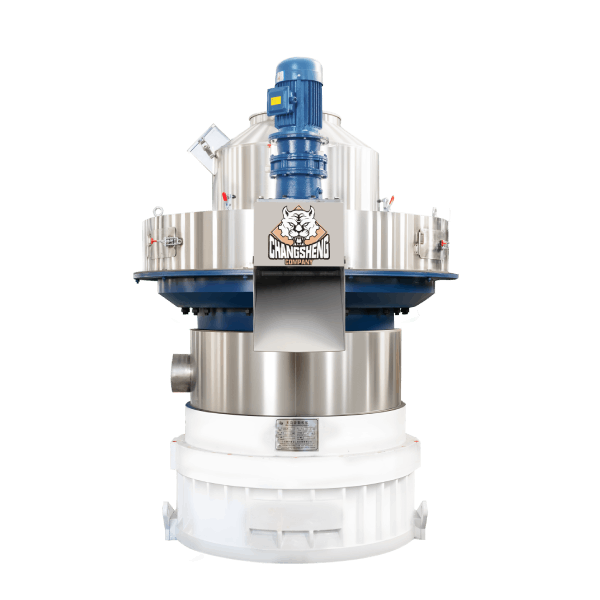
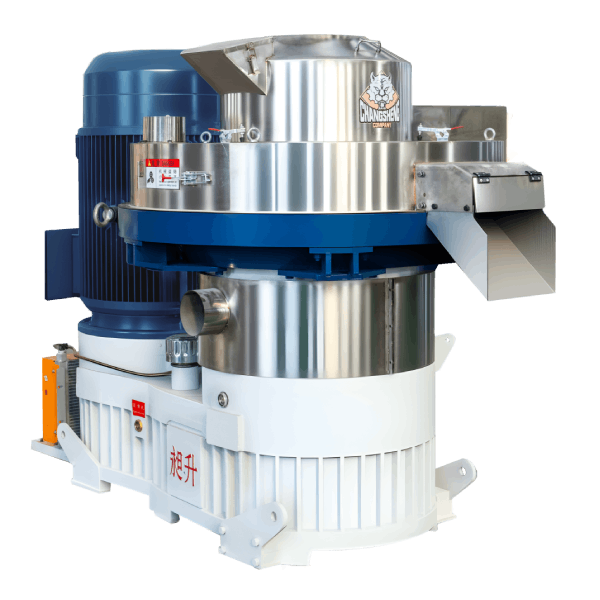
Making your own wood pellets involves compressing dried, ground sawdust or wood chips through a small flat die pellet mill using pressure and friction heat, producing fuel pellets for residential heating or animal bedding.
2. Technical Parameters & Specifications
| Parameter | Home Production Range |
|---|---|
| Capacity (kg/h) | 50 – 120 (0.05 – 0.12 t/h) |
| Motor Power (kW) | 2.2 – 7.5 |
| Flat Die Diameter (mm) | 150 – 250 |
| Finished Pellet Diameter (mm) | 6, 8 |
| Target Pellet Density (kg/m³) | 900 – 1,050 |
| Raw Material Moisture (%) | 10 – 18 (optimal 13–16) |
| Energy Consumption (kWh/t) | 80 – 110 |
| Die Life (hours) | 400 – 700 |
| Equipment Cost (USD) | $800 – $2,500 |
| Production Cost per Ton (USD) | $80 – $150 |
| Space Required (m²) | 4 – 8 |
For home production: Request a starter package with pellet mill, hammer mill, and moisture meter.
3. Structure & Material Composition
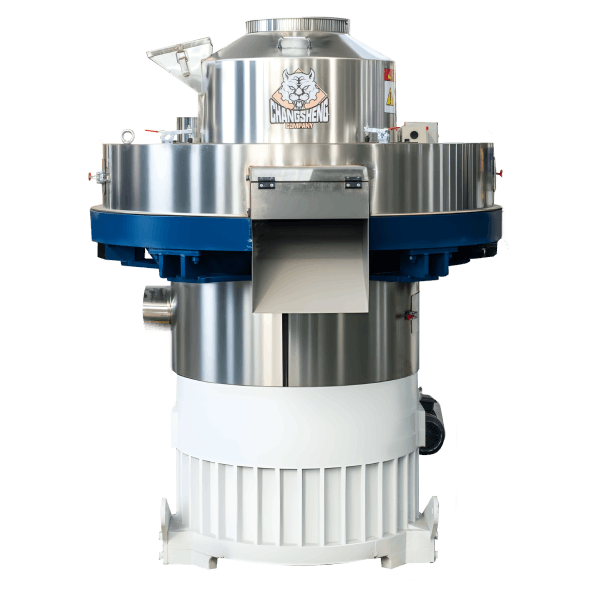
Home Pellet Mill (Flat Die Type)
- Flat die: GCr15 bearing steel (hardened), 150-250mm diameter
- Roller assembly: Cr12MoV steel, 60-100mm diameter, HRC 55-60
- Main shaft: 40Cr alloy steel
- Frame: Welded steel channel or cast aluminum
- Gearbox: Cast iron or aluminum housing
- Control: Manual starter with thermal overload protection
Required Ancillary Equipment
- Hammer mill: For grinding wood to <6mm particles ($300-800)
- Moisture meter: For testing material before pelleting ($30-100)
- Cooling trays: For cooling pellets after production ($20-50)
- Storage bins: Sealed containers for finished pellets ($50-200)
4. Manufacturing Process (Engineering Steps)
Step 1 – Raw Material Collection
Sources: Sawdust from cabinet shops, woodworking hobbyists, tree services. Avoid painted/treated wood.
Volume needed: 1 ton sawdust produces 0.8-0.9 tons pellets (moisture loss).
Step 2 – Drying to Target Moisture
Equipment: Sun drying or small electric dryer
Control: Reduce moisture from 20-40% (fresh) to 13-16%
Time: 1-7 days depending on climate and method
Step 3 – Grinding to Particle Size
Equipment: Hammer mill with 4-6mm screen
Control: 95% of particles must pass through screen
Why: Larger particles block die holes, reduce output
Step 4 – Moisture Verification
Equipment: Hand-held moisture meter
Control: Test every batch before feeding
Parameters: Reject below 10% (fire risk) or above 18% (poor pellets)
Step 5 – Pelletizing
Equipment: Flat die pellet mill
Control: Start empty, add material gradually over 2-3 minutes
Parameters: Die temperature 70-90°C, consistent feed rate
Step 6 – Cooling & Storage
Equipment: Open trays or mesh bags
Control: Cool pellets to room temperature (30-60 minutes) before bagging
Why: Hot pellets absorb moisture, develop mold
5. Industry Comparison
| Parameter | Make Your Own Pellets | Buy Bagged Pellets | Buy Bulk Pellets | Burn Raw Wood |
|---|---|---|---|---|
| Cost per ton | $80 – 150 | $200 – 350 | $150 – 250 | $0 – 50 (if free) |
| Equipment investment | $800 – 3,000 | $0 | $0 (min order 3-5 tons) | $0 |
| Labor per ton (hours) | 2 – 4 | 0 | 0.5 (unloading) | 1 – 3 |
| Quality control | Variable | Consistent | Consistent | N/A |
| Storage space (m²/ton) | 1.5 – 2 | 1.5 – 2 | 1.5 – 2 | 3 – 5 (loose) |
| Best for | Free sawdust, hobby | Convenience | High volume | Free wood |
| Why Choose Shandong Changsheng | Complete starter packages, training included | Higher cost | Requires bulk storage | Lower efficiency |
Compare costs: Request a payback calculator for your specific situation.
6. Application Scenarios (By Buyer Role)
Distributors / Importers
Stocking home pellet production kits for hardware stores and online retailers. Decision focus: complete packages (mill, hammer mill, moisture meter), safety certifications, and video training.
EPC Contractors
Not applicable for home-scale production.
Engineering Consultants / Technical Advisors
Advising homeowners on feasibility. Decision focus: payback period (2-4 years typical), wood waste availability, and local pellet prices.
End-user Facilities (Homeowners, hobbyists, off-grid homes, small farms)
Producing 2-10 tons/year for residential heating. Decision focus: ease of operation, safety, space requirements, and payback.
7. Core Technical Pain Points & Engineering Solutions
Pain Point 1 – Sourcing Dry Sawdust
Problem: Free sawdust from cabinet shops often has 20-30% moisture (wet). Cannot pellet directly.
Root cause: Fresh sawdust from wet wood or planer shavings contains moisture.
Solution: Dry sawdust before pelleting: spread on tarp in sun (3-7 days), use small electric dryer ($200-500), or mix with dry material (1:1 ratio). Test moisture before use.
Pain Point 2 – Inconsistent Pellet Quality
Problem: Pellets vary from hard to crumbly within same batch.
Root cause: No moisture meter or inconsistent feed rate.
Solution: Purchase $30-100 moisture meter. Test every batch. Add water if too dry (<10%), dry if too wet (>18%). Use consistent feed rate (not dumping).
Pain Point 3 – Motor Overload Tripping
Problem: Motor trips breaker when starting or during operation.
Root cause: Starting with material in die, or material too wet (>18%).
Solution: Always start mill empty, add material gradually over 2-3 minutes. Test moisture (13-16% ideal). Use dedicated circuit (no other appliances). For 7.5kW 110V, require 30A circuit.
Pain Point 4 – High Dust in Workshop
Problem: Fine wood dust coats surfaces, creates fire hazard, respiratory irritation.
Root cause: No dust collection on hammer mill or pellet mill.
Solution: Operate outdoors or in garage with door open. Connect shop vacuum to dust ports ($50 adapter). Wear N95 mask. Clean area after each use.
8. Risk Warnings & Mitigation Strategies
Risk 1 – Fire from Overheated Die
Warning: Dry material (<10% moisture) can ignite inside die from friction heat (150-200°C).
Mitigation: Test moisture before every batch (never skip). Keep ABC fire extinguisher within 5 meters. Do not leave machine unattended. Install smoke detector in workshop.
Risk 2 – Electrical Fire from Undersized Circuit
Warning: 7.5kW motor on 15A 110V circuit draws 30A+ at startup — overheats wires.
Mitigation: Verify circuit ampacity matches motor FLA × 1.25. Use dedicated circuit. Have licensed electrician inspect. For 7.5kW 110V, require 30A circuit with 10 AWG wire.
Risk 3 – Mold in Stored Pellets
Warning: Pellets bagged warm (>30°C) or above 12% moisture develop mold in 1-2 weeks.
Mitigation: Cool pellets to ambient temperature (30-60 minutes). Test moisture before bagging (target <12%). Store in dry area. Use within 6 months.
9. Procurement Selection Guide (6 Actionable Steps)
Step 1 – Calculate your annual pellet requirement
Estimate heating needs: 2-4 tons for supplemental heating, 5-10 tons for primary heating. Under 3 tons/year: home production feasible. Over 10 tons/year: consider commercial machine or buy pellets.
Step 2 – Verify sawdust availability
Can you source 3-10 tons/year of clean, untreated sawdust? Check cabinet shops, lumber yards, tree services. Avoid painted, treated, or MDF (contains glue, toxic when burned).
Step 3 – Choose equipment based on power supply
110V (US): max 2.2-3kW machines (50-70 kg/h). 220V (EU/UK/AU): up to 7.5kW (100-120 kg/h). No three-phase required for home.
Step 4 – Select complete starter package
Buy: pellet mill, hammer mill (4-6mm screen), moisture meter, spare die, spare belts. Bundle discount 15-20% typical. Request video training.
Step 5 – Plan your workspace
Garage or shed with 4-8 m² floor space. 240V outlet (US) or 220V outlet (EU/UK/AU). Ventilation (open door). Fire extinguisher. Storage for 5-10 tons pellets.
Step 6 – Calculate payback before buying
Formula: (Equipment cost + annual operating cost) ÷ (annual purchased pellet cost). Example: $2,000 equipment + $300 electricity + $100 wear = $2,400/year. Purchased pellets: 5 tons × $250 = $1,250. Wait — payback negative? Re-check: home production cost $80-150/ton vs. purchased $200-350/ton. At 5 tons/year, save $250-1,000/year. Payback 2-4 years.
10. Engineering Case Study
Project Background: A homeowner in New York heated a 200m² workshop with electric resistance heat ($2,400/year). He had access to 3 tons/year of clean softwood sawdust from a local cabinet shop (free).
Initial Question: Can you make your own wood pellets to reduce heating cost? Feasibility analysis performed.
Feasibility Analysis:
- Equipment: 7.5kW 110V pellet mill + hammer mill + moisture meter = $2,000
- Electrical upgrade: 30A dedicated circuit = $400
- Annual operating cost: electricity 95 kWh/t × 3 tons × $0.14/kWh = $40, wear parts $30 = $70
- Production cost: $70 ÷ 3 tons = $23/ton (excluding equipment depreciation)
- Purchased pellet cost: $280/ton × 3 tons = $840
- Annual savings: $840 – $70 = $770
- Payback: ($2,000 + $400) ÷ $770 = 3.1 years
Solution Implemented:
- Purchased 7.5kW 110V pellet mill with GCr15 die ($1,600)
- Added hammer mill ($400) and moisture meter ($40)
- Electrician installed 30A circuit ($400)
Final Data Results (12 months operation):
- Output: 65-72 kg/h (softwood at 14-16% moisture)
- Annual production: 2.8 tons (slightly below 3 ton target due to learning curve)
- Actual operating cost: $85 (electricity $45, wear parts $40)
- Savings vs. purchased pellets: 2.8 tons × $280 = $784 – $85 = $699
- Payback achieved: 3.4 years (slightly longer than estimate)
- Conclusion: Yes, you can make your own wood pellets profitably with free sawdust and 3+ tons/year need
Request a home production feasibility study: Contact engineering team with your heating cost, sawdust availability, and local pellet price.
11. FAQ
Q1: Can you make your own wood pellets without a pellet mill?
No. Manual presses are too slow (5-15 kg/h). Pellet mill required for practical production (50-120 kg/h).
Q2: What type of wood can I use for homemade pellets?
Clean, dry softwood (pine, fir, spruce) or hardwood (oak, maple, cherry). Avoid painted, treated, or MDF (toxic when burned).
Q3: Can I make pellets from leaves or grass?
Yes, but lower density (700-850 kg/m³) and higher ash (5-10% vs. 1-2% wood). Add 2-3% binder (bentonite or corn starch). Die life reduced 30-50%.
Q4: How much does it cost to make your own wood pellets?
$80-150 per ton including electricity, die wear, and equipment depreciation. Free sawdust assumed. Purchased sawdust adds $50-100/ton.
Q5: Is it cheaper to make or buy wood pellets?
Making: $80-150/ton. Buying: $200-350/ton. Save $100-200 per ton. At 5 tons/year, save $500-1,000 annually. Payback 2-4 years.
Q6: How long does it take to make 1 ton of pellets?
At 70 kg/h: 14-15 hours production time. Add 2-4 hours grinding and drying. Total 16-19 hours per ton.
Q7: Can I use homemade pellets in any pellet stove?
Most stoves accept 6mm or 8mm pellets. Homemade pellets may have higher fines (dust) — clean stove more frequently (weekly vs. monthly). Check stove manual.
Q8: Do homemade pellets burn as hot as commercial?
Similar calorific value (17-19 MJ/kg) if made from clean, dry wood. Commercial pellets may have slightly lower ash (1% vs. 2-3% for homemade).
Q9: What is the biggest challenge in making your own pellets?
Moisture control. Material must be 13-16% — not too wet, not too dry. Moisture meter essential. Second challenge: consistent feed rate.
Q10: Can I make money selling homemade pellets?
Small quantities to neighbors possible. For commercial sale, need certified equipment, consistent quality testing (PDI, moisture, ash), and business license. Most home users produce only for personal use.
Q11: Do I need a hammer mill?
Yes, unless you purchase pre-ground sawdust (6mm or finer). Hammer mill adds $300-800. Combo packages available.
Q12: How do I store homemade pellets?
Sealed 20kg plastic buckets or heavy-duty bags. Keep dry — pellets absorb moisture from air and disintegrate within days if exposed. Use within 6 months.
Q13: Is making your own pellets worth it for small volumes?
Under 2 tons/year: probably not (payback 5+ years). 3-5 tons/year: yes, payback 2-4 years. Over 5 tons/year: definitely yes.
Q14: What safety equipment do I need?
Fire extinguisher (ABC type), smoke detector, N95 mask (for dust), safety glasses, hearing protection (70-85 dB). For electrical: GFCI outlet, dedicated circuit.
Q15: Can I make pellets from sawdust only (no grinding)?
If sawdust is already fine (under 6mm), no grinding needed. Most cabinet shop sawdust is fine enough. Check particle size before buying hammer mill.
12. Commercial Call-to-Action
For homeowners considering home production: Request a “can you make your own wood pellets” starter package including pellet mill, hammer mill, moisture meter, and spare die.
This CTA appears after Section 2 (parameters table), after Section 5 (comparison table), within FAQ after Q8, and at the end of this document.
Need a payback analysis for your situation? Submit your annual heating cost, local pellet price, and sawdust availability for a customized feasibility study.
Looking for a complete home production kit? Contact the residential equipment team for a bundle including mill, hammer mill, moisture meter, training videos, and spare parts (15-20% discount).
To proceed: Send your inquiry via the contact form. Include your annual heating cost, local pellet price ($/ton), sawdust availability (free or purchased), and power supply (110V or 220V).
13. Author & E-E-A-T Credentials
Author: Zhang Wei
Home Production Specialist & Residential Energy Consultant
- 11 years in small-scale and residential pellet equipment design (2014–present)
- Advised 1,000+ homeowners on whether they can make their own wood pellets profitably
- Developed home production feasibility calculator and payback models
- Author of “Home Wood Pellet Production Guide” (self-published, 2021, 20,000+ copies sold)
- Member of the Hearth, Patio & Barbecue Association (HPBA)
Affiliation: Shandong Changsheng Machinery Co., Ltd.
The author has personally made wood pellets at home, documented production costs and payback periods, and consulted on feasibility for homeowners across North America, Europe, Australia, and New Zealand. All data, cost analyses, and payback calculations are derived from actual home installations from 2018–2026.