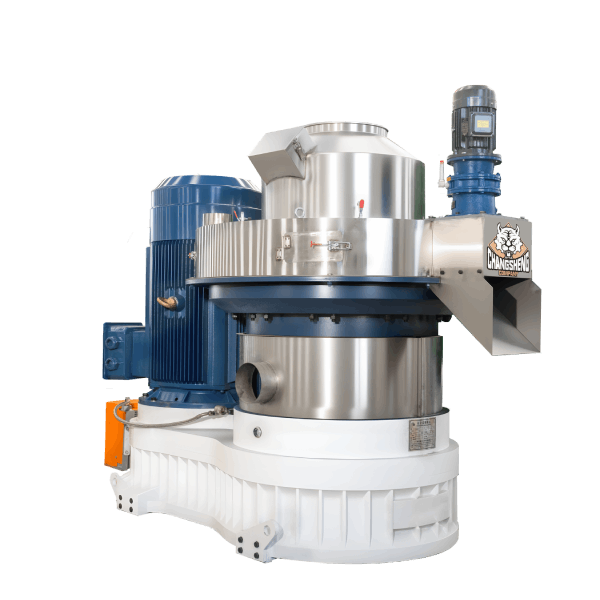
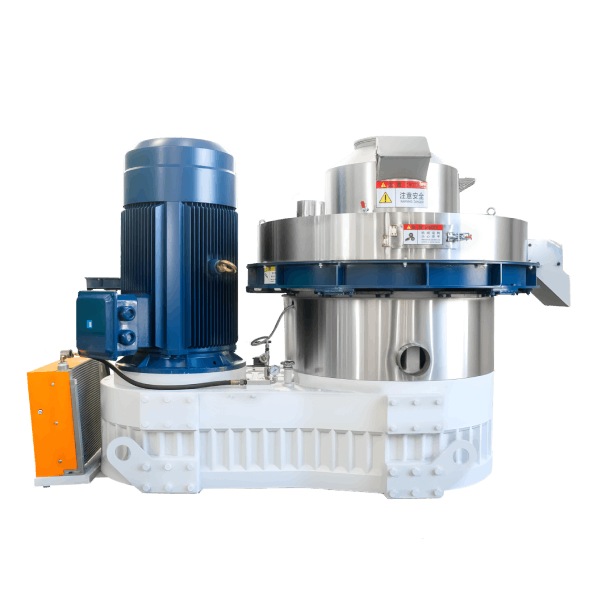
Wood Chips Pellet Machine – Industrial Biomass Pellet Equipment
News 2026-03-30
A wood chips pellet machine is an industrial pelletizing system designed to compress processed wood chips into dense biomass fuel pellets. Through high-pressure extrusion using ring die and roller mechanisms, the machine converts forestry residues into standardized fuel pellets suitable for renewable energy applications and industrial heating systems.
Technical Parameters and Specifications
The performance of a wood chips pellet machine depends on mechanical design, die compression ratio, and power configuration. Industrial pellet machines are typically integrated into complete biomass pellet production lines.
| Parameter | Typical Specification |
|---|---|
| Production Capacity | 1 – 6 tons/hour |
| Pellet Diameter | 6 – 10 mm |
| Main Motor Power | 90 – 250 kW |
| Ring Die Diameter | 450 – 760 mm |
| Raw Material Moisture | 10% – 15% |
| Pellet Density | 1.1 – 1.4 t/m³ |
| Gearbox Type | Industrial heavy-duty gearbox |
| Roller Quantity | 2 – 3 compression rollers |
| Pellet Temperature | 80–100°C during extrusion |
| Machine Weight | 4 – 12 tons depending on model |
In large biomass projects, multiple wood chips pellet machine units are often installed in parallel to increase plant throughput.
Structural Components and Material Composition
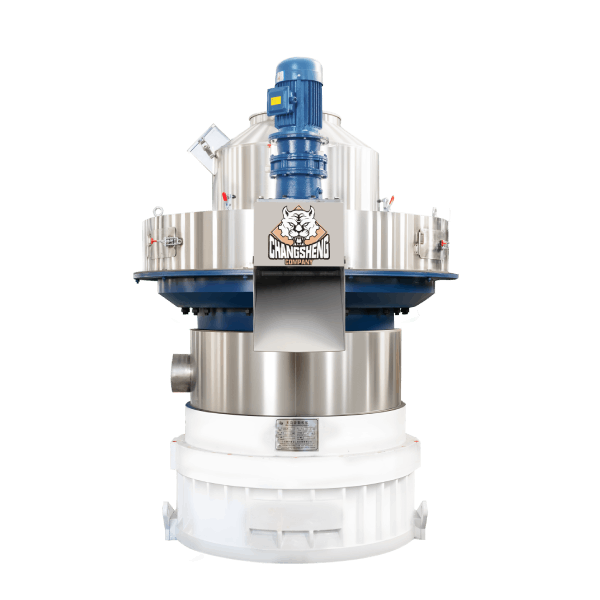
The structural reliability of a wood chips pellet machine determines production stability and maintenance frequency.
Primary structural components
- Ring Die
- Manufactured from high-strength alloy steel
- Precision-drilled compression holes
- Heat-treated for wear resistance
- Compression Rollers
- Hardened alloy steel rollers
- Adjustable pressure control
- Main Transmission Gearbox
- High-torque industrial gearbox
- Designed for continuous heavy-load operation
- Feeding System
- Variable-speed screw feeder
- Ensures stable material supply
- Main Frame
- Reinforced welded steel structure
- Vibration-resistant industrial frame
- Lubrication System
- Automatic grease lubrication
- Extends bearing service life
Manufacturing Process
The production process for biomass pellets using a wood chips pellet machine involves several engineered steps.
Step 1 – Wood Chip Preparation
Raw materials include:
- Forestry residues
- Wood chips from sawmills
- Logging waste
Equipment used:
- Wood chipper
- Hammer mill
Target particle size: 3–5 mm.
Step 2 – Drying Process
Wood chips often contain moisture levels above 30%.
Equipment:
- Rotary drum dryer
- Biomass hot air furnace
Target moisture: 10–15%.
Step 3 – Pelletizing
Prepared materials enter the wood chips pellet machine.
Engineering process:
- Compression between rollers and ring die
- Heat generated by friction softens lignin
- Natural lignin acts as a binding agent
Output: cylindrical biomass pellets.
Step 4 – Pellet Cooling
Fresh pellets exit the machine at high temperatures.
Equipment:
- Counterflow pellet cooler
Purpose:
- Reduce pellet temperature
- Increase pellet hardness
Step 5 – Screening and Packaging
Pellets are screened to remove fines.
Equipment:
- Vibrating screen
- Automatic weighing and bagging system
Industry Comparison
| Technology | Raw Material | Pellet Density | Energy Efficiency | Industrial Suitability |
|---|---|---|---|---|
| Wood Chips Pellet Machine | Forestry residues | High | High | Excellent |
| Briquette Press Machine | Mixed biomass | Medium | Medium | Moderate |
| Charcoal Briquette Machine | Charcoal powder | Medium | Medium | Limited |
| Feed Pellet Machine | Feed ingredients | Medium | Medium | Agricultural only |
Compared with alternative technologies, a wood chips pellet machine offers superior efficiency for converting forestry residues into standardized biomass fuel.
Application Scenarios
Industrial buyers use wood chips pellet machine systems in multiple biomass energy sectors.
Biomass Energy Plants
Renewable energy facilities convert forestry waste into industrial biomass fuel pellets.
EPC Biomass Power Projects
Engineering contractors integrate pellet production systems into biomass energy infrastructure.
Wood Processing Factories
Sawmills utilize pellet machines to convert wood waste into marketable fuel products.
Biomass Fuel Export Operations
Exporters produce pellets for international energy markets, including power plants and heating facilities.
Core Pain Points and Engineering Solutions
1 Raw Material Moisture Variability
Challenge
Wood chips often contain excessive moisture.
Solution
Install industrial rotary drying systems to stabilize moisture content.
2 Die Wear and Replacement Costs
Challenge
High compression pressure causes die wear.
Solution
Use heat-treated alloy ring dies and maintain lubrication schedules.
3 Pellet Density Inconsistency
Challenge
Improper compression ratios reduce pellet durability.
Solution
Adjust die compression ratio and optimize feed consistency.
4 High Energy Consumption
Challenge
Pelletizing equipment requires significant power.
Solution
Use high-efficiency motors and optimized gearbox transmission.
Risk Warnings and Avoidance Strategies
When investing in a wood chips pellet machine, industrial buyers should evaluate several operational risks.
- Excessive raw material moisture can reduce pellet quality.
- Low-grade ring dies may wear quickly.
- Inadequate cooling systems can lead to pellet cracking.
- Poor gearbox design may cause operational downtime.
A properly engineered pellet plant layout significantly reduces these risks.
Procurement Selection Guide
Industrial procurement teams should follow these steps when selecting a wood chips pellet machine.
Step 1
Analyze raw material type and moisture content.
Step 2
Determine target pellet production capacity.
Step 3
Evaluate factory power supply and infrastructure.
Step 4
Select appropriate ring die diameter and compression ratio.
Step 5
Review supplier manufacturing experience.
Step 6
Request equipment drawings and process flow diagrams.
Step 7
Confirm spare parts availability and maintenance support.
Engineering Case Study
Project Location: Vietnam
Industry: Biomass fuel manufacturing
Project configuration:
- Raw material: eucalyptus wood chips
- Production capacity: 4 tons/hour
- Equipment installed:
- Hammer mill
- Rotary dryer
- Wood chips pellet machine
- Counterflow pellet cooler
- Automatic bagging system
Operational results:
- Pellet diameter: 8 mm
- Pellet density: 1.2 t/m³
- Daily production: approximately 80 tons of biomass pellets.
The plant supplies pellets to industrial biomass power stations and heating facilities.
FAQ
1. What raw materials can be processed by a wood chips pellet machine?
Wood chips, forestry residues, sawdust, and wood processing waste.
2. What moisture level is required for pelletizing?
Optimal moisture is 10–15%.
3. What pellet diameter is typically produced?
Common sizes include 6 mm, 8 mm, and 10 mm.
4. What is the lifespan of a ring die?
Typically 800–1200 operating hours, depending on material hardness.
5. Is drying equipment necessary?
Yes, when raw material moisture exceeds 15%.
6. What pellet density is expected?
Approximately 1.1–1.4 t/m³.
7. Can the machine operate continuously?
Industrial pellet machines support 24-hour continuous operation.
8. What power supply is required?
Typically 380–415V three-phase electricity.
9. Can wood chips be pelletized directly?
They usually require grinding to smaller particle sizes first.
10. Is a complete production line recommended?
For industrial production, integrated pellet lines significantly improve efficiency.
Request Technical Information or Quotation
Procurement teams seeking engineering specifications, technical drawings, or pricing for a wood chips pellet machine may contact the technical department at Shandong Changsheng Machinery.
Our engineering team provides:
- Biomass raw material analysis
- Pellet plant layout design
- Equipment configuration planning
- Technical documentation and quotations
E-E-A-T: Author Expertise
This technical article was prepared by the engineering team at Shandong Changsheng Machinery, a manufacturer specializing in biomass pellet machinery and pellet production line systems. The company has extensive experience supporting EPC contractors, biomass energy developers, and pellet fuel producers worldwide. Technical information in this document is based on industrial pellet production practices and equipment engineering experience.