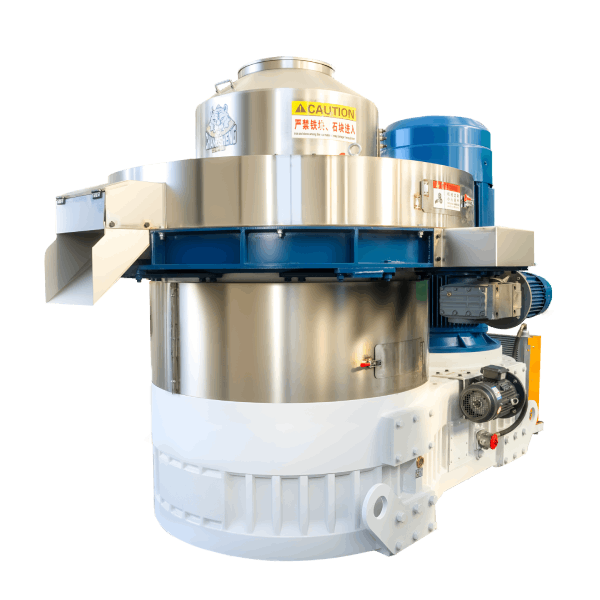
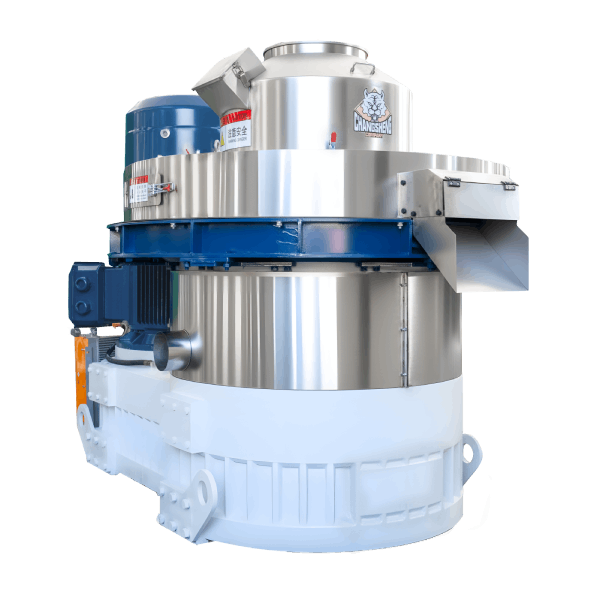
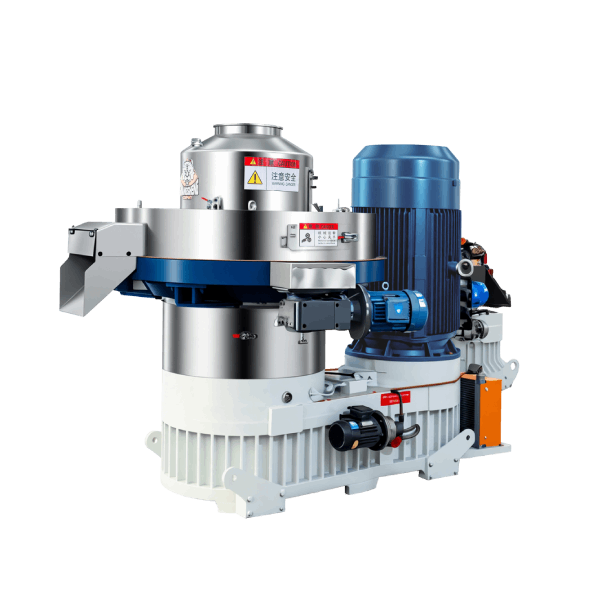
Small Pellet Mill: Complete Buyer’s Guide 2026
News 2026-08-03
Page SEO Summary: This complete buyer’s guide helps users find the right small pellet mill—covering types, capacities, applications, price ranges, and selection criteria for small-scale production.
Small pellet mills have opened up the world of pellet production to individuals, small farmers, and entrepreneurs. From making animal feed on the farm to producing wood pellets for home heating, these compact machines make pelletizing accessible without the investment required for industrial-scale equipment.
Whether you’re a small farmer looking to reduce feed costs, a hobbyist wanting to make your own heating pellets, or an entrepreneur exploring a small business opportunity, choosing the right small pellet mill is essential.
This guide provides a comprehensive framework for understanding and selecting small pellet mills.
What Is a Small Pellet Mill?
Definition
A small pellet mill is a compact, affordable machine designed for small-scale pellet production. Typically using a flat die design, these machines are suitable for capacities ranging from 30 to 300 kg/h.
Key Characteristics
| Characteristic | Description |
|---|---|
| Compact size | Small footprint; fits in workshops or garages |
| Affordable | Lower cost than industrial machines |
| Simple operation | Easy to operate and maintain |
| Versatile | Can process various materials |
| Portable | Some models can be moved |
Typical Applications
| Application | Use Case |
|---|---|
| Animal feed | Produce feed for poultry, pigs, rabbits, etc. |
| Wood pellets | Home heating; small-scale pellet sales |
| Biomass pellets | Agricultural waste utilization |
| Fish/aquaculture feed | Small-scale fish feed production |
| Experiments/R&D | Research and development |
Types of Small Pellet Mills
Flat Die Pellet Mill
| Aspect | Details |
|---|---|
| Capacity | 30-300 kg/h |
| Power | 3-22 kW (single or 3-phase) |
| Die type | Flat die with rollers |
| Advantages | Low cost; simple; portable |
| Limitations | Lower capacity; more wear |
| Best for | Small farms; home users; start-ups |
Sub-types of Flat Die
| Type | Capacity | Power | Best For |
|---|---|---|---|
| Manual flat die | 20-50 kg/h | 3-5 kW | Very small; hobby |
| Electric flat die | 50-150 kg/h | 5-11 kW | Small farms |
| Flat die with motor | 100-300 kg/h | 11-22 kW | Small commercial |
Mini Ring Die Pellet Mill
| Aspect | Details |
|---|---|
| Capacity | 150-500 kg/h |
| Power | 15-30 kW (3-phase) |
| Die type | Small ring die |
| Advantages | Better quality; higher efficiency |
| Limitations | Higher cost; needs 3-phase power |
| Best for | Small commercial operations |
Applications and Uses
Animal Feed Production
| Livestock | Pellet Size (mm) | Daily Need |
|---|---|---|
| Chicken | 2-4 | 0.1-0.15 kg/bird |
| Pig | 2-5 | 1-2.5 kg/pig |
| Rabbit | 3-4 | 0.1-0.15 kg/rabbit |
| Fish | 0.5-3 | Varies |
| Sheep/Goat | 4-6 | 1.5-2.5 kg/animal |
Wood Pellet Production
| Application | Pellet Size | Typical Use |
|---|---|---|
| Home heating | 6 mm | Pellet stoves |
| Small boiler | 6-8 mm | Small industrial/commercial |
| Cooking | 6 mm | Some stoves |
Other Applications
| Material | Application | Notes |
|---|---|---|
| Grass/hay | Animal feed | Requires drying |
| Corn stover | Biomass fuel | Requires pre-processing |
| Straw | Biomass fuel | Challenging; needs binders |
| Paper/cardboard | Fuel/insulation | Requires processing |
Capacity Selection
Matching Capacity to Needs
| Operation | Suggested Capacity | Machine Size |
|---|---|---|
| Hobby/home use | 30-50 kg/h | Small flat die |
| Small farm (50-100 animals) | 50-100 kg/h | Medium flat die |
| Medium farm (100-300 animals) | 100-200 kg/h | Large flat die |
| Small commercial | 200-400 kg/h | Ring die (small) |
Feed Calculation Example
Example: 100 Chickens
| Parameter | Value |
|---|---|
| Daily feed per chicken | 0.12 kg |
| Total daily feed | 12 kg |
| Operating hours | 2 hours/day |
| Required capacity | 6 kg/h |
Recommendation: A 30-50 kg/h small flat die machine is sufficient.
Wood Pellet Production Example
| Parameter | Value |
|---|---|
| Target annual production | 50 tons/year |
| Operating days | 200 days/year |
| Daily production | 250 kg/day |
| Operating hours | 8 hours/day |
| Required capacity | 31 kg/h |
Recommendation: A 50-80 kg/h flat die machine is sufficient.
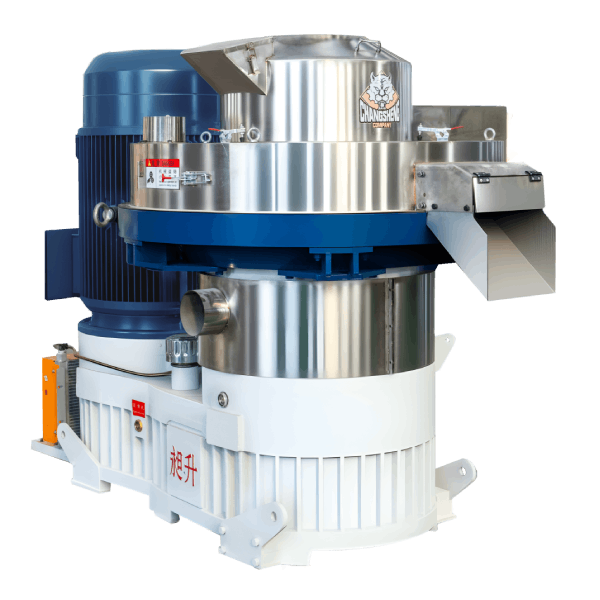
Price Range Reference
Typical Price Ranges
| Type | Capacity | Price Range (USD) |
|---|---|---|
| Manual flat die | 20-50 kg/h | $300-800 |
| Electric flat die (small) | 50-80 kg/h | $800-1,500 |
| Electric flat die (medium) | 80-150 kg/h | $1,500-2,500 |
| Electric flat die (large) | 150-300 kg/h | $2,500-5,000 |
| Mini ring die | 200-500 kg/h | $5,000-12,000 |
| Complete small line | 50-200 kg/h | $3,000-10,000 |
Price Factors
| Factor | Impact |
|---|---|
| Capacity | Larger = higher price |
| Motor type | 3-phase motors cost more |
| Component quality | Premium brands = higher price |
| Construction | Stainless steel = higher price |
| Accessories | Extra dies; spare parts |
What’s Included
Standard Inclusions
| Item | Usually Included? |
|---|---|
| Pellet mill unit | ✓ |
| Motor | ✓ |
| Basic control panel | ✓ |
| One die | ✓ |
| One set of rollers | ✓ |
| Operation manual | ✓ |
| Basic tools | ✓ |
Optional Extras
| Item | Usually Extra |
|---|---|
| Spare die | ✓ |
| Spare rollers | ✓ |
| Hammer mill | ✓ |
| Cooler | ✓ |
| Additional dies (different sizes) | ✓ |
| Pellet length adjustment | ✓ |
Key Selection Considerations
What to Consider Before Buying
| Factor | Why It Matters |
|---|---|
| What material will you process? | Determines die type and machine configuration |
| What is your target capacity? | Sizes the machine |
| What power supply is available? | Single-phase vs. 3-phase |
| What is your budget? | Determines options |
| Do you have a hammer mill? | For pre-processing |
| What is your pellet size need? | Die selection |
Questions to Ask Suppliers
| Question | Why |
|---|---|
| “What materials can this machine process?” | Capability |
| “What power supply is needed?” | Compatibility |
| “What is the die life?” | Operating cost |
| “What spare parts are available?” | Maintenance |
| “What is the warranty?” | Protection |
| “Can I see a video of it working?” | Verification |
Operation and Maintenance
Basic Operation Steps
| Step | Task |
|---|---|
| 1 | Prepare material (dry to 10-15% moisture) |
| 2 | Grind to 2-5 mm (if needed) |
| 3 | Start machine |
| 4 | Feed material gradually |
| 5 | Adjust pellet length |
| 6 | Collect pellets |
| 7 | Cool pellets before storage |
Routine Maintenance
| Task | Frequency |
|---|---|
| Lubricate moving parts | Weekly |
| Clean die | After each use |
| Inspect rollers | Monthly |
| Check belts | Monthly |
| Replace die (as needed) | Varies by use |
| Replace rollers (as needed) | Varies by use |
Common Issues
| Issue | Cause | Solution |
|---|---|---|
| Low pellet quality | Wrong moisture/particle size | Adjust parameters |
| Machine jamming | Feed rate too high | Reduce feed |
| Excessive fines | Dry material; wrong die | Add moisture; change die |
| Die blockage | Oversize particles | Grind finer |
Procurement Checklist: Small Pellet Mill
Requirements Definition
- □ Material type identified
- □ Target capacity (kg/h) defined
- □ Pellet size (mm) determined
- □ Power supply confirmed (single/3-phase)
Equipment Selection
- □ Type (flat die/ring die) selected
- □ Capacity matched to need
- □ Power compatibility confirmed
- □ Budget established
Supplier Evaluation
- □ Multiple quotes obtained
- □ Supplier reputation checked
- □ Component brands reviewed
- □ Warranty terms reviewed
- □ Spare parts availability confirmed
Final Decision
- □ Total cost (including shipping) calculated
- □ Delivery terms confirmed
- □ Payment terms confirmed
- □ Order placed
Frequently Asked Questions
1. What is a small pellet mill?
A small pellet mill is a compact, affordable machine for small-scale pellet production, typically using a flat die design with capacities of 30-300 kg/h.
2. What can a small pellet mill make?
Small pellet mills can make animal feed pellets, wood pellets for heating, biomass pellets from agricultural residues, fish feed, and more. They work with various dry materials.
3. What is the price of a small pellet mill?
Prices range from $300-800 for manual models, $800-2,500 for electric flat die models, $2,500-5,000 for larger flat die, and $5,000-12,000 for mini ring die models.
4. What is the difference between flat die and ring die?
Flat die: lower cost, simpler, 30-300 kg/h capacity. Ring die: higher capacity (150-500+ kg/h), better quality, higher cost. For most small users, flat die is sufficient.
5. Can I make wood pellets with a small pellet mill?
Yes. Small flat die pellet mills can make wood pellets from sawdust or ground wood chips. Material must be dry (10-15% moisture) and ground to 2-5 mm.
6. Is a small pellet mill easy to operate?
Yes. Small pellet mills are designed for simple operation. Most come with manuals and basic training. Startup is straightforward with some practice.
7. What power supply do I need?
Check the machine specifications. Some small models run on single-phase (220V), while larger models need 3-phase (380V). Confirm your power supply before purchasing.
8. How long does a die last?
Die life depends on material abrasiveness and usage. For wood, a die may last 200-500 hours. For softer materials like feed, die life is longer. Harder materials reduce die life.
About the Author
Zhang Wei – Senior International Sales Engineer, Shandong Changsheng Machinery Co., Ltd.
Zhang Wei has over 12 years of experience in the biomass and feed pellet mill industry, with a background in mechanical engineering and international project execution. He has worked with small farmers and entrepreneurs across Southeast Asia, the Middle East, Africa, and Latin America, providing practical solutions for small-scale pellet production.
With hands-on experience in both the manufacturing workshop and client-side operations, Zhang brings practical insights into successful equipment procurement—from the factory floor to the small farm.