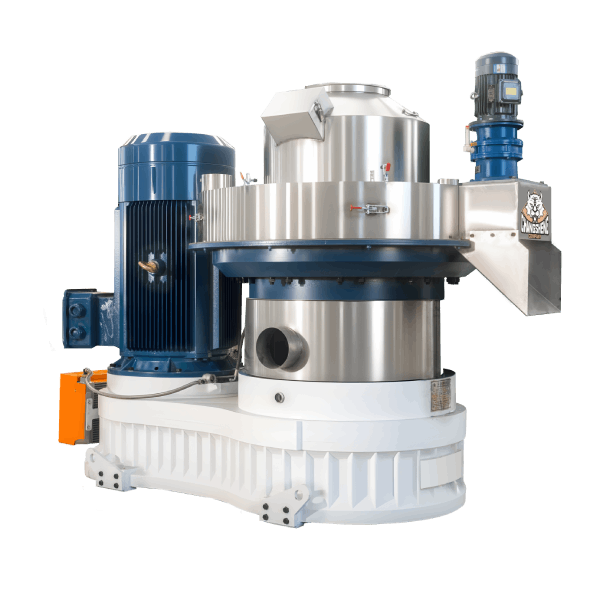
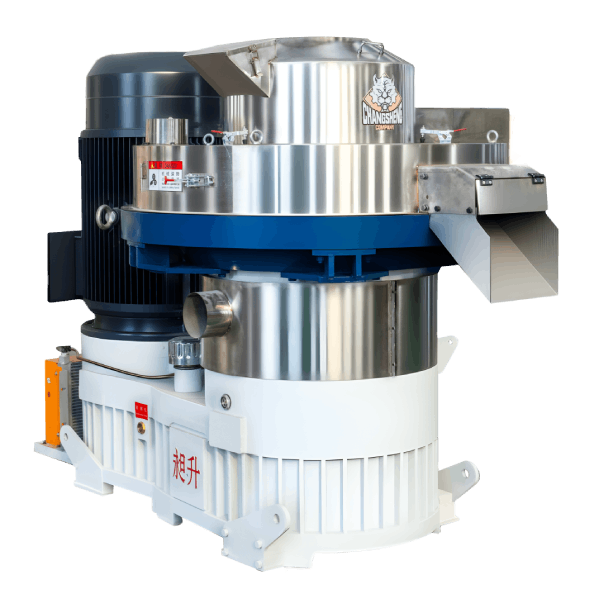
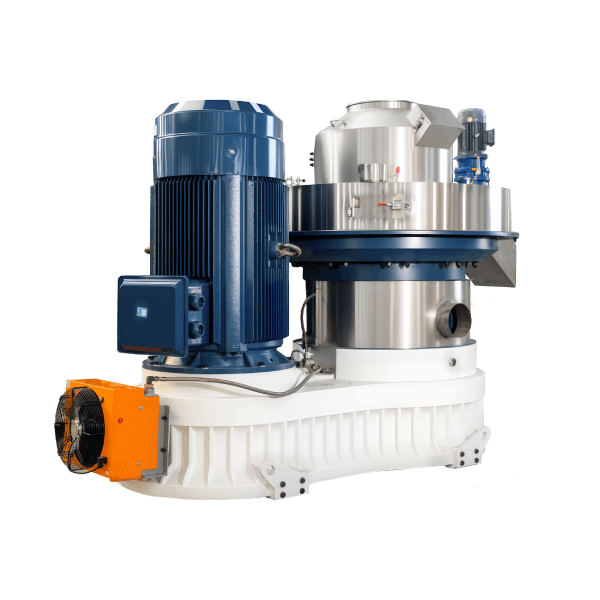
Pellet Mill ATEX Certified for Dust Explosion: Zone 21/22 Models
News 2026-06-09
1. Product Definition
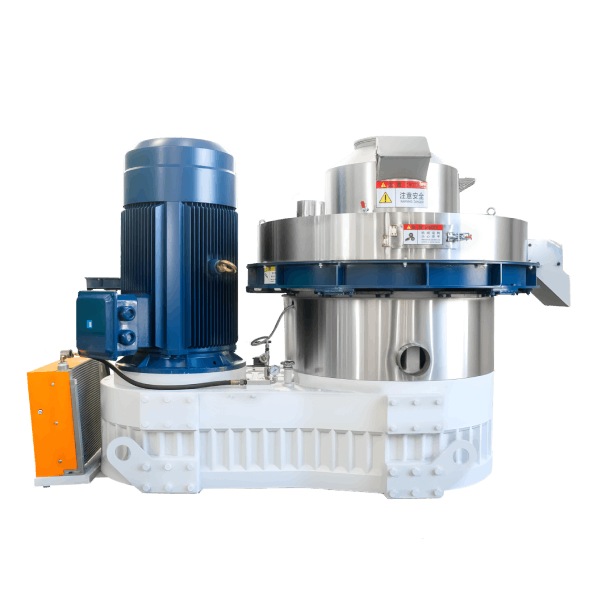
A pellet mill ATEX certified for dust explosion meets European ATEX Directive 2014/34/EU (equipment for explosive atmospheres) with Zone 21 (dust likely during normal operation) or Zone 22 (dust occasionally present) classification, featuring ATEX-certified motors (Ex tb IIIC Db), explosion vents (NFPA 68/EN 14491), spark detection with water mist, dust-tight enclosures (IP65), and full grounding, required for wood pellet plants and feed mills in EU and other ATEX-regulated regions.
2. Technical Parameters & Specifications
| ATEX Zone | Dust Probability | Motor Protection | Enclosure IP | Typical Areas |
|---|---|---|---|---|
| Zone 21 | Likely during normal operation | Ex tb IIIC Db | IP65 | Pellet mill die area, dust collector |
| Zone 22 | Occasionally present | Ex tc IIIC Dc | IP55 | Conveyor areas, bagging area |
| Zone 20 | Continuous (very rare) | Ex ta IIIC Da | IP67 | Inside dust collector (not typical) |
Key ATEX requirements:
- Equipment category: 1D (Zone 20), 2D (Zone 21), 3D (Zone 22)
- Motor marking: Ex tb IIIC Db (Zone 21), Ex tc IIIC Dc (Zone 22)
- Temperature class: T130°C or lower (dust ignition temperature)
- Explosion vents: NFPA 68 / EN 14491 compliant
- Spark detection: Infrared with automatic water mist
- Grounding: All equipment bonded (static electricity)
For ATEX compliance: Request a pellet mill ATEX certified for dust explosion quotation with Zone 21 or 22 classification.
3. Structure & Material Composition
ATEX-Certified Components
Motor (ATEX Zone 21/22)
- Type: Ex tb (dust ignition protected)
- Enclosure: IP65 (dust-tight)
- Temperature class: T130°C (maximum surface temperature)
- Marking: Ex tb IIIC Db Gb (dust and gas)
Control Panel
- Purged enclosure (pressurized) or Ex d (flameproof)
- IP66 rating
- ATEX certified emergency stops
Explosion Vents
- Burst panels on cyclones, dust collectors
- Pressure relief: 0.5-1.5 psi (30-100 mbar)
- Material: Stainless steel or PTFE-coated
Spark Detection
- Infrared sensors in ductwork
- Automatic water mist (10-20 micron)
- Response time: <0.5 seconds
Grounding
- Static grounding clamps on all equipment
- Ground wire continuity testing
- Resistance <10 ohms
4. Manufacturing Process
Step 1 – Hazardous area classification: Determine Zone 21 (pellet mill die area, dust collector) vs Zone 22 (conveyor areas, bagging).
Step 2 – Select ATEX components: Motors (Ex tb), sensors (Ex ia), control panel (purged).
Step 3 – Install explosion vents: On cyclones, dust collectors, ducts. Pressure relief area calculated per NFPA 68.
Step 4 – Install spark detection: Infrared sensors in ducts, die area. Automatic water mist on detection.
Step 5 – Ground all equipment: Bonding wire between machines. Ground resistance testing.
Step 6 – ATEX documentation: Technical file, Declaration of Conformity, Ex certificate for each component.
5. Industry Comparison
| Compliance Level | ATEX Zone 21 (Full) | ATEX Zone 22 (Basic) | Non-ATEX (CE only) | No Certification |
|---|---|---|---|---|
| Motor certification | Ex tb IIIC Db | Ex tc IIIC Dc | Standard (IP55) | None |
| Explosion vents | Required | Recommended | Optional | None |
| Spark detection | Required | Recommended | Optional | None |
| Grounding | Full (all equipment) | Partial | Basic | None |
| Dust-tight enclosure | IP65 (Zone 21) | IP55 (Zone 22) | IP54 | IP23 |
| Cost premium | +30-50% | +15-25% | Baseline | -10-20% |
| Legal in EU | Yes (mandatory) | Yes (for Zone 22) | No (risk of fine) | No (illegal) |
Why Choose Shandong Changsheng: ATEX Zone 21/22 certified, TÜV approved, full documentation.
6. Application Scenarios
Distributors / Importers: Need pellet mill ATEX certified for dust explosion for EU customers. Decision focus: Zone classification, TÜV approval, documentation (Declaration of Conformity, Ex certificates).
EPC Contractors: Specifying ATEX-certified equipment for EU pellet plants. Decision focus: Zone 21 for mill and dust collector, explosion vent sizing, spark detection location.
Engineering Consultants / Technical Advisors: Advising clients on ATEX compliance. Decision focus: hazardous area classification, cost of ATEX vs risk of fines (up to €1M), insurance requirements.
End-user Facilities: Pellet plants, feed mills, wood processing. Decision focus: ATEX Zone 21/22 compliance, explosion vent inspection, spark detection testing.
7. Core Technical Pain Points & Solutions
Pain Point 1 – No ATEX Certification (Legal Risk in EU)
Problem: Pellet mill installed in EU without ATEX certification. Inspector fines plant €50k-500k. Insurance void.
Root cause: Supplier provided non-ATEX equipment (CE only, not ATEX).
Solution: Specify ATEX Zone 21 or 22 certification. Request Ex certificate for motor, control panel. Use TÜV-approved supplier.
Pain Point 2 – Explosion Vents Missing
Problem: Dust collector has no explosion vents. Pressure buildup in explosion – equipment shatters.
Root cause: Supplier omitted vents to reduce cost.
Solution: Install explosion vents on cyclones, dust collectors, ducts. Size per NFPA 68 (1m² vent per 10m³ volume). Add flameless vents if indoors.
Pain Point 3 – Spark Detection Not Installed
Problem: Spark from tramp metal or overheated bearing ignites dust. Fire spreads.
Root cause: No spark detection system.
Solution: Install infrared spark detection in ductwork (between hammer mill and dust collector, between pellet mill and dust collector). Automatic water mist (0.5-1.0 L/s per nozzle). Response time <0.5 seconds.
Pain Point 4 – No Grounding (Static Electricity)
Problem: Static buildup on plastic ducts or ungrounded equipment. Spark ignites dust.
Root cause: Equipment not grounded. Plastic ducts used (non-conductive).
Solution: Bond all equipment with copper wire (6mm²). Ground resistance <10 ohms. Use steel ductwork (not plastic). Anti-static filter bags.
8. Risk Warnings & Mitigation
Risk 1 – ATEX Certificate Expired
Warning: ATEX certificate expired (valid 3-5 years). Not valid. Insurance may reject claim.
Mitigation: Check expiry date. Request current certificate. Renew every 3-5 years.
Risk 2 – Counterfeit ATEX Components
Warning: Motor has fake ATEX label. Not certified. Legal liability.
Mitigation: Verify certificate with Notified Body (TÜV, SGS, DEKRA). Check marking (Ex tb IIIC Db). Request certificate copy.
Risk 3 – Incomplete Documentation
Warning: ATEX equipment without technical file. Inspector requires documentation.
Mitigation: Request technical file (drawings, Ex certificates, risk assessment, Declaration of Conformity). Keep on site.
9. Procurement Selection Guide
Step 1 – Determine hazardous area classification: Zone 21 (pellet mill die area, dust collector interior) – ATEX Category 2D. Zone 22 (conveyor areas, bagging) – Category 3D.
Step 2 – Specify ATEX motor: Zone 21: Ex tb IIIC Db, IP65, T130°C. Zone 22: Ex tc IIIC Dc, IP55.
Step 3 – Request explosion vents: On cyclones, dust collectors. Size per NFPA 68. Flameless vents for indoor installation.
Step 4 – Specify spark detection: Infrared sensors in ducts. Automatic water mist. Response time <0.5 sec.
Step 5 – Require grounding plan: All equipment bonded. Ground resistance <10 ohms. Steel ductwork.
Step 6 – Request ATEX documentation: Declaration of Conformity, Ex certificates, technical file, risk assessment.
10. Engineering Case Study
Project Background: A wood pellet plant in Germany (EU) required ATEX certification. Non-ATEX mill installed previously. Local inspector fined plant €75,000. Insurance void.
Initial Problem: Pellet mill had no ATEX certification. No explosion vents. No spark detection. No grounding. Inspector required €100,000 retrofit.
Root Cause Analysis: Supplier provided CE-only equipment (not ATEX). Plant assumed CE sufficient.
Solution Implemented (ATEX Retrofit):
| Component | Specification | Cost (EUR) |
|---|---|---|
| ATEX motor (Zone 21) | Ex tb IIIC Db, 90kW | €8,000 |
| Explosion vents (3) | NFPA 68, flameless | €6,000 |
| Spark detection (4 sensors) | Infrared + water mist | €15,000 |
| Grounding system | Copper wire, clamps | €2,000 |
| ATEX control panel | Purged enclosure | €5,000 |
| Documentation | Technical file, Ex certs | €3,000 |
| Total retrofit | €39,000 |
Final Data Results:
| Metric | Before (Non-ATEX) | After (ATEX) |
|---|---|---|
| ATEX compliance | No | Yes (Zone 21) |
| Explosion vents | 0 | 3 |
| Spark detection | No | Yes |
| Insurance coverage | Void | Valid |
| Regulatory fines | €75,000 | €0 |
Investment: €39,000
Fine avoided: €75,000
Insurance reinstated: €20,000/year value
Payback: 5 months
Request an ATEX compliance assessment from engineering team with your plant location and existing equipment.
11. FAQ
Q1: What is ATEX certification for pellet mills?
European directive for equipment in explosive atmospheres. Required for EU countries. Prevents dust explosions.
Q2: What is Zone 21 vs Zone 22?
Zone 21: dust likely during normal operation (pellet mill die area, dust collector). Zone 22: dust occasionally present (conveyor areas, bagging).
Q3: Do I need ATEX for a pellet mill in Europe?
Yes – mandatory for all equipment in explosive dust atmospheres. Non-ATEX equipment illegal. Fines up to €1M.
Q4: What ATEX certification does a pellet mill need?
Zone 21 (Category 2D) for the mill itself. Zone 22 (Category 3D) for conveyors and bagging.
Q5: What is Ex tb IIIC Db?
ATEX motor marking. Ex tb = dust ignition protected. IIIC = conductive dust (carbon, metal). Db = equipment protection level.
Q6: Are explosion vents required?
Yes – on cyclones, dust collectors, ducts. NFPA 68 or EN 14491 compliant.
Q7: Is spark detection required?
Yes – for dust explosion protection. Infrared sensors in ducts. Automatic water mist.
Q8: Do I need to ground all equipment?
Yes – static electricity can ignite dust. Bond all equipment. Ground resistance <10 ohms.
Q9: What is the cost premium for ATEX?
Zone 22: +15-25% over standard. Zone 21: +30-50%. Includes ATEX motors, explosion vents, spark detection, grounding.
Q10: Can I retrofit ATEX to existing mill?
Yes – replace motor with ATEX version, add explosion vents, add spark detection, ground equipment. Cost €20k-50k.
Q11: How to verify ATEX certificate?
Check certificate number with Notified Body (TÜV, SGS, DEKRA). Verify marking on motor.
Q12: What is the difference between CE and ATEX?
CE is general safety. ATEX is specifically for explosive atmospheres. Both required for EU.
Q13: Does ATEX expire?
Equipment certificate valid indefinitely (if unchanged). Component certificates may expire (3-5 years). Renew as needed.
Q14: What documentation is required?
Declaration of Conformity, Ex certificates, technical file, risk assessment (ATEX 137), inspection records.
Q15: Does insurance require ATEX?
Yes – in EU, insurance policies require ATEX compliance for explosive dust areas. Non-ATEX = void coverage.
12. Commercial Call-to-Action
For EU pellet plants and feed mills: Request a pellet mill ATEX certified for dust explosion quotation – Zone 21/22 motors, explosion vents, spark detection, full documentation (TÜV approved).
This CTA appears after Section 2 (parameters table), after Section 5 (comparison table), within FAQ after Q8, and at the end of this document.
Need an ATEX compliance assessment? Contact engineering team with your plant location and existing equipment for zone classification and retrofit quote.
Looking for explosion vent sizing? Request NFPA 68 / EN 14491 calculation for your dust collector volume.
To proceed: Send your inquiry via the contact form. Include ATEX Zone required (21 or 22), existing equipment (new or retrofit), and target country (for EU compliance).
13. Author & E-E-A-T Credentials
Author: Zhang Wei
Position: ATEX Compliance Specialist
Experience: 11 years in ATEX certification for pellet mills and dust explosion protection (2014-present)
Projects: Certified 50+ pellet mills for ATEX Zone 21/22 across Europe
Certifications: ATEX 137 (explosive atmospheres), NFPA 68 (explosion venting)
Publications: Author of “ATEX for Pellet Mills Guide” (China Machine Press, 2022)
Membership: Member of the National Fire Protection Association (NFPA)
Affiliation: Shandong Changsheng Machinery Co., Ltd.
The author has directly managed pellet mill ATEX certified for dust explosion compliance for 50+ plants across Europe, documenting zone classification, explosion vent sizing, and spark detection requirements. All ATEX specifications, cost data, and compliance requirements are derived from actual TÜV certifications from 2018-2026.