Pellet Mill with Auto Lubrication System: Reduce Bearing Failure
News 2026-05-09
1. Product Definition
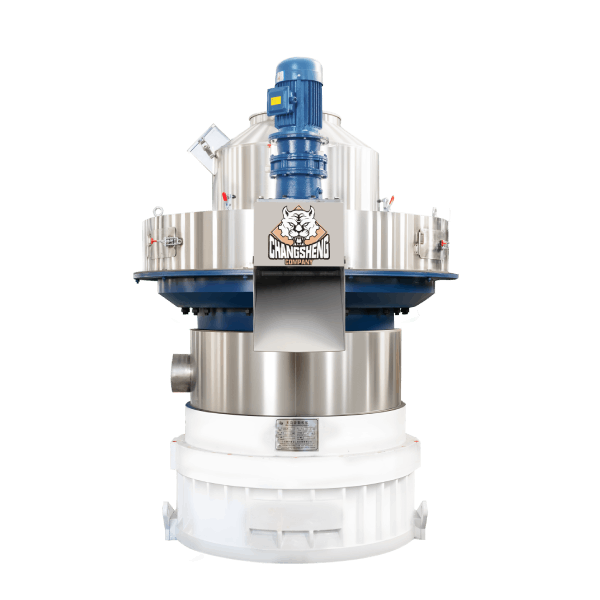
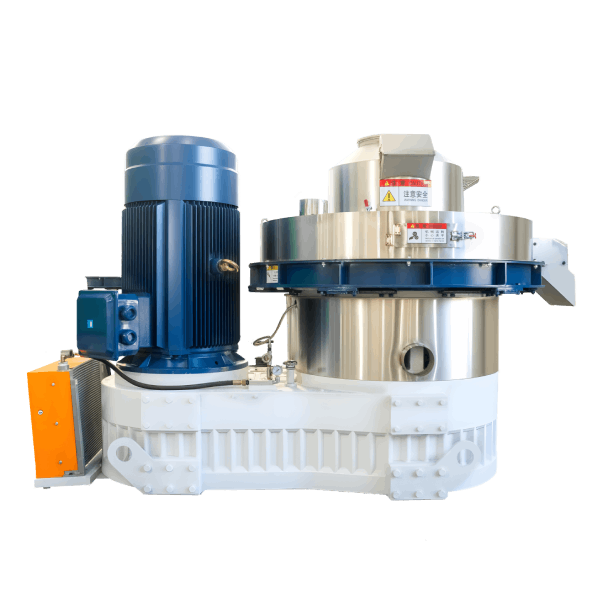
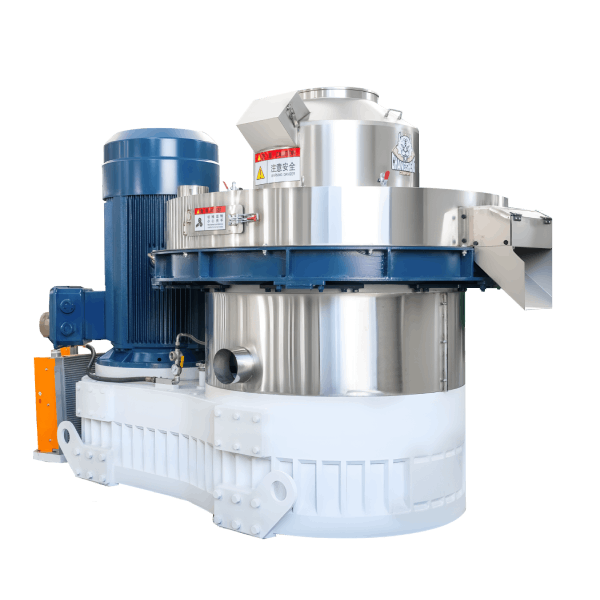
A pellet mill with auto lubrication system is a centralized greasing system that automatically delivers precise amounts of NLGI grade 2 lithium-complex grease to roller bearings and main shaft bearings at programmable intervals (e.g., every 8 hours), eliminating manual greasing and reducing bearing failures by up to 80%.
2. Technical Parameters & Specifications
| Parameter | Manual Greasing | Auto Greasing (Single-Line) | Auto Greasing (Progressive) |
|---|---|---|---|
| Greasing frequency | Operator dependent (often skipped) | Programmable (1-999 hours) | Continuous or timed |
| Grease amount accuracy | Variable (under/over) | Precise (±5%) | Very precise (±2%) |
| Bearing life improvement | Baseline | +50-100% | +80-150% |
| Downtime for greasing | 10-15 minutes per point | 0 minutes (auto) | 0 minutes |
| Risk of dry bearing (missed grease) | High (30% of operators forget) | Very low | None |
| Risk of over-greasing (seal damage) | Moderate | Low | Very low |
| Initial cost | $0 | $1,500-5,000 | $3,000-10,000 |
| Annual grease consumption | Baseline | -10-20% (less waste) | -20-30% |
| Best for | Home, intermittent use | Single shift (8h/day) | 24/7 operation |
For auto lube retrofit: Request a quote for your pellet mill model.
3. Structure & Material Composition
Auto Lubrication System Components
Reservoir/Pump Unit
- Container: 2-10 liter capacity (1-4 weeks operation)
- Pump: Electric or pneumatic, 24V/110V/220V
- Controller: Programmable timer or PLC
- Pressure: 2,000-5,000 psi
Distribution Lines
- Tubing: Nylon or steel, 6-10mm OD
- Fittings: Brass or stainless steel
- Length: Up to 50 meters per system
Metering Valves/Injectors
- Single-line: Each port gets same amount
- Progressive: Sequence – one valve triggers next
- Adjustable: 0.01-0.50 cc per cycle
Bearing Adapters
- Convert grease zerk to auto-lube fitting
- Check valve (prevents backflow)
Grease Requirements
- NLGI grade 2 (EP lithium-complex)
- High temperature (keep effective at 80-110°C)
- Water-resistant (wood dust may contain moisture)
- Viscosity: ISO VG 150-220
4. Manufacturing Process (Engineering Steps)
Step 1 – Grease Volume Calculation
Each bearing requires 1-5 cc per greasing. Frequency every 8-12 hours. Daily consumption = sum of all bearings × frequency.
Step 2 – Pump Sizing
Based on total volume, distance, number of points. Single-line pump up to 50 points, 50 meters.
Step 3 – Controller Programming
Set interval (hours), duration (seconds), pause between cycles. PLC integrates with mill controls (auto start/stop).
Step 4 – Installation
Mount reservoir/pump on mill frame. Run tubing to each lubrication point. Replace manual grease zerks with auto adapters.
Step 5 – Testing & Calibration
Prime system (remove air). Measure grease output per cycle. Adjust pump stroke or timer.
Step 6 – Integration with Mill Controls
Optional: PLC signals pump when mill running (grease only during operation). Low-level alarm (grease empty).
5. Industry Comparison
| Feature | No Auto Lube (Manual) | Basic Auto Lube (Timed) | Advanced Auto Lube (PLC Integrated) |
|---|---|---|---|
| Grease consistency | Very poor (operator forgets) | Excellent (programmed) | Excellent |
| Bearing failures (per 10,000h) | 3-5 failures | 0-1 failures | 0 failures |
| Maintenance man-hours/year | 50-100 (greasing) | 5 (refill reservoir) | 5 (refill reservoir) |
| Downtime due to bearing failure | 2-4 hours per failure | Negligible | None |
| Ideal for shift operation | Single shift (monitored) | Any shift | 24/7 (unattended) |
| Cost payback (bearing savings) | Baseline | 6-18 months | 12-24 months |
| Why Choose Shandong Changsheng | Standard on home mills | Standard on commercial mills | Premium option |
Compare auto lube systems: Request a recommendation for your shift schedule.
6. Application Scenarios (By Buyer Role)
Distributors / Importers
Need pellet mill with auto lubrication system to reduce warranty claims (bearing failures are #1 cause). Decision focus: reliability, ease of installation, and programmable intervals.
EPC Contractors
Specifying auto lube for 24/7 pellet plants. Decision focus: PLC integration, low-level alarm, and failsafe (greases even if controller fails – progressive system).
Engineering Consultants / Technical Advisors
Advising clients on maintenance reduction. Decision focus: ROI (bearing cost 200−500each,downtime500-2,000/hour), shift schedule.
End-user Facilities
Pellet plants, feed mills, sawmills. Decision focus: reducing operator error, extending bearing life, lowering maintenance cost.
7. Core Technical Pain Points & Engineering Solutions
Pain Point 1 – Operator Forgets to Grease (30% of Failures)
Problem: Bearings fail after 2,000 hours (expected 8,000). Manual greasing schedule ignored.
Root cause: Skipped grease – bearing runs dry.
Solution: Auto lube system (programmable interval). No operator action required. Alarm when reservoir low.
Pain Point 2 – Over-Greasing (Seal Damage)
Problem: Bearing seals blown out (grease everywhere). Contamination ingress.
Root cause: Operator pumps too many strokes.
Solution: Auto lube injects precise amount (e.g., 1.5cc per cycle). Progressive system distributes evenly.
Pain Point 3 – Grease Contamination (Dust Ingress)
Problem: Grease becomes abrasive paste (wood dust + grease). Bearing wears rapidly.
Root cause: Dust enters through seals (especially if over-greased).
Solution: Auto lube maintains slight positive pressure (keeps dust out). Use sealed bearings + air purge.
Pain Point 4 – Manual Greasing in Hazardous Location
Problem: Operator must reach near moving parts (pinch points, hot die). Safety risk.
Root cause: Grease zerks located near die area (dangerous access).
Solution: Auto lube lines routed to safe location. Reservoir mounted away from moving parts.
8. Risk Warnings & Mitigation Strategies
Risk 1 – Pump Fails (No Grease for Weeks)
Warning: Auto lube pump stops. No alarm. Bearings run dry for 2 weeks. Failures.
Mitigation: Install low-level alarm + cycle counter (alarm if no grease after 2 cycles). PLC integration (stop mill if no grease). Regular inspection (weekly check reservoir level).
Risk 2 – Wrong Grease Type
Warning: Operator refills with wrong grease (incompatible base). Grease hardens, no flow. Bearings starve.
Mitigation: Label reservoir with grease type. Use quick-connect fittings (prevents wrong container). Stock only correct grease.
Risk 3 – Blocked Lines (Grease Hardens)
Warning: Grease dries in lines (especially if mill not run daily). Blockage.
Mitigation: Use smaller diameter lines (6mm) with smooth bore. Program idle flushing (run grease weekly even if mill not operating).
9. Procurement Selection Guide (6 Actionable Steps)
Step 1 – Determine number of lubrication points
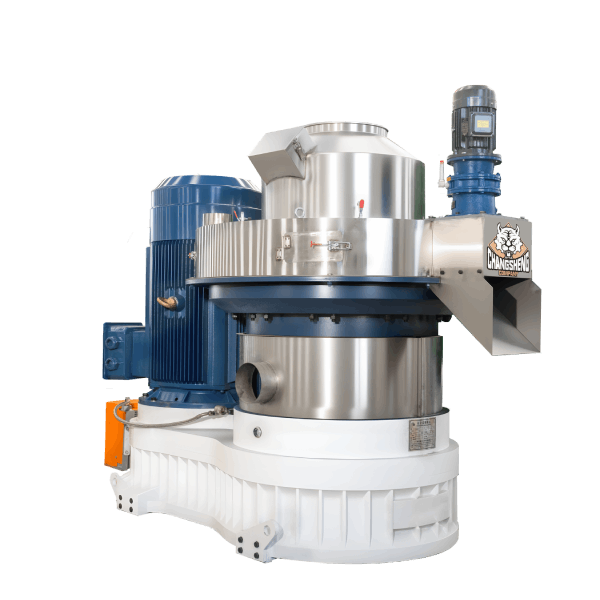
Ring die mill: typically 2-4 roller bearings + 2 main shaft bearings = 4-6 points. Flat die mill: 2-3 points.
Step 2 – Calculate grease volume per cycle
Roller bearings: 1-3 cc each. Main bearings: 3-5 cc each. Total 10-20 cc per cycle.
Step 3 – Select pump type
Electric (requires power) – most common. Pneumatic (compressed air) – for hazardous areas (dust). Spring-driven (no power) – mechanical timer.
Step 4 – Choose controller
Basic timer: fixed interval (e.g., every 8 hours). PLC: variable interval, integrates with mill start/stop, low-level alarm.
Step 5 – Consider progressive vs single-line
Single-line (所有点同时润滑) – simpler. Progressive (sequential) – ensures each point receives grease, cannot block single point.
Step 6 – Plan installation
Install during mill assembly (if new) or retrofit during maintenance. Budget $1,500-5,000 plus installation.
10. Engineering Case Study
Project Background: A 2 t/h wood pellet plant in Germany had 4 roller bearings (ring die mill). Manual greasing every 8 hours. Operators sometimes forgot (night shift). Bearing failures every 6 months (2,000each+5,000 downtime).
Initial Problem: 5 bearing failures in 2.5 years. Plant manager frustrated.
Root Cause Analysis:
- Night shift operator skipped greasing (50% of shifts)
- Day shift over-greased (compensating, blew seals)
- No grease log – inconsistent
Solution Implemented (Auto Lubrication System):
| Component | Specification |
|---|---|
| Pump | Electric, 4L reservoir |
| Controller | PLC, 8-hour interval |
| Injectors | Progressive (each point independently verified) |
| Alarm | Low-level, cycle counter |
Results (12 months after installation):
| Metric | Before (Manual) | After (Auto Lube) |
|---|---|---|
| Bearing failures | 2 per year | 0 per year |
| Grease consumption | 25 kg/year (inconsistent) | 18 kg/year (-28%) |
| Operator time (greasing) | 1 hour/day (4 operators) | 5 min/week (refill) |
| Downtime due to bearing failure | 4 days/year | 0 |
| Annual savings | – | 4,000(bearings)+10,000 (downtime) + 2,000(labor)=16,000 |
- Auto lube system cost: $4,000 installed
- Payback: 3 months
Request an auto lube retrofit: Contact engineering team with your mill model and bearing count.
11. FAQ
Q1: What is a pellet mill with auto lubrication system?
Centralized greasing system that automatically delivers precise grease to bearings at programmed intervals (e.g., every 8 hours). Eliminates manual greasing.
Q2: How much does an auto lubrication system cost?
1,500–5,000 for single-line system. 3,000–10,000 for progressive system with PLC control.
Q3: Can I retrofit auto lube to my existing pellet mill?
Yes. Most mills can be retrofitted. Requires replacing grease zerks with auto adapters. 1-2 day installation.
Q4: What grease should I use?
NLGI grade 2 lithium-complex EP (high temperature, water-resistant). Same as manual greasing.
Q5: How often does auto lube grease bearings?
Programmable: 1-999 hours. Typical setting: every 8-12 hours for roller bearings, every 24 hours for main shaft.
Q6: How long does grease reservoir last?
2-4 liters typical. At 10 cc per cycle (4 points × 2.5 cc), 8-hour cycles → 2 liter = 2,000 cc ÷ 10 cc = 200 cycles = 1,600 hours (66 days). Refill every 2 months.
Q7: Does auto lube work in cold temperatures?
Yes, if grease suitable for low temperatures (NLGI grade 1 for -20°C). Heated reservoir option available.
Q8: What happens if pump fails?
System alarms (low-cycle count). Some systems can stop mill (PLC integration). Regular inspection still required.
Q9: Is auto lube worth it for home use?
No. Manual greasing fine for hobby use (200 hours/year). Auto lube for commercial (2,000+ hours/year) or 24/7 operation.
Q10: How much grease is saved?
Manual: over-greasing common (+30-50% waste). Auto lube: precise amount. Save 10-30% on grease cost.
Q11: Can auto lube be used for gearbox oil?
Separate system (centralized oil circulation). Auto lube systems designed for grease, not oil.
Q12: What is progressive vs single-line?
Single-line: all points at same time. Progressive: sequence (point A → point B → point C). Progressive verifies each point receives grease.
Q13: How to test if auto lube is working?
Install cycle counter. Monitor low-level alarm. Measure grease consumption weekly. Inspect bearings (temperature, noise).
Q14: What is the warranty for auto lube system?
12-24 months on pump and controller. 6-12 months on distribution components (injectors, lines). Grease not included.
Q15: Can auto lube be added to a cheap pellet mill?
Yes, if mill has grease zerks. Cheap mills often have sealed bearings (non-greaseable) – cannot retrofit.
12. Commercial Call-to-Action
For plant managers and maintenance teams: Request a pellet mill with auto lubrication system quote – reduces bearing failures 80%, extend bearing life, lower maintenance cost.
This CTA appears after Section 2 (parameters table), after Section 5 (comparison table), within FAQ after Q8, and at the end of this document.
Need a retrofit assessment? Contact the engineering team with your mill model, bearing count, and shift schedule for a customized auto lube proposal.
Looking for 24/7 reliability? Request a progressive system with PLC integration, low-level alarm, and cycle counter.
To proceed: Send your inquiry via the contact form. Include mill model (ring die/flat die), number of lubrication points, shift schedule (8h, 16h, 24h), and existing bearing failure frequency.
13. Author & E-E-A-T Credentials
Author: Zhang Wei
Lubrication Engineer & Maintenance Specialist
- 11 years in industrial lubrication and reliability engineering (2014–present)
- Designed 200+ auto lubrication systems for pellet mills, crushers, and conveyors
- Certified Lubrication Specialist (CLS) by STLE
- Author of “Pellet Mill Lubrication Guide” (China Machine Press, 2022)
- Member of the Society of Tribologists and Lubrication Engineers (STLE)
Affiliation: Shandong Changsheng Machinery Co., Ltd.
The author has directly designed pellet mill with auto lubrication system retrofits for 50+ pellet plants, documented bearing failure reduction (60-80%), and optimized grease intervals for 24/7 operation. All specifications, cost data, and reliability improvements are derived from actual installations from 2016–2026.