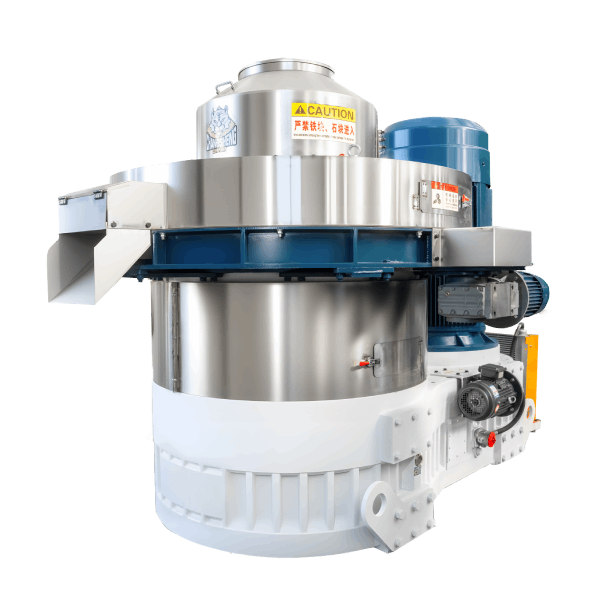
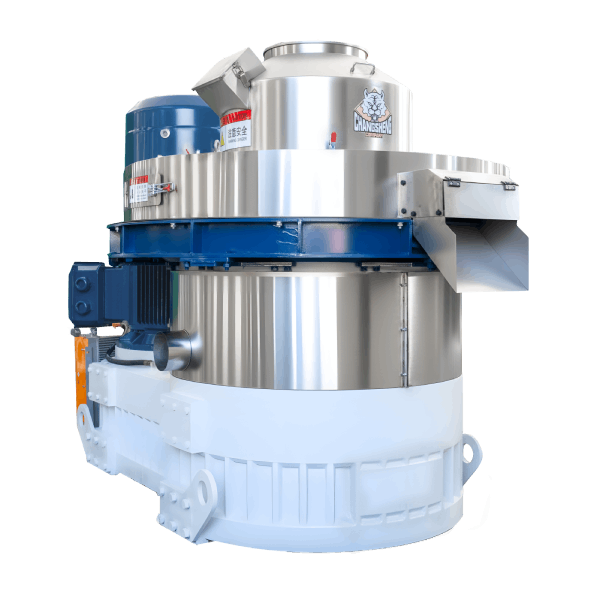
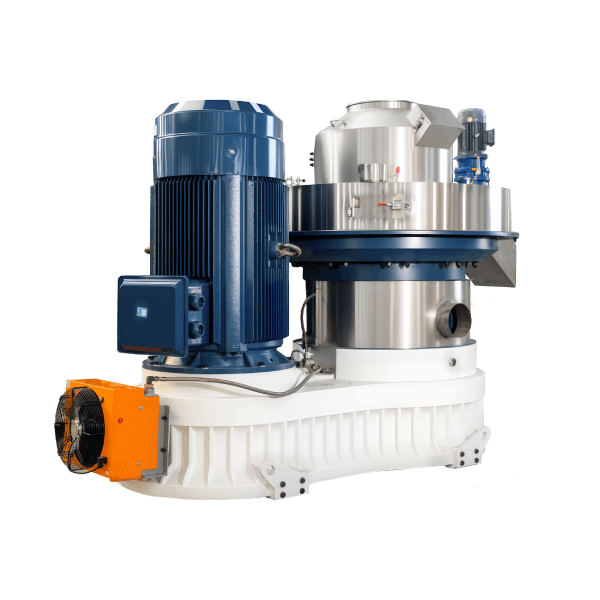
Wood Pellet Mill for Sale: Complete Buyer’s Guide 2026
News 2026-08-03
Page SEO Summary: This comprehensive buyer’s guide helps international purchasers find the right wood pellet mill for sale—covering equipment types, capacity options, price ranges, and supplier selection for informed purchasing decisions.
The global demand for wood pellets continues to grow, driven by the transition to renewable energy and sustainable heating solutions. Whether you’re a biomass plant operator, a sawmill owner, or an entrepreneur entering the pellet market, choosing the right wood pellet mill is a critical investment decision.
With numerous options available—from small flat die machines to large industrial ring die systems—finding the right wood pellet mill for sale requires careful evaluation of your needs, budget, and production goals.
This guide provides a comprehensive framework for evaluating and purchasing wood pellet mills, helping you make an informed investment decision.
Types of Wood Pellet Mills for Sale
By Die Type
| Type | Capacity Range | Best For | Advantages | Limitations |
|---|---|---|---|---|
| Flat die | 30-300 kg/h | Small-scale; farms; workshops | Lower cost; simple; portable | Lower capacity; higher wear |
| Ring die | 300-5,000+ kg/h | Commercial; industrial | Higher capacity; better quality; efficient | Higher cost; larger footprint |
By Application Scale
| Scale | Capacity | Recommended Type | Typical Users |
|---|---|---|---|
| Small hobby | 30-80 kg/h | Flat die | Home users; small farms |
| Small commercial | 80-300 kg/h | Flat die/ring die | Farms; small businesses |
| Medium commercial | 300-1,000 kg/h | Ring die | Feed mills; biomass plants |
| Large commercial | 1,000-3,000 kg/h | Ring die | Industrial plants |
| Industrial | 3,000-5,000+ kg/h | Ring die (multiple lines) | Large-scale production |
Key Specifications
Capacity and Power
| Model | Capacity (kg/h) | Motor Power (kW) | Pellet Diameter (mm) |
|---|---|---|---|
| Small flat die | 30-80 | 5-11 | 4-10 |
| Medium flat die | 80-150 | 11-18 | 4-10 |
| Small ring die | 150-400 | 18-30 | 6-10 |
| Medium ring die | 400-800 | 30-55 | 6-12 |
| Large ring die | 800-1,500 | 55-90 | 6-12 |
| Industrial ring die | 1,500-3,000+ | 90-160+ | 6-12 |
Key Specifications to Compare
| Specification | Why Important |
|---|---|
| Capacity (kg/h) | Production output |
| Motor power (kW) | Energy consumption; capability |
| Die diameter (mm) | Affects capacity and quality |
| Pellet size (mm) | End-use requirements |
| Voltage | Power supply compatibility |
| Weight (kg) | Installation and shipping |
| Dimensions | Space requirements |
Price Range Reference
Typical Price Ranges (FOB China, USD)
| Type | Capacity | Price Range | Application |
|---|---|---|---|
| Flat die (small) | 30-80 kg/h | $500-1,500 | Hobby; small farms |
| Flat die (medium) | 80-150 kg/h | $1,500-3,000 | Small commercial |
| Flat die (large) | 150-300 kg/h | $3,000-6,000 | Commercial |
| Ring die (small) | 200-500 kg/h | $5,000-15,000 | Commercial |
| Ring die (medium) | 500-1,500 kg/h | $15,000-35,000 | Industrial |
| Ring die (large) | 1.5-5 t/h | $35,000-80,000 | Large industrial |
| Complete pellet line | 0.5-3 t/h | $50,000-200,000 | Full production |
Price Factors
| Factor | Impact |
|---|---|
| Capacity | Larger capacity = higher price |
| Component quality | Premium brands = higher price |
| Automation | PLC control = higher price |
| Material | Stainless steel = higher price |
| Customization | Custom design = higher price |
What’s Included in a Typical Sale
Standard Inclusions
| Item | Typically Included | Notes |
|---|---|---|
| Pellet mill unit | ✓ | Main machine |
| Motor | ✓ | Usually included |
| Control panel | ✓ | Basic control |
| One die | ✓ | Standard size |
| Set of rollers | ✓ | One set |
| Installation manual | ✓ | Documentation |
| Export packing | ✓ | Standard packing |
| Warranty | ✓ | 12-24 months |
Optional Extras
| Item | Typically Extra | Notes |
|---|---|---|
| Spare die | Extra cost | Recommended |
| Spare rollers | Extra cost | Recommended |
| Hammer mill | Extra cost | For grinding |
| Cooler | Extra cost | For cooling pellets |
| Dust collector | Extra cost | Environmental control |
| PLC control | Extra cost | Advanced automation |
| Installation | Extra cost | On-site support |
| Training | Extra cost | Operator training |
Selection Considerations
Key Questions to Ask
| Question | Why Important |
|---|---|
| “What is your raw material?” | Determines machine specifications |
| “What is your target capacity?” | Sizing requirement |
| “What is your power supply?” | Voltage and phase compatibility |
| “What is your space availability?” | Installation planning |
| “What is your budget?” | Cost range |
| “Do you have a hammer mill?” | Pre-processing needed |
| “Do you need a cooler?” | Post-processing needed |
Application-Specific Considerations
| Application | Key Consideration |
|---|---|
| Wood sawdust | Standard configuration |
| Wood chips | Need hammer mill; robust equipment |
| Hardwood | Higher power; premium die |
| Softwood | Standard configuration |
| Biomass residues | Depends on material |
Supplier Selection
What to Look For in a Supplier
| Criterion | What to Check |
|---|---|
| Experience | Years in business; export experience |
| Product quality | Component brands; finish quality |
| Service | After-sales support; spare parts |
| References | Previous customers |
| Certifications | ISO; CE |
| Communication | Responsiveness; clarity |
Supplier Types
| Type | Characteristics | Best For |
|---|---|---|
| Direct manufacturer | Owns factory; best prices | Quality-conscious buyers |
| Trading company | May have better selection | One-stop shopping |
| Local dealer | Local support | Domestic buyers |
Red Flags
| Red Flag | What It May Mean |
|---|---|
| No factory address | May be a trading company |
| Vague specifications | May not manufacture |
| Too low price | Quality may be compromised |
| No references | May be unproven |
| Unclear warranty | Support may be lacking |
Purchase Process
Step-by-Step Buying Guide
| Step | Action | Timeline |
|---|---|---|
| 1 | Define requirements (capacity, material, budget) | 1-2 weeks |
| 2 | Research potential suppliers | 1-2 weeks |
| 3 | Request quotations | 1 week |
| 4 | Compare quotes and specifications | 1-2 weeks |
| 5 | Verify supplier (factory, references) | 2-3 weeks |
| 6 | Negotiate terms and price | 1-2 weeks |
| 7 | Sign contract and make payment | 1 week |
| 8 | Production and testing | 4-12 weeks |
| 9 | Shipping and delivery | 2-6 weeks |
| 10 | Installation and commissioning | 1-3 weeks |
Typical Timeline
| Scope | From Order to Delivery |
|---|---|
| Standard machine | 6-12 weeks |
| Custom configuration | 10-16 weeks |
| Complete line | 16-24 weeks |
Procurement Checklist: Wood Pellet Mill for Sale
Requirements Definition
- □ Target capacity defined (kg/h)
- □ Raw material type identified
- □ Pellet size requirement known
- □ Power supply confirmed
- □ Space availability confirmed
Supplier Evaluation
- □ Multiple quotes obtained (3-5)
- □ Supplier reputation verified
- □ Factory verification (video or visit)
- □ References checked
- □ Component brands reviewed
Technical Evaluation
- □ Specifications compared
- □ Quality level assessed
- □ Warranty terms reviewed
- □ Spare parts availability confirmed
Commercial Evaluation
- □ Price compared (same basis)
- □ Payment terms reviewed
- □ Delivery terms confirmed
- □ Total landed cost calculated
- □ Payback period estimated
Final Decision
- □ Total cost of ownership considered
- □ Supplier selected
- □ Contract signed
- □ Payment schedule confirmed
Frequently Asked Questions
1. What is the price range for a wood pellet mill?
Prices range from $500 for small flat die machines to $80,000+ for large industrial ring die machines. Complete pellet lines range from $50,000 to $200,000+.
2. What capacity do I need?
Match capacity to your production target. For a small farm, 30-80 kg/h may suffice. For commercial production, 300+ kg/h is recommended. Calculate based on your annual pellet demand.
3. What is the difference between flat die and ring die?
Flat die is simpler, lower cost, and suitable for 30-300 kg/h. Ring die is more efficient, higher output, suitable for 300+ kg/h. Ring die produces better quality pellets.
4. What wood types can be pelleted?
Softwood (pine, spruce), hardwood (oak, beech), mixed wood, and many biomass materials. Hardwood requires more power and harder dies.
5. Do I need a hammer mill?
If your raw material is not already ground to 2-5 mm, you need a hammer mill. Most wood pellet mills require ground material for efficient operation.
6. What is the warranty period?
Typical warranty is 12-24 months. Some suppliers offer extended warranties. Check coverage details.
7. How long does it take to get a wood pellet mill?
Standard machines: 6-12 weeks from order to delivery. Custom configurations take longer. Complete lines take 16-24 weeks.
8. How do I choose a reliable supplier?
Check: factory verification, references, certifications, communication quality, component brands, and warranty terms. Visit the factory if possible.
About the Author
Zhang Wei – Senior International Sales Engineer, Shandong Changsheng Machinery Co., Ltd.
Zhang Wei has over 12 years of experience in the biomass and feed pellet mill industry, with a background in mechanical engineering and international project execution. He has managed wood pellet mill supply projects for clients across Southeast Asia, the Middle East, Africa, Europe, and Latin America.
With hands-on experience in both the manufacturing workshop and client-side operations, Zhang brings practical insights into successful equipment procurement—from the factory floor to the customer’s production site.