Pellet Mill Electricity Cost Per Month: $500-50,000 Calculator
News 2026-06-13
1. Product Definition
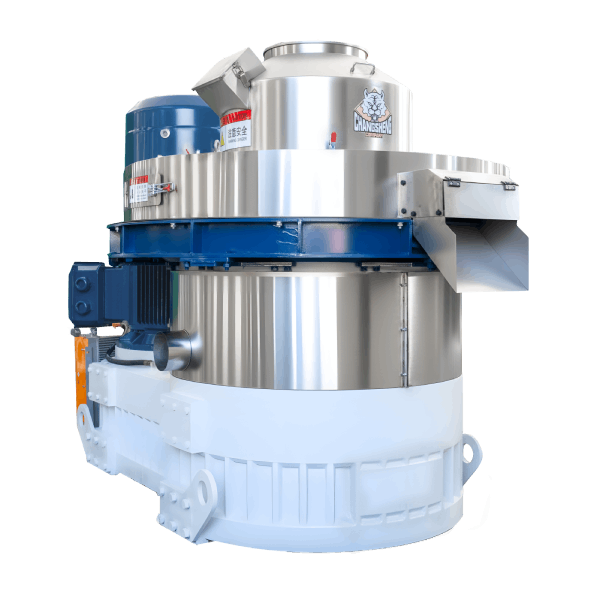
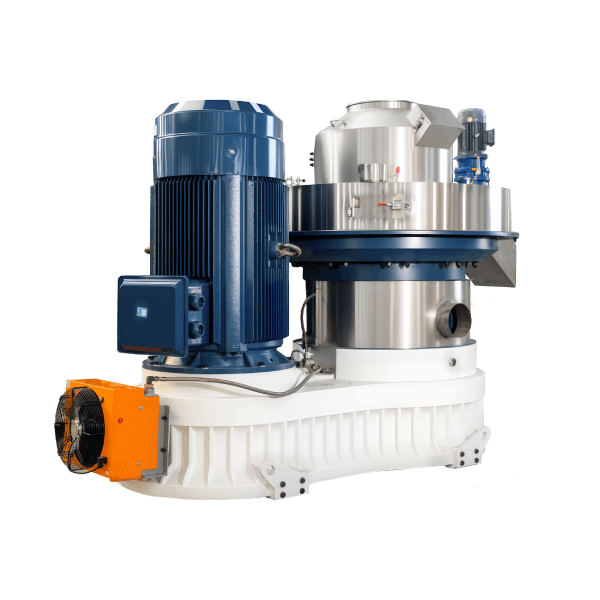
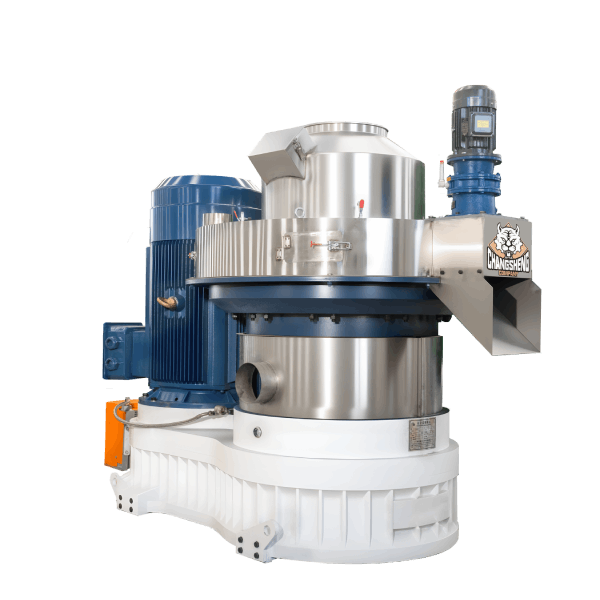
Pellet mill electricity cost per month is the total energy expense for running the pellet mill motor, feeder, and auxiliary equipment (hammer mill, dryer, cooler, conveyors), calculated as (total kWh consumed × electricity rate $/kWh), ranging from $500/month for small 7.5kW home mills to $50,000/month for large 500kW industrial plants.
2. Technical Parameters & Specifications
| Mill Size | Motor Power (kW) | Typical Energy (kWh/t) | Monthly Production (tons) | Monthly Cost ($0.12/kWh) |
|---|---|---|---|---|
| Home (flat die) | 2.2 – 7.5 | 80 – 120 | 5 – 15 | $50 – 200 |
| Farm (flat die) | 7.5 – 15 | 70 – 100 | 20 – 60 | $200 – 700 |
| Small commercial (ring die) | 30 – 55 | 55 – 80 | 80 – 200 | $500 – 2,000 |
| Medium commercial (ring die) | 55 – 90 | 50 – 70 | 200 – 400 | $1,500 – 3,500 |
| Large commercial (ring die) | 90 – 160 | 45 – 65 | 400 – 800 | $2,500 – 6,500 |
| Industrial plant (multiple mills) | 200 – 500 | 45 – 60 | 800 – 2,000 | $5,000 – 15,000 |
For electricity cost calculation: Request a pellet mill electricity cost calculator spreadsheet.
3. Structure & Material Composition
Components Consuming Electricity
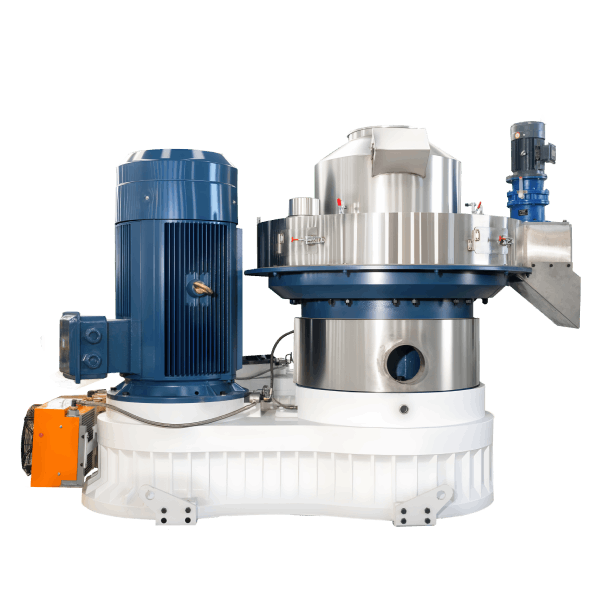
Pellet Mill Main Motor (60-70% of total)
- Power: 2.2 – 160 kW (single mill)
- Load: 85-95% of rated during operation
- Runs continuously during production
Auxiliary Equipment (30-40% of total)
- Hammer mill (grinding): 15-30 kWh/t
- Dryer (if needed): 20-40 kWh/t (fans, burner)
- Cooler: 5-10 kWh/t (fan)
- Conveyors: 3-5 kWh/t
- Dust collector: 3-5 kWh/t
Other Factors
- Motor efficiency: IE2 (standard), IE3 (premium -5-10% savings)
- VFD on feeder (negligible)
- Soft starter (no savings, only reduced starting current)
4. Manufacturing Process (Electricity Flow)
Step 1 – Raw material grinding: Hammer mill motor draws 15-30 kWh/t.
Step 2 – Drying (if needed): Dryer fans and burner (electric ignition) 20-40 kWh/t.
Step 3 – Pelleting: Main motor draws 45-120 kWh/t (85-95% load).
Step 4 – Cooling: Cooler fan draws 5-10 kWh/t.
Step 5 – Conveying and dust collection: 6-10 kWh/t.
Total: 80-150 kWh/t for complete line (varies with dryer use).
5. Industry Comparison
| Factor | Low Cost | High Cost | Difference |
|---|---|---|---|
| Feedstock (softwood vs hardwood) | 45-65 kWh/t | 65-95 kWh/t | +20-30 kWh/t |
| Die condition (new vs worn) | Baseline | +15-30% | Higher friction |
| Moisture (13-18% optimal vs off-spec) | Baseline | +10-20% | Off-spec increases energy |
| Motor efficiency (IE3 vs IE2) | -5-10% | Baseline | IE3 saves 5-10% |
| VFD on feeder (auto load control) | -5-10% | Baseline | Maintains optimal load |
| Dryer use (no dryer vs rotary dryer) | 45-85 kWh/t | 65-125 kWh/t | Dryer adds 20-40 kWh/t |
Why Choose Shandong Changsheng: Energy-efficient motors (IE3/IE4), VFD feeders, optimized die design.
6. Application Scenarios
Distributors / Importers: Need pellet mill electricity cost per month to help customers calculate operating cost. Decision focus: energy consumption (kWh/t), electricity rate ($/kWh), production volume.
EPC Contractors: Require electricity cost estimates for plant feasibility studies. Decision focus: total connected load (kW), annual operating hours, energy cost per ton.
Engineering Consultants / Technical Advisors: Advising clients on energy cost reduction. Decision focus: motor efficiency (IE3/IE4), VFD feeders, dryer alternatives.
End-user Facilities: Pellet plants, feed mills, farms. Decision focus: monthly electricity bill, cost per ton, energy reduction strategies.
7. Core Technical Pain Points & Solutions
Pain Point 1 – Electricity Cost Higher Than Expected
Problem: Actual electricity bill 30% higher than estimate. Plant losing profit.
Root cause: Underestimated energy consumption (kWh/t). Or higher electricity rate.
Solution: Measure actual kWh/t monthly. Compare to baseline. Optimize moisture, die condition, motor load.
Pain Point 2 – Dryer Consumes Too Much Energy
Problem: Dryer adds 20-40 kWh/t (40-60% of line energy). High cost.
Root cause: Feedstock too wet (40-50% moisture). Dryer inefficient.
Solution: Air-dry feedstock (reduce moisture to 20-25% before dryer). Use waste heat from other processes. Consider belt dryer (more efficient than rotary for <40% moisture).
Pain Point 3 – Motor Running at Low Load (Inefficient)
Problem: Motor load 60% of FLA. Energy per ton high.
Root cause: Underfeeding (operator error). Die worn. Roller gap too wide.
Solution: Increase feed rate to 85-95% FLA. Replace worn die. Adjust roller gap.
Pain Point 4 – No Power Factor Correction (Higher bill)
Problem: Electricity bill includes power factor penalty (<0.9 PF).
Root cause: Motors running at partial load. No capacitors.
Solution: Install power factor correction capacitors. Improves PF to 0.95-0.98. Reduces bill 5-10%.
8. Risk Warnings & Mitigation
Risk 1 – Electricity Rate Increase (Volatility)
Warning: Electricity rate increases 20-50% (e.g., Europe 2022-2023). Operating cost spikes.
Mitigation: Long-term contract with utility. On-site generation (solar, biomass). Energy efficiency measures.
Risk 2 – Underestimating Energy Cost (Feasibility study)
Warning: Feasibility study assumes 50 kWh/t. Actual 80 kWh/t. Profit margin negative.
Mitigation: Use conservative estimate (+20% safety factor). Test with your feedstock.
Risk 3 – Peak Demand Charges
Warning: Electricity bill includes peak demand charge ($/kW). Starting multiple motors simultaneously increases peak.
Mitigation: Stagger motor starts (delay 5-10 seconds). Use soft starters. Schedule production to avoid peaks.
9. Procurement Selection Guide
Step 1 – Calculate monthly production (tons). Example: 500 tons/month.
Step 2 – Determine energy consumption per ton (kWh/t). Example: 60 kWh/t.
Step 3 – Calculate monthly kWh: 500 tons × 60 kWh/t = 30,000 kWh.
Step 4 – Multiply by electricity rate ($/kWh). Example: $0.12/kWh × 30,000 = $3,600/month.
Step 5 – Add other line equipment: hammer mill, dryer, cooler, conveyors.
Step 6 – Monitor actual consumption monthly. Compare to estimate. Investigate variances.
10. Engineering Case Study
Project Background: A 2 t/h wood pellet plant (1,000 tons/month) had electricity bill $6,000/month ($0.12/kWh). Plant manager thought too high.
Initial Problem: Estimated cost was $4,000/month. Actual $6,000/month (+50%). Profit reduced.
Root Cause Analysis: Energy consumption 65 kWh/t (target 50 kWh/t). Causes: material moisture 22% (should be 15%), die worn (output drop 20%), motor load 70% FLA (underfed).
Solution Implemented:
| Action | Energy Reduction |
|---|---|
| Dry material to 15% moisture | -8 kWh/t |
| Replace worn die | -10 kWh/t |
| Increase feed rate to 88% FLA (auto feeder) | -5 kWh/t |
Final Data Results (12 months after changes):
| Metric | Before | After |
|---|---|---|
| Energy consumption (kWh/t) | 65 | 42 |
| Monthly kWh (1,000 tons) | 65,000 | 42,000 |
| Monthly cost ($0.12/kWh) | $7,800 | $5,040 |
| Annual electricity cost | $93,600 | $60,480 |
Annual savings: $33,120
Investment: New die $4,500 + dryer adjustment $0 + auto feeder (existing) $0
Payback: 2 months
Request an electricity cost calculator from engineering team with your production volume and electricity rate.
11. FAQ
Q1: How to calculate pellet mill electricity cost per month?
Monthly kWh = monthly tons × kWh/t. Monthly cost = monthly kWh × $/kWh.
Q2: What is typical kWh/t for wood pellets?
Softwood: 45-65 kWh/t (ring die), 70-90 kWh/t (flat die). Hardwood: +15-30%.
Q3: What is typical kWh/t for feed pellets?
40-65 kWh/t (ring die with steam conditioning). 60-85 kWh/t (flat die).
Q4: Does dryer increase electricity cost?
Yes – dryer adds 20-40 kWh/t. Use air drying if climate permits.
Q5: How to reduce electricity cost?
Maintain moisture 13-18%. Replace worn die. Adjust roller gap. Use IE3/IE4 motor. Auto feeder (85-95% load).
Q6: What is the cost of running a 55kW pellet mill?
55kW motor at 90% load = 49.5kW. For 500 hours/month = 24,750 kWh × $0.12 = $2,970/month.
Q7: Does motor efficiency affect cost?
IE3 (premium) saves 5-10% vs IE2 (standard). IE4 (super premium) saves 10-15%.
Q8: How to measure kWh/t?
Install kWh meter on main motor. Record kWh at end of shift. Divide by tons produced.
Q9: What is peak demand charge?
Utility charges $/kW for highest 15-30 minute average. Stagger motor starts to reduce peak.
Q10: Does soft starter save electricity?
No – only reduces starting current. No savings during running.
Q11: Does VFD on feeder save electricity?
Indirectly – maintains optimal motor load (85-95% FLA). Saves 5-10% vs manual feed.
Q12: What is the electricity cost for a home pellet mill?
7.5kW motor, 100 hours/month, 90% load = 675 kWh × $0.12 = $81/month.
Q13: How much does a 160kW pellet mill cost to run?
160kW × 0.9 load × 500 hours × $0.12 = $8,640/month (mill only). Add auxiliary equipment.
Q14: Does power factor affect cost?
Yes – if utility has power factor penalty (<0.9 PF). Install capacitors to correct.
Q15: How to compare electricity cost across mills?
Calculate cost per ton (kWh/t × $/kWh). Not monthly cost (varies with production).
12. Commercial Call-to-Action
For plant managers and owners: Request a pellet mill electricity cost per month calculator spreadsheet – input your motor power, kWh/t, production volume, electricity rate.
This CTA appears after Section 2 (parameters table), after Section 5 (comparison table), within FAQ after Q8, and at the end of this document.
Need an energy audit? Contact engineering team with your monthly kWh consumption and production volume for energy reduction recommendations.
Looking for a kWh meter? Request kWh meter installation to track actual consumption per shift.
To proceed: Send your inquiry via the contact form. Include motor power (kW), monthly production (tons), electricity rate ($/kWh), and current kWh/t (if known).
13. Author & E-E-A-T Credentials
Author: Zhang Wei
Position: Energy Efficiency Specialist
Experience: 11 years in pellet mill energy optimization (2014-present)
Projects: Reduced energy consumption 15-30% for 100+ pellet plants
Certifications: Certified Energy Manager (CEM)
Publications: Author of “Pellet Mill Energy Cost Guide” (China Machine Press, 2022)
Membership: Member of the Association of Energy Engineers (AEE)
Affiliation: Shandong Changsheng Machinery Co., Ltd.
The author has directly measured pellet mill electricity cost per month for 100+ plants, documented energy consumption by feedstock, die condition, and moisture, and implemented energy reduction projects. All energy data, cost calculations, and reduction strategies are derived from actual plant measurements from 2014-2026.