Duck Feed Pellet Machine Production Line: Complete System Guide

News 2026-07-31

Page SEO Summary: This system planning guide helps duck farmers and feed producers design duck feed pellet production lines—covering equipment configuration, process design, capacity selection, and investment considerations for duck feed manufacturing.

Duck farming is a significant and growing sector of the poultry industry, particularly in Asia. Ducks have different nutritional requirements from chickens—they need different protein, energy, and amino acid profiles. This makes duck feed production a specialized process that requires careful attention to formulation and processing.

A duck feed pellet machine production line is a complete system designed to produce high-quality pelleted feed for ducks. The line includes grinding, mixing, conditioning, pelletizing, cooling, and packaging equipment, all configured to meet the specific needs of duck feed production.

This guide provides a comprehensive framework for planning, designing, and procuring duck feed pellet production lines.


Duck Feed: Nutritional Requirements

Duck vs. Chicken Feed

NutrientDuck (Starter)Chicken (Starter)Difference
Crude protein (%)20-2218-20Higher for ducks
Energy (kcal/kg)2,900-3,0002,850-2,950Similar
Methionine (%)0.40-0.450.35-0.40Higher for ducks
Lysine (%)1.10-1.201.00-1.10Higher for ducks
Calcium (%)0.90-1.000.90-1.00Similar

Feed Requirements by Stage

Duck TypeProtein (%)Energy (kcal/kg)Pellet Size
Duckling (0-2 weeks)20-222,9001.5-2.5 mm
Grower (2-6 weeks)18-202,9502.5-3.5 mm
Finisher (6+ weeks)16-183,0003.0-4.0 mm
Breeder/Layer17-192,8503.0-4.0 mm

Production Line Overview

Complete System Components

StageEquipmentFunction
Raw material handlingReceiving pit; conveyorsIntake and storage
GrindingHammer millSize reduction
Batching/WeighingScale systemAccurate formulation
MixingMixerUniform blending
ConditioningConditionerSteam/moisture addition
PelletizingPellet millForm pellets
CoolingCoolerTemperature/moisture reduction
ScreeningFines screenRemove fines
PackagingBagging systemFinal product

Basic Flow Diagram

StageDescription
1. Raw materialsCorn, soybean meal, etc.
2. GrindingHammer mill (1-2 mm for ducks)
3. BatchingWeighing system
4. MixingRibbon or paddle mixer
5. ConditioningSteam (70-85°C)
6. PelletizingPellet mill
7. CoolingCounterflow cooler
8. ScreeningFines removal
9. PackagingBagging and sealing

Equipment Specifications

1. Grinding (Hammer Mill)

ParameterRecommendationWhy
Screen size1.5-2.0 mmFine grind for duck digestibility
Motor power15-75 kWCapacity-dependent
Capacity0.5-5+ t/hLine capacity

2. Batching System

ParameterRecommendationWhy
Number of bins6-12Ingredient storage
Weighing accuracy±0.1-0.2%Formulation accuracy
Batch size0.5-2.0 tonsProduction efficiency

3. Mixer

ParameterRecommendationWhy
TypeRibbon or paddleGood mixing
Time3-6 minutesUniformity
CV<5%Quality assurance

4. Conditioner

ParameterRecommendationWhy
Temperature70-85°CStarch gelatinization
Residence time15-30 secondsAdequate conditioning
Steam additionVariableMoisture control

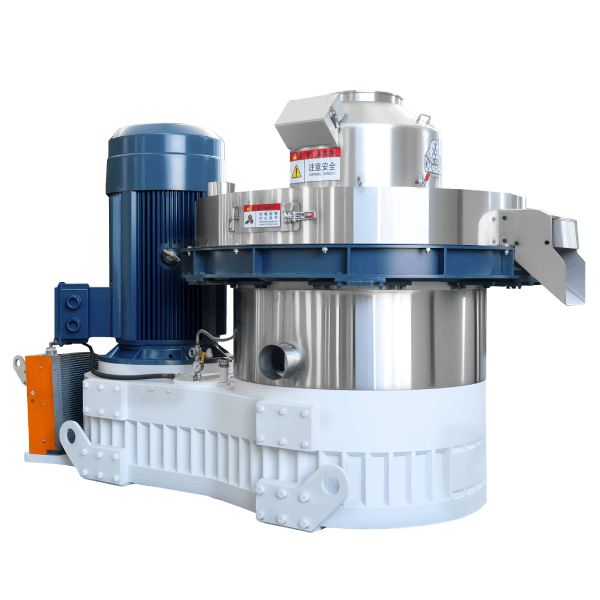
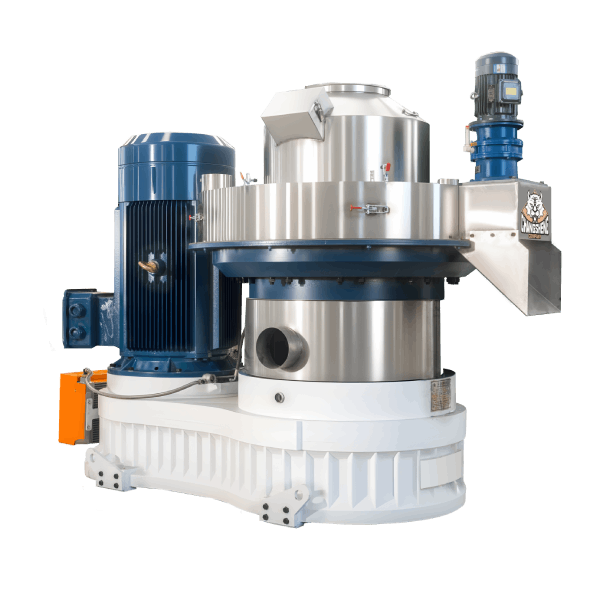
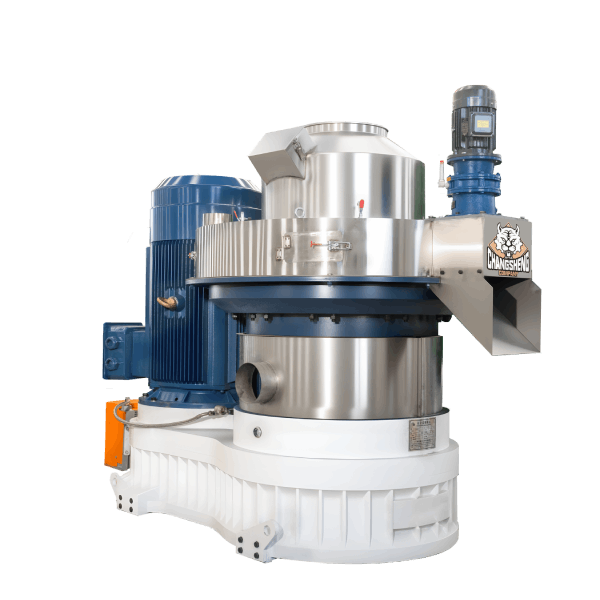
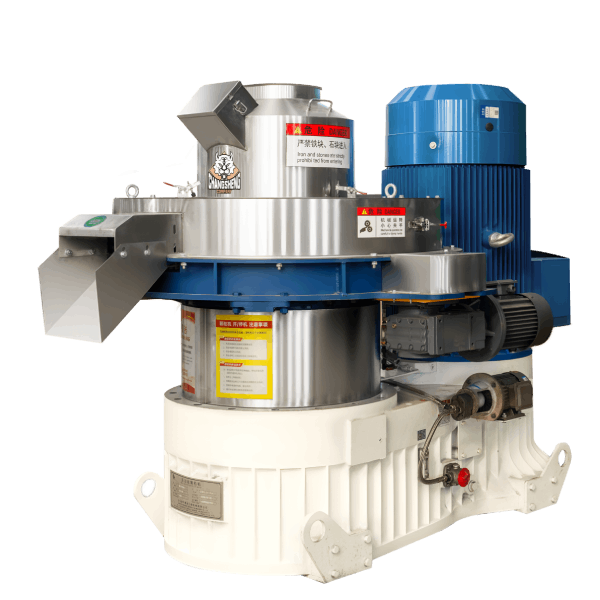
5. Pellet Mill

ParameterDuck FeedWhy
Die diameter2.5-4.0 mmDuck pellet size
Compression ratio (L/D)1:8 to 1:12Good pellet quality
Motor power15-110 kWCapacity-dependent
Die materialPremium alloyDurability

6. Cooler

ParameterRecommendationWhy
TypeCounterflowBest efficiency
Retention time5-10 minutesAdequate cooling
Final moisture10-12%Storage stability

7. Screening

ParameterRecommendationWhy
Screen size1.5-2.5 mmFines removal
TypeVibrating screenEfficiency

8. Packaging

ParameterRecommendationWhy
Bag size20-50 kgMarket standard
SealingAutomatedEfficiency

pellet machine

Capacity Selection

Matching Capacity to Duck Numbers

Operation ScaleDucksFeed Need (kg/h)Line Capacity (t/h)
Small farm1,000-5,000100-5000.1-0.5
Medium farm5,000-20,000500-2,0000.5-2.0
Large farm20,000-50,0002,000-5,0002.0-5.0
Commercial mill50,000+5,000+5.0+

Feed Consumption Guidelines

Duck TypeDaily Feed (kg)
Duckling (0-2 weeks)0.05-0.08
Grower (2-6 weeks)0.10-0.18
Finisher (6+ weeks)0.15-0.25
Breeder0.15-0.20

Investment Analysis

Line Cost Estimates

Capacity (t/h)Equipment Cost (USD)Complete Line Cost (USD)
0.1-0.5$10,000-30,000$30,000-80,000
0.5-1.0$30,000-60,000$80,000-150,000
1.0-2.0$60,000-120,000$150,000-300,000
2.0-5.0$120,000-250,000$300,000-600,000
5.0+$250,000-500,000$600,000-1,200,000

Additional Costs

Cost CategoryEstimated
Installation5-15% of equipment cost
Commissioning$2,000-10,000
ShippingDestination-dependent
BuildingSite-specific

Feed Quality Control

Key Quality Parameters

ParameterTargetWhy
Pellet durability (PDI)>90%Handling; feeding
Moisture10-12%Storage stability
Fines<5%Feed quality
ProteinAs formulatedNutrition
Pellet sizeConsistentUniform feeding

Quality Testing

TestFrequency
Ingredient qualityEach delivery
Grind finenessDaily
Mixing uniformityWeekly
Pellet durabilityEach batch
MoistureEach batch

Procurement Checklist: Duck Feed Production Line

Production Requirements

  • □ Target capacity (t/h) confirmed
  • □ Duck numbers and feed needs calculated
  • □ Pellet size requirements determined
  • □ Feed formulation established

Equipment Configuration

  • □ Hammer mill with 1.5-2.0 mm screens
  • □ Batching/weighing system
  • □ Mixer (ribbon/paddle)
  • □ Conditioner with steam system
  • □ Pellet mill with appropriate die
  • □ Cooler (counterflow)
  • □ Screening system
  • □ Packaging system

Budget

  • □ Equipment cost budgeted
  • □ Complete line cost estimated
  • □ Installation cost estimated
  • □ Operating cost projected
  • □ Payback period calculated

Supplier Evaluation

  • □ Supplier experience with poultry feed lines
  • □ Duck feed reference projects
  • □ Spare parts availability
  • □ Warranty and support terms

Frequently Asked Questions

1. What is a duck feed pellet production line?

A duck feed pellet production line is a complete system that converts raw feed ingredients into pelleted duck feed. It includes grinding, batching, mixing, conditioning, pelletizing, cooling, screening, and packaging equipment.

2. How is duck feed different from chicken feed?

Duck feed has higher protein and amino acid requirements than chicken feed. Pellet size for ducks is generally 2.5-4.0 mm, and the feed must be finely ground (1.5-2.0 mm) for digestibility.

3. What capacity do I need?

Use: (ducks × daily feed per duck) ÷ (operating hours). For 10,000 ducks (average 0.15 kg/day × 8 hours), you need about 190 kg/h (0.2 t/h). A 0.5 t/h line provides capacity margin.

4. What is the cost of a duck feed production line?

A 0.1-0.5 t/h line costs $30,000-80,000. A 0.5-1.0 t/h line costs $80,000-150,000. A 2.0-5.0 t/h line costs $300,000-600,000.

5. What is the optimal pellet size for ducks?

Ducklings: 1.5-2.5 mm; growers: 2.5-3.5 mm; finishers and breeders: 3.0-4.0 mm. Use different die sizes or change dies for different stages.

6. Why is fine grinding important for duck feed?

Ducks have less developed grinding ability than chickens. Fine grinding (1.5-2.0 mm) improves digestibility and feed conversion efficiency.

7. What is the payback period for a duck feed line?

Typical payback is 1-3 years for commercial operations, depending on capacity, utilization, and feed cost savings versus purchased feed.

8. Do I need a conditioner for duck feed?

Yes. Conditioning with steam improves starch gelatinization, pellet durability, and feed digestibility. It is essential for quality duck feed pellets.


About the Author

Zhang Wei – Senior International Sales Engineer, Shandong Changsheng Machinery Co., Ltd.

Zhang Wei has over 12 years of experience in the biomass and feed pellet mill industry, with a background in mechanical engineering and international project execution. He has managed feed production line projects for poultry, livestock, and aquaculture operations across Southeast Asia, the Middle East, Africa, and Latin America.

With hands-on experience in both the manufacturing workshop and client-side operations, Zhang brings practical insights into successful equipment procurement—from the factory floor to the customer’s feed production facility.