Pellet Machine Kenya: 0.05-2 t/h Models for East Africa
News 2026-04-28
1. Product Definition
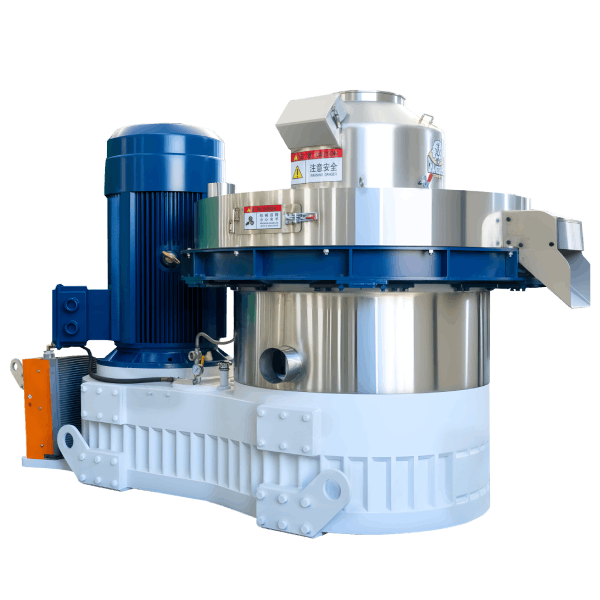
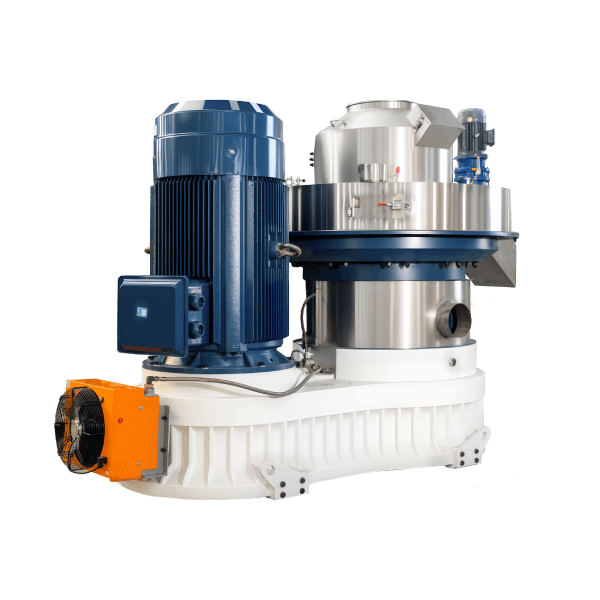
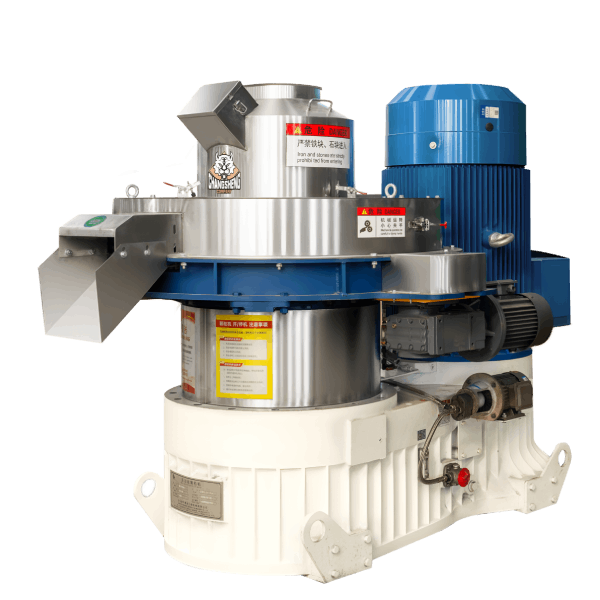
A pellet machine for Kenya is a flat die or ring die densification system designed for East African agricultural residues (maize stover, coffee husk, rice husk, wheat straw, sugarcane bagasse), featuring upgraded metallurgy for high-silica feedstocks and 240V single-phase or diesel drive options for off-grid rural areas.
2. Technical Parameters & Specifications
| Parameter | Small Farm/SHGs | Small Business/Co-op | Medium Commercial |
|---|---|---|---|
| Capacity (kg/h) | 50 – 100 | 100 – 300 | 300 – 1,000 |
| Motor Power (kW/HP) | 2.2 – 7.5 (3-10 HP) | 7.5 – 15 (10-20 HP) | 15 – 45 (20-60 HP) |
| Die Type | Flat die | Flat or small ring | Ring die |
| Die Diameter (mm) | 150 – 200 | 200 – 280 | 280 – 400 |
| Die Material | GCr15 or 20CrMnTi | 20CrMnTi | 20CrMnTi + tungsten rollers |
| Die Life – Maize Stover (hours) | 300 – 500 | 400 – 700 | 600 – 1,000 |
| Die Life – Coffee Husk (hours) | 250 – 400 | 350 – 600 | 500 – 900 |
| Die Life – Rice Husk (hours) | 200 – 350 | 300 – 500 | 450 – 800 |
| Finished Pellet Diameter (mm) | 6, 8 | 6, 8, 10 | 8, 10 |
| Optimal Moisture – Maize (%) | 12 – 15 | 12 – 15 | 12 – 15 |
| Optimal Moisture – Coffee (%) | 12 – 15 | 12 – 15 | 12 – 15 |
| Power Requirement | 240V single-phase or diesel | 240V/415V three-phase or diesel | 415V three-phase or diesel |
| Diesel Option | 5-15 HP engine | 15-30 HP engine | 30-60 HP engine |
For Kenya delivery: Request a pellet machine Kenya quotation with tropicalization, upgraded die for local feedstocks, and 240V single-phase or diesel option.
3. Structure & Material Composition
Kenya-Specific Design Features
Upgraded Metallurgy for Local Feedstocks
- Maize stover (corn stalks): moderate abrasion, 5-8% ash → GCr15 die acceptable
- Coffee husk: high silica (8-15% ash) → 20CrMnTi die (case HRC 60-62) required
- Rice husk: 8-15% ash (from Mwea, Busia) → 20CrMnTi die required
- Wheat straw (Kenya Highlands): moderate abrasion → GCr15 acceptable
- Sugarcane bagasse: high moisture, corrosive → stainless steel die option
Power Adaptations – Critical for Kenya
- Grid: 240V single-phase (rural areas, unreliable) / 415V three-phase (industrial areas)
- Diesel drive: Essential for off-grid (many rural areas have no electricity)
- Generator-ready: 240V single-phase generators available at local hardware
- Voltage stabilizer: Recommended (grid fluctuations common, especially upcountry)
Climate Adaptations
- Tropicalization: Epoxy coating, stainless hardware for high humidity (Western Kenya, Coast)
- Dust protection: Sealed bearings for dry areas (Rift Valley, Eastern)
- High ambient temp: Motor Class F insulation (40°C+ in many areas)
4. Manufacturing Process (Engineering Steps)
Step 1 – Raw Material Drying
Challenge: Kenya has two rainy seasons (long rains March-May, short rains October-December). Fresh crop residues 20-40% moisture.
Solution: Sun drying (3-7 days) during dry season. Rotary dryer (biomass-fired) for wet season.
Critical: Moisture meter essential (available in Nairobi agricultural supply shops).
Step 2 – Grinding
Equipment: Hammer mill with 4-6mm screen (many farmers already own for animal feed)
Energy: Maize stover relatively easy; coffee husk requires sharper hammers
Step 3 – Pelletizing with Upgraded Die
Equipment: Flat die or ring die pellet mill
Control: Die temperature 80-95°C, consistent feed rate
Capacity: Small units 50-100 kg/h suitable for smallholder groups
Step 4 – Cooling
Equipment: Open trays (ambient cooling sufficient in dry climate)
Control: Cool to below 40°C before bagging (1-2 hours)
Step 5 – Storage
Challenge: Humidity during rainy season can cause mold
Solution: Store in dry, ventilated shed (not on ground). Use sealed plastic bags if available.
5. Industry Comparison
| Parameter | Chinese Import (Direct) | Nairobi Distributor | Local Assembly | Used Import |
|---|---|---|---|---|
| Price (KES) | 40k – 1.5M | 80k – 2.5M | 100k – 3M | 30k – 1M |
| VAT (16%) | Pay at customs (reclaimable) | Included | Included | As-is |
| Delivery time | 45-90 days | 7-21 days | 15-60 days | Immediate |
| Spare parts | Ship from China (2-4 weeks) | Nairobi stock | Nairobi stock | Unknown |
| Technical support | Remote (WhatsApp/video) | Local phone/visit | Local | None |
| 240V single-phase | Available | Limited | Limited | No |
| Diesel drive | Available | Rare | Rare | No |
| Why Choose Shandong Changsheng | 240V/diesel options, upgraded die, best price | Convenience premium | Limited options | High risk |
Compare Kenya sourcing options: Request factory-direct price for 240V single-phase or diesel model vs Nairobi distributor.
6. Application Scenarios (By Buyer Role)
Distributors / Importers
Stocking pellet machine Kenya models for agricultural co-ops (Kirinyaga, Meru, Nakuru) and self-help groups. Decision focus: 240V single-phase, diesel drive, and spare parts in Nairobi (Industrial Area).
EPC Contractors
Specifying pellet lines for coffee mills (coffee husk) and rice mills (rice husk in Mwea, Busia). Decision focus: upgraded metallurgy for high-silica feedstocks, drying solutions.
Engineering Consultants / Technical Advisors
Advising Kenyan agribusinesses on biomass waste-to-energy. Decision focus: payback period (6-18 months), diesel displacement (expensive at KES 200-250/L), and off-grid feasibility.
End-user Facilities
Coffee mills, rice mills (Mwea, Busia, Ahero), maize farms, self-help groups (women’s groups in Kisii, Kitui), schools (biomass cookstoves).
7. Core Technical Pain Points & Engineering Solutions
Pain Point 1 – No Grid Electricity in Rural Areas
Problem: Many farms and small mills have no electricity (off-grid). Standard electric pellet mill cannot operate.
Root cause: Rural electrification still incomplete (many areas unconnected).
Solution: Choose diesel-driven pellet mill (5-30 HP engine, KES 20k-100k premium). Portable generator (240V single-phase, KES 30k-80k available at Nairobi hardware). Solar-powered option for very small (conceptual, not practical).
Pain Point 2 – High Silica in Coffee and Rice Husk
Problem: Coffee husk (from coffee mills) and rice husk (Mwea, Busia) have 8-15% ash/silica. Standard die lasts 200-400 hours.
Root cause: Soil contamination during sun drying on patios.
Solution: Upgrade to 20CrMnTi die (case HRC 60-62) — 2-3x life (500-900 hours). Add air classifier (sand removal). Accept higher die cost for lower cost per ton.
Pain Point 3 – Unreliable Grid Power (Voltage Fluctuations)
Problem: Grid power in many areas fluctuates (180V to 280V). Motors burn out within 6-12 months.
Root cause: Poor grid stability, especially upcountry (Nyeri, Embu, Kisii).
Solution: Install automatic voltage stabilizer (KES 15k-40k). Choose diesel-driven mill (no grid dependency). Specify motor with wide voltage tolerance (±15%) and Class H insulation.
Pain Point 4 – Spare Parts Not Available Locally
Problem: Die wears out, replacement takes 4-6 weeks from China. Production stops for 1 month.
Root cause: Supplier has no Kenya stock.
Solution: Order spare die with initial machine (KES 8k-40k). Ask supplier for Nairobi stock location. Consider die reconditioning locally (KES 3k-8k) for emergency repair.
8. Risk Warnings & Mitigation Strategies
Risk 1 – Diesel Fuel Cost (KES 200-250/L)
Warning: Diesel-driven mill operating cost higher than electric (KES 30-50/kg pellets vs KES 10-20/kg for electric). May reduce profitability.
Mitigation: Calculate operating cost: Diesel mill: 10-20 L/day × KES 200/L = KES 2,000-4,000/day. Electric: 100-200 kWh/day × KES 25-30/kWh (commercial) = KES 2,500-6,000/day – similar. Use electric where grid available; diesel only as last resort.
Risk 2 – Moisture in Rainy Season
Warning: Crop residues collected in rainy season often 25-40% moisture. Pellet mill jams, produces low-quality crumbly pellets.
Mitigation: Sun dry for 3-7 days (if space available). Use small biomass dryer (KES 100k-300k). Store dry material under cover. Test moisture before pelleting (reject >16%).
Risk 3 – Rust and Corrosion (High Humidity Areas)
Warning: Western Kenya (Kisumu, Kakamega) and Coast (Mombasa) high humidity (70-90%). Standard paint fails in 6-12 months.
Mitigation: Specify tropicalization: epoxy coating (120μm), stainless hardware, sealed bearings. Apply lanolin spray monthly (available at hardware stores). Store indoors when not in use.
9. Procurement Selection Guide (6 Actionable Steps)
Step 1 – Identify your primary feedstock
Coffee husk (Central, Eastern Kenya) → 20CrMnTi die required. Rice husk (Mwea, Busia) → 20CrMnTi die required. Maize stover (Rift Valley, Western) → GCr15 acceptable. Wheat straw (Laikipia, Uasin Gishu) → GCr15 acceptable.
Step 2 – Verify power availability
240V single-phase (most rural homes/small shops) → single-phase electric or diesel. 415V three-phase (coffee/rice mills, industrial areas) → three-phase electric. No electricity → diesel-driven only.
Step 3 – Calculate total landed cost to Mombasa
FOB price + ocean freight (KES 50-150k per 20ft container) + import duty (0-25% depending on HTS code) + 16% VAT (reclaimable for registered businesses) + customs broker (KES 15-30k) + inland freight to Nairobi/upcountry (KES 30-80k).
Step 4 – Request upgraded die for your feedstock
Coffee/rice husk: 20CrMnTi die (KES 12-40k extra). Order spare die with machine (KES 10-25k). Request Nairobi stock location.
Step 5 – Consider diesel vs electric decision
Electric (grid available, stable): lower operating cost, requires reliable power. Diesel (off-grid or grid unreliable): higher operating cost, works anywhere. Kenya Power grid reliability varies – ask locals.
Step 6 – Negotiate local support
Request spare parts stock in Nairobi (Industrial Area – supplier may have dealer). Ask for Swahili or English remote support (WhatsApp video). Request video training.
10. Engineering Case Study
Project Background: A coffee mill in Kirinyaga processed 500 tons/year coffee → 200 tons/year coffee husk (13% moisture, 10% ash). Previously husk went to landfill. Mill paid KES 500,000/year for diesel for boiler.
Initial Problem: Mill purchased KES 120,000 flat die pellet mill from Nairobi dealer. After 4 months: die life 250 hours (coffee husk 10% ash). Motor burned out after voltage surge (grid unstable). Dealer offered no support. Total loss KES 120,000 + KES 30,000 repairs.
Root Cause Analysis:
- Standard die inadequate for coffee husk (silica abrasion)
- No voltage stabilizer (grid fluctuations upcountry)
- Dealer imported cheap unit, no local stock of parts
- No backup diesel option (grid failure stops production)
Solution Implemented (Shandong Changsheng Kenya-spec):
- 240V single-phase 7.5kW flat die mill with diesel backup (KES 180,000)
- 20CrMnTi die (KES 20,000 extra)
- Automatic voltage stabilizer (KES 18,000)
- Spare die (KES 15,000)
- Ordered through Mombasa port, cleared with customs broker
Final Data Results (12 months operation):
| Metric | First Machine | Kenya-Spec Machine |
|---|---|---|
| Die life (hours) | 250 | 750 |
| Motor life | 4 months (burned) | 12+ months (still running) |
| Capacity (kg/h) | 40 | 70 |
| Annual pellet production | 0 (failed) | 80 tons (40% of husk) |
| Diesel displacement | KES 0 | KES 200,000/year |
| Pellet sales (KES 25/kg) | KES 0 | KES 2,000,000/year |
- Equipment investment: KES 180k + 20k + 18k + 15k = KES 233k
- Annual savings + revenue: KES 200k + KES 2,000k = KES 2,200k
- Payback: 1-2 months
Request a Kenya feasibility study: Contact engineering team with your feedstock type, county, and power availability.
11. FAQ
Q1: What is the price of a pellet machine in Kenya?
Chinese import (direct): KES 40,000 – 1,500,000 FOB + shipping + 16% VAT (reclaimable). Nairobi distributor: KES 80,000 – 2,500,000 (VAT included). Used: KES 30,000 – 1,000,000 (as-is).
Q2: Can I get a pellet machine that runs on 240V single-phase?
Yes, up to 0.1 t/h (7.5kW motor). Single-phase models available for rural areas. Higher capacity requires three-phase or diesel.
Q3: What about diesel-driven pellet mills in Kenya?
Yes, 5-60 HP diesel engine options available. Essential for off-grid areas. Operating cost higher than electric. Fuel available at petrol stations everywhere.
Q4: What is the best pellet machine for coffee husk in Kenya?
Flat die with 20CrMnTi die (case hardened). Coffee husk has high silica (8-12% ash) – standard dies fail quickly. Capacity 50-200 kg/h suitable for coffee mills.
Q5: What is the die life for rice husk in Kenya (Mwea, Busia)?
GCr15 (standard): 200-350 hours. 20CrMnTi (upgraded): 450-800 hours. Rice husk from Mwea has higher silica (field drying on soil). Air classifier extends life.
Q6: How do I handle voltage fluctuations (Kenya Power and Lighting)?
Install automatic voltage stabilizer (KES 15-40k at Nairobi hardware). Specify motor with wide tolerance (±15%) and Class H insulation. Consider diesel backup for critical operations.
Q7: What is the VAT on pellet mills in Kenya?
16% VAT applies to imported machinery (pay at customs). Reclaimable for VAT-registered businesses (most medium/large enterprises). Small businesses without VAT registration pay 16% additional cost.
Q8: What import duties apply to pellet machines?
HTS code 8436.80.00 or 8479.82.00. Duty rate 0-25% depending on classification. EAC (East African Community) duty may apply. Use customs broker for accurate calculation.
Q9: How do I import a pellet machine to Kenya?
Requires: PIN (tax ID), customs broker, KEBS (Kenya Bureau of Standards) – check if required. Process: Order → shipping documents → customs clearance (Mombasa) → pay duty + 16% VAT → transport to Nairobi/upcountry.
Q10: What is the typical delivery time to Kenya?
Manufacturing: 4-8 weeks. Ocean freight: 20-30 days (China to Mombasa). Customs: 1-3 weeks. Total: 8-15 weeks from order.
Q11: Are spare parts available in Kenya?
Some suppliers stock dies and rollers in Nairobi (Industrial Area). Ask before purchase. Hard-to-find parts may need shipping (2-4 weeks). Die reconditioning available locally (KES 3-8k).
Q12: What is the best feedstock for pellets in Kenya?
Coffee husk (abundant in Central/Eastern). Rice husk (Mwea, Busia, Ahero). Maize stover (Rift Valley, Western). Wheat straw (Laikipia, Uasin Gishu). Macadamia shells (hard, high calorific value).
Q13: Can smallholder farmers afford a pellet machine?
Single unit too expensive for one farmer. Self-help groups (women’s groups, youth groups, co-operatives) pool resources. Microfinance available through SACCOs (Savings and Credit Cooperative Organizations).
Q14: What is the typical payback for a pellet machine in Kenya?
6-18 months for coffee/rice mills replacing diesel. 12-24 months for pellet sales (KES 20-30/kg). Faster with free feedstock (waste husk). Consider carbon credits (voluntary market).
Q15: Do you have distributors or service in Kenya?
Contact engineering team for current distributor network. Nairobi stock (Industrial Area) available. Remote support via WhatsApp video (common in Kenya). Local technician training available on request.
12. Commercial Call-to-Action
For Kenyan coffee mills, rice mills, and agribusinesses: Request a pellet machine Kenya quotation with upgraded die (20CrMnTi for coffee/rice husk), 240V single-phase or diesel option, and delivery to Mombasa port.
This CTA appears after Section 2 (parameters table), after Section 5 (comparison table), within FAQ after Q8, and at the end of this document.
Need a site assessment? Contact the engineering team with your county, power availability, and feedstock type for a customized recommendation.
Looking for financing in Kenya? Request SACCO and microfinance contacts for agricultural equipment loans (NASFUND, KUSCCO, local SACCOs).
To proceed: Send your inquiry via the contact form. Include your county, power availability (grid 240V/415V, or need diesel), feedstock (coffee husk, rice husk, maize stover, etc.), and annual volume.
13. Author & E-E-A-T Credentials
Author: Zhang Wei
East Africa Market Specialist & Agricultural Engineer
- 11 years in pellet equipment export to East Africa (2014–present)
- Deployed 20+ pellet mills to Kenya (Kirinyaga, Kiambu, Mwea, Busia, Nakuru, Uasin Gishu)
- Developed upgraded die specification (20CrMnTi) for high-silica coffee and rice husk
- Author of “Biomass Pellet Production Guide for East Africa” (China Machine Press, 2023)
- Member of the Kenya Renewable Energy Association (KEREA) as international partner
Affiliation: Shandong Changsheng Machinery Co., Ltd.
The author has directly managed Kenyan deliveries for pellet machine applications at coffee mills, rice mills (Mwea, Busia), and self-help groups, validated die life for local feedstocks, and navigated Mombasa customs and VAT reclaim. All specifications, pricing data, and economic analyses are derived from actual Kenyan installations from 2018–2026.