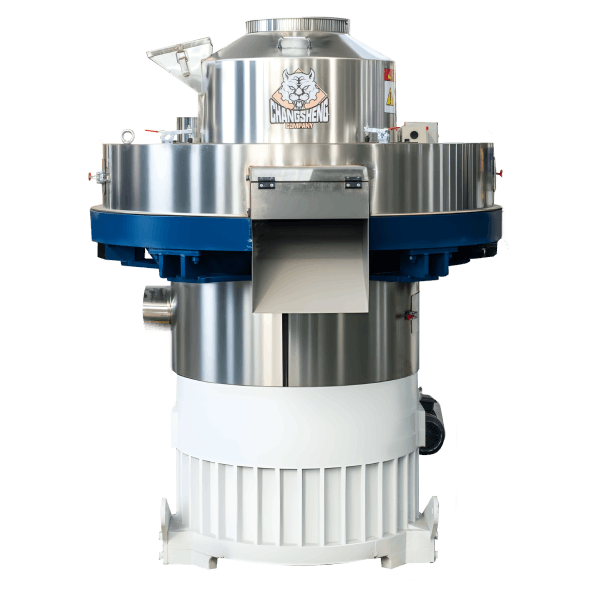
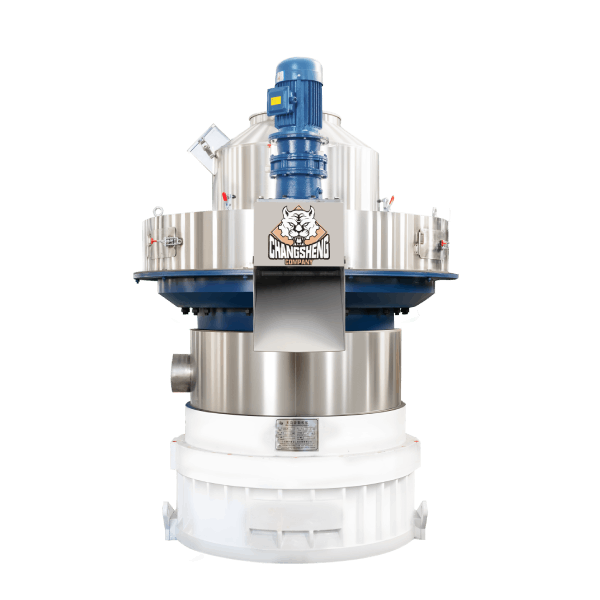
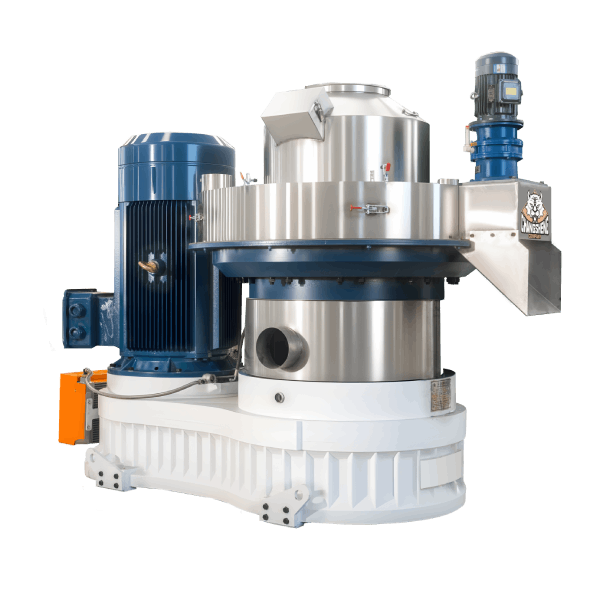
Rabbit Feed Pellet Mill with Die 3mm: Complete Selection Guide
News 2026-07-30
Page SEO Summary: This technical guide helps rabbit farmers and feed producers evaluate rabbit feed pellet mills with 3mm dies—covering equipment types, capacity selection, investment considerations, and the special requirements for rabbit feed production.
Rabbit farming is growing worldwide as a sustainable source of meat and fur. Rabbits require feed that is high in fiber, with specific nutritional profiles for different life stages. Pelleted feed is ideal for rabbits—it reduces waste, improves feed efficiency, and ensures consistent nutrition.
A rabbit feed pellet mill with a 3mm die produces pellets of the optimal size for rabbits. This size is suitable for growers, adult rabbits, and even weaners, making it the most versatile die size for rabbit feed production.
This guide provides a comprehensive technical framework for understanding, selecting, and procuring rabbit feed pellet mills with 3mm dies.
Why 3mm Pellets for Rabbits?
The Importance of Pellet Size
| Aspect | Impact |
|---|---|
| Palatability | Right size for rabbit mouths |
| Nutrition intake | Consistent consumption |
| Feed efficiency | Better FCR |
| Waste reduction | Less breakage and waste |
Pellet Size by Rabbit Stage
| Rabbit Stage | Pellet Diameter | Why |
|---|---|---|
| Weaner (1-2 months) | 2-3 mm | Small mouth; easy chewing |
| Grower (2-4 months) | 3-4 mm | Fast growth; high intake |
| Adult/Doe | 3-4 mm | Consistent nutrition |
| Breeding buck | 3-4 mm | Maintenance |
The 3mm Advantage: A 3mm die produces pellets suitable for all rabbit stages, making it the most versatile choice for rabbit feed production.
Rabbit Feed: Nutritional Requirements
Key Nutrient Requirements
| Stage | Crude Protein (%) | Crude Fiber (%) | Energy (MJ/kg) |
|---|---|---|---|
| Weaner | 16-18 | 12-15 | 10-11 |
| Grower | 16-18 | 14-16 | 10-11 |
| Adult (maintenance) | 14-16 | 16-18 | 9-10 |
| Lactating doe | 17-19 | 14-16 | 11-12 |
Rabbit Feed Characteristics
| Characteristic | Why It Matters |
|---|---|
| High fiber | Essential for digestive health |
| Moderate protein | Growth and reproduction |
| Low fat | Prevent obesity |
| Fine grinding | Digestibility |
| Consistent quality | Prevent digestive upset |
How the Pellet Mill Works
Basic Operation
| Stage | Description |
|---|---|
| Grinding | Raw materials ground to fine powder (1-2 mm) |
| Mixing | Ingredients blended uniformly |
| Conditioning | Steam and moisture added (optional) |
| Pelletizing | Material forced through die holes |
| Cutting | Pellets cut to length |
| Cooling | Pellets cooled and dried |
Die 3mm Specifications
| Parameter | Detail |
|---|---|
| Hole diameter | 3.0 mm |
| Compression ratio (L/D) | 1:8 to 1:12 |
| Die type | Flat die or ring die |
| Suitability | All rabbit stages |
Equipment Selection
Capacity Options
| Operation Size | Rabbits | Feed Need (kg/h) | Recommended Capacity |
|---|---|---|---|
| Small farm | 50-200 | 10-40 | 30-80 kg/h |
| Medium farm | 200-500 | 40-100 | 80-200 kg/h |
| Commercial farm | 500-1,000 | 100-200 | 200-400 kg/h |
| Feed mill | 1,000+ | 200+ | 400+ kg/h |
Feed Consumption
| Rabbit Type | Daily Feed (kg) |
|---|---|
| Weaner | 0.05-0.08 |
| Grower | 0.08-0.12 |
| Adult | 0.10-0.15 |
| Lactating doe | 0.15-0.25 |
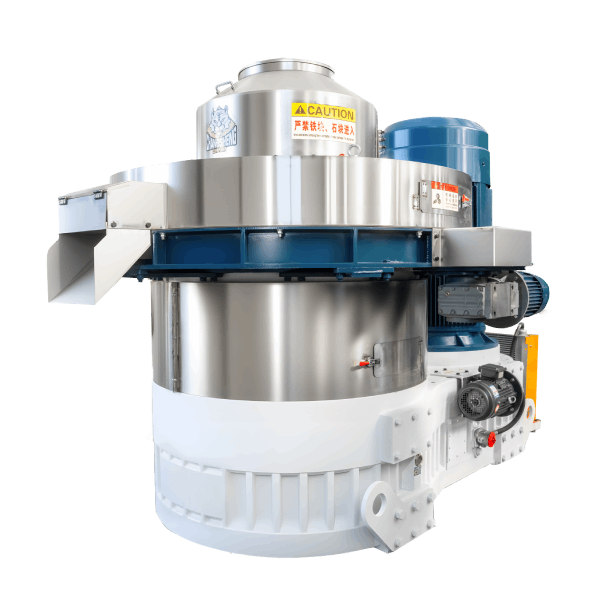
Machine Types
| Type | Capacity | Power | Best For |
|---|---|---|---|
| Flat die | 30-200 kg/h | 5-15 kW | Small-medium farms |
| Ring die | 200-1,000+ kg/h | 15-45 kW | Commercial operations |
Key Specifications for Rabbit Feed
Pellet Mill Specifications
| Specification | Recommendation | Rationale |
|---|---|---|
| Die diameter | 3.0 mm | Rabbit pellet size |
| Compression ratio (L/D) | 1:8 to 1:12 | Good pellet quality |
| Pellet length | 5-10 mm | Rabbit feeding |
| Conditioner | Recommended | Improves durability |
| Motor power | Match to capacity | Production target |
Pellet Quality Targets
| Parameter | Target | Why |
|---|---|---|
| Durability (PDI) | >85% | Handling; feeding |
| Moisture | 10-12% | Storage stability |
| Fines | <5% | Feed quality |
| Uniformity | Consistent | Nutrition |
Feed Formulation
Simple Rabbit Feed Formula
| Ingredient | Grower | Adult | Notes |
|---|---|---|---|
| Alfalfa meal | 40-50% | 45-55% | High fiber |
| Corn | 15-20% | 10-15% | Energy |
| Soybean meal | 15-20% | 10-15% | Protein |
| Wheat bran | 10-15% | 10-15% | Fiber |
| Molasses | 2-3% | 2-3% | Binder; palatability |
| Premix | 2-3% | 2-3% | Vitamins/minerals |
Grinding Requirements
| Requirement | Detail |
|---|---|
| Particle size | <1.5 mm (fine grind) |
| Grinding equipment | Hammer mill with small screen |
| Importance | Digestibility; pellet quality |
Investment Analysis
Cost Estimates
| Capacity | Equipment Cost (USD) | Complete Line Cost (USD) |
|---|---|---|
| 30-80 kg/h | $800-3,000 | $3,000-8,000 |
| 80-200 kg/h | $3,000-8,000 | $8,000-20,000 |
| 200-400 kg/h | $8,000-15,000 | $20,000-40,000 |
| 400+ kg/h | $15,000-30,000 | $40,000-80,000 |
Profitability Example
Operation: 200 Rabbits
| Item | Amount |
|---|---|
| Annual feed need | ~10-15 tons |
| Purchased feed cost | $400-500/ton = $4,000-7,500 |
| On-farm production cost | $300-400/ton = $3,000-6,000 |
| Annual savings | $1,000-2,500 |
| Equipment investment | $2,000-5,000 |
| Payback period | 1-3 years |
Operation and Maintenance
Daily Operation
| Step | Task |
|---|---|
| 1 | Grind ingredients to <1.5 mm |
| 2 | Mix formulation thoroughly |
| 3 | Condition (add steam/moisture) |
| 4 | Pelletize with 3mm die |
| 5 | Cool pellets |
| 6 | Store in dry conditions |
Maintenance
| Task | Frequency |
|---|---|
| Clean die | Daily |
| Lubricate bearings | Weekly |
| Inspect rollers | Weekly |
| Check die wear | Monthly |
| Replace die | As needed |
Procurement Checklist: Rabbit Feed Pellet Mill
Farm Assessment
- □ Number of rabbits confirmed
- □ Feed consumption calculated
- □ Power supply assessed
- □ Space available
Equipment Specifications
- □ Die diameter: 3.0 mm confirmed
- □ Compression ratio: 1:8 to 1:12
- □ Capacity matched to rabbit numbers
- □ Motor power within supply
Complete System
- □ Hammer mill (for fine grinding)
- □ Mixer
- □ Pellet mill with 3mm die
- □ Cooler
- □ Conditioner (recommended)
Budget
- □ Equipment cost budgeted
- □ Operating cost estimated
- □ Payback period calculated
- □ Raw material cost confirmed
Supplier Evaluation
- □ Supplier experience with rabbit feed
- □ 3mm die availability
- □ Spare parts availability
- □ Warranty and support terms
Frequently Asked Questions
1. Why choose a 3mm die for rabbit feed?
A 3mm die produces pellets suitable for all rabbit stages—weaners, growers, adults, and does. It is the most versatile die size for rabbit feed production.
2. What capacity do I need for my rabbits?
Use this formula: (rabbits × daily feed per rabbit) ÷ (operating hours). For 200 rabbits (average 0.12 kg/day × 8 hours), you need about 80-100 kg/h.
3. Is a 3mm die suitable for all rabbit ages?
Yes. Weaners eat 2-3mm pellets, and adults eat 3-4mm pellets. The 3mm size works for both, making it the ideal choice.
4. What is the difference between flat die and ring die?
Flat die is lower cost, suitable for 30-200 kg/h. Ring die is higher output, suitable for 200+ kg/h. For small to medium rabbit farms, flat die is sufficient.
5. How much does a rabbit feed pellet mill with 3mm die cost?
A flat die machine costs $800-3,000. A ring die machine costs $3,000-15,000. A complete line costs $3,000-80,000.
6. Is rabbit feed pelleting profitable?
Yes. On-farm feed production can save 15-25% compared to purchased feed. For a 200-rabbit operation, savings of $1,000-2,500 per year are typical.
7. What grinding fineness is needed?
Rabbit feed requires fine grinding (<1.5 mm) for digestibility and pellet quality. Use a hammer mill with a small screen (1.5-2.0 mm).
8. Do I need a conditioner?
A conditioner is recommended for better pellet quality. It adds steam and moisture, improving binding and durability. However, simple flat die machines may not include a conditioner.
About the Author
Zhang Wei – Senior International Sales Engineer, Shandong Changsheng Machinery Co., Ltd.
Zhang Wei has over 12 years of experience in the biomass and feed pellet mill industry, with a background in mechanical engineering and international project execution. He has worked with rabbit farmers and feed producers across multiple regions, providing practical solutions for small-scale and commercial feed production.
With hands-on experience in both the manufacturing workshop and client-side operations, Zhang brings practical insights into successful equipment procurement—from the factory floor to the customer’s rabbit farm.