Page SEO Summary: This technical guide helps aquaculture professionals and procurement managers evaluate sinking fish feed pellet mills—covering technology, production processes, equipment selection, and investment considerations for sinking feed production.
Sinking fish feed remains the most widely used feed type in global aquaculture. For many farmed fish species—particularly bottom feeders and certain freshwater species—sinking pellets are the preferred or only suitable feed form. They are also the more economical choice for farmers, requiring simpler equipment and lower production costs than floating feed.
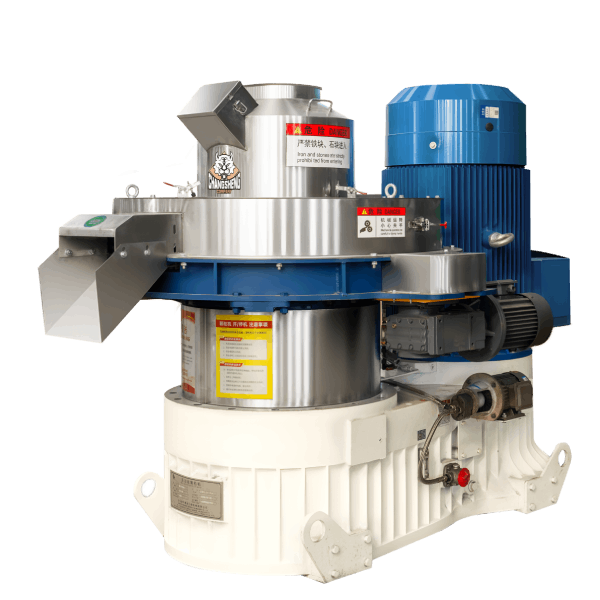
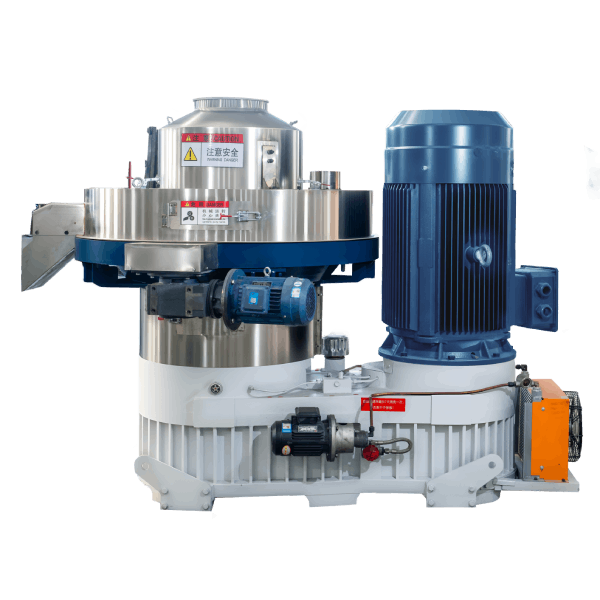
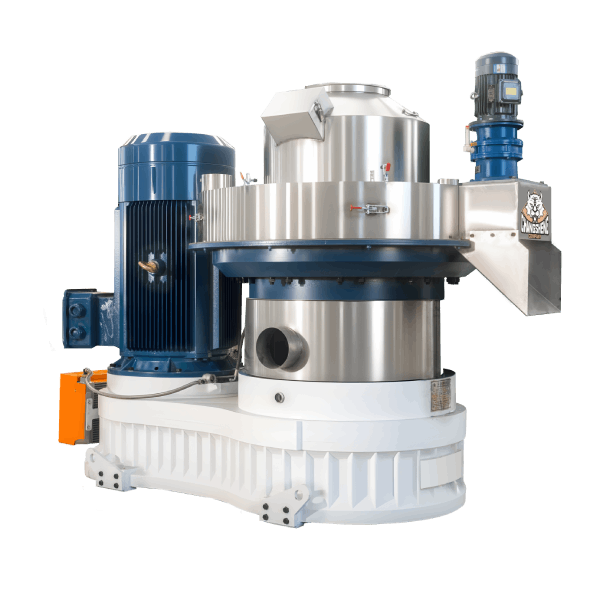
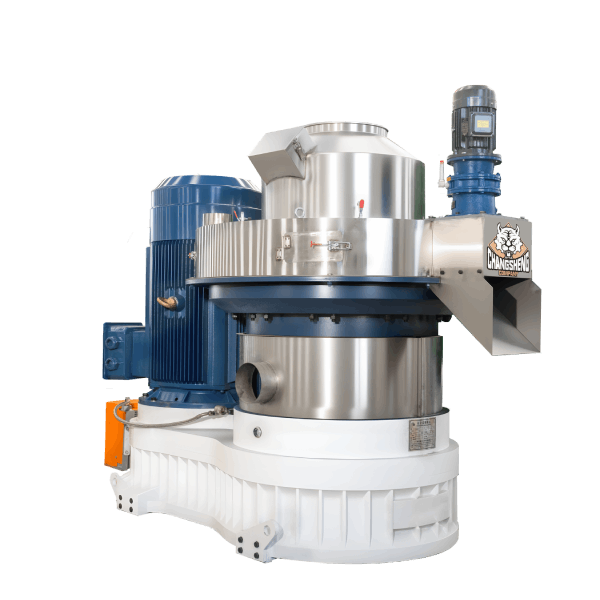
Sinking fish feed pellet mills are essentially standard pellet mills adapted for aquatic feed production. They use compression to form dense, water-stable pellets that sink rapidly to the bottom of ponds or tanks. While less technologically complex than floating feed extruders, sinking feed production still requires careful attention to formulation, grinding, and conditioning.
This guide provides a comprehensive technical framework for understanding, selecting, and procuring sinking fish feed pellet mills.
What Is a Sinking Fish Feed Pellet Mill?
Definition
A sinking fish feed pellet mill is a standard ring die or flat die pellet mill used to produce dense, water-stable feed pellets that sink when placed in water. The equipment uses compression (pressure) to form pellets from ground feed ingredients.
Operating Principle
Principle
Description
Compression
Feed ingredients are forced through die holes under high pressure
Binding
Natural binders (starch, protein) hold pellets together
Reduce raw materials to uniform particle size (0.5-1.5 mm)
Mixing
Mixer
Blend ingredients uniformly
Conditioning
Conditioner
Add steam and moisture; soften ingredients
Pelletizing
Pellet mill
Form dense pellets
Cooling
Cooler
Reduce temperature and moisture
Screening
Fines screen
Remove fines
Packaging
Bagging system
Final product packaging
Key Process Parameters
Parameter
Typical Range
Importance
Grinding fineness
0.5-1.5 mm
Pellet quality and durability
Conditioning temperature
70-90°C
Starch gelatinization; binding
Conditioning moisture
15-18%
Pellet density and durability
Die compression ratio (L/D)
1:10 to 1:14
Pellet density and water stability
Pellet mill temperature
80-95°C
Material binding
Pellet moisture (final)
10-12%
Storage stability
Pellet Mill Specifications for Sinking Fish Feed
Key Specifications
Specification
Recommendation
Rationale
Motor power
Depends on capacity
Match to production target
Die diameter
350-600 mm
Capacity-dependent
Die compression ratio (L/D)
1:10 to 1:14
Good water stability
Die material
Premium alloy (X46Cr13 or higher)
Durability; wear resistance
Conditioner
Recommended
Improves binding and durability
Feeder
Variable speed
Controlled feed rate
Capacity Options
Capacity (kg/h)
Motor Power
Die Size
Application
50-100
7.5-15 kW
250-300 mm
Small farms
100-300
15-22 kW
300-350 mm
Small feed mills
300-500
22-37 kW
350-400 mm
Commercial mills
500-1,000
37-55 kW
400-500 mm
Large feed plants
1,000-2,000
55-75 kW
500-600 mm
Industrial operations
Raw Materials for Sinking Fish Feed
Common Ingredients
Ingredient
Function
Typical Inclusion
Fish meal
Protein source
15-35%
Soybean meal
Protein source
20-40%
Corn/rice bran
Carbohydrate source
15-30%
Oil
Energy source
3-8%
Vitamins/minerals
Nutritional balance
1-3%
Binders
Water stability
2-5%
Key Ingredient Requirements
Requirement
Why
Fine grinding
Better pellet quality and fish digestion
Consistent moisture
Reliable pelletizing
Proper protein/fat balance
Nutritional requirements
Binders (starch, gluten)
Water stability
Water Stability: Critical Quality Parameter
Why Water Stability Matters
Reason
Impact
Prevents feed waste
Pellets disintegrate before fish eat
Reduces water pollution
Prevents nutrient loading
Improves FCR
More feed consumed; less wasted
Maintains water quality
Less organic matter in water
Achieving Good Water Stability
Factor
How It Helps
Fine grinding
Better binding
Good conditioning
Starch gelatinization
Proper die compression
Denser pellets
Binders
Improved cohesion
Cooling
Sets pellet structure
Water Stability Test
Test
Method
Target
Static water test
Place pellets in water; observe disintegration
Minimum 15-30 minutes
Agitation test
Gently stir in water
Minimum 30-60 minutes
Investment Considerations
Equipment Cost Estimates
Capacity (kg/h)
Pellet Mill Cost (USD)
Complete Line Cost (USD)
50-100
$3,000-8,000
$10,000-25,000
100-300
$8,000-20,000
$25,000-50,000
300-500
$20,000-35,000
$50,000-100,000
500-1,000
$35,000-60,000
$100,000-200,000
1,000-2,000
$60,000-100,000
$200,000-400,000
Additional Costs
Cost Category
Estimated
Installation
5-15% of equipment cost
Commissioning
$1,000-5,000
Shipping
Destination-dependent
Training
$500-3,000
Spare parts
10-20% of equipment cost
Quality Control
Key Quality Parameters
Parameter
Target
Why It Matters
Water stability
>15-30 minutes
Prevents waste
Durability (PDI)
>95%
Handling and transport
Moisture
10-12%
Storage stability
Diameter
±0.5 mm
Species-specific
Length
2-3× diameter
Feeding behavior
Color
Consistent
Quality indicator
Quality Testing
Test
Equipment
Frequency
Water stability
Beaker; timer
Every batch
Durability
PDI tester
Every batch
Moisture
Moisture analyzer
Every batch
Size
Calipers; gauge
Every batch
Procurement Checklist: Sinking Fish Feed Mill
Production Requirements
□ Target capacity (kg/h) defined
□ Species to be fed identified
□ Pellet size and water stability requirements confirmed
□ Raw materials available
Equipment Specifications
□ Pellet mill type selected (ring die preferred)
□ Motor power confirmed
□ Voltage/frequency match site supply
□ Die compression ratio: 1:10 to 1:14
□ Conditioner included
□ Cooling system included
Complete Line
□ Grinding equipment included
□ Mixing equipment included
□ Conditioning system included
□ Cooling and screening included
□ Packaging equipment (if needed)
Commercial
□ Equipment investment budgeted
□ Complete line investment estimated
□ Operating cost projected
□ Raw material cost calculated
□ Payback period estimated
Supplier Evaluation
□ Supplier experience with sinking feed
□ References from aquaculture projects
□ Spare parts availability
□ Warranty and support terms
Frequently Asked Questions
1. What is a sinking fish feed pellet mill?
A sinking fish feed pellet mill is a standard ring die or flat die pellet mill used to produce dense, water-stable feed pellets that sink in water. It uses compression to form pellets from ground feed ingredients.
2. How is sinking feed different from floating feed?
Sinking feed is produced by compression (standard pellet mill) with low starch gelatinization (20-30%). Floating feed is produced by extrusion/expansion with high gelatinization (80-90%). Sinking feed is denser, less expensive to produce, and suitable for bottom-feeding fish.
3. What fish species eat sinking feed?
Catfish, carp, shrimp, lobster, eel, turbot, and other bottom-feeding species prefer sinking feed. Tilapia and trout can eat either, depending on preference and farming practice.
4. What capacity do I need?
Match capacity to your farm size or market. Small farms: 50-300 kg/h. Commercial operations: 300-1,000+ kg/h.
5. How much does a sinking feed pellet mill cost?
A pellet mill costs $3,000-100,000 depending on capacity. A complete line costs $10,000-400,000+.
6. What raw materials are needed?
Common ingredients: fish meal, soybean meal, corn/rice bran, oil, vitamins/minerals, and binders. Formulation depends on the target species.
7. What is water stability and why is it important?
Water stability is how long pellets stay intact in water (15-60 minutes typical). It prevents feed waste, reduces water pollution, and improves feed conversion.
8. Is sinking feed production profitable?
Yes. Sinking feed is the most common and economical form of aquafeed. With growing aquaculture demand, sinking feed production offers good returns with lower investment than floating feed.
Zhang Wei has over 12 years of experience in the biomass and feed pellet mill industry, with a background in mechanical engineering and international project execution. He has managed feed production projects for aquaculture, livestock, and poultry operations across Southeast Asia, the Middle East, Africa, and Latin America.
With hands-on experience in both the manufacturing workshop and client-side operations, Zhang brings practical insights into successful equipment procurement—from the factory floor to the customer’s feed production facility.