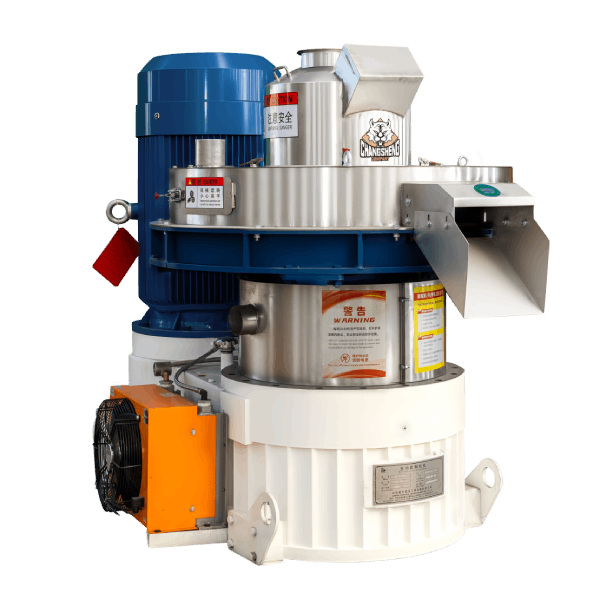
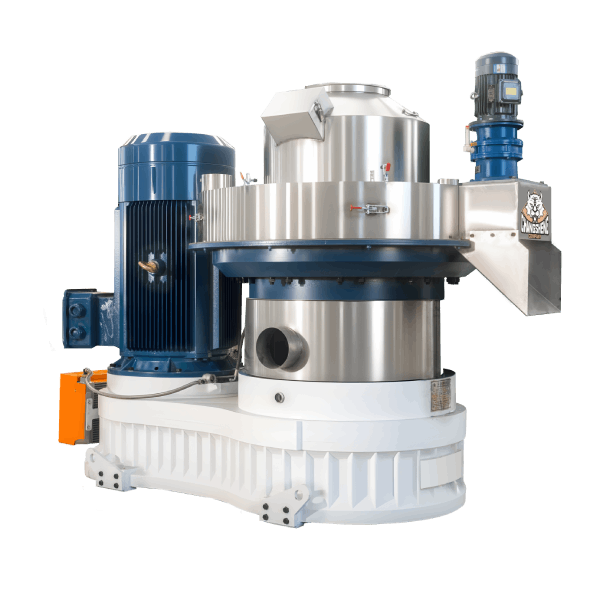
Coffee Husk Pellet Machine: Processing, Drying & Pellet Production
News 2026-04-25
A coffee husk pellet machine is not a standard wood pellet machine with a different name. Coffee husk has higher ash, higher sand contamination, more organic acids, and more variable moisture than most wood materials. These characteristics affect drying, cleaning, grinding, die selection, roller selection, dust control, and feeder design.
This guide is written for coffee mills, coffee processors, biomass boiler users, industrial fuel producers, and pellet fuel producers. It covers coffee husk characteristics, preparation, machine configuration, die wear, production process, pellet quality, capacity, common problems, applications, buying guide, and FAQ. For generic pellet mill selection, see the separate pellet mill guide on this site.
What Is a Coffee Husk Pellet Machine?
A coffee husk pellet machine is a ring die densification system configured to compress dried coffee husk into fuel pellets. It is part of a production line that usually includes drying, cleaning, grinding, sand removal, pelletizing, cooling, and screening.
Coffee Husk from Dry and Wet Coffee Processing
Coffee husk is the dry outer layer of the coffee cherry, removed during dry processing. In wet processing, the equivalent by-product is pulp, which has different moisture and composition. This guide focuses on dry-process husk, which is the common feedstock for pellet production.
Coffee Husk as a Biomass Fuel
Coffee husk has calorific value in a similar range to wood, typically around 16 to 18 MJ/kg. This range depends on coffee variety, origin, moisture, and ash content, and should be confirmed with a laboratory test for your specific husk. Its main limitations are high ash, high silica, and variable moisture. These limitations affect both fuel application and equipment wear.
Why Coffee Husk Needs Feedstock-Specific Processing
Coffee husk cannot be treated like sawdust. It often contains sand and soil from patio drying, has higher ash and silica, and contains organic acids that attack steel. A machine configured for wood may run for a short time on coffee husk, but die life, output, and dust safety will not be acceptable for commercial operation.
Coffee Husk Characteristics That Affect Pelletizing
Ash and Mineral Content
Coffee husk ash content is commonly in the range of 8 to 15 percent. This range depends on coffee variety, origin, and sand content, and should be confirmed by laboratory test. This is much higher than clean wood, which is usually 1 to 2 percent. High ash reduces pellet energy value and increases wear.
Soil and Sand Contamination
Coffee husk dried on patios often contains sand, soil, and small stones. Sand is highly abrasive and accelerates die and roller wear. Removing sand before pelletizing is one of the most effective ways to extend die life.
Moisture Variation
Fresh husk moisture is typically around 30 to 40 percent. It must be dried to the range suitable for pelletizing, typically around 12 to 15 percent. This range depends on coffee variety, origin, die compression ratio, and machine configuration, and the exact target should be confirmed with a pelletizing test. Below 10 percent, fire risk increases. Above 15 percent, pellet quality drops and mold risk increases.
Fiber and Bulk Density
Coffee husk is fibrous and has low bulk density, often around 100 to 150 kg/m³. This range depends on moisture, particle size, and origin. Low bulk density causes feeding problems, bridging in the feeder, and unstable output. Feeder design must be adapted to this material.
Organic Acids and Corrosion
Coffee husk contains organic acids, including chlorogenic acid, which attack steel and cause pitting and corrosion in die holes. Corrosion shortens die life and affects pellet quality. Die coating or alternative die material may be required for commercial operation.
How to Prepare Coffee Husk for Pelletizing
Drying
Drying reduces moisture to the target range. A rotary dryer with spark arrestor is commonly used. Dryer inlet temperature should be controlled to avoid burning the husk. Fresh husk should be dried to below 12 percent within 48 hours of milling to reduce mold and mycotoxin risk.
Cleaning
Cleaning removes stones, metal, and other foreign material. Magnetic separators remove ferrous metal. Screening removes larger contaminants.
Grinding
Grinding reduces particle size. A hammer mill with suitable screen size is used. Coffee husk is fibrous and requires more grinding energy than wood. Screen size and hammer condition affect particle size consistency.
Sand Removal
Sand removal is critical for coffee husk. An air classifier or gravity table removes sand and stones before pelletizing. This step is often optional for wood but mandatory for husk with visible sand.
Moisture Testing
Moisture should be tested before pelletizing, not only after drying. Moisture variation is a common cause of unstable output and poor pellet quality.
Coffee Husk Pellet Machine Configuration
Ring Die
Ring die machines are used for commercial coffee husk pellet production. Die hole diameter, taper, and compression ratio must be selected for coffee husk, not for wood. Die material and heat treatment should be selected for abrasive and corrosive service.
Wear-Resistant Roller
Roller shells should be selected for high abrasion. Hardfacing or carbide overlay extends roller life. Roller clearance should be checked regularly because husk abrasion changes clearance quickly.
Air Classification
An air classifier removes sand and heavy particles before pelletizing. This step extends die life significantly and reduces blockage. It is strongly recommended for husk with visible sand or stones.
Magnetic Separation
Magnetic separators remove ferrous metal before grinding and pelletizing. Double-stage separation is common in commercial husk lines.
Feeder
Coffee husk is fibrous and low in bulk density, so feeder design must prevent bridging. A horizontal breaker shaft, variable pitch screw, or hopper vibrator may be required. Variable frequency feeding improves stability.
Dust Collection
Coffee husk dust is fine and poses both health and explosion risks. Dust collection with high-efficiency cyclone and filters is required. Explosion venting, spark detection, grounding, and where applicable ATEX-rated motors and controls are recommended for commercial lines.
Coffee Husk and Pellet Mill Die Wear
Why Sand Accelerates Die Wear
Sand contains silica, which is highly abrasive. Even a small amount of sand in the feedstock accelerates die and roller wear significantly. Removing sand before pelletizing is the single most effective wear-reduction measure.
Ash and Abrasive Particles
Higher ash content generally means more abrasive particles. Die material, heat treatment, and compression ratio should be selected for the actual ash content of your husk. Die life should be confirmed with test data at your ash level.
Die Material Selection
Die material options include alloy steel with suitable heat treatment, coated dies for corrosion resistance, and alternative materials for very abrasive service. Common industrial options include case-hardened alloy steel dies and coated dies, and roller shells with hardfacing or carbide overlay. The correct choice depends on ash content, sand content, moisture, and target die life. Die life figures should always be confirmed with test data at your material condition, not assumed from general figures.
Roller Wear
Roller shells wear with the die. Roller material and hardness should match the die and the feedstock. Roller clearance should be checked at intervals recommended by the supplier.
How to Reduce Wear Cost
Reduce sand before pelletizing. Match die and roller to feedstock. Track die hours and output. Plan spare parts stock. Calculate cost per ton of pellets, not only die price. Expected die and roller life should be confirmed by the supplier based on similar ash and sand conditions, not assumed from a general figure.
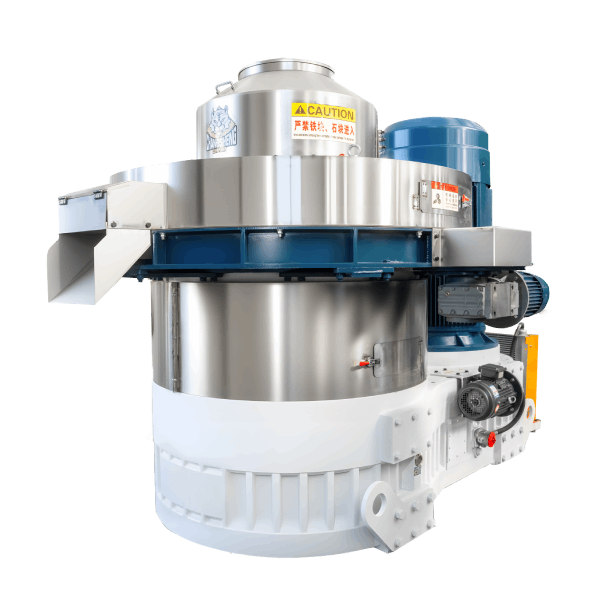
Coffee Husk Pellet Production Process
Coffee husk pellet production typically follows this sequence: coffee husk receiving, cleaning, drying, grinding, sand removal, pelletizing, cooling, screening, and storage.
Cleaning removes metal and large contaminants. Drying reduces moisture to the target range. Grinding reduces particle size. Sand removal removes abrasive particles. Pelletizing forms pellets. Cooling hardens pellets. Screening removes fines and oversize. Storage must protect pellets from moisture and self-heating.
Each step is included for a specific reason. Skipping sand removal or dust control is a common cause of short die life and safety issues.
Coffee Husk Pellet Quality
Moisture
Finished coffee husk pellets typically have moisture around 8 to 10 percent. Moisture above this range reduces fuel value and increases mold risk.
Ash
Ash content is typically 8 to 15 percent, depending on husk source and contamination. Ash should be declared to the final user because it affects boiler design and ash handling.
Density
Bulk density is typically in the range of 900 to 1,200 kg/m³, depending on compression and material. Lower density reduces transport efficiency.
Durability
Durability depends on lignin content, compression ratio, moisture, and cooling. Coffee husk pellets are generally less durable than premium wood pellets and should be handled accordingly.
Pellet Diameter
Common pellet diameters are 6, 8, 10, and 12 mm, depending on boiler feeding system and application.
Fuel Application
Coffee husk pellets are suitable for industrial boilers with ash removal systems. They are not recommended for home pellet stoves because of high ash content. They can be used in co-firing with coal or with wood pellets in some industrial systems.
Coffee Husk Pellet Machine Capacity
Capacity is not a fixed number. It depends on moisture, ash, particle size, bulk density, motor power, die specification, and feed rate.
Rated capacity is only meaningful when material, moisture, ash, particle size, pellet diameter, and die specification are stated. Actual capacity is usually lower than rated capacity because of moisture variation, sand content, and feeder stability.
Typical commercial coffee husk pellet lines range from about 0.5 to 3 t/h, depending on configuration and husk condition. Smaller lines are used by coffee mills processing their own husk, while larger lines are used by industrial fuel producers. The exact capacity for your project should be confirmed with test data at your actual husk condition.
A capacity margin of about 20 to 30 percent above the calculated requirement is a practical starting point. The exact margin depends on material consistency and operating hours.
Coffee Husk Pelletizing Problems
High Ash
High ash reduces pellet energy value and increases wear. Ash content should be declared and used for die and boiler selection.
Sand Contamination
Sand accelerates die and roller wear and causes blockage. Air classification is recommended where sand is present.
Die Corrosion
Organic acids in coffee husk attack die holes. Coated dies or alternative materials may be required for commercial operation.
Die Wear
Die wear is faster with coffee husk than with wood. Die material, heat treatment, and sand removal all affect die life.
Dust
Coffee husk dust is fine and poses health and explosion risks. Dust collection, explosion venting, spark detection, grounding, and where applicable ATEX-rated equipment are recommended.
Feeder Bridging
Low bulk density and fibrous structure cause bridging in the feeder. Feeder design must be adapted with breaker shaft, variable pitch screw, or vibrator.
Coffee Husk Pellet Applications
Coffee processing mills: converting husk into fuel for own boilers or sale.
Coffee exporters and processors: managing husk waste and reducing disposal cost.
Biomass boiler users: using husk pellets as fuel with ash handling systems.
Industrial fuel producers: producing husk pellets for industrial customers.
Pellet fuel producers: adding husk pellets to product range for specific markets.
Waste-to-energy projects: using coffee husk pellets in co-firing and industrial fuel applications.
These applications are common in coffee-producing regions such as Vietnam, Brazil, Colombia, Ethiopia, and Indonesia, where husk supply is concentrated and transport distance to the pellet line is short.
Coffee Husk Pellet Machine Buying Guide
Annual coffee husk volume: determines required capacity and operating hours.
Moisture: determines drying requirement.
Ash: determines die material, compression ratio, and boiler compatibility.
Sand contamination: determines air classification requirement.
Desired pellet diameter: determines die specification.
Daily operating hours: determines machine type and spare parts planning.
Final fuel application: determines pellet quality requirements.
These seven inputs are enough to recommend a suitable configuration.
Frequently Asked Questions
Can coffee husk be made into pellets?
Yes. Coffee husk can be pelletized into fuel pellets with a ring die pellet machine configured for high-ash, abrasive, and corrosive material.
Does coffee husk need drying?
Yes, in most cases. Fresh husk moisture is typically around 30 to 40 percent and must be dried to the range suitable for pelletizing, typically around 12 to 15 percent. This range depends on variety, origin, and machine configuration, and should be confirmed with a test.
Why does coffee husk cause high die wear?
Coffee husk contains sand, soil, and silica from patio drying. These particles are highly abrasive and accelerate die and roller wear. Removing sand before pelletizing extends die life significantly.
Does coffee husk contain high ash?
Yes. Ash content is commonly in the range of 8 to 15 percent, much higher than clean wood. This range depends on variety, origin, and sand content. Ash affects pellet energy value and boiler compatibility.
How can sand be removed from coffee husk?
An air classifier or gravity table removes sand and heavy particles before pelletizing. Magnetic separators remove ferrous metal. Cleaning before grinding also helps.
What pellet machine is suitable for coffee husk?
A ring die pellet machine with die and roller material selected for abrasive and corrosive service, feeder designed for low bulk density fibrous material, and dust collection with explosion protection.
Can coffee husk be mixed with sawdust?
Yes. Mixing husk with sawdust reduces ash content and may extend die life. The mix ratio should be consistent and confirmed with a pelletizing test.
What moisture is suitable?
Typical target moisture before pelletizing is around 12 to 15 percent. This range depends on variety, origin, die compression ratio, and machine configuration. Below 10 percent increases fire risk. Above 15 percent reduces pellet quality and increases mold risk.
What pellet diameter should I choose?
Common diameters are 6, 8, 10, and 12 mm, depending on boiler feeding system and application. Industrial boilers usually accept 8 to 12 mm.
Can coffee husk pellets be used in boilers?
Yes, in industrial boilers with ash removal systems. They are not recommended for home pellet stoves because of high ash content.
Author Introduction
This article was prepared by a technical content specialist with over ten years of experience in industrial equipment, biomass processing machinery, and B2B export projects. The author has worked with coffee husk pellet projects in coffee-producing regions such as Vietnam, Brazil, Colombia, Ethiopia, and Indonesia, including high-ash and high-silica husk, and understands the practical challenges buyers face in drying, sand removal, die selection, dust safety, and cost control.
The content reflects real engineering practice in coffee husk pellet machine selection, feedstock preparation, die wear management, and project execution. It is intended to help coffee mills, coffee processors, biomass boiler users, and pellet producers make informed decisions and reduce project risk. The author is affiliated with Shandong Changsheng Machinery Co., Ltd.
Call to Action
If you are planning a coffee husk pellet project and need help confirming drying, sand removal, machine configuration, die material, dust protection, or spare parts plan, you can request a technical proposal based on your coffee husk and required output. Share your coffee production volume, husk moisture, ash content, sand contamination level, target capacity, pellet diameter, power supply, and final fuel application, and a suitable configuration can be recommended.
You can also request a quotation for a coffee husk pellet machine for sale, ask for a process flow diagram, request a spare parts list, or arrange a video factory inspection before making a final decision. If you have a coffee husk sample, a pelletizing test can be arranged to confirm die selection and expected performance under your actual material conditions.