Wood Pellet Machine Troubleshooting Guide 2026: 15 Common Issues
News 2026-04-14
1. Product Definition
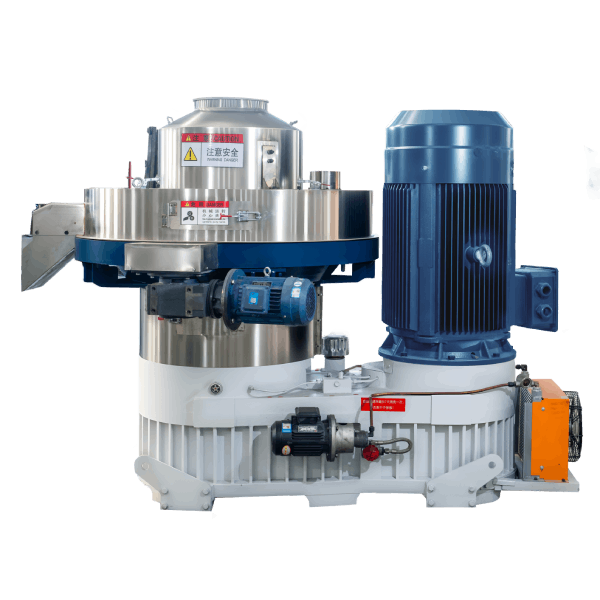
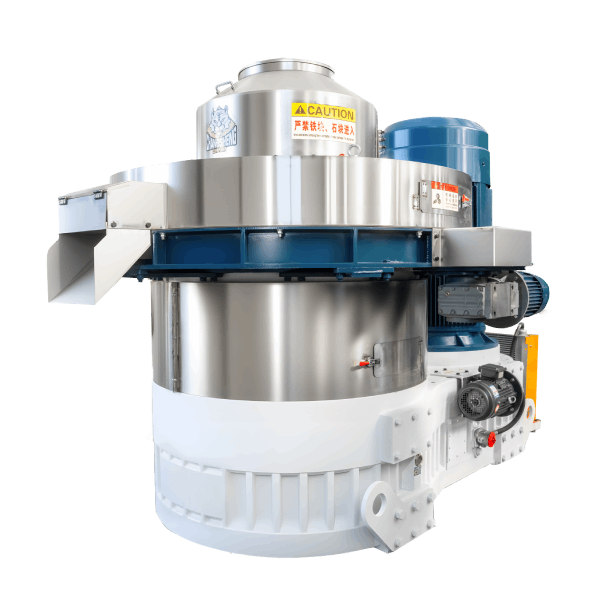
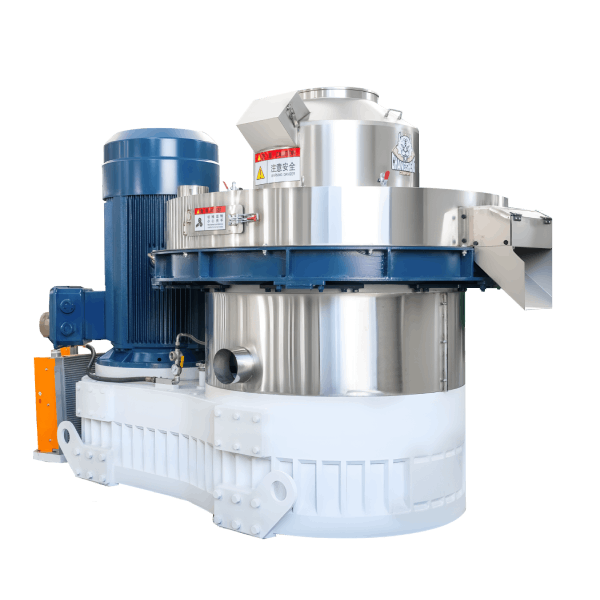
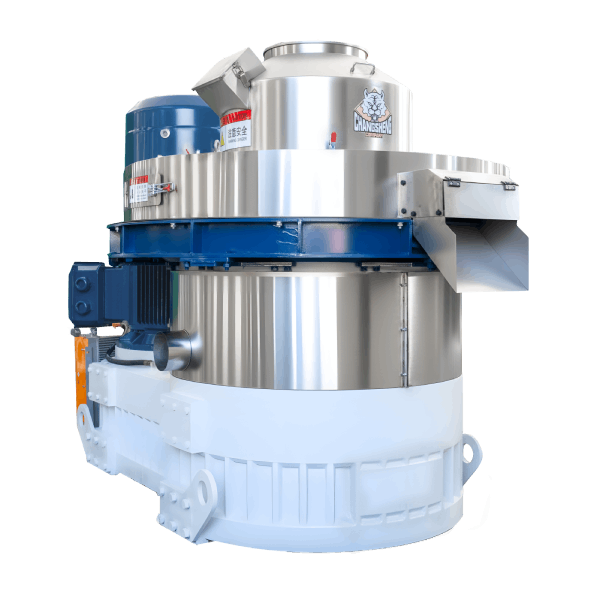
A wood pellet machine is a mechanical densification system that compresses sawdust and wood particles through a die via rotating rollers. Troubleshooting involves diagnosing and resolving issues in feed, compression, cooling, or power systems.
2. Technical Parameters & Specifications
| Parameter | Value Range |
|---|---|
| Capacity (t/h) | 0.05 – 5 |
| Main Motor Power (kW) | 7.5 – 160 |
| Die Diameter (mm) | 150 – 760 (flat or ring) |
| Finished Pellet Diameter (mm) | 6, 8, 10 |
| Target Pellet Density (kg/m³) | 1,000 – 1,300 |
| Optimal Moisture Content (%) | 13 – 18 |
| Normal Energy Consumption (kWh/t) | 45 – 85 |
| Expected Die Life (hours) | 500 – 2,500 |
| Routine Maintenance (hours/month) | 4 – 15 |
For technical support: Request a troubleshooting guide specific to your mill model.
3. Structure & Material Composition
Mechanical System (Compression Zone)
- Ring die or flat die: Hardened alloy steel (GCr15, 20CrMnTi)
- Roller assembly: High-chromium iron (Cr26) with bearings
- Main shaft: 40Cr or 4140 alloy steel
Supporting System
- Gearbox: Cast iron housing with helical or straight gears
- Bearings: SKF, FAG, or equivalent tapered roller or ball bearings
- Frame: Welded steel channel
Lubrication System
- Automatic or manual grease system for roller bearings
- Oil bath or circulating oil for gearbox
Control System
- PLC or manual starter with overload protection
- Current meter (ammeter) for load monitoring
- Emergency stop
4. Manufacturing Process (Engineering Steps)
Step 1 – Raw Material Preparation
Equipment: Dryer + hammer mill
Control: Moisture 13-18%, particle size 95% under 6mm
Troubleshooting focus: Off-spec material causes 70% of problems
Step 2 – Feeding
Equipment: Screw feeder (VFD recommended)
Control: Maintain 85-95% motor load
Troubleshooting focus: Starvation or flooding
Step 3 – Pelletizing
Equipment: Die and roller assembly
Control: Die temperature 80-110°C, gap 0.1-0.3mm
Troubleshooting focus: Wear, gap, temperature
Step 4 – Cooling
Equipment: Counterflow cooler
Control: Exit temperature ≤ ambient +5°C
Troubleshooting focus: Fines, cracking
Step 5 – Screening
Equipment: Rotary screener
Control: Remove fines (<2mm) and oversize (>12mm)
Troubleshooting focus: Yield loss
5. Industry Comparison
| Parameter | Ring Die Mill | Flat Die Mill | Troubleshooting Complexity |
|---|---|---|---|
| Typical capacity (t/h) | 0.5–5 | 0.05–0.5 | Ring die: higher |
| Die change difficulty | Complex (needs hoist) | Simple (manual) | Flat die: easier |
| Common failure modes | Die cracking, roller seizure | Die hole blocking, belt slip | Similar |
| Diagnostic tools needed | Ammeter, temp sensor, gap gauge | Ammeter, moisture meter | Similar |
| Spare parts cost (annual) | $3k-15k (2 t/h) | $500-2k (0.2 t/h) | Ring die: higher |
| Why Choose Shandong Changsheng | Full documentation, video support, 24h response | Simpler design | Comprehensive manuals |
Compare troubleshooting resources: Request support documentation for your mill type.
6. Application Scenarios (By Buyer Role)
Distributors / Importers
Need troubleshooting guides to support customers remotely. Decision focus: multilingual documentation, video library, and spare parts cross-reference.
EPC Contractors
Require troubleshooting procedures for warranty support during first year of plant operation. Decision focus: response time and remote diagnostic capability.
Engineering Consultants / Technical Advisors
Advising clients on maintenance capability and spare parts stocking. Decision focus: common failure frequency and mean time to repair (MTTR).
End-user Facilities (Pellet plants, farms, workshops)
Training operators and maintenance staff. Decision focus: clear step-by-step procedures, symptom-to-cause tables, and repair time estimates.
7. Core Technical Pain Points & Engineering Solutions
Pain Point 1 – Low Pellet Output (Below 70% of Rated Capacity)
Problem: Mill produces significantly less than nameplate capacity.
Root causes: Material moisture too high (>20%), die holes worn/blocked, roller gap too large (>0.4mm), or feeder speed too low.
Solution: Test moisture (target 13-18%). Clean die with oil-soaked sawdust. Adjust roller gap to 0.1-0.3mm. Increase feeder speed until motor load reaches 85-90%.
Pain Point 2 – Motor Overload Tripping
Problem: Main motor trips overload breaker or thermal relay.
Root causes: Feed rate too high, material moisture >25%, foreign object in chamber, or voltage drop.
Solution: Reduce feed rate immediately. Check moisture (dry if >22%). Stop and inspect chamber. Verify supply voltage (should be within ±5% of nameplate).
Pain Point 3 – Excessive Fines (>10%) or Pellet Cracking
Problem: High percentage of broken pellets or dust after cooling.
Root causes: Pellets not fully cooled (core still warm), die compression ratio too low, or material too dry (<10% moisture).
Solution: Extend cooling retention to 15-20 minutes. For ring die, increase compression ratio (longer holes). Add water to reach 13-16% moisture.
Pain Point 4 – Unusual Noise (Knocking or Grinding)
Problem: Metallic knocking or grinding sound from pelletizing chamber.
Root causes: Roller bearings failing, foreign object (metal/stone) in die, or loose roller assembly.
Solution: Stop immediately. Inspect roller bearings (replace if rough). Remove die and check for embedded metal. Tighten roller bolts to specified torque (consult manual).
Pain Point 5 – Die Cracking Prematurely
Problem: Ring die develops radial cracks before 50% of expected life.
Root causes: Thermal shock from cold material, excessive roller gap, or substandard die material.
Solution: Pre-heat material to 40-50°C before feeding. Maintain roller gap at 0.1-0.2mm. Request hardness test (HRC 52-58). Avoid cheap dies.
8. Risk Warnings & Mitigation Strategies
Risk 1 – Electrical Shock During Troubleshooting
Warning: Opening electrical panels or reaching into chamber with power connected can cause fatal shock.
Mitigation: Lock out and tag out (LOTO) main disconnect before any inspection. Verify power off with meter. Wear insulated gloves. Never bypass interlocks.
Risk 2 – Fire from Blocked Die
Warning: Blocked die holes cause friction heating above 150°C, igniting wood dust inside chamber.
Mitigation: Monitor die temperature (install thermocouple if not equipped). Stop feed immediately if temperature exceeds 120°C. Keep CO₂ or ABC fire extinguisher within 10 meters.
Risk 3 – Crush Injury During Die Change
Warning: Ring die weighs 100-500kg. Improper lifting can crush hands or feet.
Mitigation: Use rated overhead hoist (never manual lift alone). Wear steel-toe boots. Follow die change procedure step by step. Never put hands under suspended die.
9. Procurement Selection Guide (6 Actionable Steps)
Step 1 – Document the problem systematically
Record: symptom (low output, noise, fines), when it started (sudden or gradual), recent changes (material, settings, maintenance), and current readings (motor amps, temperatures).
Step 2 – Check the most common causes first
70% of wood pellet machine troubleshooting issues are material-related: moisture (too high or low), particle size (oversize), or contamination (sand, metal). Test moisture before touching mechanical components.
Step 3 – Isolate the problem area
Run mill empty (no material). If noise persists → mechanical issue (bearings, gears, belts). If quiet → material or feed issue. Run with material but bypass cooler → fines issue is pelleting vs. cooling.
Step 4 – Consult documentation
Keep machine manual, maintenance log, and spare parts list accessible. Record all repairs and part replacements. Use symptom-to-cause table (request from supplier).
Step 5 – Verify with measurements
Use moisture meter (calibrated). Measure roller gap with feeler gauge (0.1-0.3mm for ring die). Check motor amps with clamp meter (compare to nameplate FLA). Log all readings.
Step 6 – Escalate to supplier if unresolved
Provide documented symptoms, readings, and steps taken. Request video call for remote diagnosis. Have spare parts ready before technician arrives (reduce downtime 50-70%).
10. Engineering Case Study
Project Background: A 2 t/h wood pellet plant in Sweden experienced sudden output drop from 2.0 t/h to 0.8 t/h over 2 weeks. Pellet fines increased from 5% to 25%. Operators tried increasing feeder speed, which caused motor overload trips.
Initial Problem: Plant manager suspected gearbox failure or motor problem. Local technician quoted $8,000 for gearbox replacement plus 5 days downtime.
Root Cause Analysis (by Shandong Changsheng remote support):
- Operator sent video of mill running: motor load was 55% (should be 85-90%)
- Ammeter reading: normal at 55% load but dropped to 40% when knocking sound appeared
- Moisture test: material was 23% (rain exposure in open storage)
- Die inspection photo showed 40% of holes blocked with compacted wet sawdust
Solution Implemented:
- Dried material to 15% moisture (used existing rotary dryer, adjusted temperature)
- Cleaned die with oil-soaked sawdust (4 hours procedure)
- Reduced feeder speed to maintain 85% motor load (not increased)
- Installed moisture meter at feeder with color-coded display for operators
Final Data Results:
- Output restored to 1.95 t/h within 24 hours
- Fines reduced to 4% after cooling
- Gearbox replacement avoided ($8,000 saved)
- Downtime: 2 days (vs. 5 days quoted for gearbox replacement)
- Added weekly moisture training for operators — no recurrence in 6 months
Request remote troubleshooting support: Contact engineering team with photos, videos, and machine readings.
11. FAQ
Q1: Why does my pellet mill keep tripping the overload?
Material too wet (>22%) or feed rate too high. Reduce feed, check moisture. Also check for voltage drop or undersized circuit.
Q2: How do I know if my die is worn out?
Output drops 20% below baseline, pellet density falls below 1,000 kg/m³, or die surface shows cracks. Measure output monthly to track wear.
Q3: Why are my pellets coming out black or burned?
Die temperature too high (>120°C) from dry material (<10% moisture) or blocked holes. Add moisture, clean die, reduce feed rate.
Q4: What causes loud knocking noise from the chamber?
Foreign object (metal, stone) or loose roller. Stop immediately. Inspect chamber and roller bolts.
Q5: How often should I grease roller bearings?
Every 4-8 operating hours for manual grease. Automatic systems typically every 8-12 hours. Follow manual — over-greasing damages seals.
Q6: Why won’t pellets stay together (crumbling)?
Moisture too low (<10%) or too high (>20%). Compression ratio too low. Test moisture, adjust to 13-16%. For ring die, use longer holes.
Q7: What causes the mill to vibrate excessively?
Uneven roller gap, worn bearings, or unbalanced die. Check gap (0.1-0.3mm). Inspect bearings. Replace die if worn unevenly.
Q8: How do I clear blocked die holes?
Run oil-soaked sawdust (20kg diesel or vegetable oil per 200kg sawdust) through mill for 10-15 minutes. Never drill out holes — damages die.
Q9: Why does my belt drive squeal?
Belt tension too low or worn belts. Tension to spec (deflection 10mm per meter of span). Replace belts as set (all together).
Q10: Can high humidity cause problems?
Yes. Material absorbs moisture from air. Test moisture immediately before feeding. Store material under cover.
Q11: How do I know if my roller bearings are failing?
Unusual grinding noise, rough feel when turning by hand, or metal particles in grease. Replace immediately to avoid die damage.
Q12: What is normal die temperature during operation?
80-110°C (measured on outer surface). Above 120°C: risk of fire and die cracking. Install temperature monitoring if not equipped.
Q13: Why does my motor run hot but not trip?
Overloaded (above 100% FLA), poor ventilation, or voltage drop. Measure amps. Clean cooling fins. Verify supply voltage (±5%).
Q14: How do I store spare dies?
Coat with rust preventative oil. Store vertically on edge (not flat). Keep in dry area (humidity <60%). Inspect for rust every 3 months.
Q15: When should I call a technician vs. DIY troubleshooting?
DIY: material issues, settings, cleaning, belt tension, grease. Technician: gearbox noise, bearing replacement, die cracking, electrical faults beyond fuses.
12. Commercial Call-to-Action
For operators and maintenance teams: Request a comprehensive wood pellet machine troubleshooting guide with symptom-to-cause tables, diagnostic flowcharts, and repair videos.
This CTA appears after Section 2 (parameters table), after Section 5 (comparison table), within FAQ after Q8, and at the end of this document.
Need immediate technical support? Submit photos, video, and machine readings for remote diagnosis by our engineering team (24-hour response).
Looking for spare parts to fix your issue? Contact the parts team with your mill model and problem description for expedited shipping.
To proceed: Send your troubleshooting inquiry via the contact form. Include mill model, symptom, recent changes, motor amp reading, moisture reading, and photos/video if available.
13. Author & E-E-A-T Credentials
Author: Zhang Wei
Senior Field Service Engineer & Troubleshooting Specialist
- 11 years in wood pellet mill field service and remote diagnostics (2014–present)
- Resolved 600+ troubleshooting cases across 35 countries for flat die and ring die mills
- Developed 12 diagnostic flowcharts and 30+ video troubleshooting guides
- Author of “Wood Pellet Mill Troubleshooting Handbook” (China Machine Press, 2022)
- Certified Maintenance & Reliability Professional (CMRP)
Affiliation: Shandong Changsheng Machinery Co., Ltd.
The author has personally diagnosed and resolved wood pellet machine troubleshooting cases involving low output, motor overload, excessive fines, noise, vibration, die cracking, and fire prevention. All diagnostic procedures, root cause analyses, and repair recommendations are derived from actual field cases from 2014–2026.